




Wooden Roll Top Bureau
A wooden roll top bureau provides a clever sliding shutter to hide your papers, combining solid utility with period charm.
Wooden Roll Top Bureau
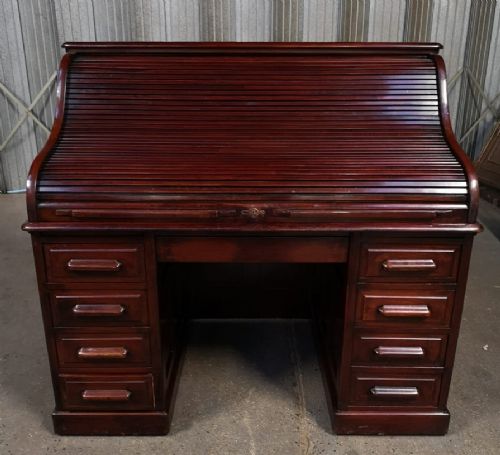
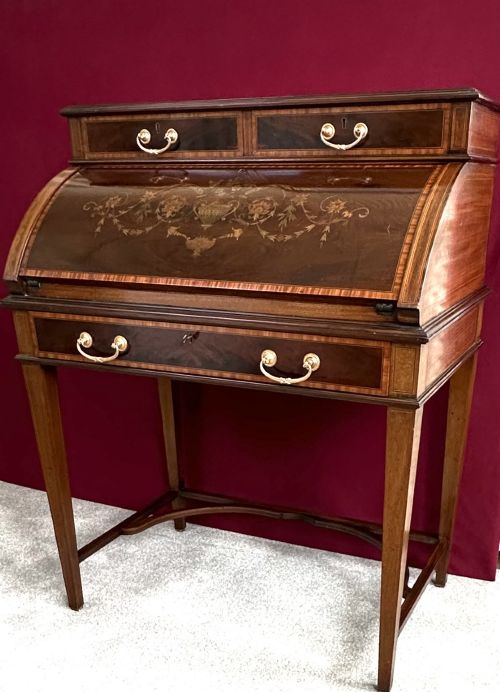
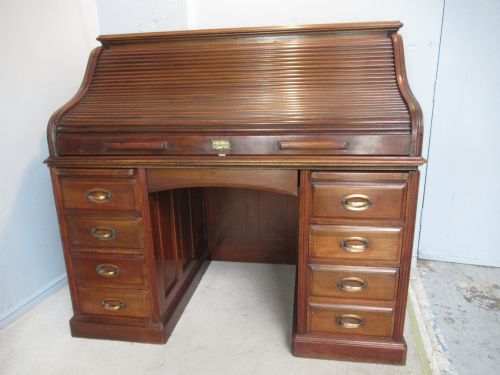
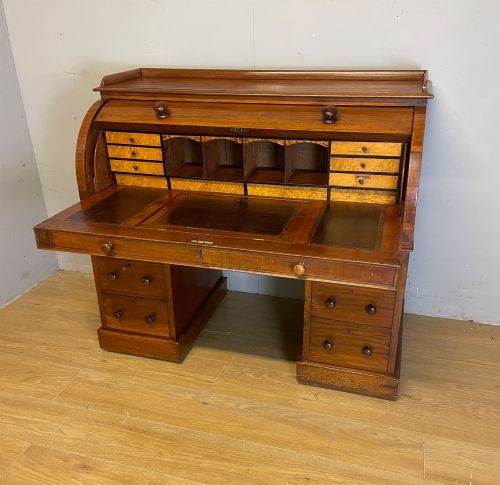
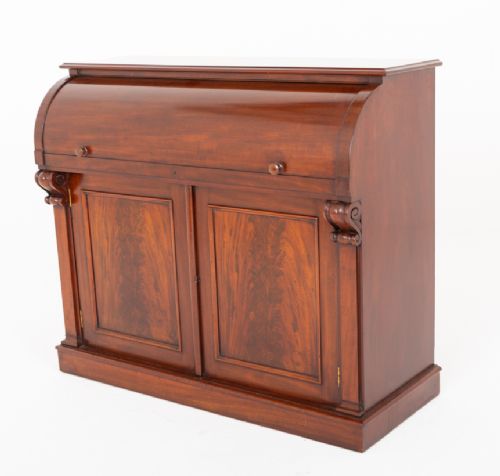
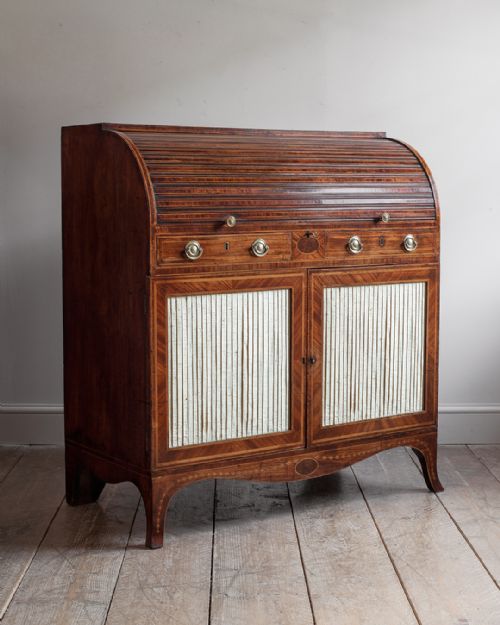
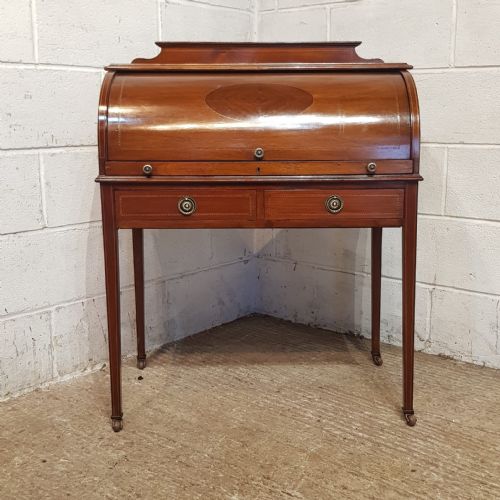
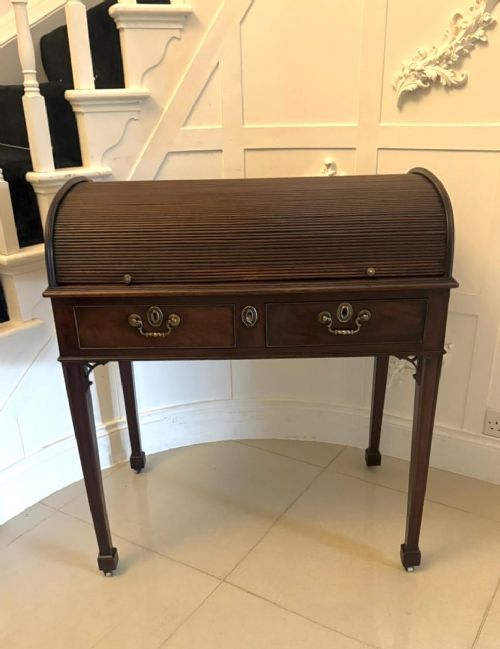
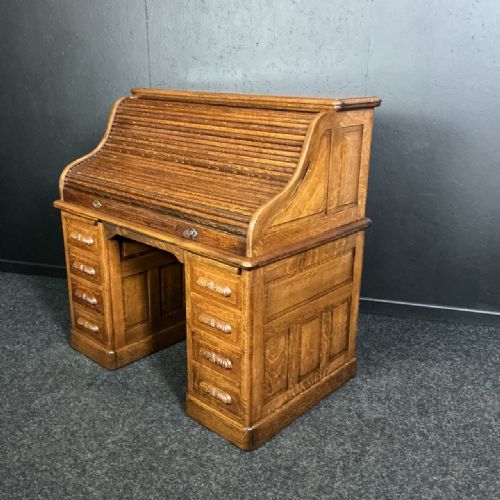
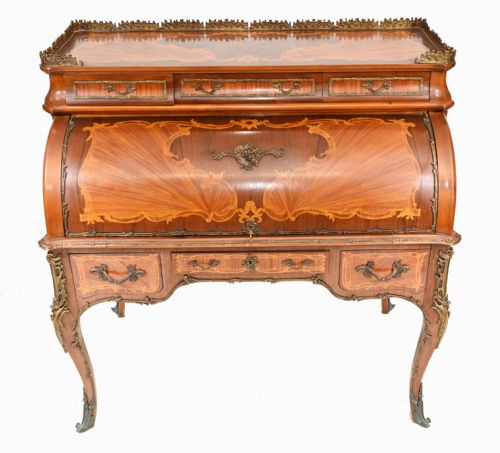
A wooden roll top bureau is a practical writing desk featuring a flexible tambour, cylinder, or barrel closure that conceals the fitted interior surface when not in use. These pieces range from substantial twin pedestal designs to compact Edwardian and Victorian writing tables.
You will encounter various historical interpretations here, spanning simple oak office desks from the early twentieth century to elegant Georgian and Victorian mahogany or walnut library pieces. Makers also adapted these forms into French, Dutch, and Japanese revival styles.
The primary appeal lies in the ingenious slatted or curved shutter mechanism, which allows you to secure your correspondence instantly without clearing the desktop. This makes them exceptionally functional items for modern study spaces as well as traditional interiors.
Materials and construction
Cabinet makers relied predominantly on timbers such as mahogany, oak, walnut, and satinwood, frequently applying burr walnut or exotic veneers to decorative surfaces. Brass hardware, leather writing inserts, and intricate marquetry or inlay details complete the construction.
The characteristic roll top relies on closely fitted wooden strips glued to a fabric backing or moving along recessed tracks, allowing a rigid wooden surface to curve smoothly around a cylinder. Pedestal bases and fitted internal compartments demand precise joinery to ensure drawers and slides operate without binding.
One exceptional Japanese Yosegi desk on record proves that nineteenth-century artisans applied microscopic geometric mosaic wood veneers to master the rolling cylinder form.
What separates the finest examples
Quality rests upon the precision of the tambour mechanism and the smoothness of the curved track, which should glide freely without catching or sagging. Superior examples display seamless movement in the slatted shutter and perfectly flush joints throughout.
The selection of timber grain and the finesse of internal pigeonholes and small drawers distinguish standard utility furniture from exhibition pieces. Finer workshops incorporated secondary woods with equal care and executed marquetry, parquetry, or brass mounts with absolute crispness.
Wiggers
The Wooden Roll Top Bureau Glossary
- Tambour
- A flexible shutter formed of narrow wooden slats glued to canvas or leather, allowing it to slide along a curved groove. This ingenious device conceals the desk interior securely.
- Cylinder desk
- A writing piece featuring a solid quarter-circle rotating drum rather than slatted tambour strips. It opens to reveal a pull-out writing slide and pigeonholes.
- Pedestal desk
- A heavy table design supported by two vertical banks of drawers reaching down to the floor. The central writing space sits comfortably between them.
- Marquetry
- Decorative patterns formed by fitting together thin veneers of various coloured woods. Master craftsmen used this technique to create elaborate floral or geometric scenes.
- Davenport
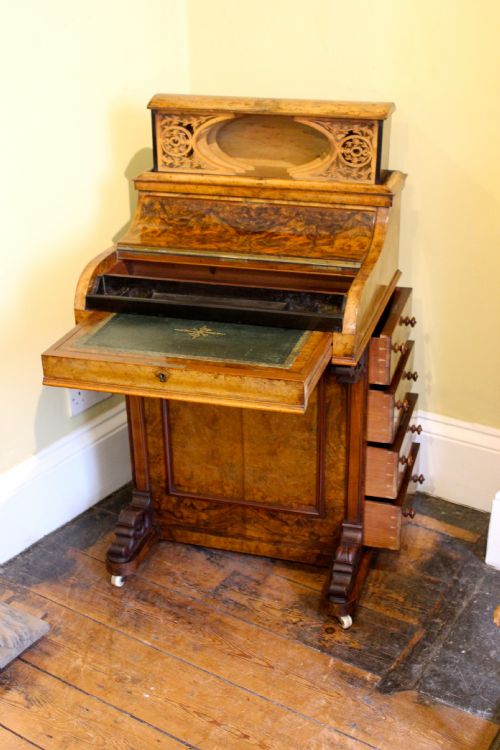
- A compact form of small writing desk with a sloping top and drawers accessing one side. These originated during the Regency period.
Wooden Roll Top Bureau: Frequently Asked Questions
What is a tambour desk?
A tambour desk uses a flexible slatted wooden curtain that slides in a track to cover the writing surface and pigeonholes. This clever mechanism provides security for your papers while taking up less clearance than a traditional hinged fall front.
Such designs became popular in the eighteenth and nineteenth centuries for both formal libraries and busy commercial offices. They allow you to leave work spread out and conceal it instantly.
Are these desks practical for modern laptops?
Many of these desks accommodate laptops easily upon their pull-out writing slides or main surfaces, provided you check the internal dimensions beforehand. Compact Edwardian models fit comfortably into contemporary study rooms.
However, you should measure the depth of the kneehole and the pull-out writing surface to ensure your specific computer equipment fits when the roll top closes.
How do I date a wooden roll top desk?
Dating relies on identifying the prevailing timber choices, construction methods, and hardware styles associated with specific periods like the Georgian era, Victorian period, or Edwardian decade. Simpler oak pedestal versions typically point towards the early twentieth century.
Finer mahogany and walnut examples featuring hand-cut dovetails and tambour shutters generally indicate eighteenth or nineteenth-century craftsmanship. Examining the secondary woods inside the drawers offers further clues to the manufacturing date.