


Wooden Rocker Chair
A wooden rocker chair brings immediate comfort to a room, offering gentle motion through traditional craft.
Wooden Rocker Chair
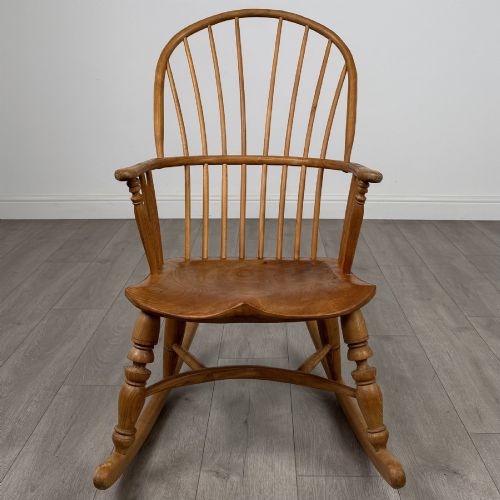
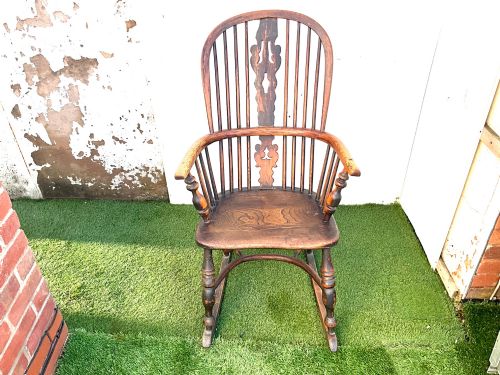
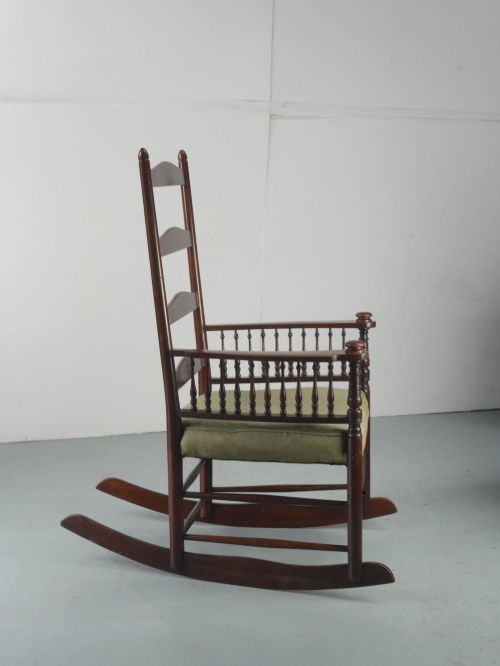
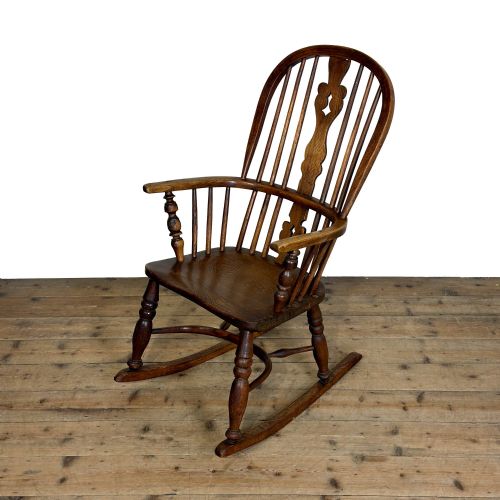
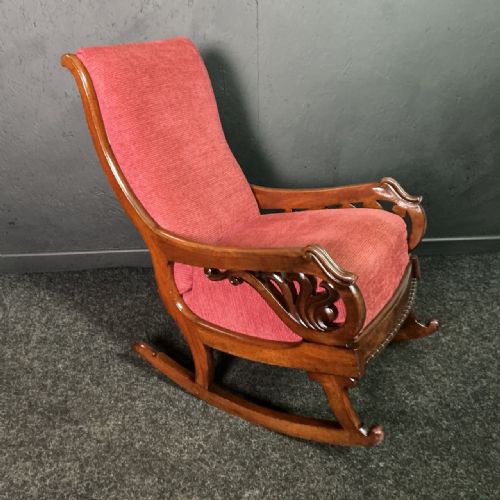
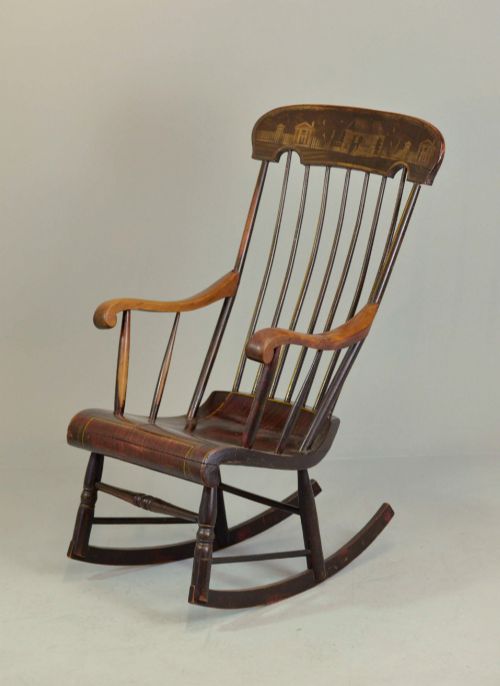
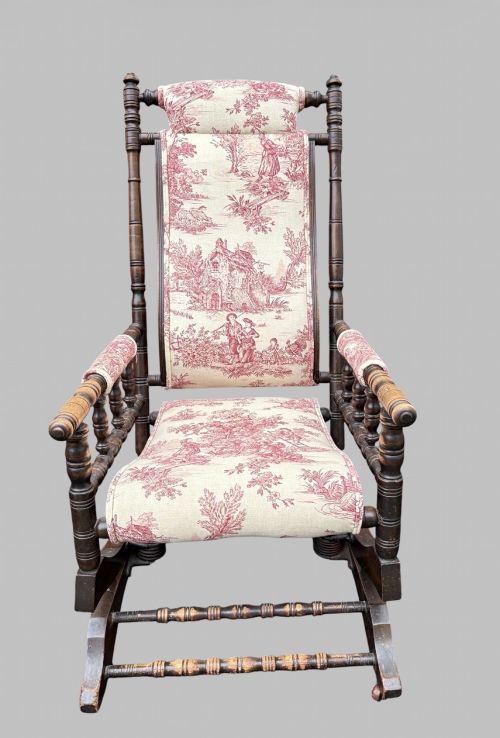
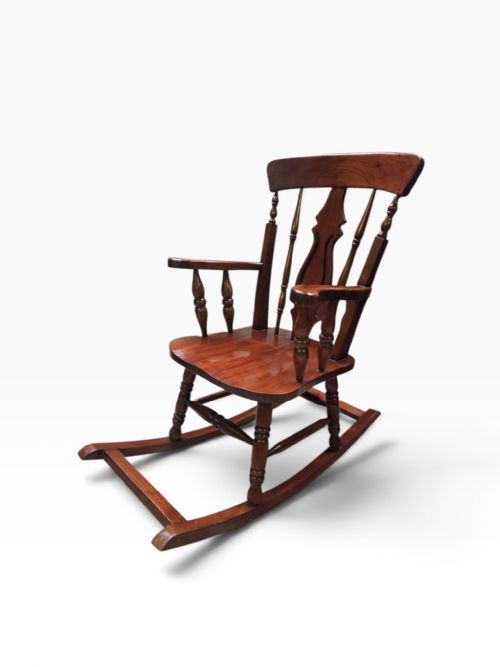
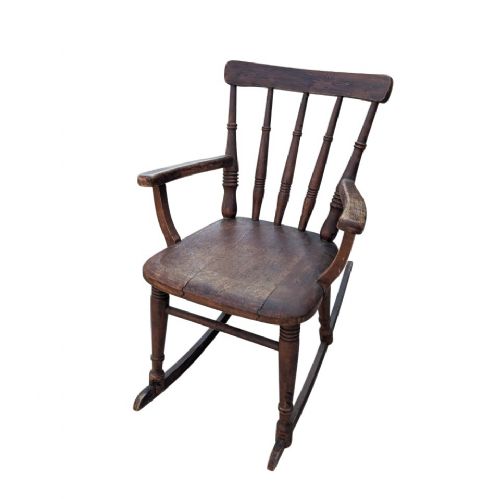
A wooden rocker chair is a seat mounted on curved wooden bows that allow it to sway back and forth. When searching for a wooden rocker chair, buyers encounter numerous regional forms spanning the eighteenth, nineteenth and twentieth centuries.
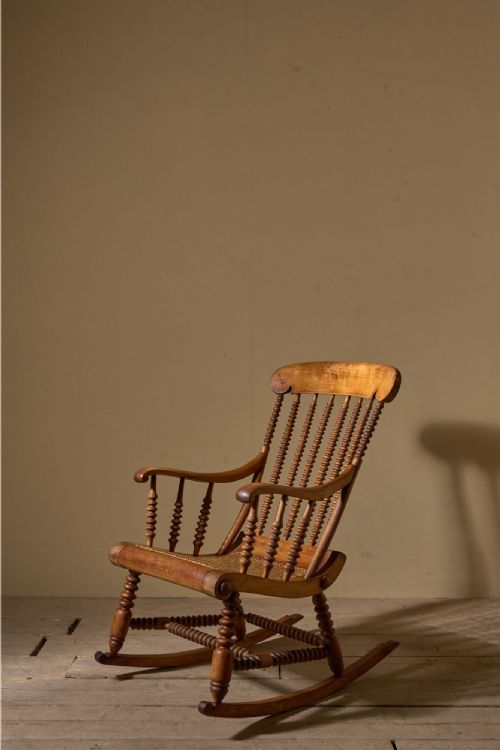
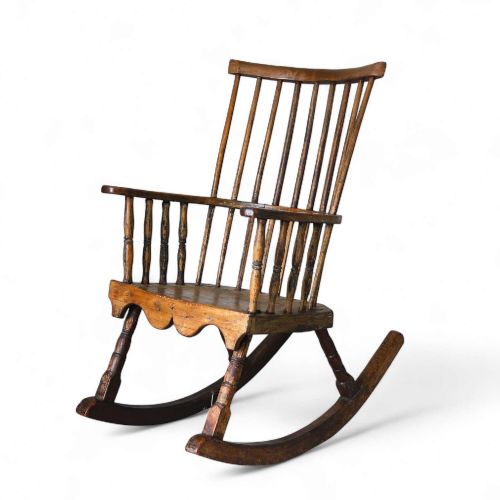
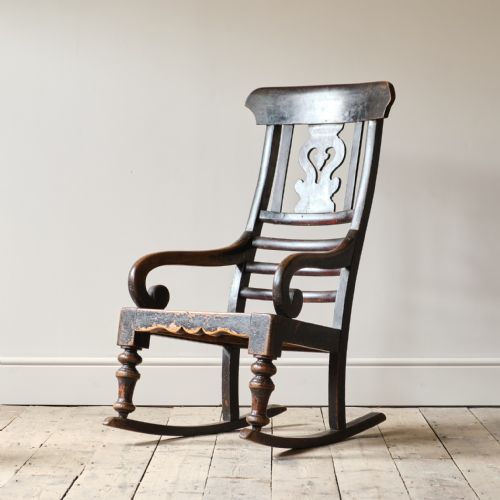
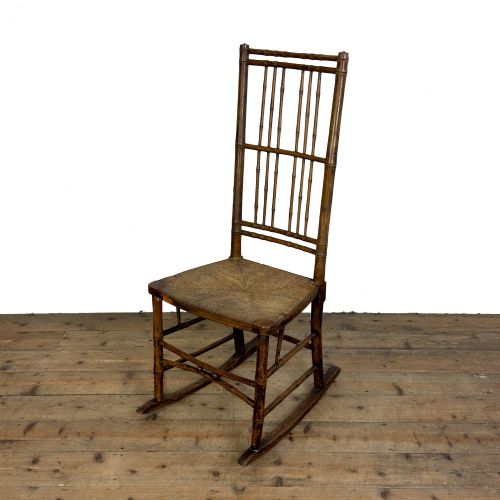
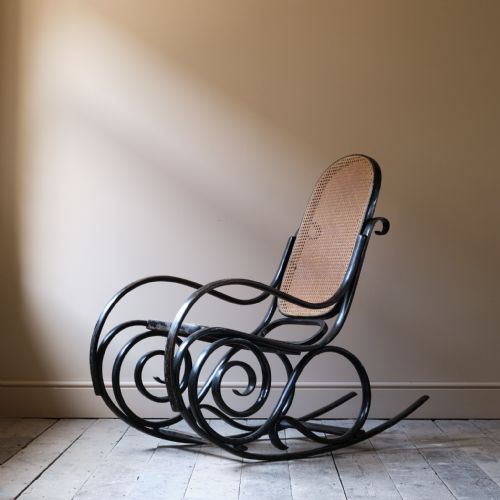
The selections on this page draw heavily on vernacular English country styles, particularly Windsor designs with spindle or comb backs. Alongside these sit continental bentwood examples, American Boston rockers and occasional Victorian chairs.
Makers utilised native hardwoods such as beech, elm, ash and oak to build these frames. Many pieces incorporate woven rush or cane seating, whilst others feature upholstered pads or plain timber panels.
How wooden rocker chairs were made
Cabinet makers and bodgers constructed these frames using traditional joinery, turning spindles on lathes and bending steamed timbers into curved profiles. Woods like ash and elm provided the necessary tensile strength for slender components and flexible backs.
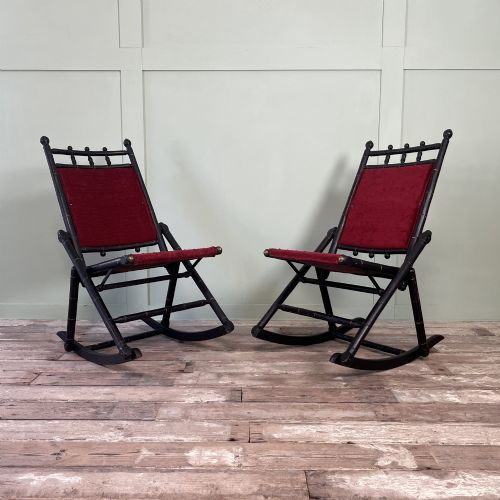
Seat bases often started as solid carved wooden saddles shaped to fit the body. Other variants relied on steam-bent beech or laminated hardwoods, particularly in continental bentwood and aesthetic movement folding designs.
Wooden Rocker Chair Retail Price Guide 2026
Typical asking prices for wooden rocker chair among the pieces listed under this phrase on Sellingantiques today, from the lower quarter to the upper quarter. They describe what is for sale here now, not the wider market.
Materials recorded across the selection include beech, elm, oak, mahogany, ash, rush and cane.
What varies in quality in wooden rocker chairs
Quality rests in the integrity of the timber selection and the precision of the joinery. Chairs shaped from solid elm or ash with well-pegged joints display superior structural resilience compared to later mass-produced alternatives.
The balance of the rocker bows determines the smoothness of the motion. Fine examples exhibit careful proportioning where the curve of the rocker matches the weight and pitch of the upper frame.
Jacob and Josef Kohn·Liberty's
The Wooden Rocker Chair Glossary
- Windsor
- A chair built with a solid wooden seat into which the legs, back spindles and armbows are inserted directly. These seats often feature distinct saddle shapes for comfort.
- Bentwood
- Wood that has been rendered pliable through steaming and then bent into curved forms. This technique produced lightweight frames seen in nineteenth-century continental seating.
- Bobbin turned
- Timber turned on a lathe to create a series of rounded, bead-like shapes resembling bobbins of thread. This decorative turning appears frequently on nineteenth-century vernacular frames.
- Rush
- Dried marsh grass woven into durable seating mats. It provides a textured, flexible surface common in traditional country chairs.
- Comb-back
- A Windsor chair design where the top rail resembles the teeth of a comb, holding vertical spindles. This regional English form offers sturdy support for the occupant.
Wooden Rocker Chair: Frequently Asked Questions
What is a wooden rocker chair?
A wooden rocker chair is a seating design mounted on curved wooden rails that enable forward and backward movement. These pieces range from heavy Windsor armchairs to light bentwood frames.
Craftsmen built them across various periods using native timbers such as ash, elm and beech, often pairing solid wood seats with turned spindle backs.
How do I date a wooden rocker chair?
Dating relies on observing construction methods, timber choices and stylistic details. Earlier pieces often display vernacular hand-turning and pegged joinery.
Later Victorian and Edwardian examples might feature factory-turned components, applied inlay or machine-bent elements like those found in bentwood pieces.
Where were Windsor rockers made?
Windsor rocking chairs originated in rural workshops across England, particularly in the Thames Valley and various provincial counties. Makers utilised locally available woods like elm for seats and ash for spindles.
Later adaptations of the Windsor form appeared in America and across different European regions during the nineteenth century.
How do I care for an antique rocker?
Maintenance involves keeping wooden surfaces clean with a soft cloth and applying traditional wax sparingly to nourish the timber. Avoid placing these chairs near direct heat sources which can dry out the wood.
Check the joints and rocker bows periodically to ensure the structure remains stable during daily use.