




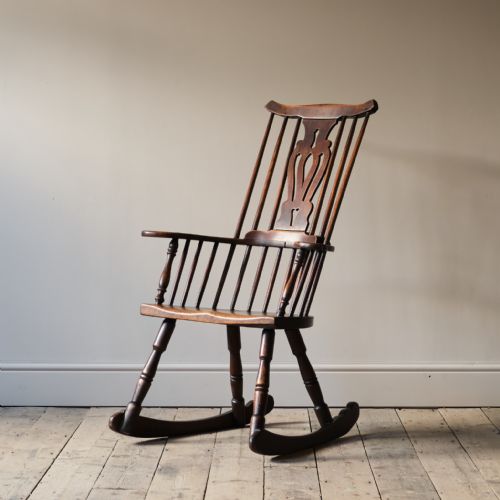
Vintage Windsor Rocker
A vintage windsor rocker brings undeniable character to a room, offering a comforting seat shaped by centuries of country craftsmanship.
Vintage Windsor Rocker
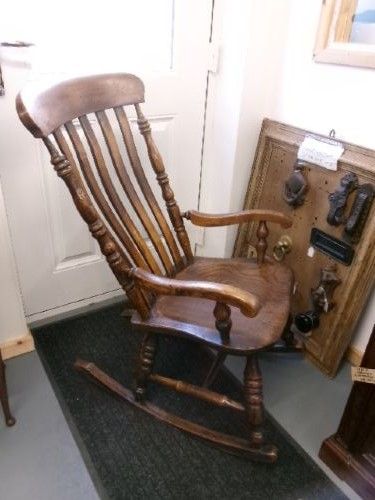
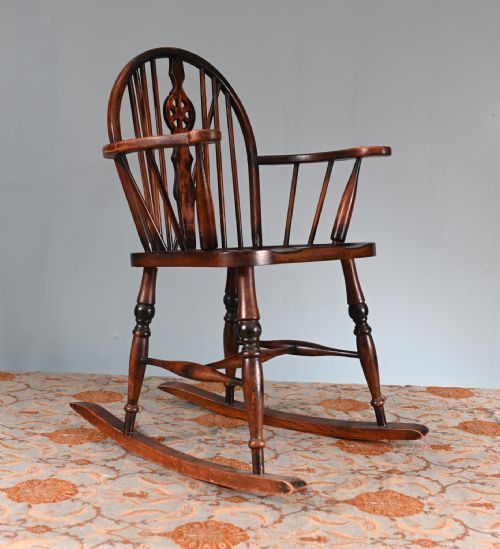
A vintage windsor rocker is a traditional timber seating form distinguished by a central seat plank into which the legs, back spindles, and bow or crest are independently joined. These pieces range from substantial farmhouse armchairs designed for daily domestic use to smaller scaled childs seating variants.
Buyers browsing this page most frequently encounter Victorian examples and nineteenth century interpretations alongside earlier regional forms. The selection encompasses traditional english country styles as well as continental Scandinavian country variations finished in original paint.
The enduring appeal of these chairs lies in their honest construction and the comfort afforded by a gently curving seat and responsive spindle back. They bridge the gap between functional utility and decorative country charm.
Materials and Construction
Makers utilised a combination of native timbers suited to specific structural demands, pairing durable hardwoods like elm for shaped seats with resilient beech, ash, oak, or birch for turned spindles and legs.
The traditional construction method relies on socket joints where wedged tenons secure the upright components directly into a solid timber seat plank. This method allowed craftsmen to create robust, resilient frames without relying on excessive metal fixings.
Vintage Windsor Rocker Retail Price Guide 2026
Typical asking prices for vintage windsor rocker among the pieces listed under this phrase on Sellingantiques today, from the lower quarter to the upper quarter. They describe what is for sale here now, not the wider market.
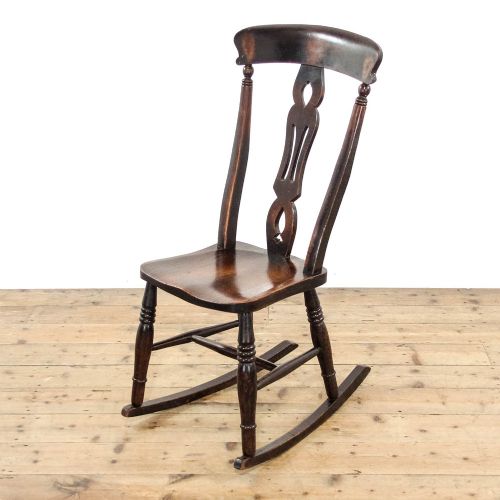
Several smaller chairs designed specifically for children survive among these listings, offering miniature rocking comfort for the youngest household members.
Judging Quality and Character
Quality in these chairs is defined by the integrity of the timber selection and the harmony of the turning work on the legs and spindles. Chairs featuring finely figured elm seats and well proportioned wheelback or spindle arrangements represent the higher end of the range.
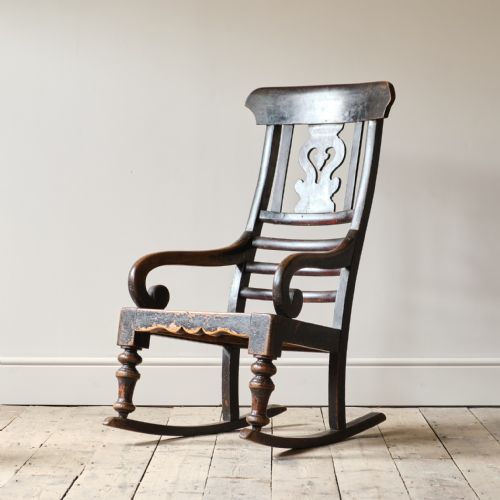
The preservation of original surface treatments, whether aged patinated timber or early paint finishes, largely determines the visual desirability of a piece. Subtle details such as generous armbows and balanced rocking curves distinguish superior country workshop output from heavier utilitarian production.
The Vintage Windsor Rocker Glossary
- Spindle back
- A chair back constructed from vertical turned or tapered wooden rods inserted between the seat and the top rail. This design provides lightweight yet sturdy support.
- Wheelback
- A Windsor chair variation featuring a pierced central splat carved or shaped to resemble the spokes of a cart wheel. It is a defining decorative feature of nineteenth century seating.
- Thames Valley
- A regional English style associated with refined Windsor chair production. Pieces from this tradition often incorporate rich yew or elm timbers and sophisticated turnings.
Vintage Windsor Rocker: Frequently Asked Questions
What defines a windsor rocker?
A windsor rocker is characterised by a solid wooden seat into which the structural elements are tenoned directly, mounted upon curved wooden rockers.
This distinct construction separates traditional windsor chairs from standard framed or upholstered seating forms.
How do I care for antique timber?
Maintain antique wood by keeping it away from direct heat sources and sudden humidity changes to prevent timber splitting.
Apply a traditional beeswax polish occasionally to nourish the grain and preserve the historic surface patina.
Were these chairs used indoors?
These rockers were primarily designed as functional seating for domestic kitchens, nurseries, and farmhouse parlours.
Their comfortable curved seats and gentle motion made them practical additions to everyday living spaces.
How do I identify earlier pieces?
Earlier examples often reveal themselves through hand-turned components, deeper solid elm seat saddles, and regional construction traits.
Comparing the turning profiles and timber selection helps distinguish eighteenth century forms from later Victorian revivals.