




Wooden Religious Plaque
A wooden religious plaque brings centuries of devotion into a room, offering tactile connection through hand-carved scenes of faith.
Wooden Religious Plaque
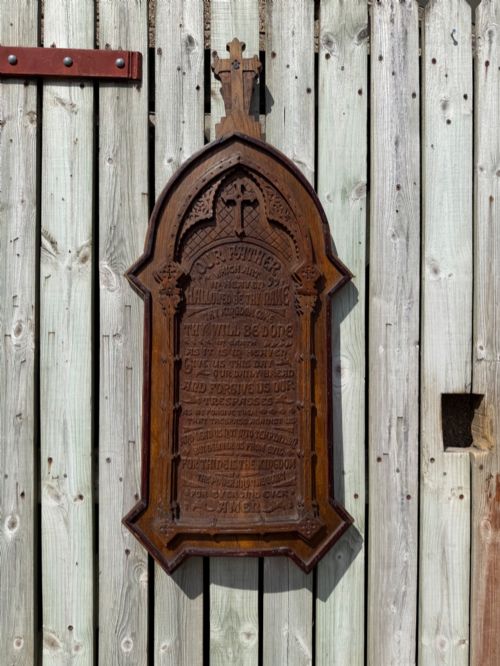
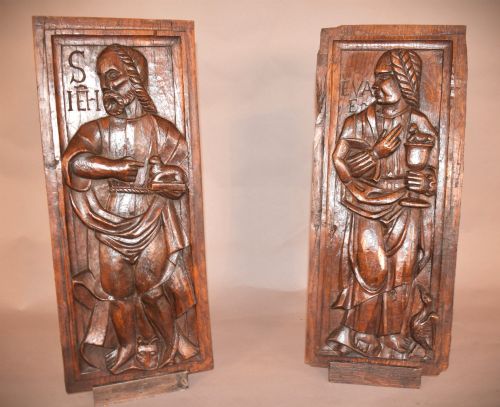
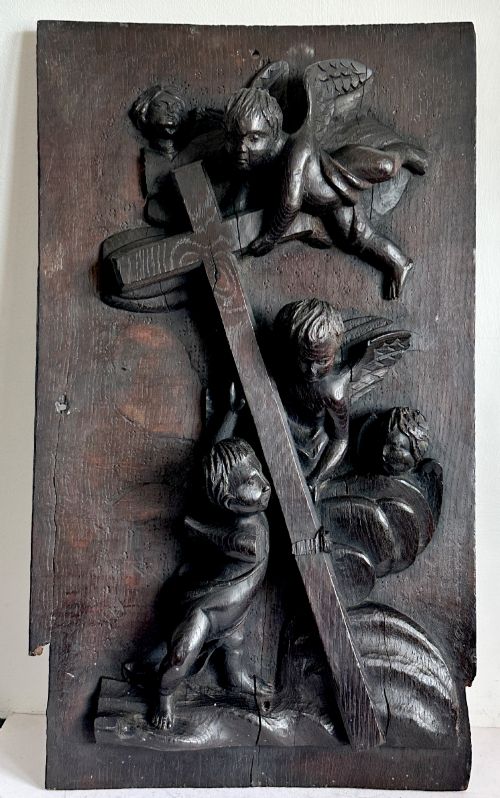
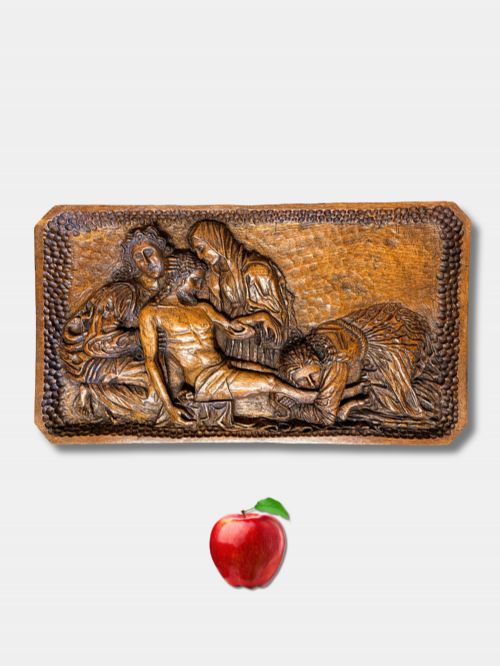
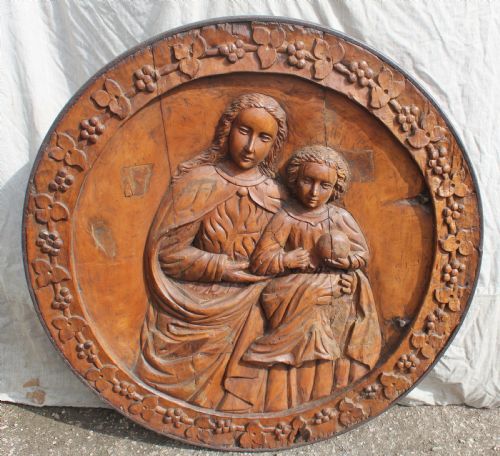
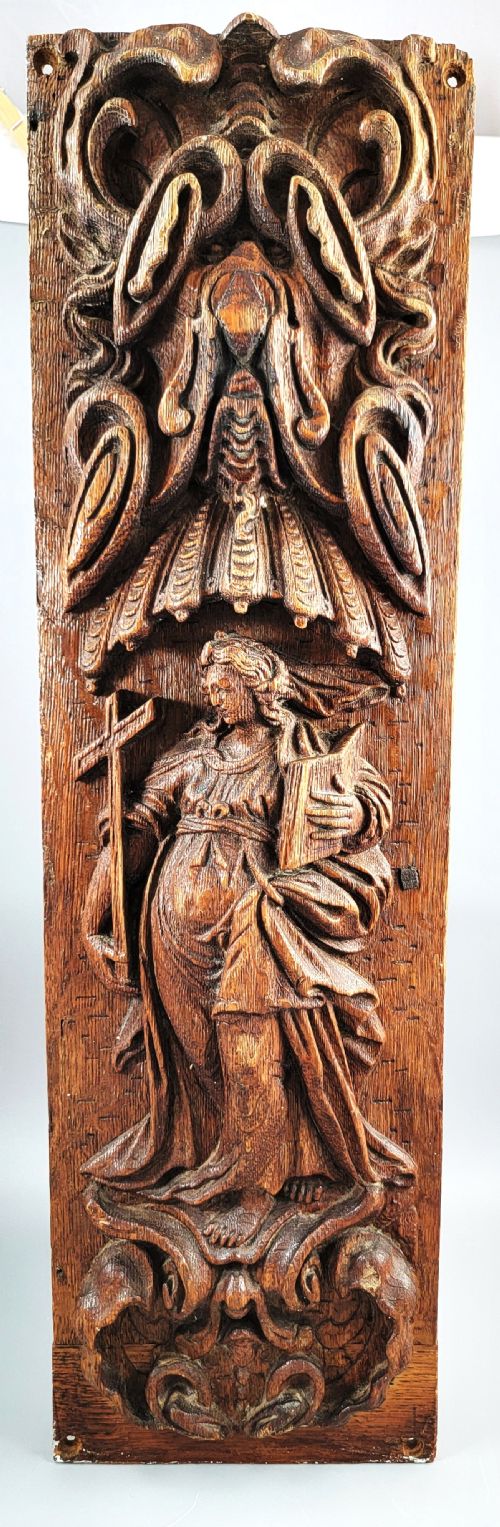
A wooden religious plaque serves as a devotional wall art piece, taking the form of wall reliefs, carved panels, and framed icons. These works capture sacred narratives, featuring depictions such as Christ's Lamentation, the Baptism of Christ, and the Crucifixion.
The selections span multiple centuries, ranging from sixteenth-century carvings to Edwardian painted signs and twentieth-century prayer plaques. Makers across regions utilised local timber to shape devotional items for domestic and communal worship.
Forms vary from monumental French walnut panels to small Russian icons mounted on wood and German folk art carvings. Each object represents a distinct tradition of spiritual expression in timber.
How they were made
Carpenters and carvers shaped these pieces primarily from solid hardwoods such as oak, walnut, chestnut, and pine, selecting timber with tight grains suitable for intricate detail work. Artisans employed hand chisels and gouges to build deep relief scenes directly into the wood.
Surface treatments often included tempera paint, silver and gilt highlights, or plain oil finishes to protect the wood and enhance the narrative figures. Certain panels utilised pyrography or pokerwork techniques to scorch designs into the timber surface.
One piece records a tin tabernacle, proving that temporary corrugated iron churches still required absolute architectural grandeur inside.
What varies in quality
The preservation of original surface finishes, whether early paint, tempera, or polished walnut, affects the integrity of the piece. Intact icon mounts and original framing elements elevate the physical completeness of the work.
The Wooden Religious Plaque Glossary
- Carved panel
- A flat piece of timber decorated with sculpted relief work. These panels were frequently integrated into larger architectural settings or hung independently on walls.
- Tempera
- A permanent, fast-drying painting medium consisting of coloured pigment mixed with a water-binder size, often egg, used extensively on wooden icon panels.
- Icon
- A devotional painting of a holy figure, traditionally executed on wood and venerated in Eastern Christian traditions.
- Pyrography
- The art of decorating wood or other materials with burn marks using a heated tool, appearing in nineteenth-century American works.
- Relief
- A sculptural technique where the sculpted elements remain attached to a solid background of the same material.
Wooden Religious Plaque: Frequently Asked Questions
How do I hang a heavy wooden plaque?
Heavy carved oak and walnut panels require secure wall anchors and appropriate load-bearing brackets fixed directly into wall studs. Avoid relying solely on picture wire for monumental pieces.
Ensure the hanging hardware engages with the internal structure of the wooden panel rather than superficial trim. Professional installation is recommended for pieces exceeding standard domestic weight.
Where should I display these plaques?
Place wooden religious pieces away from direct heat sources, radiators, and bright sunlight to prevent the timber from drying out, warping, or cracking. Stable indoor humidity preserves both the wood and any applied paint or tempera.
Interior walls with moderate ambient light offer the ideal environment for viewing the depth and texture of the carving. Give the pieces adequate space to let the shadow and relief work register clearly.
How do I clean an antique wooden panel?
Dust the carved surfaces gently with a soft, dry, lint-free cloth or a clean artist's paintbrush. Avoid using commercial furniture polishes, water, or chemical cleaners, which can damage aged finishes and exposed tempera.
If the piece requires deeper conservation work, consult a professional restorer specialising in historic woodwork. Keeping the surface dry ensures the original patina remains undisturbed.
How can I tell the period of the carving?
Examine the tool marks left on the reverse and edges of the timber, as hand-adzed and early chisel marks differ from later machine-sawn surfaces. Stylistic indicators, such as Louis XIII or Baroque framing motifs, also provide clues to the era.
Compare the timber species and preparation methods against known examples from specific regions like Flanders, Germany, or Russia. Wear patterns and natural oxidation of the wood further indicate age.