
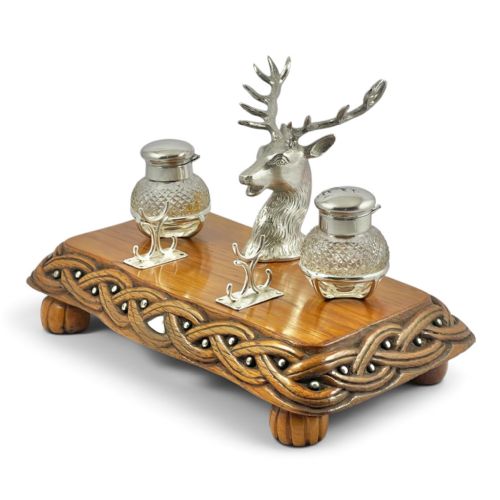


Wooden Pen Stand
These wooden pen stand pieces are functional desk accessories from the nineteenth century designed to hold writing instruments and ink.
Wooden Pen Stand
A wooden pen stand or inkstand sits on a desk to organise writing tools, typically incorporating glass inkwells, brass fittings, and compartments for pens. When you search for a wooden pen stand, you encounter nineteenth-century pieces ranging from utilitarian oak and walnut blocks to elaborate luxury stationery tidies.
The selections here span the Victorian era, the Regency period, and the Edwardian epoch, with Black Forest carved designs appearing alongside classic coromandel, mahogany, and rosewood items. These desk accessories reflect the formal correspondence habits of past centuries, combining practicality with decorative cabinet-making.
You are most likely to meet Victorian coromandel or walnut stands featuring mounted inkwells and pen recesses, alongside figural Black Forest carvings from around eighteen hundred and ninety. Simpler solid oak or carved wood desk stands also recur frequently across the inventory.
Materials and construction
Cabinet-makers utilised dense timbers such as coromandel, walnut, mahogany, rosewood, and oak as the structural foundation for these desk stands, often selecting woods for their distinct grain patterns and deep natural tones. Ebony and carved woods also feature prominently, particularly in continental Black Forest pieces.
Makers embellished these wooden bodies with brass hinges, inlaid mother-of-pearl, and detailed hand-carved motifs like animals and birds of prey. Fitted glass inkwells, sometimes accompanied by silver or metal collars, sit securely within recessed wooden platforms designed to contain spills.
Evaluating quality and craftsmanship
The distinction between standard and exceptional pieces rests upon the precision of the woodworking, the complexity of any carved details, and the quality of the inlaid materials. Finely figured coromandel wood, intricate mother-of-pearl inlay, and deeply carved Black Forest animal figures elevate an inkstand beyond a simple utilitarian block.
Secondary elements such as heavy brass mounts, intact glass inkwells with matching lids, and robust structural joinery distinguish superior items. The crispness of the carving and the preservation of the original polished surface dictate the overall standing of each piece.
Maison F. Mack
The Wooden Pen Stand Glossary
- Coromandel wood
- A dense, heavily grained tropical timber featuring dark brown and black stripes, highly prized for luxury nineteenth-century desk accessories.
- Black Forest
- A nineteenth-century style of intricate wood carving originating from central Europe, frequently depicting animals, birds, and natural foliage.
- Inkstand
- A desk accessory comprising one or more inkwells combined with a pen tray or wooden stand for writing implements.
- Desk tidy
- A compartmentalised desk accessory used to organise stationery, letters, and writing tools.
- Mother-of-pearl
- The iridescent inner layer of certain mollusc shells, utilised for decorative inlay work on wooden boxes and desk stands.
Wooden Pen Stand: Frequently Asked Questions
What is a wooden pen stand used for?
These pieces served as dedicated desktop stations for holding inkwells, nib pens, and blotting sand during the nineteenth century when correspondence required dip pens and liquid ink.
Today they function as decorative desktop organisers or focal points in a traditional study, accommodating modern pens while retaining their historical character.
What materials were used for these desk stands?
Cabinet-makers built these items using hardwoods like coromandel, walnut, mahogany, oak, rosewood, and ebony, selected for their durability and grain.
Fitted components typically include clear or coloured glass inkwells, brass hinges and collars, and occasional mother-of-pearl or silver detailing.
How do I care for antique wooden desk accessories?
Keep wooden desk stands away from direct sunlight and strong heat sources to prevent the timber from drying out or warping over time.
Apply a microcrystalline wax periodically to nourish the polished wood surface, and lift glass inkwells carefully when cleaning to protect the surrounding wooden recesses.