






Wooden Pedestal Torchiere
These wooden pedestal torchiere stands bring height and sculptural presence to a room, carrying lamps or displays with traditional craftsmanship.
Wooden Pedestal Torchiere
A wooden pedestal torchiere stands as a tall, slender column designed to elevate a light source, bust, or decorative object. The form originates from lighting stands that evolved into display furniture over centuries.
On this page, buyers frequently meet mahogany and walnut examples ranging from 19th-century interpretations to earlier revival styles. Makers shaped these pieces to serve both practical lighting needs and decorative display purposes within large interiors.
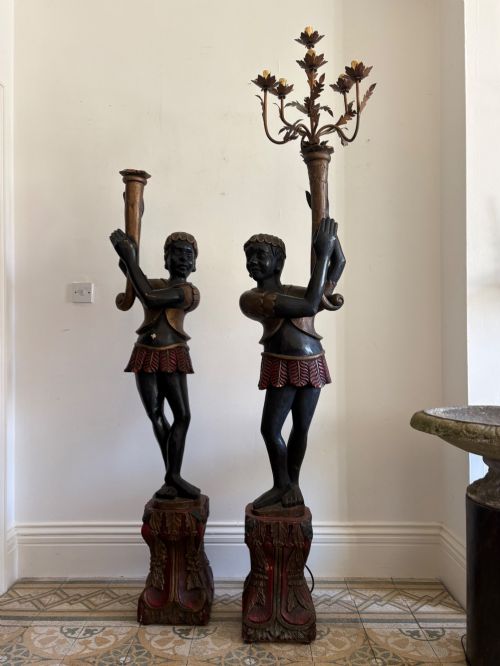
The selection includes English country house designs alongside continental Italian and French Empire pieces. Such variety reflects how different periods adapted the basic column or figural stand to suit changing domestic tastes.
How they were made
Carvers shaped these stands from solid timbers such as mahogany, walnut, lime wood, and macassar ebony using traditional hand tools. Artisans turned shafts on lathes and carved detailed capitals, bases, and figural elements by hand.
Many surfaces received applied gesso, gilding, or polychrome paint to enhance the sculptural carving, particularly on Venetian and Baroque examples. Joinery combined pegged mortise and tenon construction with turned threads to secure multi-part columns safely.
Wooden Pedestal Torchiere Retail Price Guide 2026
Typical asking prices for wooden pedestal torchiere among the pieces listed under this phrase on Sellingantiques today, from the lower quarter to the upper quarter. They describe what is for sale here now, not the wider market.
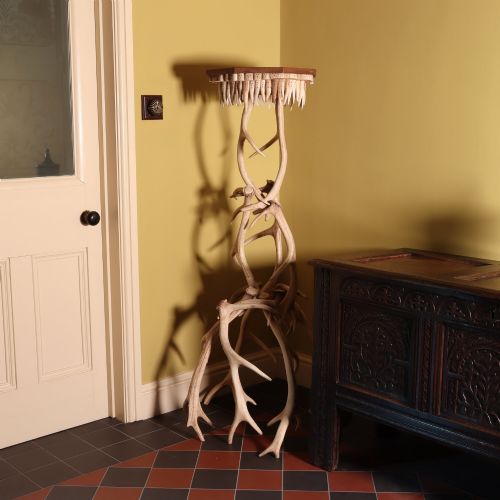
A taxidermy antler stand brings woodland wildness straight into the formal drawing room.
What varies in quality
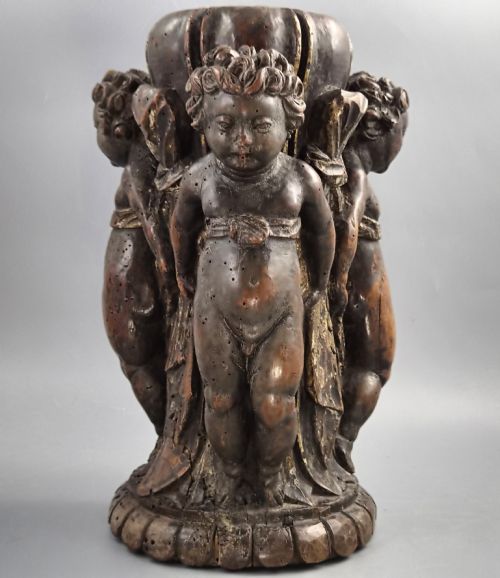
The depth and crispness of the wood carving distinguish exceptional standards from simpler production, particularly where figures, putti, or foliage decorate the shaft. Master carvers achieved naturalistic movement and deep undercut details that catch the light.
Choice of timber grain and the integrity of the structural core determine longevity, as tall slender stands require stable balancing bases to prevent tipping. Superior examples utilise dense, well-seasoned hardwoods with precise turning and original surface finishes.
The Wooden Pedestal Torchiere Glossary
- Gesso
- A plaster-based material applied to wood surfaces to create a smooth layer for subsequent gilding or painting. Artisans could carve and stamp intricate relief patterns directly into this ground.
- Putti
- Depictions of small winged infants or cherubs frequently carved onto Baroque and Venetian furniture bases. They add a theatrical and sculptural dimension to the supporting column.
- Macassar Ebony
- A heavily figured exotic hardwood showing dark brown and warm golden stripes. Cabinetmakers utilised this timber during the Art Deco period to create striking contrast and surface pattern.
Wooden Pedestal Torchiere: Frequently Asked Questions
What is a wooden pedestal torchiere used for?
These tall stands support table lamps, heavy bronze figures, or art pottery to create vertical interest in a room. They place display items at eye level away from standard tabletops.
Historically, they provided elevated illumination in dark corners of grand reception rooms. Today, they function primarily as sculptural furniture that frames architectural corners or empty wall spaces.
How do I spot a Georgian style torchiere?
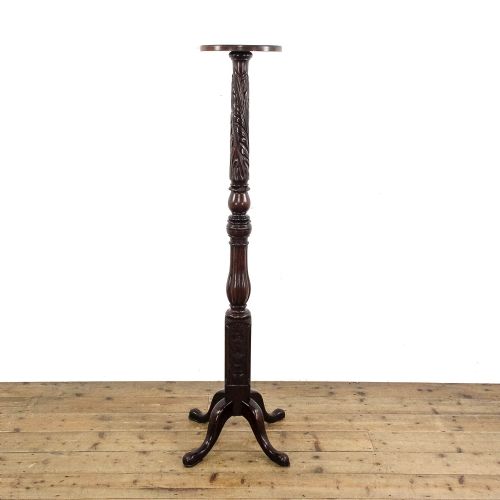
Georgian style stands typically feature classical proportions with fluted mahogany columns, acanthus leaf carving, and tripod pad feet. The woodwork emphasises clean architectural lines derived from ancient orders.
Later Victorian and 20th-century revivals often copy these proportions closely. Examining the timber maturity and construction joints helps determine whether a piece is period or a later interpretation.
Where should I place a tall torchiere stand?
Tall stands sit best in corners, flanking doorways, or framing large pieces of furniture where vertical height balances low seating. They require stable floor surfaces to prevent accidental tipping due to their high centre of gravity.
Ensure the placement keeps wiring for integrated lamps safe and hidden along the base. A clear perimeter allows the carved details and timber grain to remain fully visible.
Are these stands stable enough for heavy items?
Most antique stands use heavy timber bases and weighted internal construction to support standard loads like bronze sculptures or heavy lamps safely. However, slender figural stems require careful placement away from busy walkways.
Checking the width of the foot print relative to the overall height gives a good indication of physical stability. Solid wood tripod bases generally offer reliable support for balanced display objects.