



Wooden Mosaic Box
These wooden mosaic box pieces are intricate works of micro-mosaic and marquetry that collectors treasure for their painstaking craftsmanship and geometric precision.
Wooden Mosaic Box
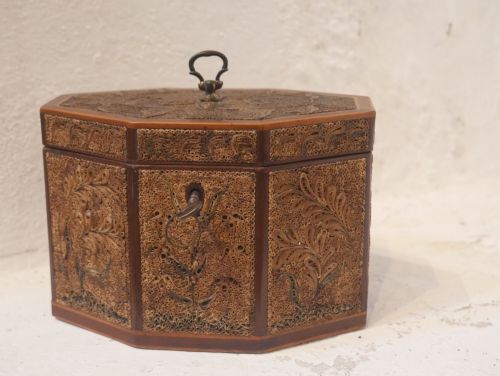
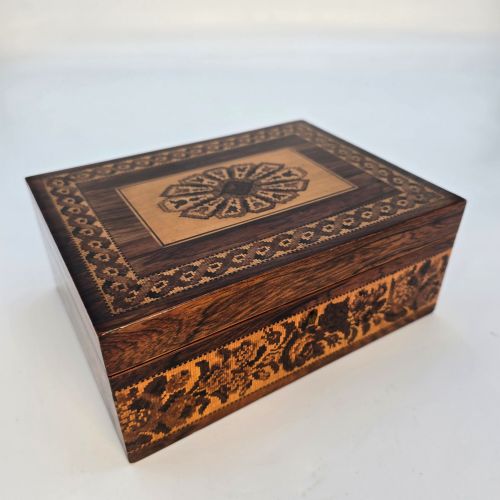
When you search for a wooden mosaic box, you encounter pieces that range from tea caddies and stationery boxes to sewing boxes and trinket boxes. The version you are most likely to meet on this page is a Victorian example of Tunbridge Ware, often fashioned from rosewood or walnut and detailed with elaborate inlaid geometric motifs.
The objects span periods from the eighteenth century through the Victorian era up to the early twentieth century, taking forms such as glove boxes, cribbage boxes, and travelling inkwells. Alongside English Tunbridge Ware, the selections include Anglo-Indian carved wood and bone pieces, nineteenth century Italian pietra dura mounted boxes, and Persian Khatamkari items.
These items served domestic and social functions in period interiors, housing everything from tea leaves and correspondence to sewing implements and jewellery. Their survival depends on the stability of the timber foundations and the secure adhesion of thousands of tiny mosaic tesserae.
How they were made
Craftsmen constructed these boxes using solid timbers and veneers such as rosewood, walnut, boxwood, and holly, frequently incorporating brass fittings and bone highlights. The makers assembled tiny wood blocks of various natural colours into complex mosaics, slicing them thinly to create repeating pictorial bands and geometric veneers.
Surfaces were meticulously smoothed and polished to highlight the natural tones of the diverse woods without relying on artificial stains. Structural carcass work involved precise joinery to house delicate sliding lids, fitted interior compartments, and compartments for specific desk or needlework accessories.
Wooden Mosaic Box Retail Price Guide 2026
Typical asking prices for wooden mosaic box among the pieces listed under this phrase on Sellingantiques today, from the lower quarter to the upper quarter. They describe what is for sale here now, not the wider market.
Listings feature Victorian Tunbridge Ware alongside eighteenth-century pieces, nineteenth-century Italian pietra dura mounts, and Persian Khatamkari boxes.
What varies in quality
The distinction between the finest examples and simpler pieces lies in the density and ambition of the mosaic work, where multi-panel pictorial views or complex perspective cubes demand far greater skill than repeating geometric borders. The precision of the individual tesserae and the completeness of the internal fittings dictate the standing of a piece.
Makers identified with specific workshops, such as Edmund Nye or Henry Hollamby, achieved a level of refinement in their Tunbridge Ware panels that elevates their output. The choice of base timber, such as burr walnut or figured rosewood, combined with the crispness of the retained interior linings, separates standard utility boxes from exceptional collectors pieces.
Edmund Nye·Henry Hollamby
The Wooden Mosaic Box Glossary
- Tunbridge Ware
- A distinct type of decorative woodwork originating from Tunbridge Wells, characterised by mosaic veneer formed from thousands of tiny wood blocks to create pictures or geometric patterns. It reached its height of popularity during the nineteenth century.
- Marquetry
- The art and craft of applying pieces of veneer to a structure to form decorative designs, maps, or ornaments. In these boxes, it often frames the central mosaic panels.
- Pietra Dura
- An inlay technique using cut and fitted polished coloured stones to create images. Boxes featuring this method mount the stone plaques directly into the wooden lid.
- Tesserae
- The individual small blocks of wood or other materials assembled together to form the mosaic pattern. Their microscopic scale defines the intricacy of the box.
- Khatamkari
- A Persian version of marquetry craftsmanship involving delicate geometric tiling made from bone, metal, and various woods. It decorates items such as tissue boxes.
Wooden Mosaic Box: Frequently Asked Questions
What is a wooden mosaic box?
A wooden mosaic box is a decorative container embellished with tiny wood segments arranged to form geometric patterns or pictorial scenes. These pieces were produced primarily in nineteenth-century England, notably in Tunbridge Wells, alongside international variants.
They served various domestic purposes, functioning as tea caddies, stationery desks, glove receptacles, and sewing companions. Their appeal lies in the astonishing microscopic precision of the timber tesserae.
How do I identify Tunbridge Ware?
Tunbridge Ware is recognised by its characteristic mosaic veneer depicting floral motifs, geometric bands, or famous castles constructed from naturally coloured woods. The absence of painted colour is key, as makers relied entirely on the natural hues of species like holly, barberry, and plum.
Many finer examples carry labels or stamps relating to prominent makers such as Edmund Nye or Henry Hollamby. The intricacy of the perspective cubes on the lid edges also points toward genuine nineteenth-century production.
How should I care for my box?
Keep wooden mosaic boxes away from direct sunlight and dramatic fluctuations in temperature or humidity to protect the delicate timber tesserae. Excessive dryness can cause the tiny wood blocks to shrink and loosen from their base.
Dust them gently with a soft, dry cloth rather than applying liquid polishes or modern cleaning agents. Maintaining a stable indoor climate ensures the historic veneer and original polish remain secure.