


Wooden Merchant Chest
These wooden merchant chest examples bring utilitarian organisation and robust timber construction into a room.
Wooden Merchant Chest
A wooden merchant chest encompasses multi-drawer storage cabinets, banks of drawers, and trunks originating from the eighteenth, nineteenth, and twentieth centuries. Buyers seeking this category encounter pieces intended for commercial, domestic, or maritime storage use.
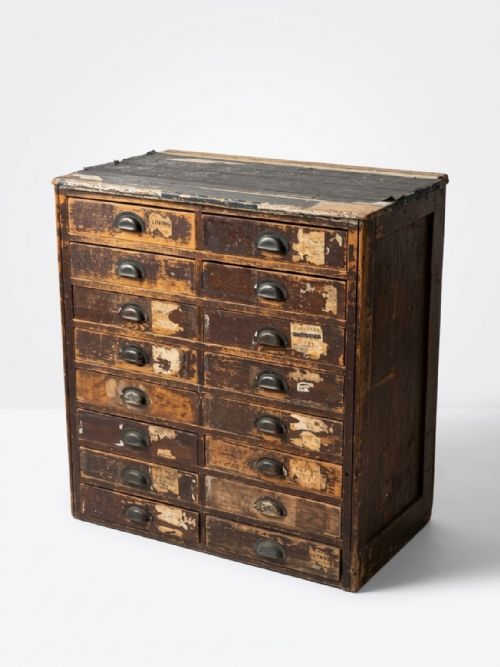
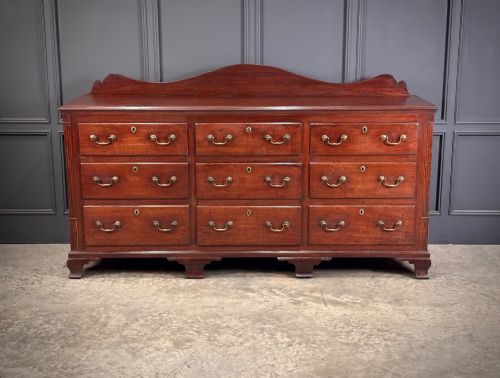
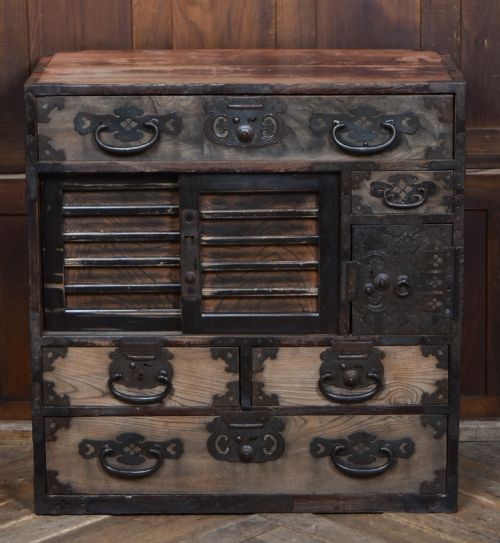
The selection ranges from large eighteenth century mahogany banks of drawers and Victorian chemist shop fittings to Japanese tansu chests in keyaki, cedar, elm, and kiri wood. European drapers chests and teak merchants trunks also appear frequently.
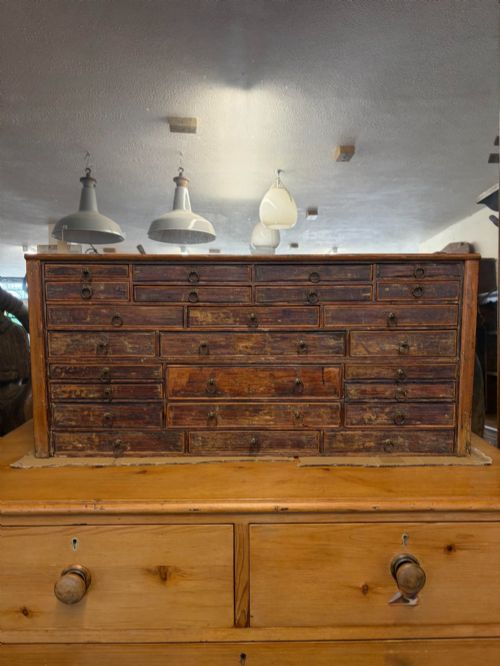
Forms span from tall watchmakers cabinets with numerous small drawers to heavy iron-banded strongboxes and wheeled kuruma-dansu. Each object reflects the specific filing, mercantile, or travel requirements of its original makers.
Materials and construction methods
Construction relies upon dense hardwoods and durable softwoods including mahogany, teak, pine, walnut, cedar, elm, and keyaki. Cabinetmakers joined carcases using traditional joinery suited to heavy daily use.
Metal reinforcement is common, utilising brass bindings, iron bands, and wrought iron hardware to protect corners and secure lids on trunks and strongboxes. Lacquer and polished finishes appear on specific regional variants such as red lacquered tansu chests.
Internal configurations vary from banks of twenty-five or sixty-six small drawers to large open compartments and fitted trunk interiors. Drawer construction employs tightly fitted wooden panels designed to slide within cabinetry frames.
Materials span iron, brass, pine, mahogany, cedar, wrought iron, glass, walnut, rosewood, and keyaki wood.
Distinctions in build and preservation
Quality rests upon the integrity of the timber framing, the density of the chosen wood, and the survival of original hardware like brass handles and iron banding. Heavier timbers and substantial carcase construction indicate robust utility.
The preservation of original surface finishes, whether polished walnut, red lacquer, or weathered teak, determines the physical character of a piece. Smooth drawer operation within large banks of drawers reflects precise initial joinery.
Completeness of original internal dividers, backboards, and locking mechanisms separates standard utility items from well-preserved examples. Regional specificity in Japanese tansu or European shop fittings adds distinct technical interest.
Luxmore's of Ilfracombe
The Wooden Merchant Chest Glossary
- Tansu
- A traditional Japanese mobile or stationary storage cabinet built from woods like keyaki, cedar, or kiri. These pieces often feature multiple sliding doors and internal drawers.
- Bank of drawers
- A large cabinet containing numerous small drawers designed for organising merchandise, watch parts, or shop stock. Examples range from Victorian chemist fittings to drapers chests.
- Kuruma-dansu
- A Japanese wheeled chest produced during the nineteenth century for ease of transport during fires or relocation. The wheels are typically integrated directly beneath the wooden frame.
- Zenibako
- A traditional Japanese wooden money box used by merchants for safely storing coin currency. These compact boxes often feature reinforced corners and secure internal compartments.
- Strongbox
- A heavily reinforced iron and wood chest designed for secure storage of valuables and documents. These pieces rely on thick timber walls overlaid with iron bands.
Wooden Merchant Chest: Frequently Asked Questions
What is a tansu chest?
A tansu chest is a traditional Japanese storage cabinet constructed from woods such as cedar, elm, or keyaki. These pieces were utilised in homes and shops for organising clothing, documents, and household goods.
Many examples feature multiple internal drawers and sliding panels tailored to specific domestic or mercantile storage tasks.
How were merchant chests used?
Merchant chests served as secure storage for valuable inventory, textiles, documents, and currency in shops and offices. Multi-drawer units organised small stock items like hardware or watch parts.
Trunks and strongboxes provided durable containment for transport during travel by ship or overland routes.
What woods were used for these chests?
Cabinetmakers selected dense and durable woods including mahogany, teak, walnut, pine, cedar, and elm. Regional preferences determined the choice, such as keyaki and kiri in Japanese tansu construction.
Iron and brass components reinforced the timber frames against heavy wear and structural strain.
How do I date a wooden merchant chest?
Dating relies upon examining the construction techniques, timber species, hardware styles, and overall form. Eighteenth-century pieces often display heavy mahogany carcases and hand-cut joinery.
Nineteenth and early twentieth-century examples frequently include shop fittings, drapers chests, and Japanese tansu cabinets with specific regional metalwork.