
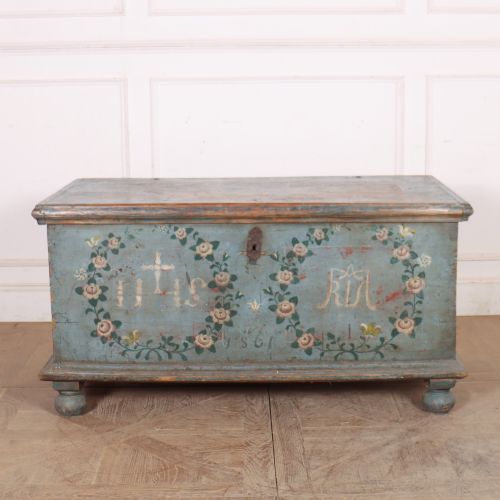


Wooden Marriage Coffer
A wooden marriage coffer is a traditional storage chest once given as a wedding gift, prized for holding household linens and personal wealth.
Wooden Marriage Coffer
A wooden marriage coffer is a substantial storage piece commissioned or given to mark a wedding, taking forms such as dome top chests, mule chests with drawers, and flat blanket boxes. The version you are most likely to meet on this page is a painted pine box from the nineteenth century, often originating from Sweden or Hungary.
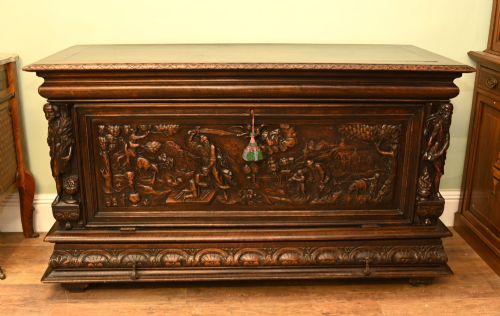
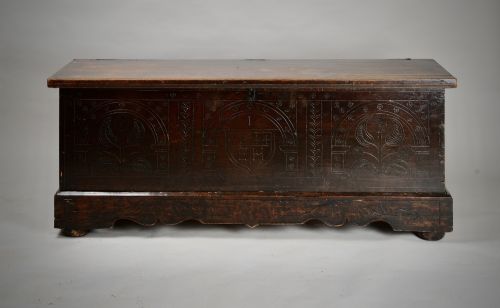
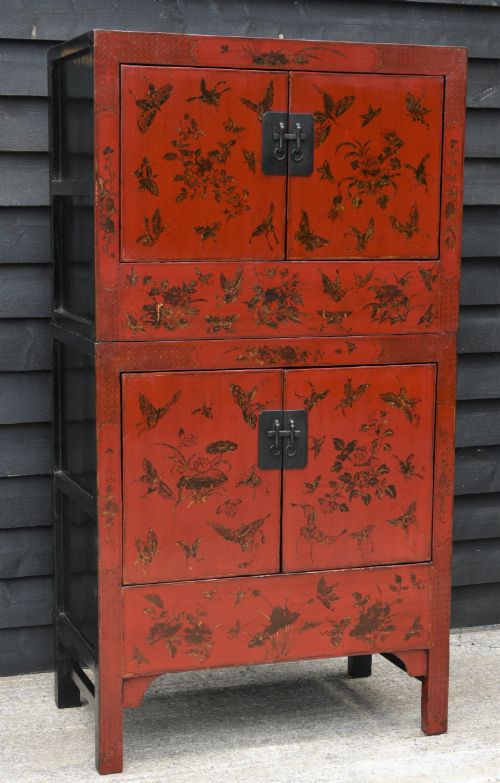
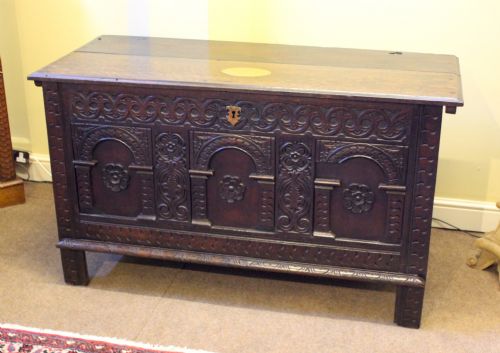
Beyond the Scandinavian and Hungarian examples, these pieces span seventeenth century English oak, Italian walnut cassones, Spanish blanket chests with Moorish decoration, and Chinese red lacquered cabinets. Their shared purpose was the safe transport and storage of a bride's dowry.
The styles range from folk art and Scandinavian country to Jacobean carved oak and Italian Renaissance. Each regional workshop brought local custom to the construction, resulting in varied proportions and decorative motifs.
Judging Quality
Quality rests in the integrity of the timber, the skill of the joinery, and the preservation of the original surface decoration. Pieces retaining their early paintwork or original forged iron hardware stand above those with stripped surfaces or replaced components.
The finesse of the hand-carving or the precision of the painted folk art motifs separates standard utility pieces from exceptional workshop examples. Proportion, structural soundness, and the survival of interior compartments further distinguish the finer pieces.
Several Swedish marriage chests bear painted initials and wedding dates, preserving the exact moment two households merged over a century ago.
The Wooden Marriage Coffer Glossary
- Cassone
- A traditional Italian chest, typically large and ornate, used for storing a bride's trousseau. These often feature walnut, carving, or gilt decoration.
- Mule Chest
- A chest featuring one or more drawers beneath the main storage compartment. This form emerged in the seventeenth and eighteenth centuries to provide easier access to stored textiles.
- Dome Top
- A curved lid construction designed to shed water and increase internal capacity. This shape is frequently found on nineteenth century Scandinavian painted coffers.
- Dowry Chest
- A container designated for holding the property, money, and linens a bride brought into a marriage. They were often marked with initials, dates, or marriage motifs.
- Folk Art
- Decorative work produced within a traditional community culture, relying on local styles rather than academic training. On these coffers, it appears as hand-painted floral and geometric patterns.
Wooden Marriage Coffer: Frequently Asked Questions
What were wooden marriage coffers used for originally?
These chests served to transport and store the textiles, household linens, and valuables that made up a bride's dowry. Placed in the main living quarters, they also functioned as seating and displayed the wealth of the newly established household.
Over time, they remained in the family home to store winter blankets and important documents. Their sturdy construction ensured contents stayed protected from dampness and pests.
How do I care for a painted wooden coffer?
Keep the piece away from direct sunlight and sources of heat to prevent the pine or oak from drying out and the old paint from flaking. Dust gently with a dry cloth and avoid modern chemical polishes that can damage historic surfaces.
Maintain a stable room humidity to protect both the wood and any iron hardware from corrosion. Wax can be applied sparingly to unpainted wooden sections to nourish the grain.
How do I tell an 18th century coffer from a 19th century one?
Earlier pieces from the seventeenth and eighteenth centuries generally rely on solid oak, hand-carved panels, and pegged joinery rather than mass-produced fasteners. Their decoration tends toward architectural mouldings, inlay, or dark patinated finishes rather than bright folk art pigments.
Nineteenth century examples, particularly from Scandinavia and Hungary, more commonly feature soft pine construction and vibrant hand-painted floral or geometric surfaces. Regional construction methods and tool marks also offer clues to the date of manufacture.
Can I use a marriage coises as a coffee table?
Flat-topped blanket boxes and low coffers can serve as coffee tables if the height and surface area suit your seating arrangement. Ensure the lid is structurally stable and support any weight placed on top without straining old hinges.
Consider placing a tray on the surface to protect the historic wood or painted finish from rings and spills. Dome top versions are less suitable for this function due to their curved lids.