






Wooden Maritime Object
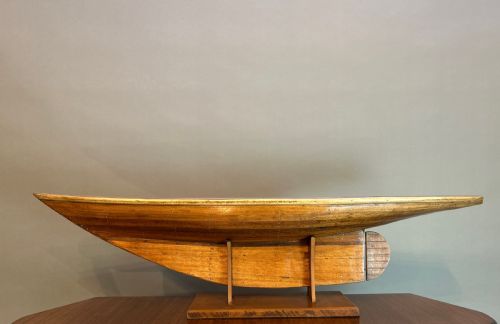
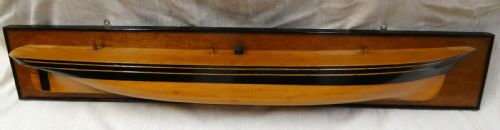
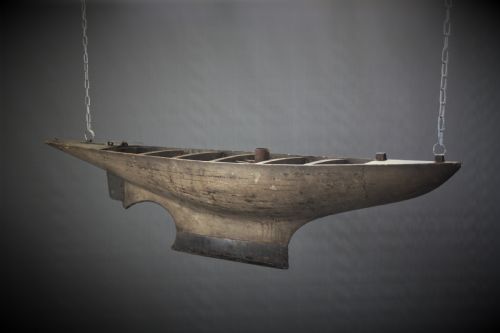
A wooden maritime object carries the salt of the sea, taking the form of pond yacht hulls, dioramas, and ship's blocks crafted to work or display.
Wooden Maritime Object
A wooden maritime object encompasses a diverse collection of items connected to the sea, spanning from model boats and sailing ship dioramas to scientific instruments and sailors' tools. When searching for a wooden maritime object, buyers encounter pieces that range from utilitarian ship components to decorative folk art models.
The selections available lean heavily towards model pond yachts, framed dioramas, and functional timber rigging blocks like pulleys. These items originate from periods including the Georgian era, the nineteenth century, and the early twentieth century.
How they were made
Construction relies primarily on timber, utilising woods such as oak and elm for heavy-duty ship blocks alongside various woods for scratch-built hulls. Metal components like brass and lead appear alongside paint, glass, and canvas to complete models, dioramas, and navigational instruments.
Techniques range from the carvel hull construction of pond yachts to the intricate assembly of multi-masted sailing ship dioramas. Artisans and sailors shaped these materials by hand, producing carved items like sailors' fids and detailed scratch-built vessels.
Wooden Maritime Object Retail Price Guide 2026
Typical asking prices for wooden maritime object among the pieces listed under this phrase on Sellingantiques today, from the lower quarter to the upper quarter. They describe what is for sale here now, not the wider market.
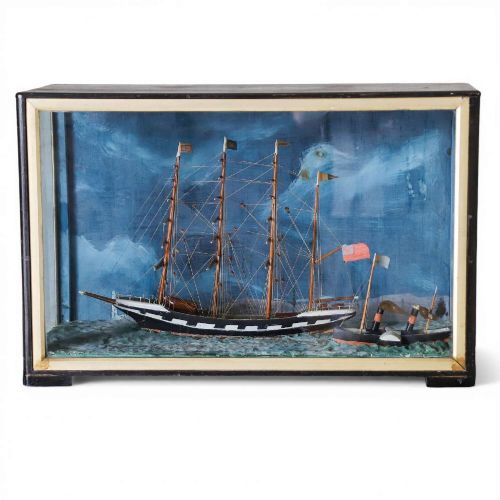
A tiny wooden ship sits patiently inside its box, forever riding a painted Turner-esque wave without ever getting anyone's feet wet.
What varies in quality
Quality in these pieces rests upon the precision of the hand construction and the fidelity of the maritime detail. Scratch-built models with carvel hulls and detailed rigging demonstrate higher levels of maker skill compared to simpler decorative models.
The integrity of the original materials, whether aged elm in a pulley block or intact painted surfaces on a pond yacht hull, dictates the overall character of the piece. Preservation of original canvas, glass, and brass fittings further distinguishes standard decorative items from finer folk art examples.
The Wooden Maritime Object Glossary
- Carvel hull
- A boat building method where hull planks are laid edge-to-edge flush against each other on a frame. This technique provides a smooth exterior surface seen on traditional pond yachts.
- Pond yacht
- A model sailing boat designed for recreational sailing on park lakes and ponds. These are typically ballasted with lead to keep them upright in the wind.
- Fid
- A tapered conical tool carved from wood, traditionally used by sailors for separating strands of rope during splicing. They are straightforward utilitarian maritime objects.
- Diorama
- A three-dimensional scene enclosed in a box or case, often depicting a sailing ship set against a painted Turner-esque seascape or constructed with shellwork.
- Fiddle block
- A type of ship's pulley featuring two sheaves of different sizes mounted in tandem within a single wooden shell. Elm and oak were commonly used for these working items.
Wooden Maritime Object: Frequently Asked Questions
What is a wooden maritime object?
A wooden maritime object is any artefact made primarily of timber that relates to ships, navigation, or seafaring life. This category includes working ship parts, scientific instruments, and decorative models.
Items range from utilitarian oak and elm pulley blocks to intricate nineteenth-century dioramas and pond yacht hulls. Each piece reflects the maritime heritage of its period.
How were old pond yachts used?
Old pond yachts were built for recreational sailing on lakes and ponds by hobbyists and enthusiasts. Owners trimmed the sails and launched them, letting the wind carry them across the water.
Because they were functional toys rather than static displays, many bear the marks of active use on the water. Their lead ballast kept them stable during these sailing sessions.
What are ship dioramas made from?
Ship dioramas combine carved wooden model ships with painted backgrounds, often depicting dramatic seascapes. Some examples incorporate canvas, glass, and natural elements like shells to create a detailed three-dimensional scene.
Craftsmen enclosed these miniature views in wooden shadow boxes to protect the delicate rigging and painted surfaces from dust and damage.
How do I identify a Georgian compass?
A Georgian travelling compass or sundial is identified by its period-specific construction, materials, and mechanical layout. These pocket instruments combine brass components with fitted wooden or leather-covered cases.
Examining the craftsmanship of the dial face and the style of the casing helps date the instrument to the eighteenth or early nineteenth century.
What is a sailors fid used for?
A sailor's fid is a traditional hand-carved wooden tool used primarily for rope work and rigging maintenance aboard ship. Sailors utilised the tapered shape to open the strands of heavy cordage for splicing.
These functional objects were often shaped from dense hardwoods by the sailors themselves during long voyages at sea.