




Wooden Lowboy Desk
A wooden lowboy desk brings compact, graceful proportions and useful drawer storage to a room.
Wooden Lowboy Desk
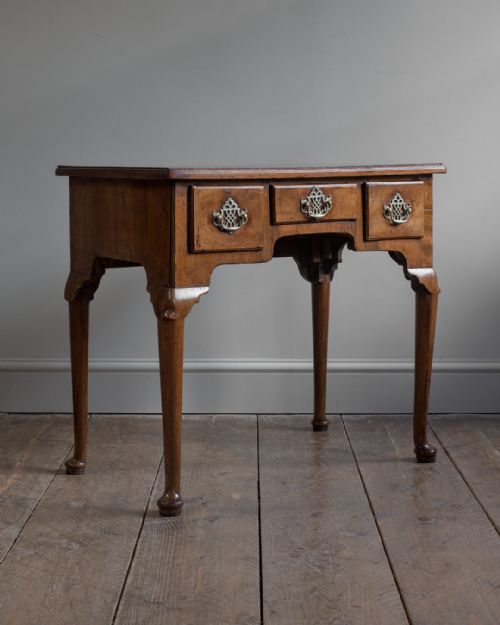
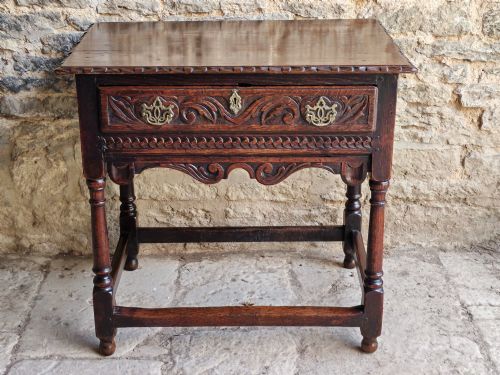
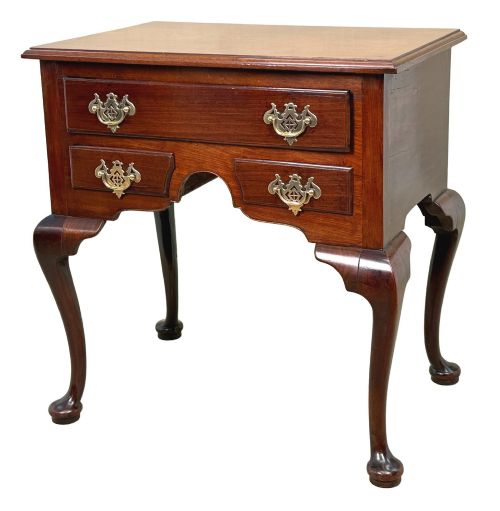
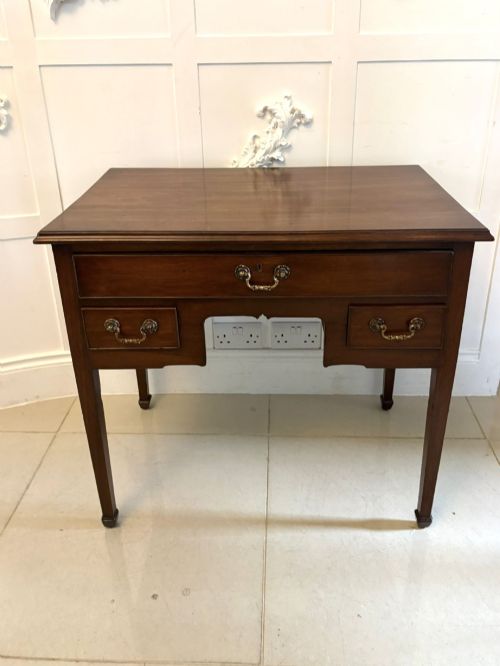
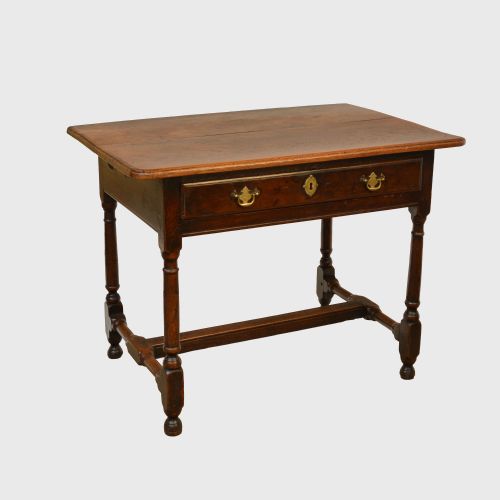
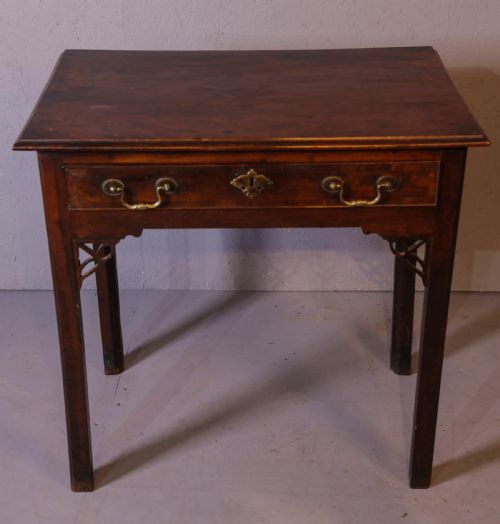
When searching for a wooden lowboy desk, collectors encounter low tables designed with drawers, historically utilised for dressing or correspondence. The pieces listed on this page span the eighteenth century, the Georgian period, and the nineteenth century, alongside later revival pieces.
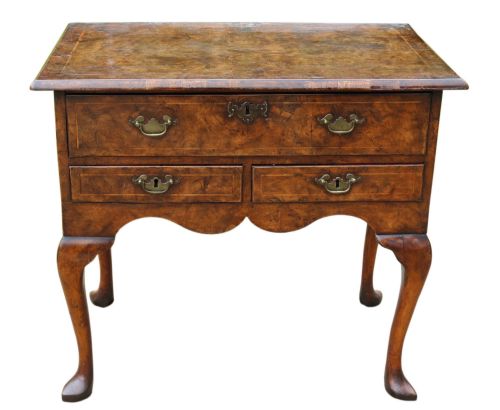
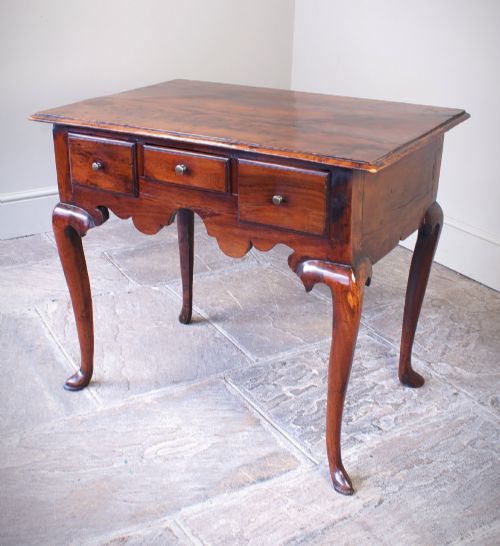
The most common forms on this page include eighteenth-century examples in oak, walnut, and mahogany, as well as country pieces in elm, yew, and fruitwood. These tables typically feature cabriole legs or straight wood-turned legs with stretchers.
Makers and workshops range from country cabinet makers using native timbers to formal city workshops employing quarter veneering and featherbanding. Buyers find both simple provincial side tables and refined Georgian examples.
What varies in quality
The selection of timber dictates much of the visual appeal, with highly figured burr veneers and rich fruitwood grains standing apart from plain utility boards. Crispness in the carving of cabriole legs and the finesse of drawer linings separate provincial pieces from master workshops.
Proportion and surface patination define the upper tier of these tables. Original brass hardware, uncompromised timber colour, and balanced drawer arrangements elevate a piece beyond standard utilitarian examples.
Wooden Lowboy Desk Retail Price Guide 2026
Typical asking prices for wooden lowboy desk among the pieces listed under this phrase on Sellingantiques today, from the lower quarter to the upper quarter. They describe what is for sale here now, not the wider market.
Listings feature eighteenth-century and Georgian pieces alongside nineteenth-century examples, constructed in mahogany, oak, walnut, elm, yew, and fruitwood.
Shoolbred and Co
The Wooden Lowboy Desk Glossary
- Lowboy
- A small table with one or more drawers, standing on relatively tall legs. These pieces typically served as dressing tables or writing desks in domestic settings.
- Quarter veneered
- A method of arranging four matching veneer slices cut from the same log to create a symmetrical pattern on a tabletop.
- Featherbanding
- A delicate inlay technique using narrow bands of veneer laid in a herringbone pattern around the edge of a drawer or top.
- Cabriole leg
- A furniture leg that curves outward and then tapers inward, frequently ending in a pad foot.
- Stretcher
- A horizontal support connecting the legs of a table to provide structural rigidity.
Wooden Lowboy Desk: Frequently Asked Questions
What is a lowboy desk?
A lowboy desk is a small, low table featuring one or more drawers beneath the working surface. They were historically placed in bedrooms and parlours for personal correspondence or grooming.
Today, buyers use them as compact writing desks, hallway tables, or decorative side tables in smaller rooms.
How old are these tables?
The examples on this page primarily date from the eighteenth century and the Georgian era, with some nineteenth-century pieces and later revival items included.
Dates are determined by timber species, construction methods, hardware styles, and overall regional design characteristics.
What timbers were used?
Cabinet makers utilised a variety of woods depending on the region and period. Mahogany, walnut, and oak were common in formal settings, while country makers worked with elm, yew, fruitwood, and burr walnut.
Fined-grained native timbers often display rich patination developed over centuries of use.
Where should I place one?
Because of their modest depth and shallow height, these tables fit easily into narrow hallways, bedrooms, or living spaces.
They function well as writing surfaces, display tables for lamps, or standalone accent pieces against a wall.