



Wooden Library Stairs
Wooden library stairs are functional ascents built for high shelves, combining rich timbers and clever folding designs that collectors prize for home studies.
Wooden Library Stairs
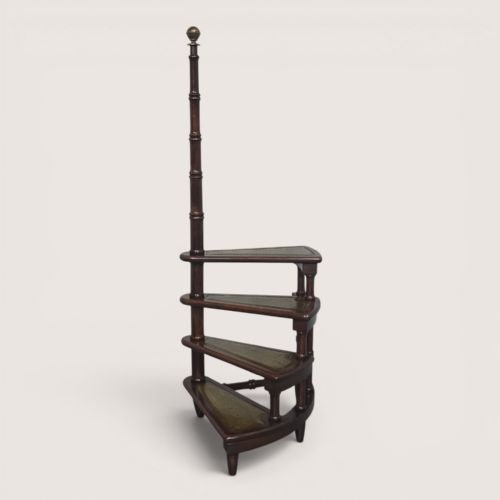
Wooden library stairs encompass library steps, bed steps, and library ladders designed to reach elevated domestic volumes. The pieces on this page span the eighteenth, nineteenth, and early twentieth centuries, showing how domestic spaces adapted to floor-to-ceiling shelving over generations.
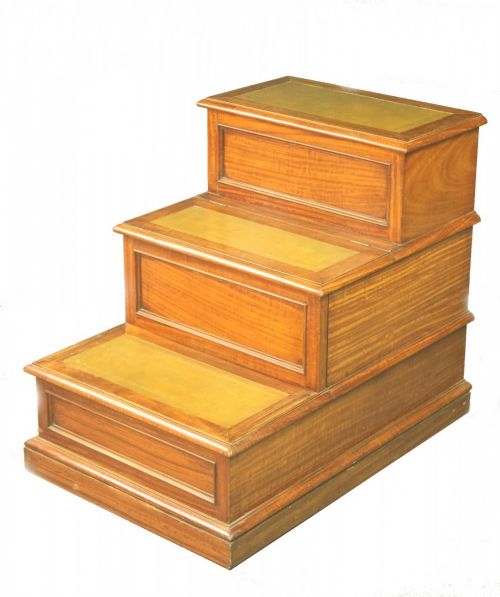
Most items you encounter here are freestanding staircase forms in mahogany or oak, alongside occasional specialised formats such as spiral configurations and satinwood bed steps. These examples reflect styles ranging from Georgian restraint to Victorian exuberance and Gothic Revival.
Makers produced these ascents in various heights, from compact tiered bed steps intended for high eighteenth-century sleeping berths to tall ladders suited for institutional and domestic galleries. The survival of leather treads and brass fittings on many examples indicates their continued utility in private libraries.
How they were made
Cabinetmakers constructed these ascents primarily using dense hardwoods like mahogany, oak, and satinwood, occasionally incorporating pine for secondary framing or taller ladders. Selected timbers provided the structural rigidity required for weight-bearing steps while showing off rich natural grain patterns.
Workshops integrated tactile details such as tooled leather inserts on treads to prevent slipping and brass hinges or rods for folding mechanisms. Turned supports and carved structural elements appeared across Victorian and Edwardian iterations, balancing utility with decorative ambition.
Wooden Library Stairs Retail Price Guide 2026
Typical asking prices for wooden library stairs among the pieces listed under this phrase on Sellingantiques today, from the lower quarter to the upper quarter. They describe what is for sale here now, not the wider market.
The listings here feature pieces spanning the 18th Century, 19th Century, and 1920s, constructed in mahogany, oak, pine, and satinwood.
What varies in quality
Quality rests in the architectural ambition of the frame, distinguishing straightforward utilitarian ladders from sophisticated multi-tier folding steps or spiral configurations. The inclusion of original leather treads and high-status secondary woods like satinwood elevates an example above standard utility pieces.
The sophistication of the joinery and turning dictates the refinement of the piece, where crisp execution on structural supports demonstrates superior workshop standards. Finer items maintain proportional harmony across their steps and handholds, reflecting the deliberate hand of a skilled cabinetmaker.
The Wooden Library Stairs Glossary
- Tread
- The horizontal surface of a step upon which the foot rests. Many library examples feature inset leather panels.
- Bed steps
- A compact set of tiered steps originally designed to help people climb into high historical beds. These often double as library steps.
- Gothic Revival
- An architectural and decorative style drawing on medieval forms. Pieces in this idiom feature pointed arches and heavy structural proportions.
- Satinwood
- A luminous hardwood with a golden sheen utilised for fine furniture trim and specialised steps. It provides a striking contrast to darker timbers.
Wooden Library Stairs: Frequently Asked Questions
How were wooden library stairs used?
These steps and ladders provided safe access to high bookshelves in private studies and grand home libraries. Users climbed them to retrieve heavy bound volumes stored near ceilings.
Many designs incorporated folding mechanisms or disguised themselves as small furniture items when not in active service. This allowed homeowners to maximise vertical storage without cluttering the floor space.
How do I date wooden library stairs?
Dating relies on identifying timber choices, construction techniques, and stylistic markers such as Gothic Revival motifs or Georgian proportions. Specific periods like the eighteenth century favour mahogany and restrained lines.
Later Victorian and Edwardian examples often introduce machine-tooled elements or alternative woods like pine and oak. Comparing the turnings and hardware helps place the piece within its decade of manufacture.
What is the difference between steps and ladders?
Library steps feature flat, horizontal treads set within a self-supporting staircase frame, often with handrails or tiered boxes. They offer stable, stair-like ascent.
Library ladders are taller, single-plane structures designed to lean against bookshelves or walls. They require more balance to climb and suit restricted floor spaces.
Where should I place library stairs at home?
These pieces fit naturally beside tall bookcases, high windows, or architectural shelving units in a study or living room. Their sculptural timber forms make them effective display stands for plants or objects.
Smaller bed steps function well as bedside tables or standalone accent furniture. Taller ladders suit narrow gaps where vertical interest is needed.