



Wooden Ladder Back
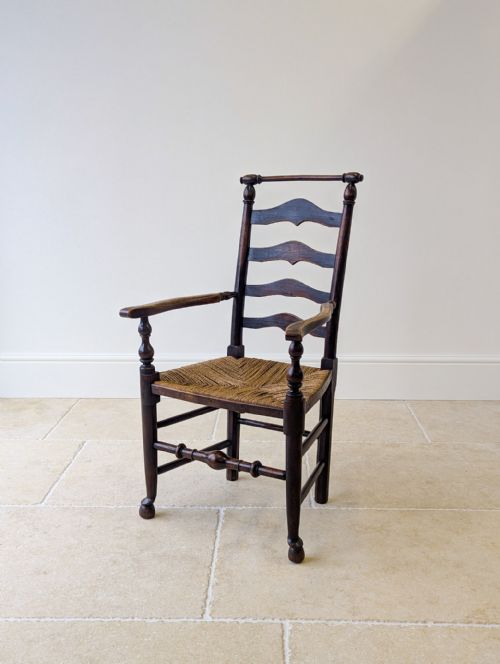
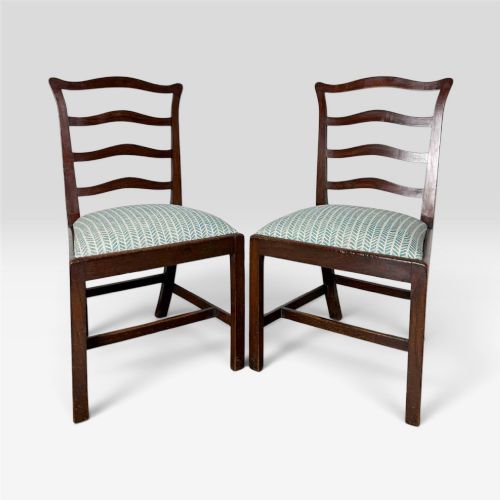
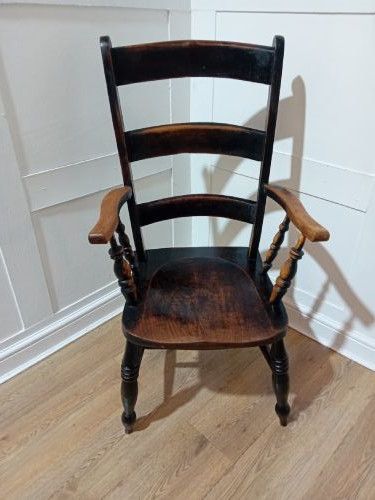
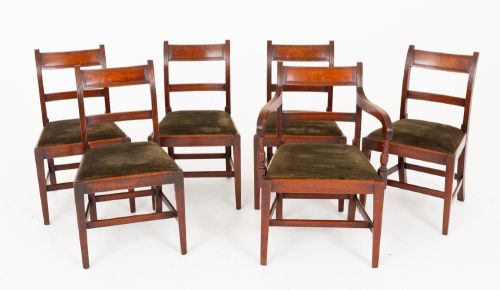
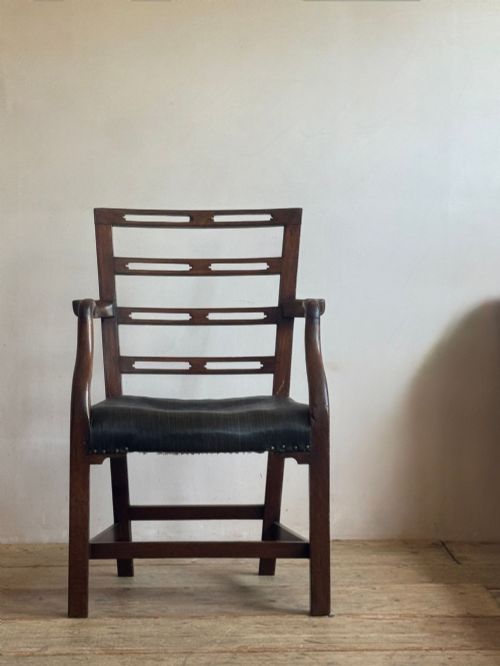
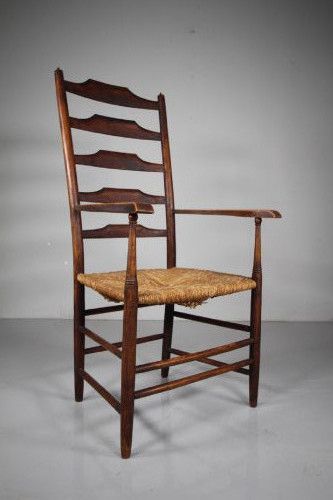
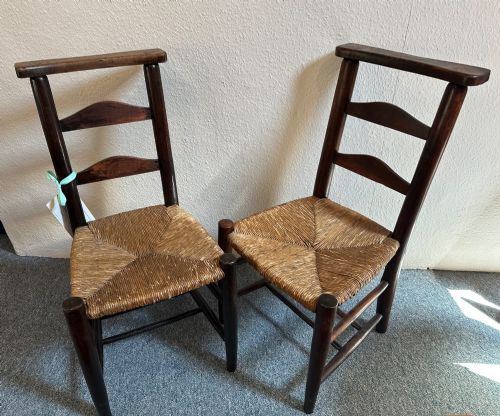
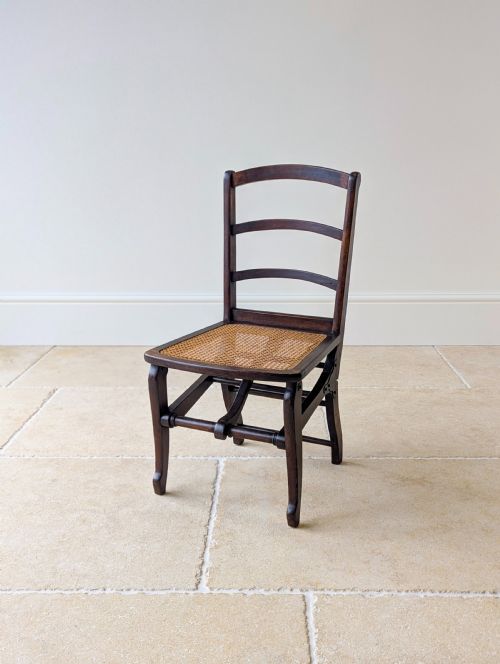
A wooden ladder back brings tactile vernacular charm and honest construction to interiors through horizontal slats and woven seating.
Wooden Ladder Back
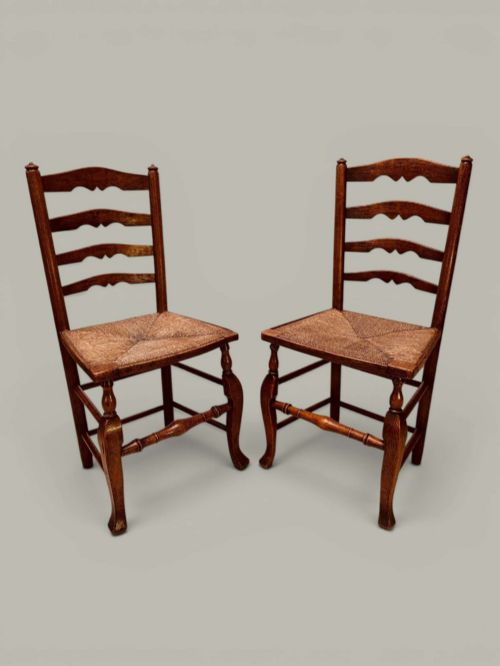
Wooden ladder back seating spans utilitarian country forms to formal Georgian and Arts and Crafts iterations. Buyers encounter regional English, French, and American examples dating from the eighteenth century through the early twentieth century.
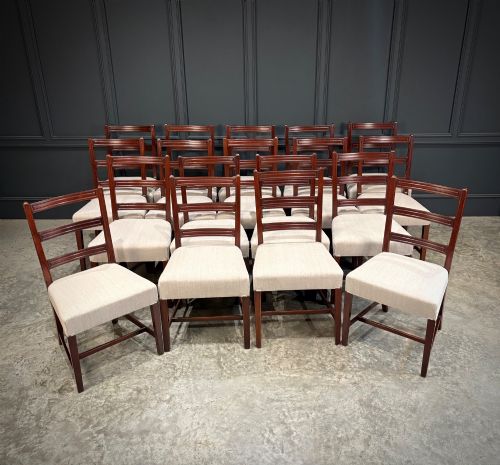
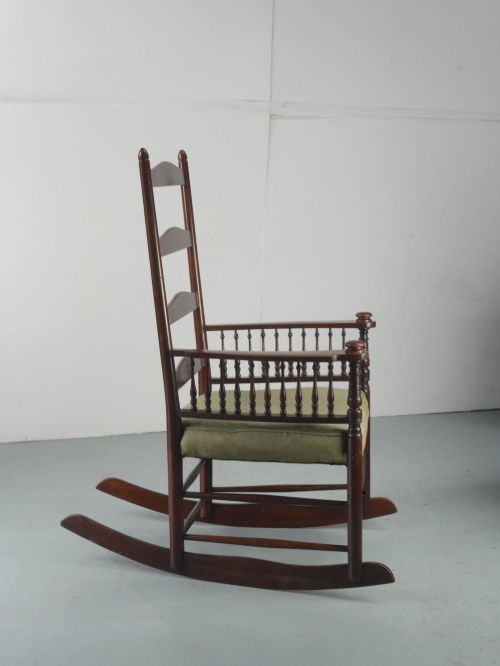
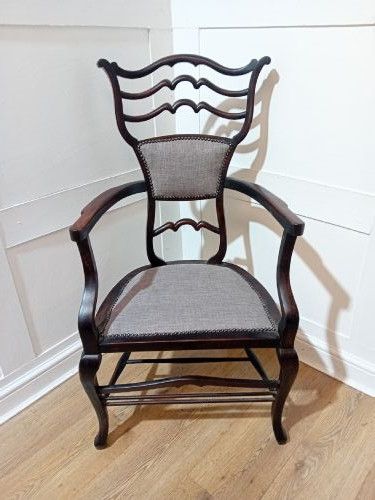
The inventory on this page includes single side chairs, expansive dining sets, armchairs, rockers, high chairs, and settees. Ash, oak, and mahogany appear frequently alongside rush, fabric, and brass elements.
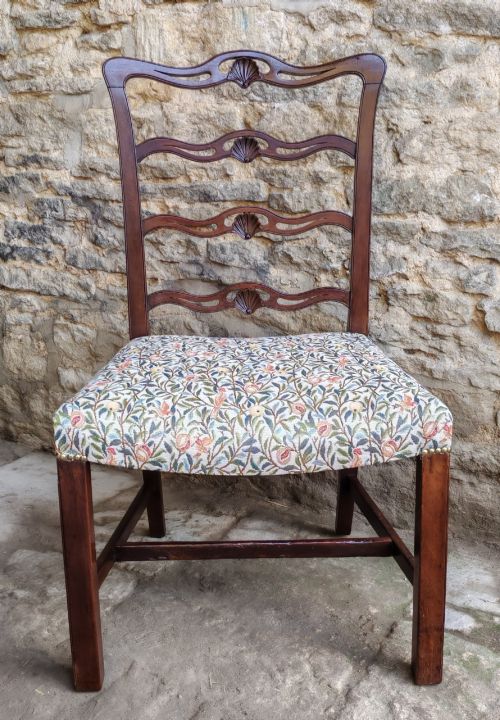
Regional vernacular pieces, such as Cheshire, Lancashire, and Thames Valley designs, represent the domestic traditions found in these listings. Formal Georgian and Edwardian interpretations adapt the slat-back principle for refined dining and desk spaces.
How they were made
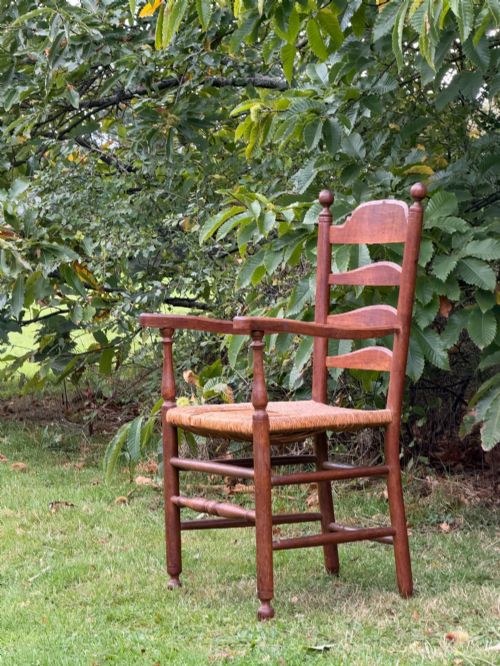
Turned wooden uprights and horizontal slats form the defining skeletal architecture, utilising native timbers like ash, elm, oak, and hardwood. Craftsmen shaped these components using traditional green woodworking and turning techniques.
Seats are frequently woven from natural rush, providing a durable and flexible surface that complements the rigid wooden frames. Selected examples incorporate upholstered fabric inserts or solid mahogany panels depending on the period and style.
Wooden Ladder Back Retail Price Guide 2026
Typical asking prices for wooden ladder back among the pieces listed under this phrase on Sellingantiques today, from the lower quarter to the upper quarter. They describe what is for sale here now, not the wider market.
Materials utilised across the inventory include rush, oak, mahogany, elm, ash, and brass.
What varies in quality
The refinement of the slat turning and the proportion of the graduated horizontal rungs dictate visual distinction. Superior examples demonstrate harmonious scaling between the back rails and the supporting posts.
The integrity of the original timber and the preservation of historic woven rush surfaces contribute significantly to the standing of an individual piece. Retaining original patination and early finishes elevates pieces above later restorations.
Philip Clissett·Lawrence Neal·Liberty and Co
The Wooden Ladder Back Glossary
- Ladder back
- A chair featuring a backrest composed of horizontal wooden slats resembling the rungs of a ladder. These slats are often curved to fit the spine.
- Rush seat
- A seating surface woven from dried marsh rushes tightly twisted around a wooden frame. It provides a traditional textured base found on country chairs.
- Vernacular
- Everyday utilitarian furniture made by regional craftsmen using local materials rather than following high-style metropolitan designs. These pieces emphasise functional domestic utility.
- Turned
- Wood shaped on a lathe by rotating it against cutting tools to create rounded spindles and legs. This technique defines the uprights of ladder back seating.
Wooden Ladder Back: Frequently Asked Questions
How do I date a wooden ladder back chair?
Dating relies on examining the turning style of the wood, the construction joints, and the wear patterns on the feet and rungs. Earlier pieces from the eighteenth century often show hand-split components and deeper patination.
Later Victorian and Edwardian examples feature more standardised machine-turned spindles and distinct regional characteristics that align with documented maker traditions.
Are rush seats durable for everyday dining?
Natural rush seating is remarkably resilient and supports regular daily use when maintained away from excessive moisture. The woven material flexes comfortably under weight while maintaining structural tension.
Historic rush requires gentle cleaning and protection from heavy liquids to preserve the integrity of the natural fibres over decades of domestic life.
How do I style a ladder back in a modern home?
These chairs provide textural contrast when placed around contemporary dining tables or utilised as standalone accent seating in hallways and bedrooms. Their honest structural form complements minimalist and rustic interiors alike.
Pairing a set of country ladder backs with a simpler wooden table highlights the traditional turning work without overwhelming the surrounding space.
What is the difference between regional English and French styles?
English country ladder backs typically utilise native timbers like ash and elm with straightforward turned posts and rush seats. They prioritize sturdy utility and regional joinery traditions.
French Provincial and Louis XV style variants often incorporate refined carving, cabriole legs, or lighter wood framing while retaining the characteristic horizontal back slats.