







Wooden Knob Pine Chest
A wooden knob pine chest is a practical storage staple, bringing honest nineteenth-century utility and warm character to any room.
Wooden Knob Pine Chest
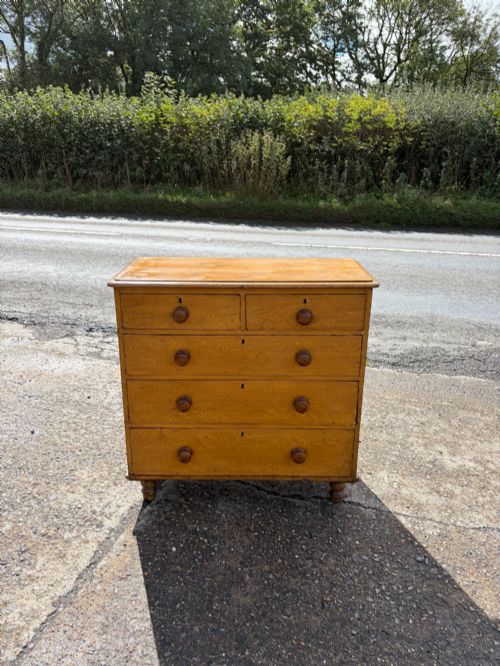
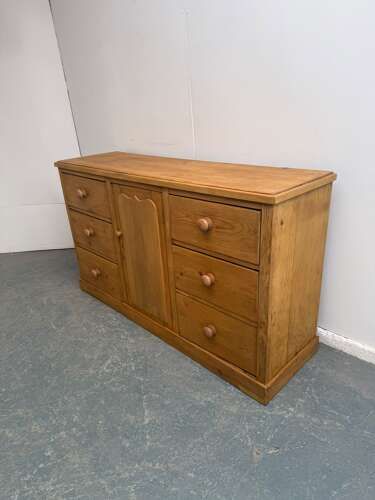
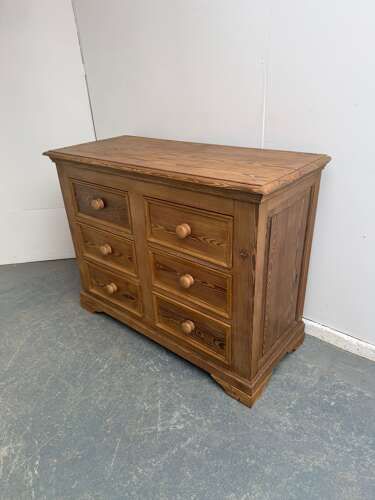
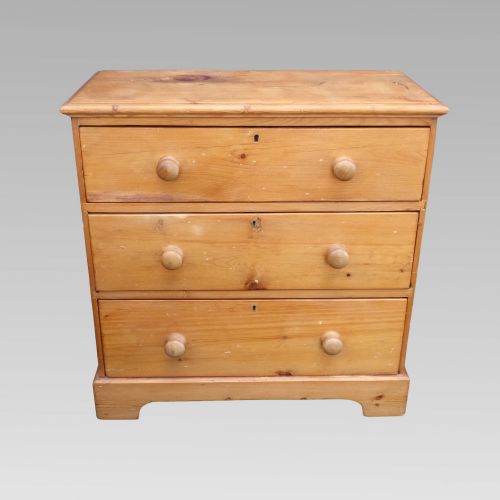
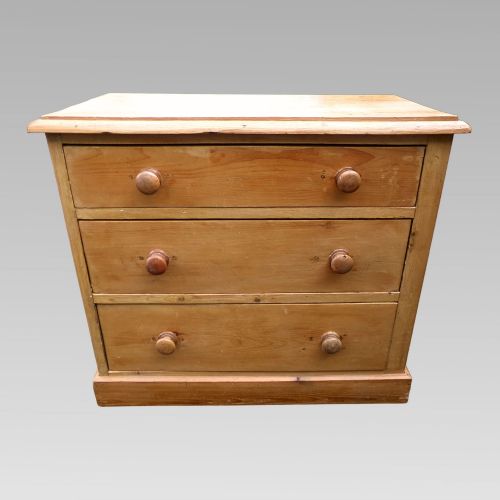
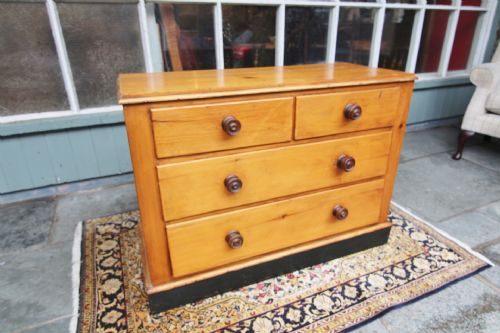
A wooden knob pine chest is primarily a nineteenth-century storage piece, spanning the Victorian and Arts and Crafts periods. These chests of drawers serve as everyday bedroom furniture, offering deep drawer capacities built for domestic use.
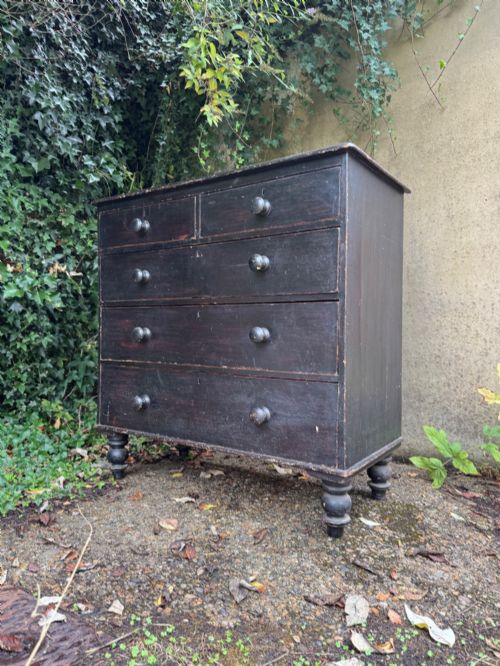
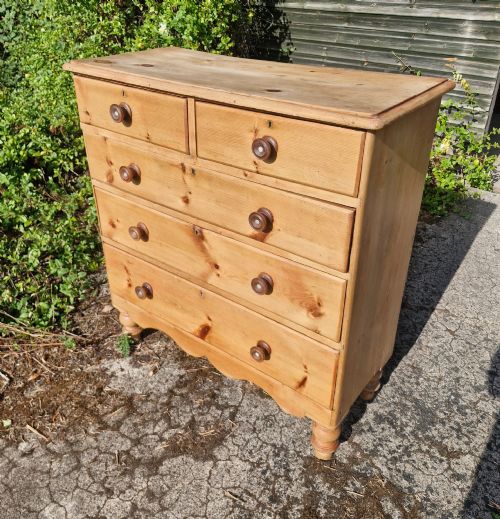
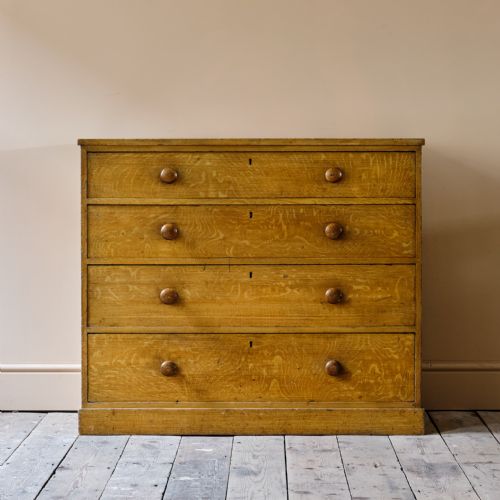
The versions most common here are sturdy upright or low chests built from solid pine. Many retain their original turned wooden knobs and feet, while others feature original painted surfaces or waxed finishes.
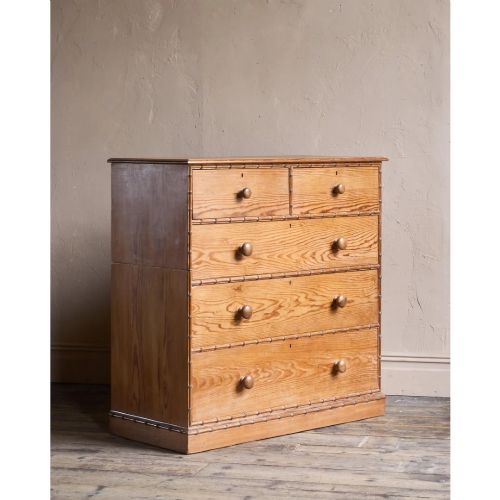
Regional variations appear across the listings, including pieces identified as Scottish or Irish alongside English examples. Certain variants include functional additions such as a gallery or faux bamboo detailing.
How they were made
Construction relies primarily on solid pine, shaped into carcases and panelled forms using traditional joinery methods. Secondary materials such as brass, iron, bone, and wax appear as hardware or surface treatments.
Surfaces are finished in two distinct ways according to period preference: either maintained in original paint or stripped and waxed to reveal the grain of the wood. Turned wooden knobs are fixed to drawer fronts alongside feet that support the base.
Wooden Knob Pine Chest Retail Price Guide 2026
Typical asking prices for wooden knob pine chest among the pieces listed under this phrase on Sellingantiques today, from the lower quarter to the upper quarter. They describe what is for sale here now, not the wider market.
One remarkably honest chest comes with original paint that has quietly outlasted several dynasties and a great many pairs of socks.
What varies in quality
Quality in a wooden knob pine chest rests upon the integrity of the timber and the preservation of its original surface. Pieces retaining untouched original paint or deep, aged wax finishes stand apart from those stripped down indiscriminately.
Proportion and detail distinguish finer examples, such as those featuring narrow panelled construction, a gallery, or matching turned knobs and feet. The skill of the original cabinetmaker shows in the smooth operation of the drawers and the sturdiness of the carcase.
Howard and Sons
The Wooden Knob Pine Chest Glossary
- Pine
- A softwood timber widely used for nineteenth-century domestic furniture. It takes wax or paint finishes effectively and forms robust carcases.
- Gallery
- A low decorative upstand attached to the top rear or sides of a chest. It prevents items from sliding off the surface.
- Waxed finish
- A treatment applied to bare wood to nourish the grain and impart a soft sheen. This method highlights the natural knots and colour of the pine.
- Original paint
- The initial surface coating applied during the period of manufacture, preserved over generations. It provides authentic historical character and colour.
- Turned knobs
- Circular drawer handles shaped on a lathe from wood. They are characteristic fittings for nineteenth-century chests.
Wooden Knob Pine Chest: Frequently Asked Questions
Are these chests heavy to move?
Solid pine construction makes these chests substantial pieces of furniture, though their weight varies according to size and timber density.
Most units can be manoeuvred by two people when the drawers are removed to lighten the load.
How do I care for a waxed pine chest?
Maintenance involves applying a quality natural beeswax periodically to nourish the wood and protect the surface from moisture.
Avoid placing the chest in direct sunlight or near heat sources to prevent the pine from drying out or splitting.
What is the difference between painted and waxed chests?
Waxed chests display the natural grain, knots, and warm honey tones of the pine beneath a protective polish. Painted chests retain historical surface colours that reflect regional traditions and domestic decorative choices.
Both finishes are period-appropriate, depending on whether the piece was designed for a servant's quarters or a main bedroom.
Will modern clothes fit in these drawers?
Nineteenth-century drawers tend to be deep and spacious, easily accommodating folded modern garments like jumpers and trousers.
It is advisable to check internal drawer dimensions if you require storage for bulky modern items.