

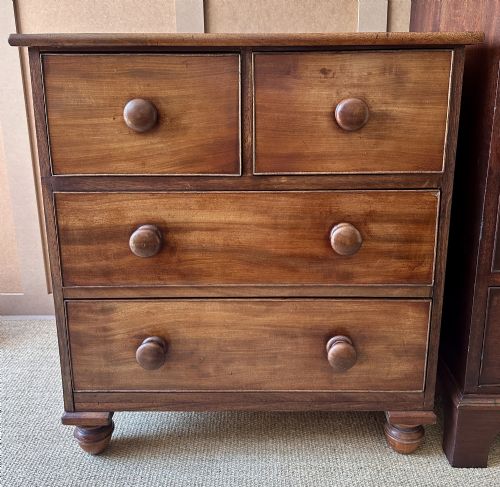
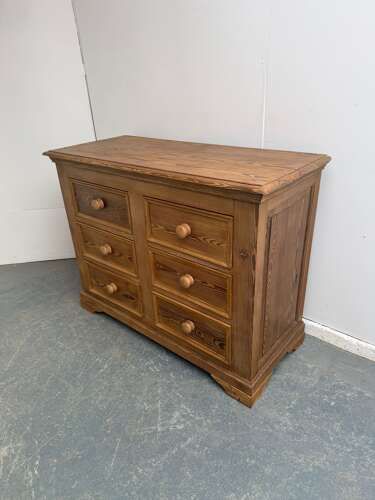
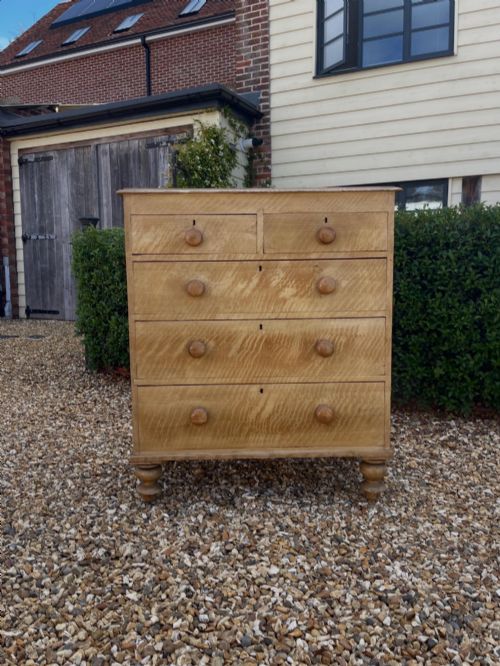
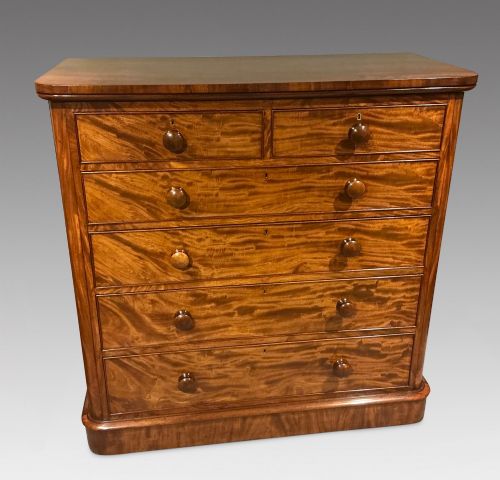
Wooden Knob Chest Drawers
These wooden knob chest drawers combine domestic utility with timber construction, offering generous storage through simple turned handles.
Wooden Knob Chest Drawers
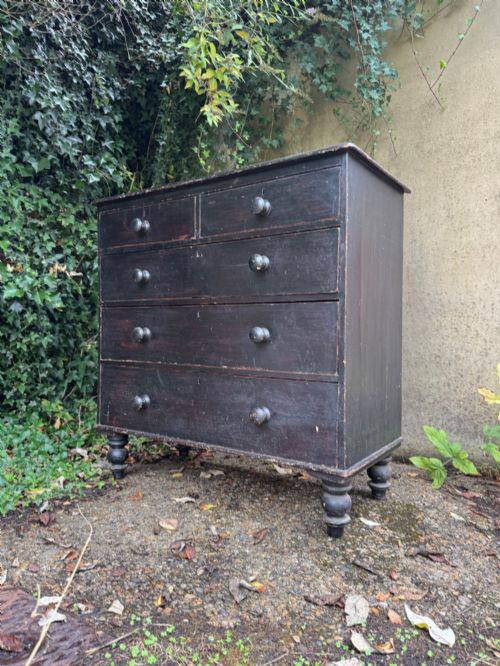
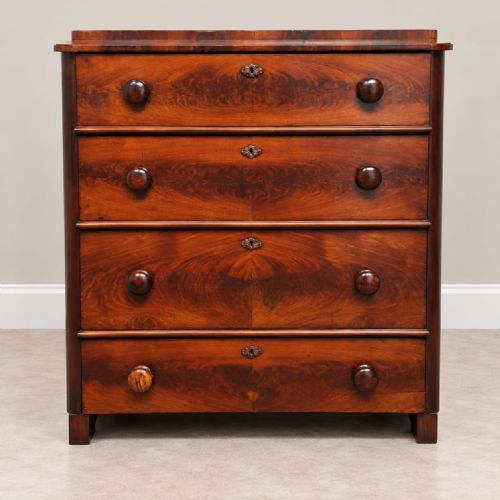
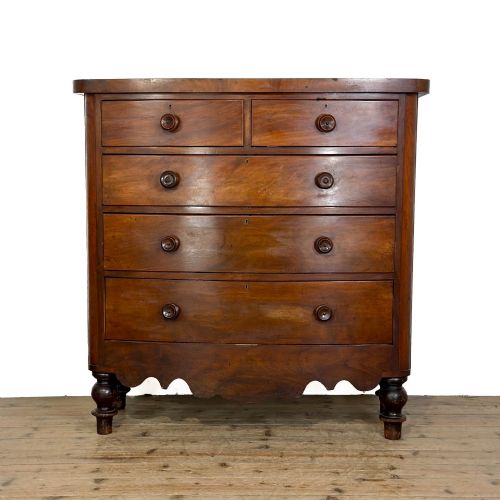
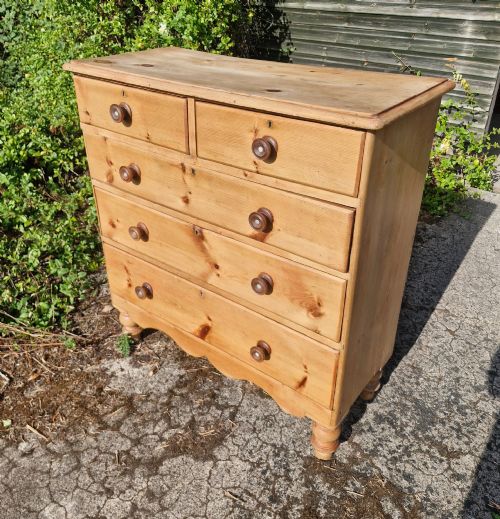
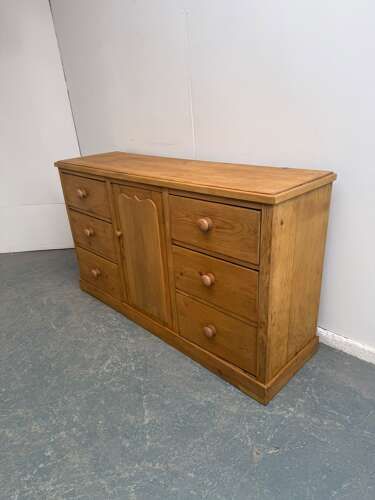
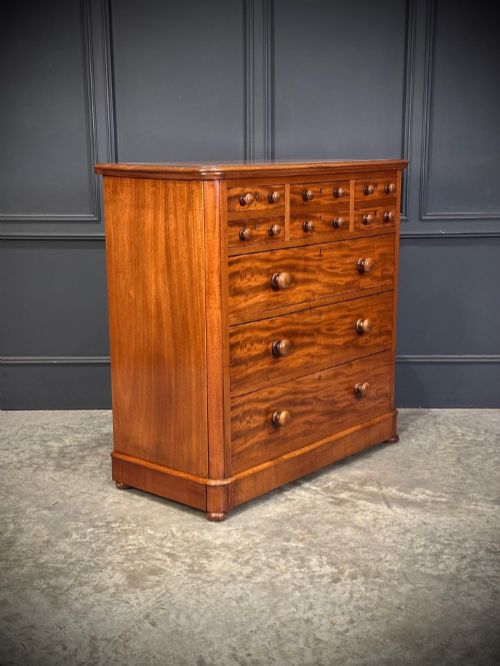
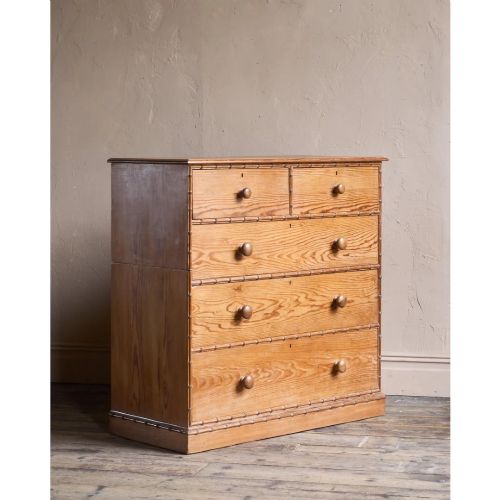
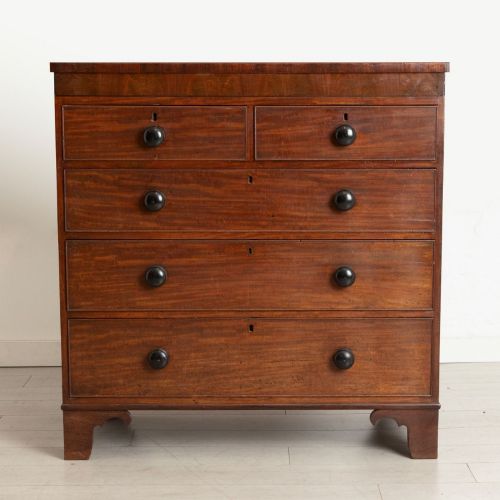
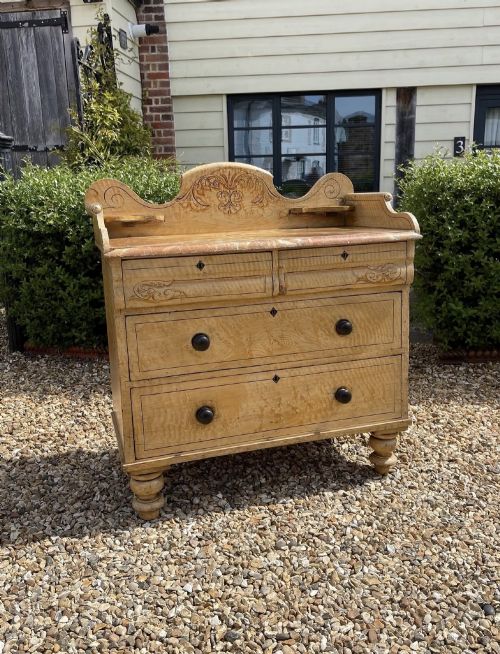
A wooden knob chest drawers search reveals pieces spanning the Georgian, Regency, and Victorian eras, alongside 19th-century workshop output. The most common version met on this page is the Victorian pine or mahogany chest, often built with multiple graduated drawers and resting on turned feet or a plinth base.
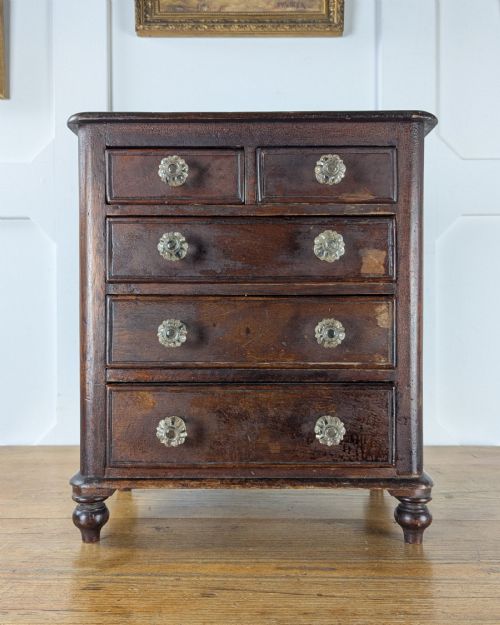
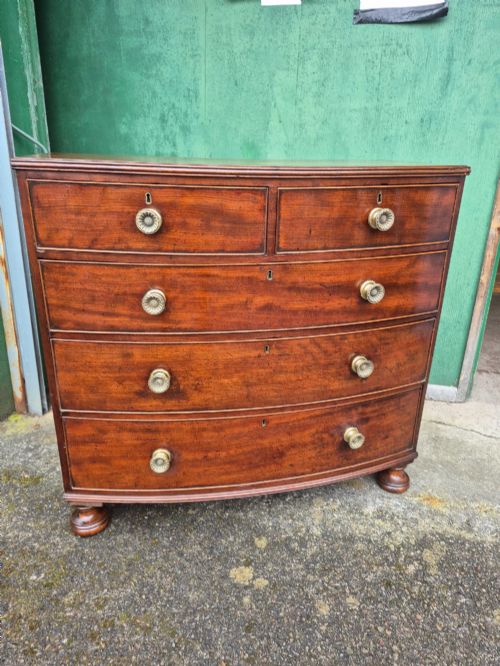
Beyond standard bedroom chests, the evidence includes miniature apprentice pieces, bow-front designs, and apothecary cabinets. Surviving examples reflect both formal cabinet-making in mahogany and robust country workshop production in pine, sometimes retaining original painted surfaces.
Materials and construction
Makers utilised solid pine and mahogany for the primary carcase and drawer frames, frequently applying wax finishes to protect the timber grain. Turned wooden knobs serve as the standard operating hardware for the drawers, turning directly from the matching or contrasting wood stocks.
Construction methods range from dovetailed drawer boxes to applied crossbanding and inlays on finer Georgian and Regency carcases. Surviving pieces also show secondary materials such as brass, glass, and iron used selectively for internal mechanisms or structural support.
Secret drawers hidden within the upper frieze give these chests a built-in hiding place for small valuables.
Assessing quality
Quality in a wooden knob chest drawers separates basic utility furniture from ambitious cabinet-maker output through timber selection and surface treatment. Finer examples display figured mahogany veneers, precise crossbanding, and well-proportioned secret drawers concealed within the frieze.
Simpler pine pieces rely on the integrity of their original paint surfaces or the warmth of waxed grain to establish their character. The crispness of the turned wooden handles and the smooth running of the drawer frames indicate the original standard of assembly.
Howard and Sons
The Wooden Knob Chest Drawers Glossary
- Bow front
- A convex curved cabinet front that projects outward at the centre. This curved profile appears frequently on Regency and Victorian mahogany examples.
- Crossbanding
- A narrow strip of veneer applied to the border of a drawer front or top with the grain running perpendicular to the surrounding surface. It frames the primary wood grain for decorative contrast.
- Apprentice chest
- A miniature piece of furniture made by a trainee craftsman to demonstrate mastery of joinery techniques. These small-scale chests replicate full-size drawer configurations precisely.
- Plinth base
- A solid rectangular block or heavy moulding forming the lowest support of a piece of furniture. It elevates the carcase directly from the floor without separate legs.
Wooden Knob Chest Drawers: Frequently Asked Questions
How do I date a wooden knob chest drawers?
Dating relies on observing timber choices, construction techniques, and stylistic markers across the periods represented. Georgian and Regency pieces typically show finer mahogany veneers and crossbanding, while Victorian examples often utilise pine or flame mahogany with turned feet.
Hardware and drawer construction also provide clues to age. Hand-cut dovetails and original turned wooden knobs indicate 19th-century workshop origins.
What is an apprentice chest?
An apprentice chest is a scaled-down version of a full-size chest of drawers created by a craftsman in training. These miniature pieces display the exact joinery methods and proportions used on larger furniture.
They function as decorative tabletop items while retaining the functional drawers and wooden knob handles of their full-sized counterparts.
Are painted pine chests original?
Many 19th-century pine chests survive with original painted finishes applied in domestic or workshop settings. These painted surfaces provide protection to the soft wood underneath and create a distinct folk art appearance.
Evaluating the paint involves checking for natural wear patterns and consistency with nineteenth-century colour palettes.
Where should I place a bow front chest?
A bow front chest functions effectively in bedrooms, hallways, or living spaces where its curved profile adds visual depth. The projecting centre demands slightly more clearance than a flat-fronted piece.
Pairing the chest with a plain wall allows the timber grain and curved drawer fronts to remain the visual focal point of the room.