

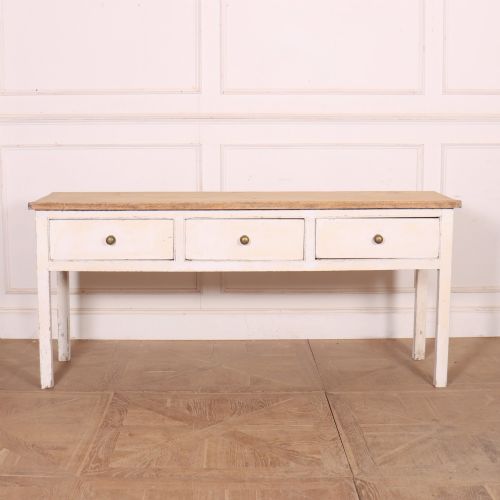
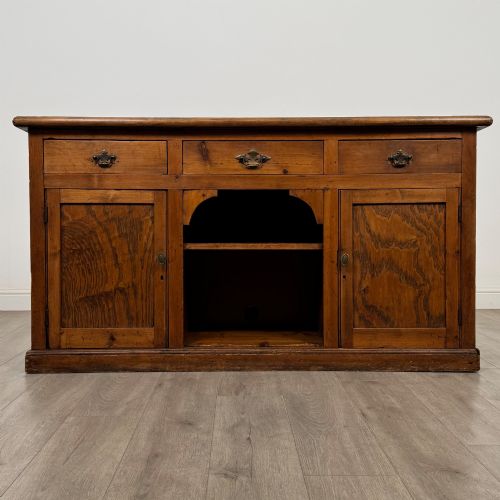
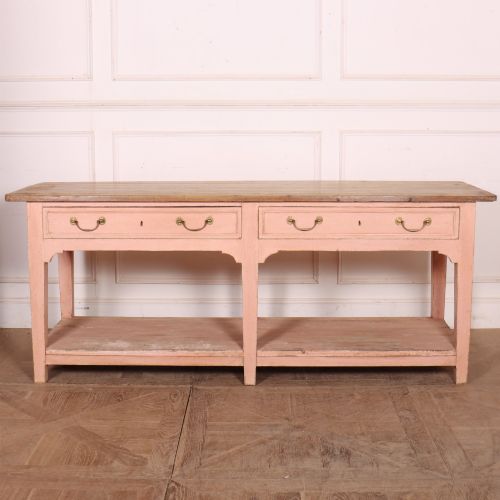
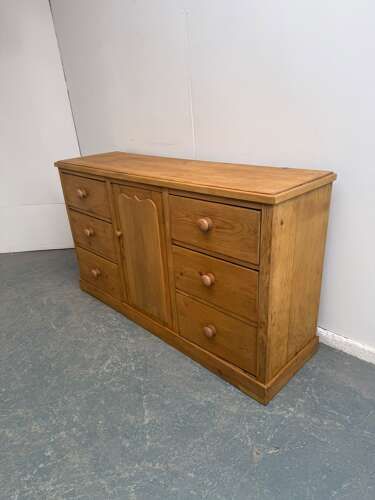


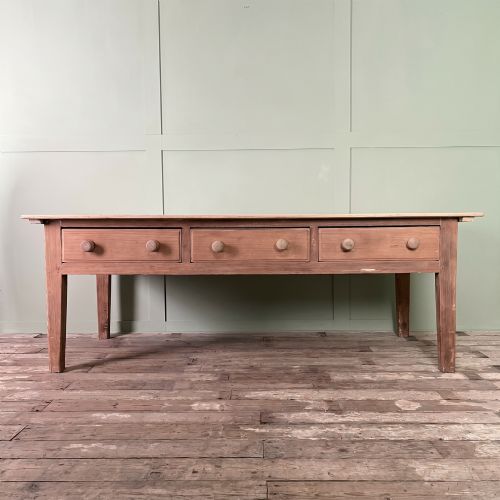
Wooden Kitchen Server
A wooden kitchen server brings hard-working practicality and plain utility to a room through centuries of sturdy timber construction.
Wooden Kitchen Server
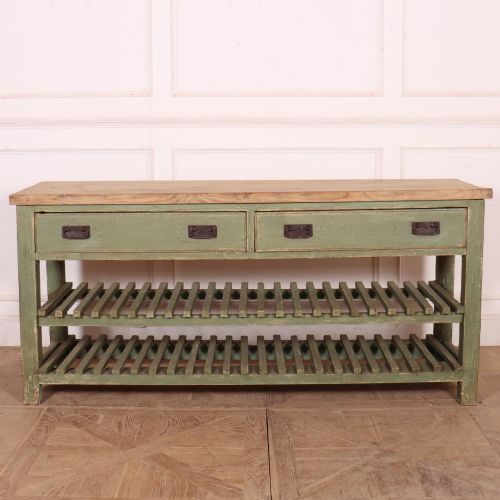
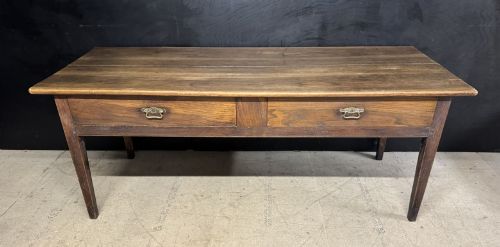
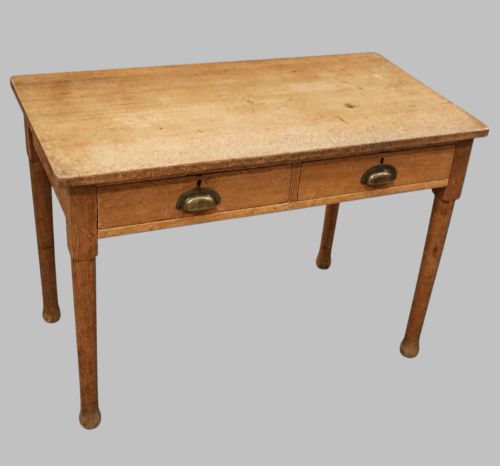
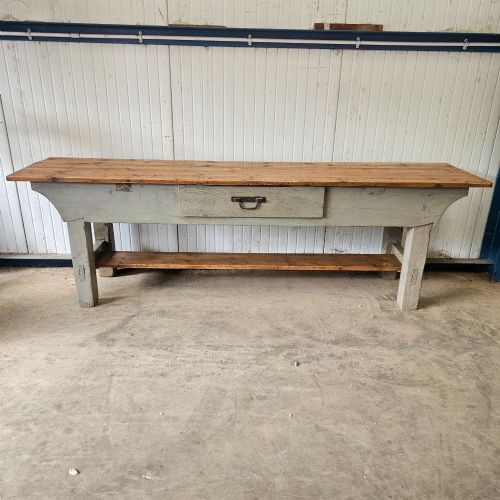
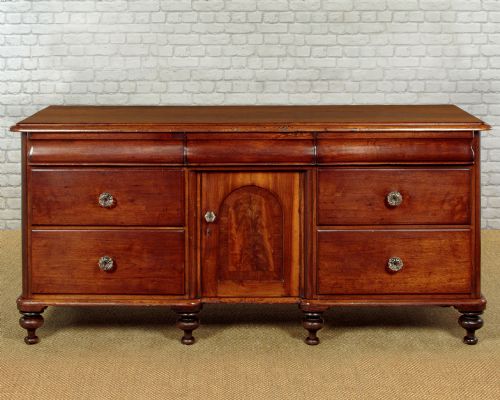
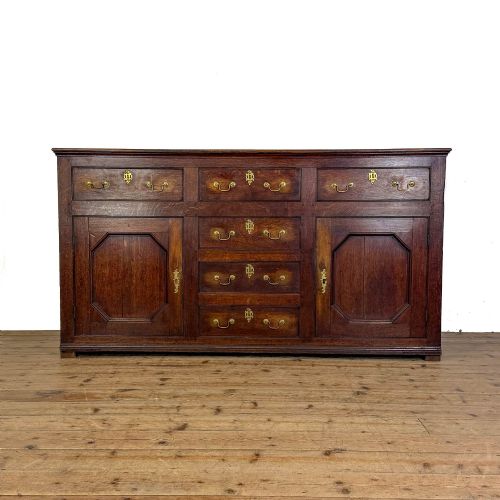
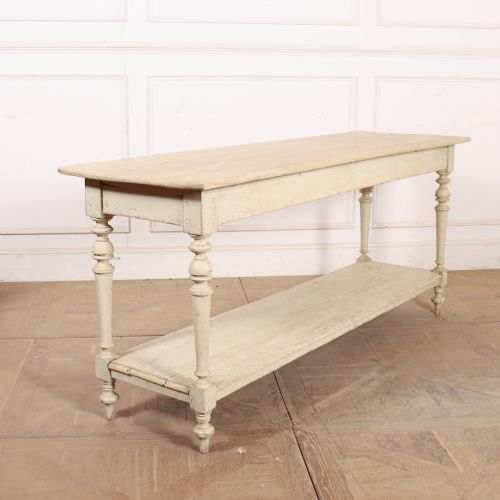
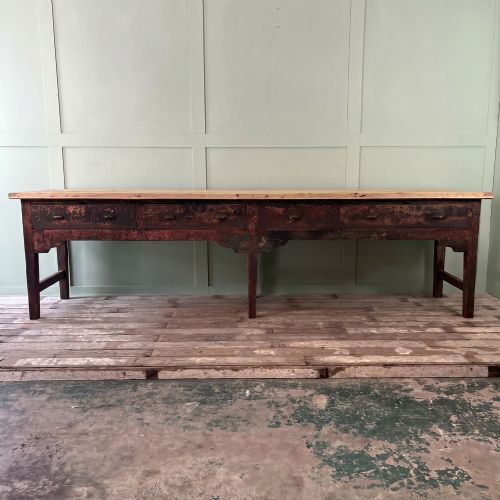
A wooden kitchen server encompasses utility pieces built for food preparation, storage, and domestic service in domestic spaces. These include dresser bases, serving tables, worktables, and preparation boards from various regional traditions. A buyer searching for a wooden kitchen server encounters primarily nineteenth-century examples alongside eighteenth-century formats.
The most common forms found here are pine and oak dresser bases, worktables, and serving tables originating from English, French, Welsh, and Scottish workshops. Pieces range from simple two-drawer work tables to potboard dresser bases and large harvest tables designed for heavy daily use. Many retain original painted finishes or waxed surfaces developed over generations of service.
Materials and construction methods
Makers built these servers using domestic and regional hardwoods and softwoods suited to heavy kitchen tasks, predominantly pine, oak, sycamore, chestnut, and walnut. Secondary metals such as brass and iron appear in structural fixings, drawer pulls, and handles.
Surfaces were left practical and unpretentious, utilising wax treatments to protect the timber or applying layers of paint that weathered through decades of domestic labour. Joinery prioritised strength and stability above ornamentation, resulting in robust frames designed to withstand continuous preparation work.
Wooden Kitchen Server Retail Price Guide 2026
Typical asking prices for wooden kitchen server among the pieces listed under this phrase on Sellingantiques today, from the lower quarter to the upper quarter. They describe what is for sale here now, not the wider market.
Distinctions in quality and proportion
Quality rests in the integrity of the timber selection, the honesty of the construction, and the preservation of original surfaces. Better examples display harmonious proportions, substantial tabletops, and well-kept drawer constructions that operate smoothly despite their age.
The presence of an untouched original painted surface or a rich, honest wax patina elevates a piece above standard utilitarian items. Conversely, heavy alterations or unsympathetic modern replacements diminish the historic character of the furniture.
The Wooden Kitchen Server Glossary
- Dresser base
- A low sideboard or cabinet featuring drawers and sometimes an open potboard shelf underneath, used historically for storing kitchen utensils and serving food.
- Potboard
- An open lower shelf fitted beneath a dresser base or serving table, traditionally used for storing heavy pots and pans.
- Harvest table
- A long, narrow wooden table designed to accommodate large groups for seasonal farm meals and domestic food preparation.
- Bread prep table
- A heavy utilitarian worktable constructed with a thick wooden top specifically for kneading dough and preparing baked goods.
- Patina
- The surface sheen and colour developed on timber through decades of handling, cleaning, waxing, and exposure to light.
Wooden Kitchen Server: Frequently Asked Questions
What is a wooden kitchen server used for?
These servers provide durable work surfaces and generous storage for modern kitchens, dining rooms, and pantries. Their deep drawers and sturdy tops accommodate daily food preparation and serve as practical sideboards.
They also function effectively as freestanding islands or display counters, bringing traditional character and functional surface area to contemporary domestic spaces.
How do I care for a antique wooden server?
Maintain waxed pine and oak surfaces by applying natural beeswax periodically to nourish the timber and protect against moisture. Avoid placing hot dishes directly onto the antique wood without protective mats.
Keep these pieces away from direct heat sources and rapid temperature fluctuations to prevent the timber from warping or splitting over time.
How can I tell an eighteenth-century server from a nineteenth-century one?
Earlier eighteenth-century pieces often display hand-sawn timbers, pegged joinery, and deeper patination inherent to early workshop construction methods. Oak and chestnut appear frequently among these earlier examples.
Nineteenth-century pieces frequently utilise pine and incorporate machine-sawn elements alongside traditional joinery, reflecting changing production techniques during the Victorian era.
Are these servers suitable for modern kitchen islands?
Many worktables and dresser bases match the height and scale required for freestanding kitchen islands. Their robust construction handles everyday food preparation tasks easily.
Buyers should check specific dimensions for height and depth to ensure comfortable clearance and alignment with existing kitchen layouts.