

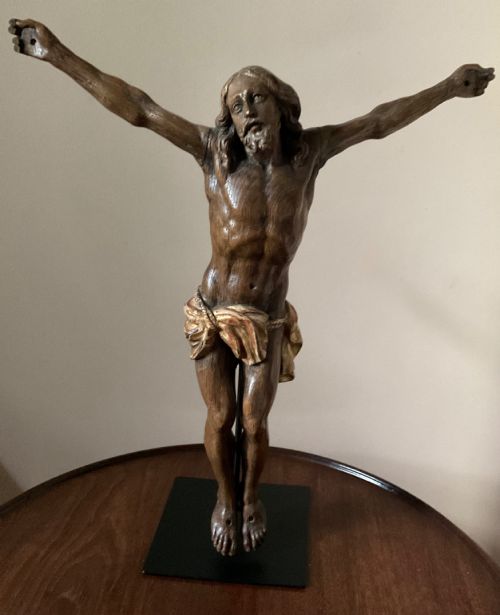
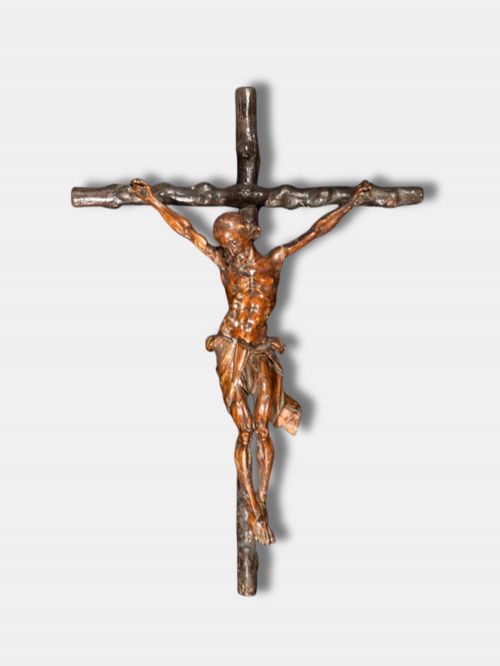
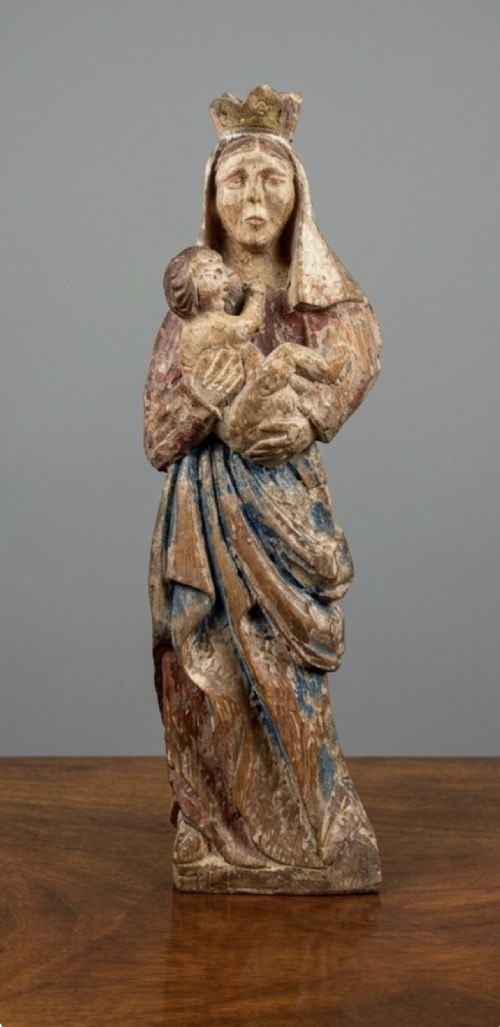
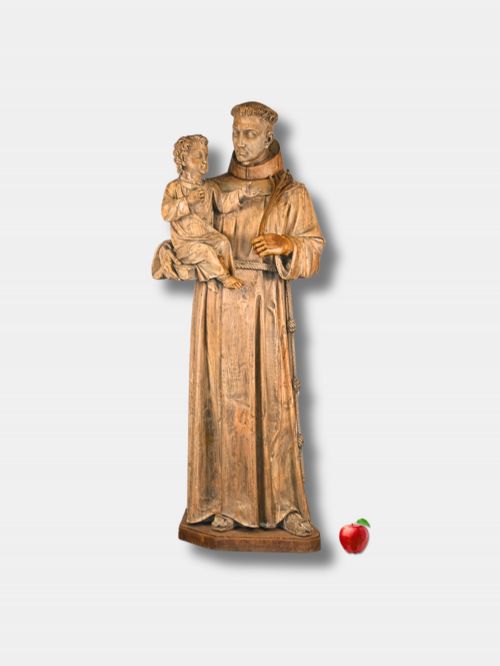
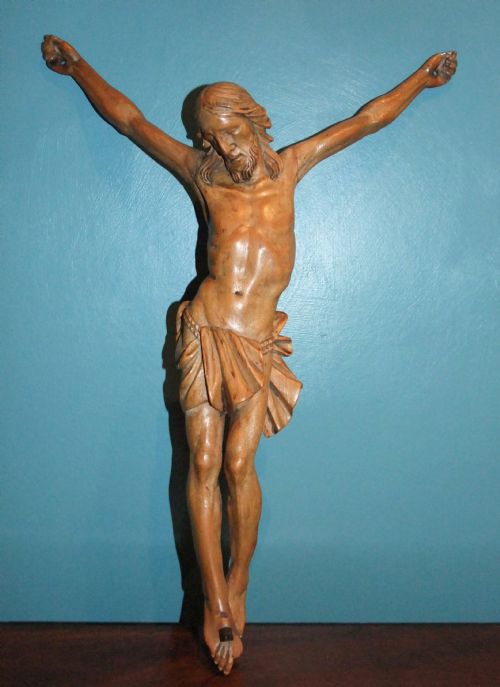


Wooden Jesus Figure
These carved wooden jesus figure carvings are devotional works of art spanning the seventeenth century to the art deco period.
Wooden Jesus Figure
A wooden jesus figure takes several distinct devotional forms, most commonly appearing as a corpus christi mounted on a cross or as part of a larger religious sculpture group. Buyers searching for this phrase encounter figures depicting the adult Christ, the infant Christ holding the orb, or the young Christ alongside other figures such as Mary and Joseph.
The selections on this page draw from continental European traditions, with particular representation from Spanish, South German, Italian, and French workshops. Examples range from life-size church carvings down to smaller devotional pieces intended for domestic contemplation.
Chronologically, seventeenth-century and eighteenth-century works dominate the offerings, alongside nineteenth-century French and Victorian pieces and twentieth-century interpretations. These sculptures reflect the stylistic shifts of the Baroque period as well as later ecclesiastical aesthetics.
How they were made
Carvers shaped these figures from solid timber, utilising regional hardwoods such as lindenwood, olive wood, fruitwood, and oak. The wood was worked with hand chisels and gouges to define anatomical details, drapery folds, and facial expressions.
Many surfaces received preparatory layers of gesso before being finished with polychrome paint, parcel gilt, or gold leaf. This combination of carved wood and applied polychromy provided a lifelike appearance suited to devotional spaces.
Wooden Jesus Figure Retail Price Guide 2026
Typical asking prices for wooden jesus figure among the pieces listed under this phrase on Sellingantiques today, from the lower quarter to the upper quarter. They describe what is for sale here now, not the wider market.
Listings feature carved wood, polychrome, gesso, and gold leaf across seventeenth-century to twentieth-century European devotional art.
What varies in quality
Surface treatment heavily influences the character of a piece. Original polychrome and parcel gilt layers that have survived with natural patination command greater interest than later overpainting or stripped timber.
The Wooden Jesus Figure Glossary
- Corpus Christi
- Latin for body of Christ, this term specifically denotes a sculpture of the crucified Christ on a cross.
- Polychrome
- The practice of decorating sculptural surfaces in multiple colours using paint or tinted gesso. This technique was widely employed in European religious art to enhance realism.
- Gesso
- A plaster mixture applied to wood surfaces as a smooth base for painting or gilding. It provides a stable ground for detailed decorative work.
- Parcel Gilt
- A decorative method where only specific areas of a wooden sculpture are highlighted with gold leaf. This technique creates contrast against painted or bare wood surfaces.
- Lindenwood
- A pale, fine-grained timber favoured by Germanic carvers for its even texture and suitability for intricate detail.
Wooden Jesus Figure: Frequently Asked Questions
How are wooden jesus figure sculptures mounted?
Many corpus christi figures are designed to be attached directly to a wooden cross using traditional metal fixings or original peg joints. Other independent devotional sculptures stand on integral wooden bases or altarpieces.
Buyers should examine the rear of the sculpture for historical mounting holes, brackets, or Tenon joints that indicate how the piece was originally displayed in a church or chapel setting.
What periods do these figures come from?
The available pieces span several centuries, with a strong representation of seventeenth-century and eighteenth-century continental baroque works. Later examples extend through the nineteenth-century Victorian period up to twentieth-century art deco interpretations.
Stylistic markers such as dynamic drapery folds, dramatic facial expressions, and regional painting techniques help distinguish seventeenth-century baroque carvings from later nineteenth-century revival pieces.
What woods were used for these carvings?
Carvers utilised a variety of timbers depending on regional availability and the intended scale of the sculpture. Lindenwood, olive wood, fruitwood, and oak appear frequently across European workshops.
Softer fine-grained woods like lindenwood allowed carvers to achieve high levels of anatomical detail, while denser hardwoods provided structural stability for life-size figures.
How should I care for a wooden religious sculpture?
Wooden figures with polychrome or gilt surfaces require stable indoor environmental conditions free from rapid fluctuations in temperature and humidity. Direct sunlight should be avoided to prevent paint fading and wood splitting.
Dusting should be performed gently with a dry, soft brush, avoiding any liquid cleaners or commercial polishes that might compromise historical gesso and paint layers.