




Wooden Inlay Games Table
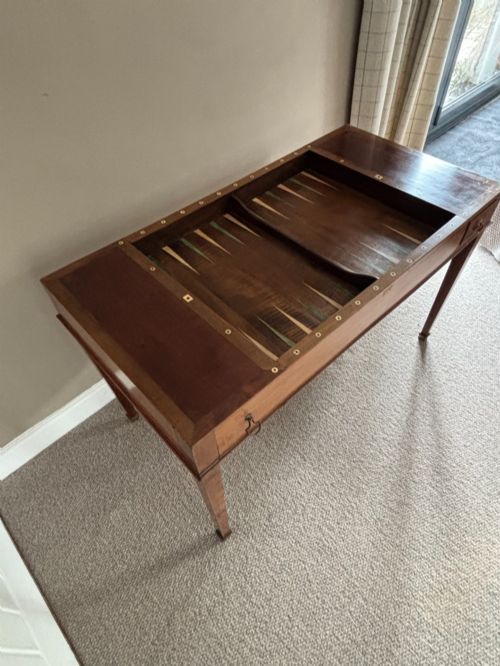
A wooden inlay games table brings centuries of social play into your home, combining fine cabinetmaking with integrated boards for chess, cards, and backgammon.
Wooden Inlay Games Table
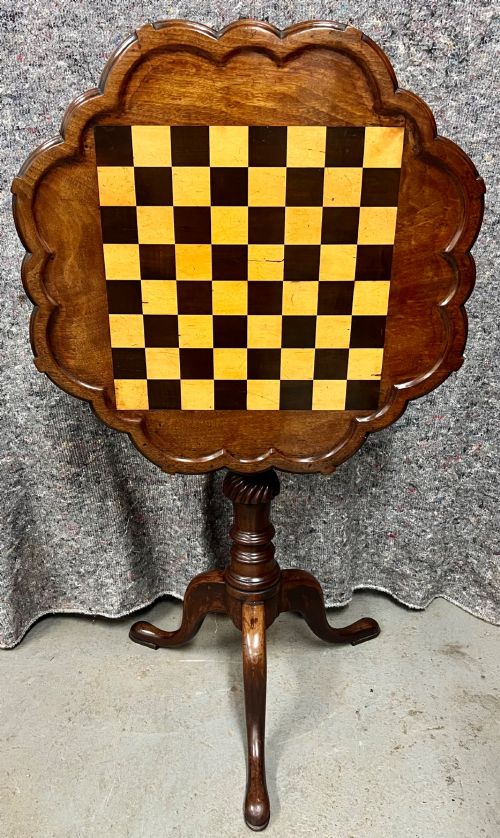
When you search for a wooden inlay games table, you encounter versatile multi-purpose furniture designed for domestic leisure across the Georgian, Regency, and Victorian eras. These items transition from compact console or occasional surfaces into dedicated playing areas through folding, swivelling, or removable tops.
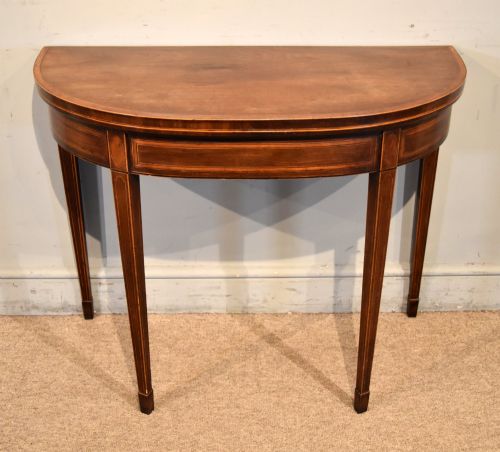
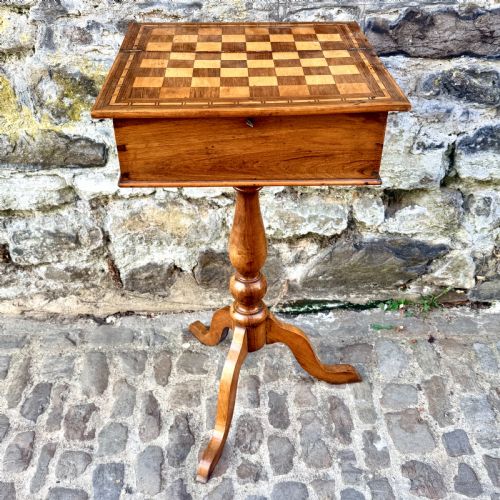
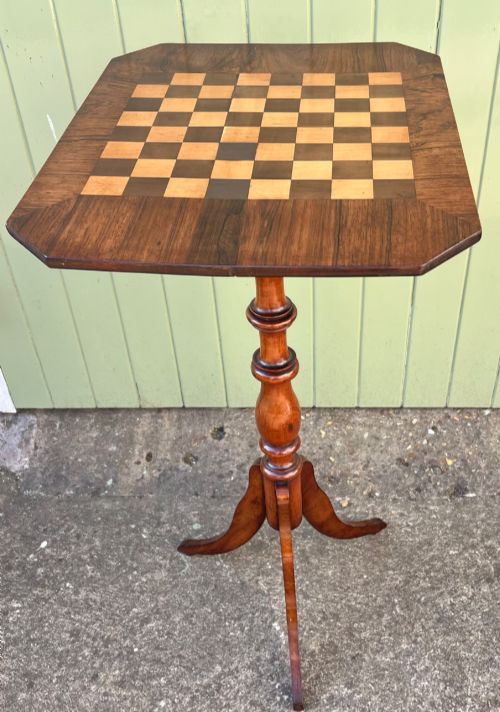
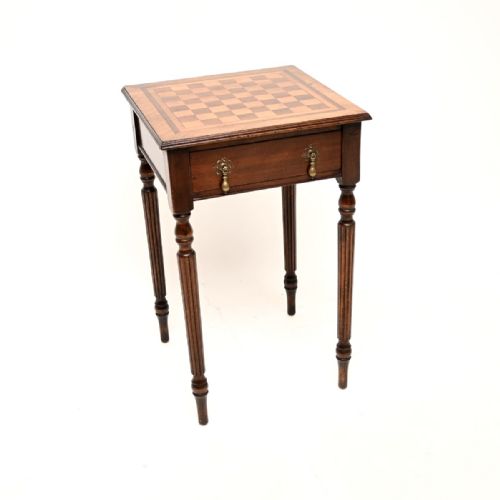
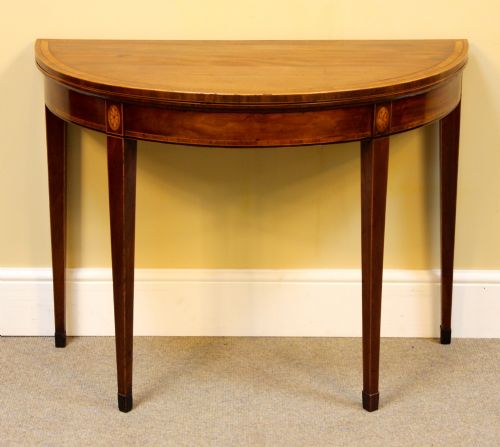
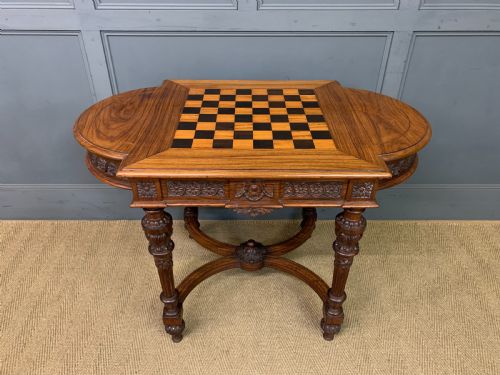
The versions most common on this page are mahogany card tables and rosewood chess boards originating in the nineteenth century. Many incorporate contrasting boxwood, satinwood, and ebony banding to mark out playing squares directly onto the timber surface.
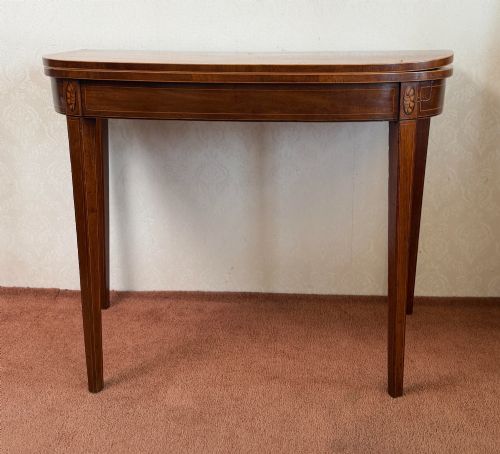
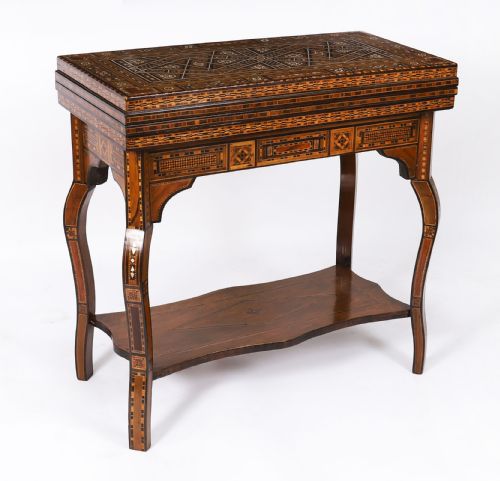
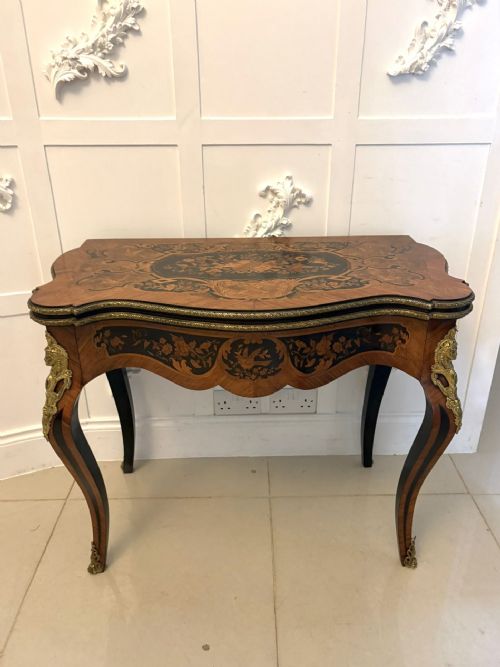
Regional variations span British workshop traditions, French Provincial and Louis XV revival pieces, alongside Anglo-Indian and Levantine imports. Forms range from tripod tables and sewing combinations to robust D-shaped fold-over card tables.
How they were made
Cabinetmakers utilised dense hardwoods like mahogany, walnut, and rosewood as the structural foundation for these tables. Lighter timbers such as boxwood, satinwood, and fruitwood were sliced into thin veneers and stringing to construct intricate geometric chequerboards and floral marquetry.
Complex joinery allowed tops to pivot, fold, or lift, concealing shallow compartments beneath for counters, dice, and playing cards. Ormolu mounts, brass inlay, and turned pedestals with tripod legs provided structural stability and decorative contrast to the warm timber grains.
Wooden Inlay Games Table Retail Price Guide 2026
Typical asking prices for wooden inlay games table among the pieces listed under this phrase on Sellingantiques today, from the lower quarter to the upper quarter. They describe what is for sale here now, not the wider market.
Listings feature mahogany, rosewood, walnut, and satinwood across Georgian, Regency, and Victorian periods.
What varies in quality
Quality rests upon the precision of the timber inlay and the integrity of the pivoting mechanism. Crisp alignment between dark and light woods on the playing surface indicates skilled hand-cutting rather than mass-produced stamping.
The choice of primary timber and secondary veneers dictates longevity, with highly figured burr walnut and Honduras mahogany sitting at the higher end of craftsmanship. Sound construction ensures the folding leaves meet flush and the supporting leg action operates without strain.
The Wooden Inlay Games Table Glossary
- Inlay
- The technique of inserting pieces of contrasting material into a depressed wooden cavity to form a decorative design. This method creates flush surfaces on chess and game boards.
- Marquetry
- Elaborate veneer work arranged in pictorial or patterned compositions across a tabletop. Unlike simple inlay, marquetry covers the entire surface in assembled wood pieces.
- Card table
- A specialist table featuring a fold-over or swivel top designed to open up for card games. They often contain internal wells to store gaming accessories.
- Tripod table
- A small freestanding table supported by a central pillar resting on three spreading feet. This form allows flexibility in placement around a parlour or drawing room.
Wooden Inlay Games Table: Frequently Asked Questions
How do I use a games table today?
These tables function well as writing desks, hallway consoles, or side tables when folded closed. Opening the top reveals a functional surface for board games, card evenings, or casual dining.
Position them away from direct sunlight and radiators to protect the delicate veneers and natural wood movement of the inlay.
How do I identify a Regency games table?
Regency pieces often display classical architectural influences, including brass stringing, rosewood or mahogany grains, and bold pedestal bases with carved feet. Their clean lines reflect the early nineteenth-century design taste.
Look for D-shaped tops and fold-over mechanisms that typify the card tables produced during this period.
Are these tables suitable for small rooms?
Many historical games tables were built with compact dimensions to fit smaller drawing rooms and parlours. Fold-over designs and occasional tripod formats occupy minimal floor space when closed.
They offer flexible surfaces that expand only when needed for social gatherings.