



Wooden Hoshiarpur Table
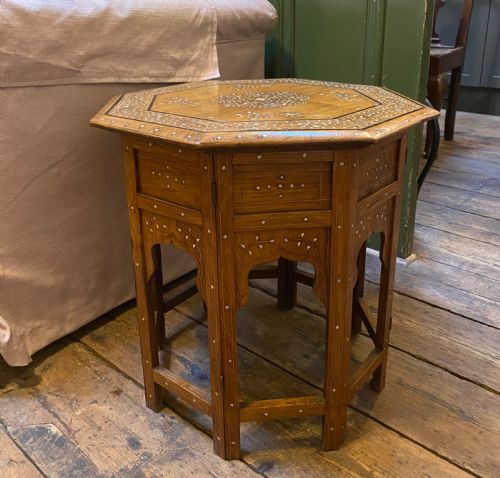
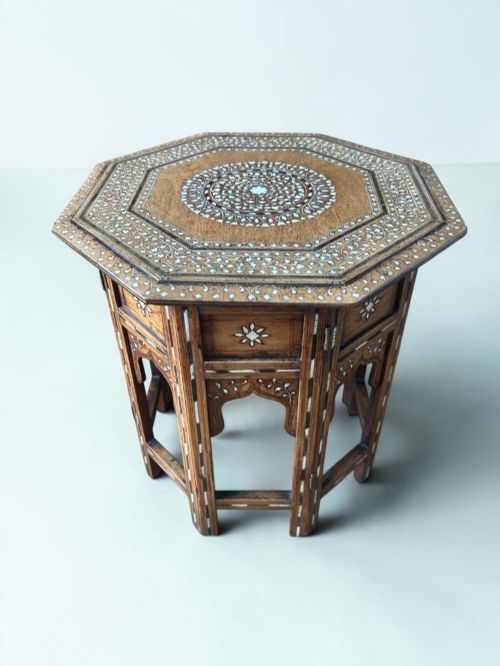
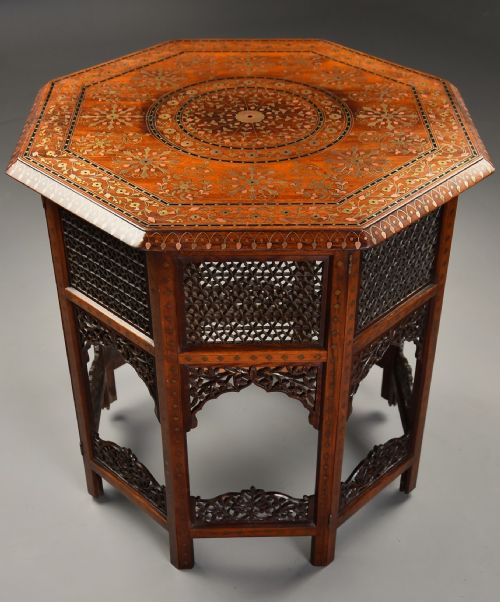
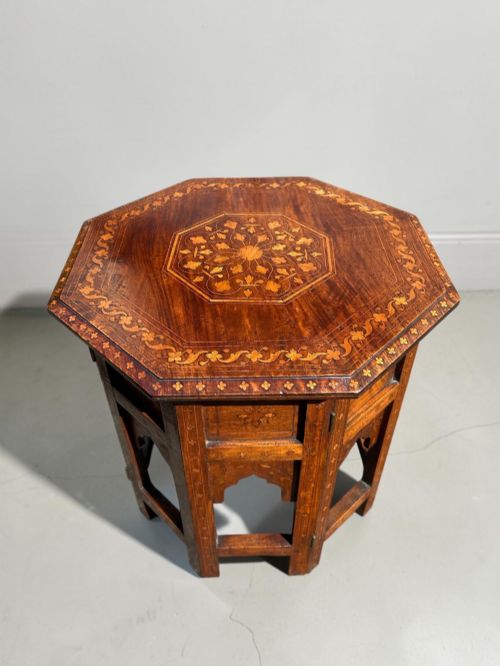
A wooden hoshiarpur table brings intricate craftsmanship into a room through carved surfaces and contrasting geometric inlays.
Wooden Hoshiarpur Table
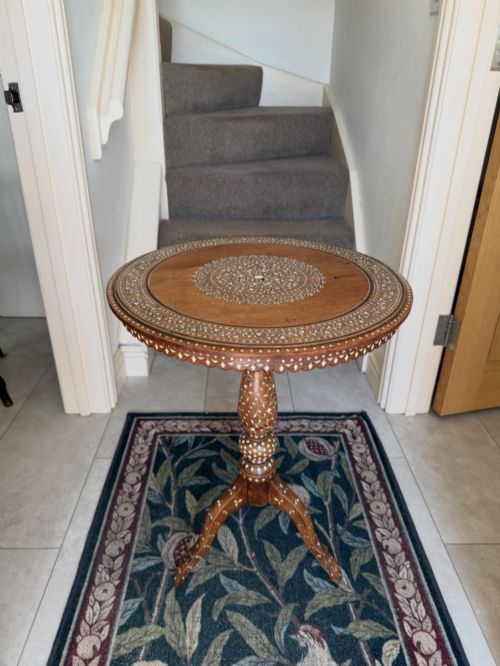
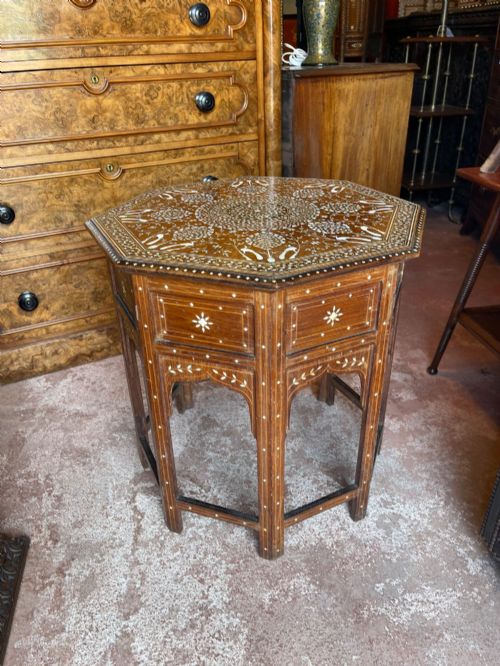
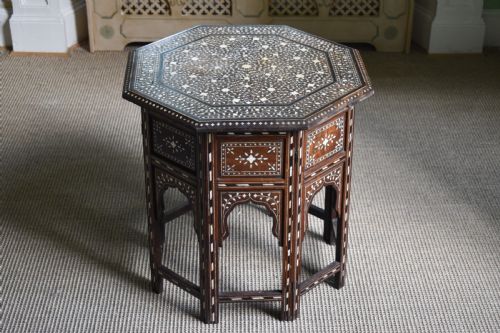
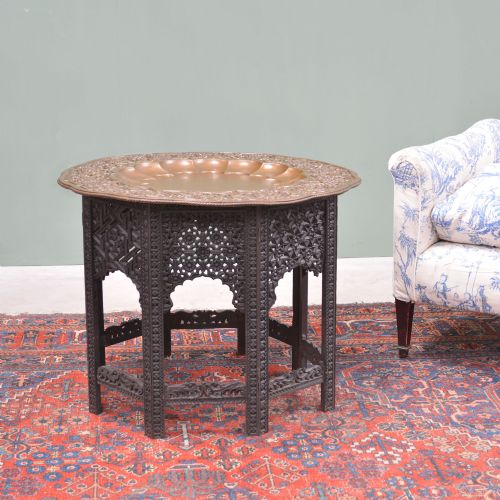
A wooden hoshiarpur table is an example of intricate North Indian craftsmanship, typically produced in octagonal, pedestal, or tray top forms. These pieces often fall within the Anglo-Indian and Moorish Revival styles, reflecting nineteenth and early twentieth century production.
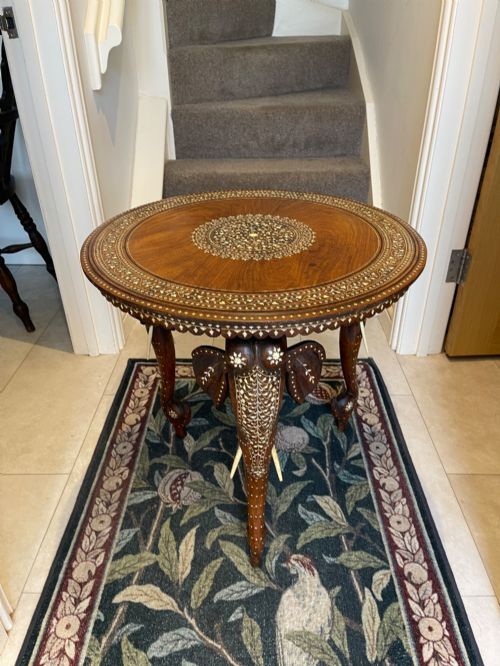
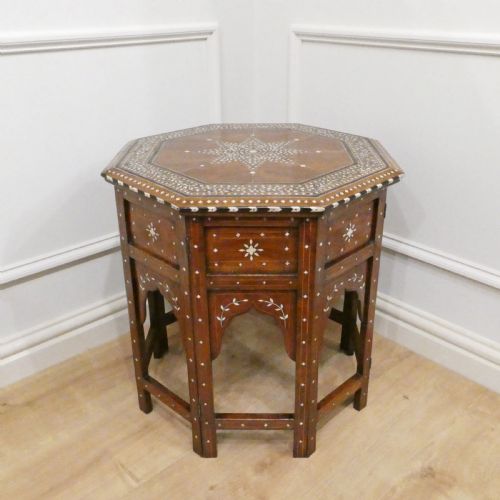
The octagonal occasional table is the version most frequently encountered on this page, often built to function as a side table or display surface. Examples range from compact tripod designs to full size models supported by carved figurative bases such as elephants.
How they were made
Makers utilised dense timbers including teak, rosewood, padauk, and general hardwood as the foundational structure for each piece. These woods provided a stable canvas for the heavy carving characteristic of the Hoshiarpur tradition.
Surface decoration relies heavily on contrasting materials set into the timber base. Artisans channelled the wood to receive detailed bone inlay, mother of pearl, and brass inlay, creating intricate geometric and floral patterns across the top and sides.
Wooden Hoshiarpur Table Retail Price Guide 2026
Typical asking prices for wooden hoshiarpur table among the pieces listed under this phrase on Sellingantiques today, from the lower quarter to the upper quarter. They describe what is for sale here now, not the wider market.
The listings span from 1860 to 1920, predominantly featuring teak, rosewood, and hardwood with bone, brass, and mother of pearl inlay.
What varies in quality
The precision and density of the carved surface detail separate standard examples from finer specimens. Master carvers achieved crisp, deep relief work without splitting the underlying hardwood, whilst lesser pieces show shallower, softer cutting.
The completeness and integration of the inlay work dictate the overall success of the piece. Superior examples retain all original bone, brass, and mother of pearl elements flush with the timber, whilst lesser items often reveal shrinkage gaps or clumsy replacement sections.
The Wooden Hoshiarpur Table Glossary
- Anglo-Indian
- A style describing decorative arts produced during the British period in India, blending local craftsmanship with European forms. It frequently combines dense native carving with standard British furniture shapes like occasional and side tables.
- Bone Inlay
- A technique where small pieces of shaped bone are pressed and glued into hand-cut recesses in the wooden surface. This method creates striking pale geometric motifs against dark timber.
- Mother of Pearl
- The iridescent inner layer of certain mollusc shells, used by artisans to create luminous highlights in tabletop designs. Small thin sections are shaped and fitted alongside bone and brass components.
- Octagonal
- Having eight sides, which is the predominant geometric format for these tables. This specific shape allows for symmetrical arrangement of intricate inlaid border patterns.
Wooden Hoshiarpur Table: Frequently Asked Questions
What is a hoshiarpur table?
A hoshiarpur table is an intricately carved wooden furniture piece originating from North India, known for dense surface decoration and geometric inlays. These tables typically feature octagonal or pedestal forms created during the nineteenth and early twentieth centuries.
They reflect the Anglo-Indian and Moorish Revival styles, combining traditional Indian woodworking techniques with forms suited to Western domestic interiors of the period.
How do I clean the inlaid surface?
Cleaning requires a soft, dry cloth to remove dust from the recessed carvings and inlaid sections without applying moisture. Excess liquid can loosen the delicate bone, brass, or mother of pearl elements secured within the timber.
Applying a minimal amount of appropriate furniture wax helps preserve the dry hardwood without clouding the contrasting inlay materials. Regular gentle dusting remains the safest maintenance method.
Where should I place an octagonal table?
An octagonal hoshiarpur table works well as a central focal point or a functional side table next to seating. The compact size of many examples allows them to fit easily into corners or beside chairs as occasional display surfaces.
Placing the table away from direct heat sources and strong sunlight protects the dense hardwoods and fragile bone or mother of pearl inlays from warping or drying out.
Are these tables collapsible?
Certain examples feature folding or collapsible bases designed for easy transport and storage. These folding mechanisms typically consist of interlocking wooden panels that support the removable octagonal top.
When setting up a collapsible version, ensure the wooden supports slot together securely to maintain stability across the inlaid surface. Not all models possess this feature, as many rely on fixed pedestals or tripod legs.