

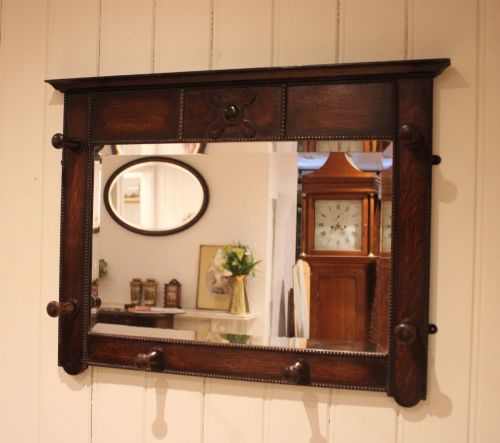


Wooden Hat Rack Mirror
These wooden hat rack mirror pieces combine glass and timber to organise hallways, bringing period character to a practical entranceway.
Wooden Hat Rack Mirror
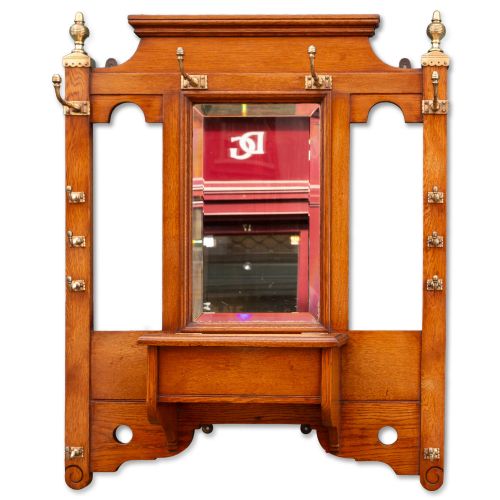
When you search for a wooden hat rack mirror, you encounter a variety of entrance furniture from the nineteenth and early twentieth centuries. These combinations of timber frames, reflective glass plates and metal hanging hooks served the busy hallways of period homes.
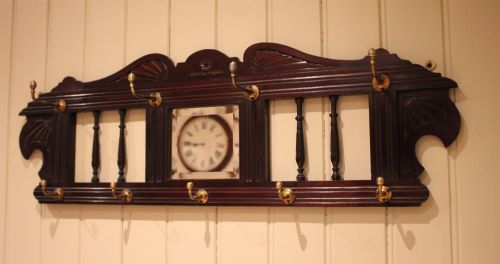
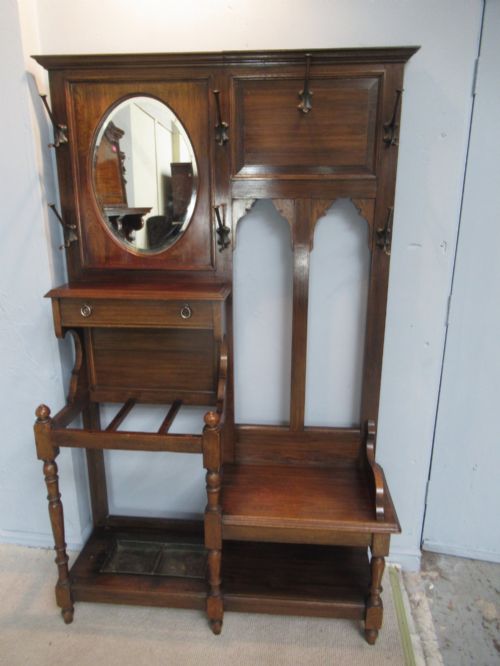
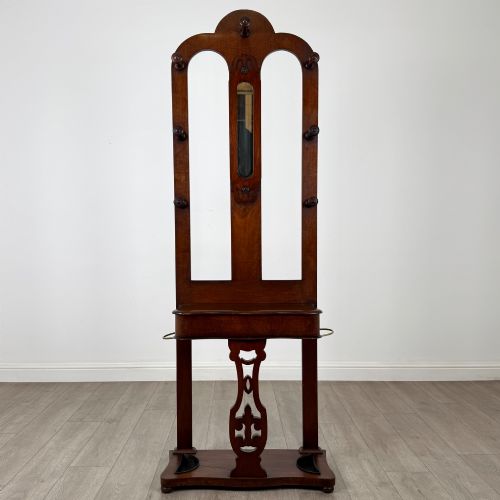
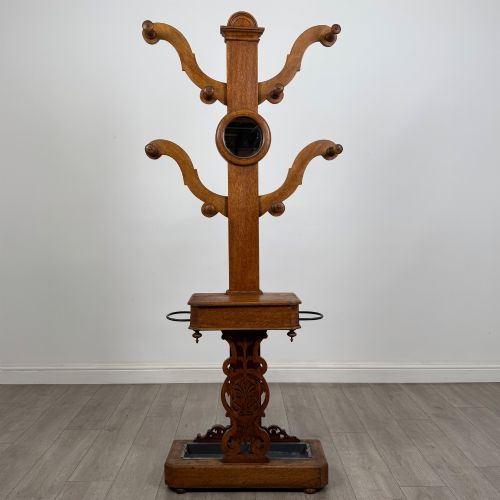
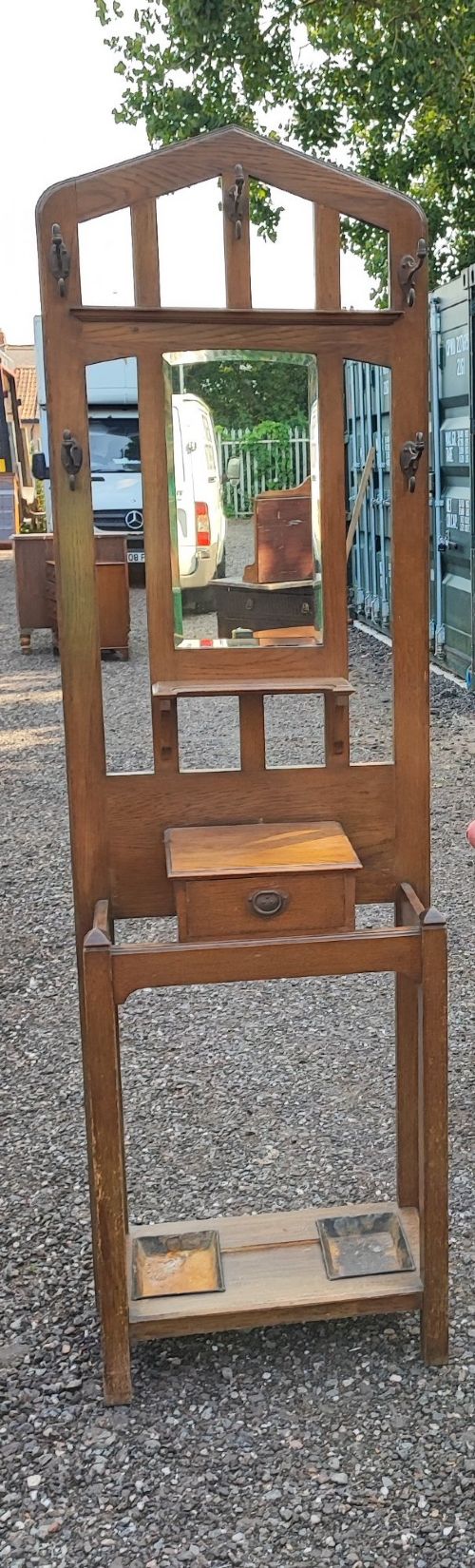
The most common form on this page is the wall-mounted coat rack or standalone hall stand featuring an integrated mirror. Oak and mahogany dominate the offerings, spanning the Victorian and Edwardian eras through to the Arts and Crafts and Art Nouveau movements.
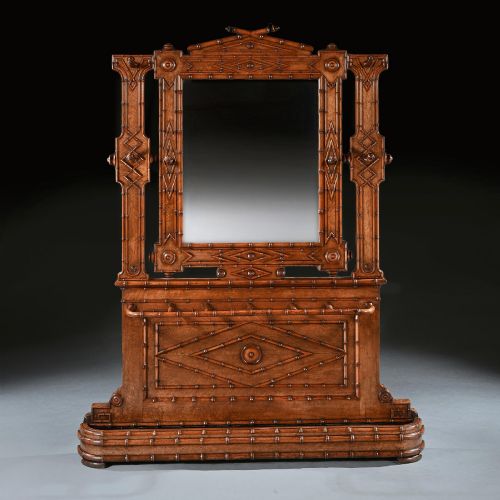
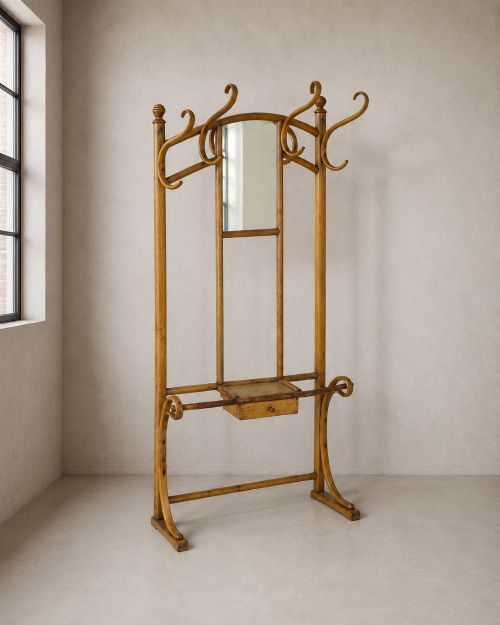
Pieces range from compact wall mirrors fitted with brass hooks to large, architectural hallstands incorporating umbrella bins and marble inserts. You also find specialised regional variations such as Black Forest carvings, French bamboo designs and equestrian horseshoe motifs.
Distinguishing quality across examples
The distinction between standard utility furniture and superior examples lies in the ambition of the design and the depth of the timber carving. Elaborate detailing such as figural greenman carvings, hand-painted tiles or sophisticated bentwood construction elevates an item above basic hallway storage.
Material selection also dictates the hierarchy of quality, with richly figured golden oak, deep mahogany and birdseye maple paired with heavy brass hooks outperforming plain secondary timbers. The integration of structural elements, from bevelled mirror plates to fitted marble shelves, shows the original maker's investment in materials.
Listings feature oak, mahogany, walnut, and cast iron across Victorian, Edwardian, and Arts and Crafts periods.
Ellen E Houghton of Minton·Thonet
The Wooden Hat Rack Mirror Glossary
- Hallstand
- A substantial piece of entrance furniture combining a mirror, coat hooks, umbrella stands and sometimes a small shelf or seat. They anchored the hallway of a period home.
- Bevelled plate
- Mirror glass with angled, polished edges that catch the light. This edge work indicates finer mirror production.
- Bentwood
- Timber shaped by steaming until pliable, allowing for graceful curved frames. This technique produced light yet resilient furniture.
- Faux bamboo
- Wood carved or painted to replicate natural bamboo stalks. This decorative finish gained popularity through nineteenth-century interest in Japanese design.
- Greenman
- A sculptural architectural motif depicting a face carved from leaves and foliage. It appears frequently in late Victorian carved oak furniture.
Wooden Hat Rack Mirror: Frequently Asked Questions
How were wooden hat rack mirrors used?
These pieces served as the primary storage and grooming station in a period hallway. Residents and visitors hung heavy coats and hats upon arrival while checking their appearance in the mirror.
Many examples included umbrella wells and ledges for calling cards, keeping the entrance tidy and organised for daily comings and goings.
How do I date a hall stand?
Dating relies on stylistic clues and timber choices. Heavy oak carvings and rich walnut typically point to the Victorian era, while lighter oak and simpler geometric lines often indicate Edwardian or Arts and Crafts production.
Hardware styles and mirror bevels also help narrow the decade of manufacture, matching broader shifts in decorative arts from the late nineteenth into the early twentieth century.
Can I hang a heavy wall-mounted rack securely?
Wall-mounted racks require firm fixing into solid masonry or direct attachment to wall studs. The combination of solid timber, mirror glass and heavy metal hooks creates substantial weight.
Using appropriate wall plugs and screws ensures the structure safely supports the burden of wet coats and heavy garments without pulling away from the wall.
What maintenance do these wooden pieces need?
Routine care involves dusting the timber and applying appropriate wax to nourish the antique wood surface. Avoiding direct sunlight and damp conditions preserves both the finish and the integrity of the joints.
Brass hooks and mirror plates benefit from gentle cleaning without harsh chemicals to maintain their original character.