

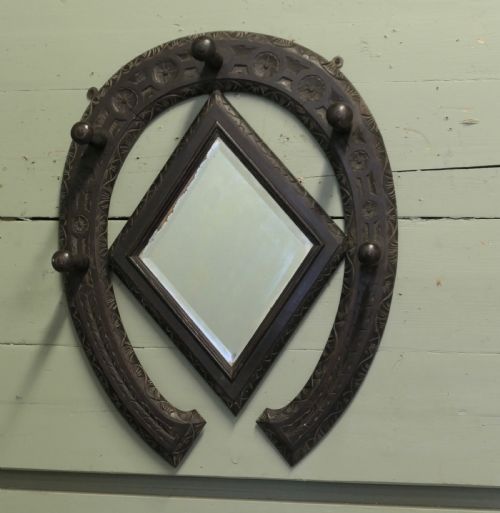


Vintage Coat Peg Mirror
These vintage coat peg mirror pieces combine practical hall storage with a looking glass, offering period character for an entryway.
Vintage Coat Peg Mirror
A vintage coat peg mirror merges the utility of a hat and coat rack with a wall mirror or hall stand, designed primarily for entranceways to check appearance before leaving the house. The items appearing under the vintage coat peg mirror search span the Victorian period, the Edwardian era, and the 1920s.
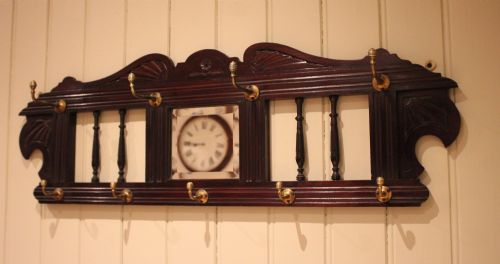
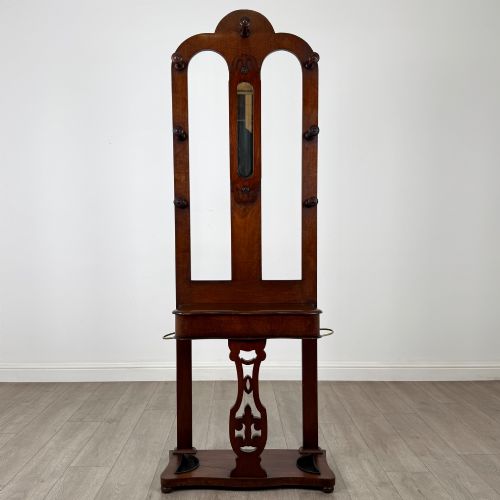
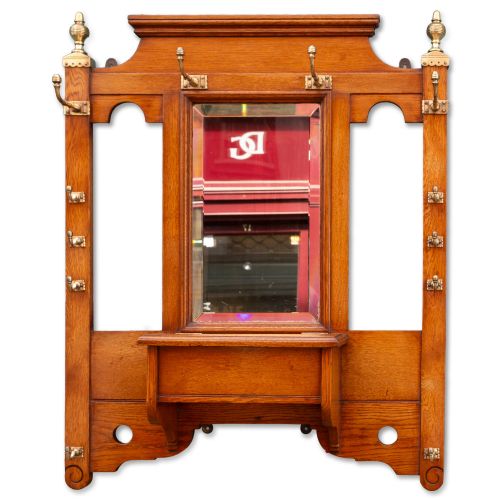
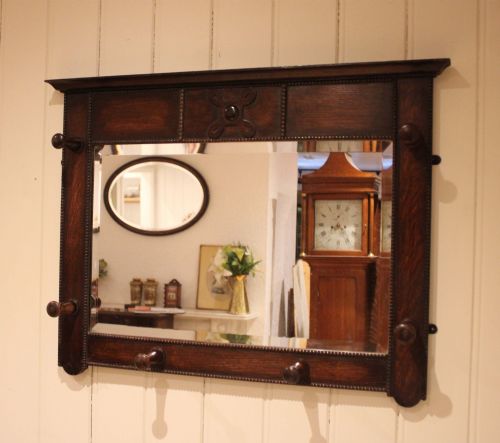
Most examples take the form of wall-mounted wooden boards fitted with metal hooks and a central glass plate, whilst larger iterations stand on the floor as complete hall stands with umbrella trays. Surviving pieces draw on Victorian, Late Victorian, Gothic Revival, Edwardian, Victorian Equestrian Novelty, and Art Deco styles.
Buyers encounter formats ranging from compact oak wall mirrors with integrated hooks to expansive mahogany hall stands combining coat rails, hat shelves, and marble surfaces. The combination of reflective glass and functional peg hardware remains the defining characteristic across all listed objects.
How they were made
Cabinetmakers constructed these pieces using solid timbers such as oak, mahogany, and walnut, frequently shaping the wood into backplates that supported heavy brass, cast iron, or iron hooks. Metal elements such as horseshoe frames and tack mounts appeared in specialised novelty pieces, while iron served structural roles in industrial French Art Deco designs.
Glass plates featured bevelling to catch the light at the edges, secured into wooden frames often complemented by marble inserts on larger hall stands. Joinery methods relied on traditional woodworking techniques appropriate to the 19th Century and early 20th Century periods.
Vintage Coat Peg Mirror Retail Price Guide 2026
Typical asking prices for vintage coat peg mirror among the pieces listed under this phrase on Sellingantiques today, from the lower quarter to the upper quarter. They describe what is for sale here now, not the wider market.
Periods represented span from the 19th Century and Victorian era through the Edwardian period up to 1920.
What varies in quality
The choice of timber establishes the initial grade of a piece, with figured mahogany and selected oak demonstrating greater substance than utilitarian alternatives. The density of the grain and the weight of the supporting backboard determine how securely the assembly holds under the daily load of heavy garments.
Hardware specification marks the difference between standard production and superior craftsmanship, visible in the weight of cast brass hooks and the quality of the bevelled mirror glass. Novelty execution, such as the sculptural detail in equestrian horseshoe designs, elevates the workmanship above plain domestic utility.
The Vintage Coat Peg Mirror Glossary
- Hall stand
- A composite hall furniture piece incorporating a mirror, coat hooks, a glove drawer, and umbrella stands. These large items dominate the entrance space in larger period houses.
- Bevelled glass
- Mirror glass featuring an angled, polished edge that thins towards the perimeter. This treatment adds a decorative reflective quality to the glass plate.
- Gothic Revival
- An architectural and decorative style drawing on medieval forms. In these pieces, it manifests in pointed arches, heavy mouldings, and structural ironwork.
- Equestrian novelty
- A design theme incorporating horse-related motifs such as horseshoes and riding tack. These items reflect 19th Century sporting interests.
- Art Deco
- A design movement from the early 20th Century favouring streamlined industrial forms and geometric lines. In hat and coat racks, it appears through iron construction and functional shelf arrangements.
Vintage Coat Peg Mirror: Frequently Asked Questions
Where should I hang a coat peg mirror?
These pieces suit entrance halls, porches, and narrow corridors where wall space allows for both hanging coats and checking reflections. Their dual purpose makes them practical additions right by the front door.
Ensure the wall structure can support the combined weight of the timber backplate, the mirror, and heavy winter garments loaded onto the metal pegs.
How do I date an oak hall mirror?
Dating relies on stylistic markers and timber selection, shifting from ornate Victorian carvings and Gothic Revival motifs to simpler Edwardian oak and 19th Century golden tones. The presence of specific hardware styles, such as heavy brass hooks, helps anchor the piece to its era.
Examine the construction methods at the back of the board, as older 19th Century items show different joinery and fixings compared to 1920s examples.
What is a horseshoe coat rack?
A horseshoe coat rack is a novelty piece incorporating iron or brass horseshoes into the frame around the mirror and hooks. These items reflect Victorian equestrian interests.
They often combine tack rack elements with the horseshoe motif, serving both functional storage and decorative thematic display.
Are hall stands and wall mirrors the same?
Wall mirrors with coat hooks mount directly onto a vertical surface as a single compact unit. Hall stands are larger freestanding or floor-supported items that often include umbrella wells and marble bases.
Both categories fall under the vintage coat peg mirror group, though hall stands require significantly more floor space.