
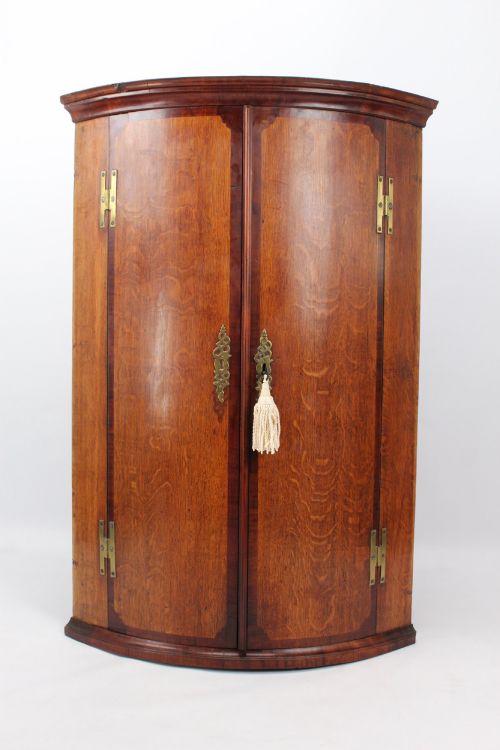
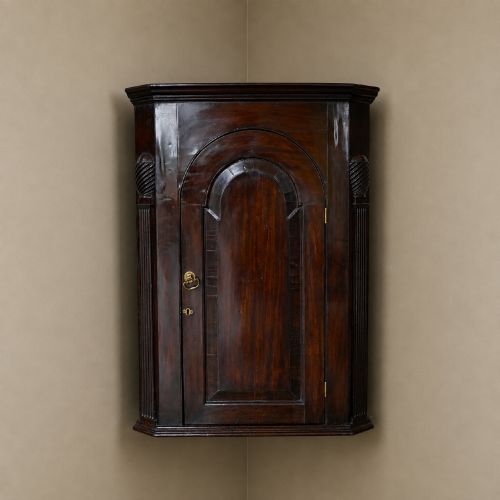
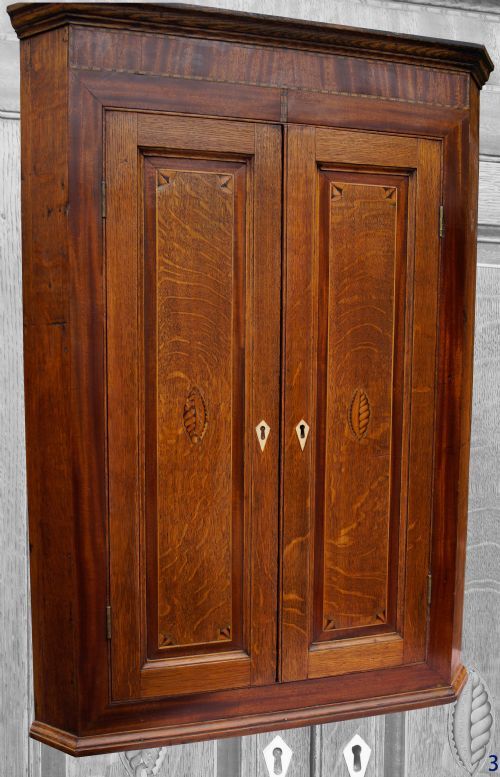
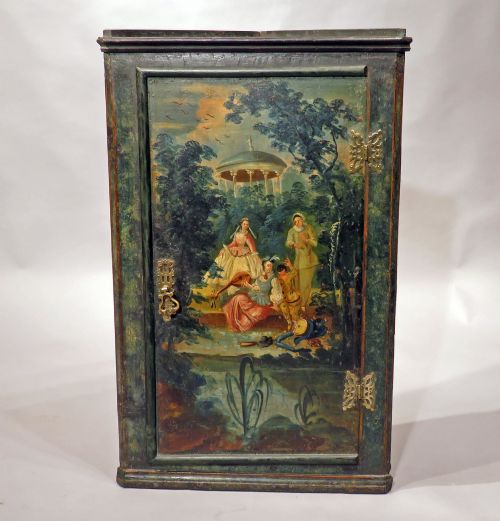
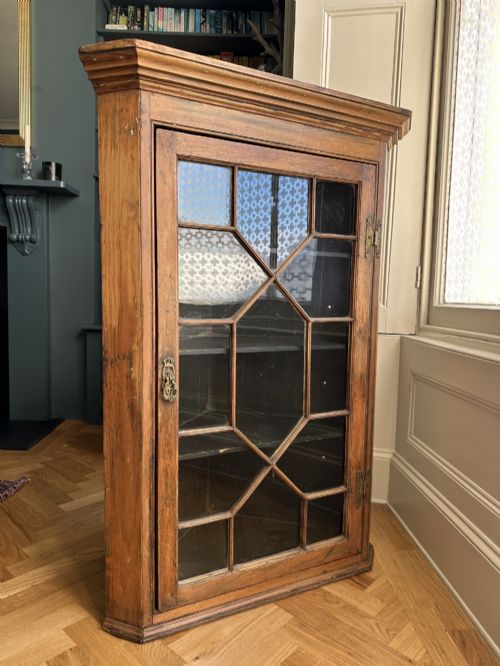
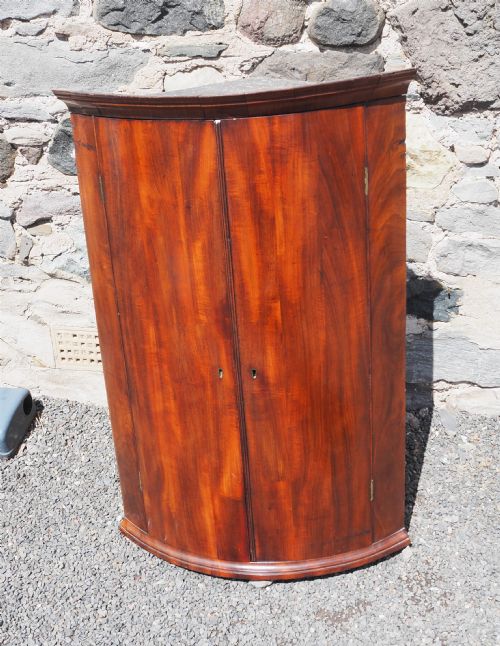


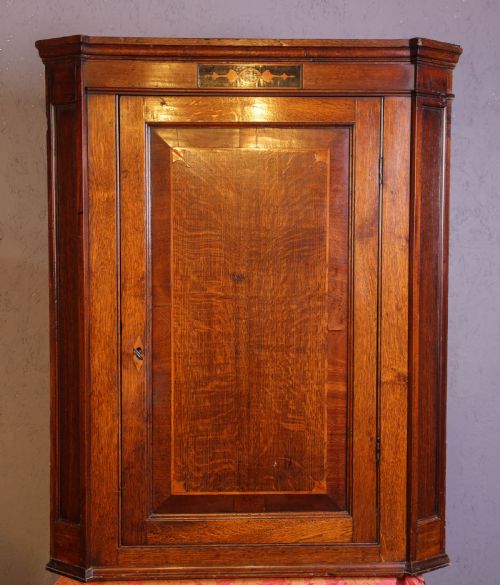


Wooden Hanging Corner Cabinet
A wooden hanging corner cabinet solves the eternal problem of dead vertical space by turning an empty room angle into a display point.
Wooden Hanging Corner Cabinet
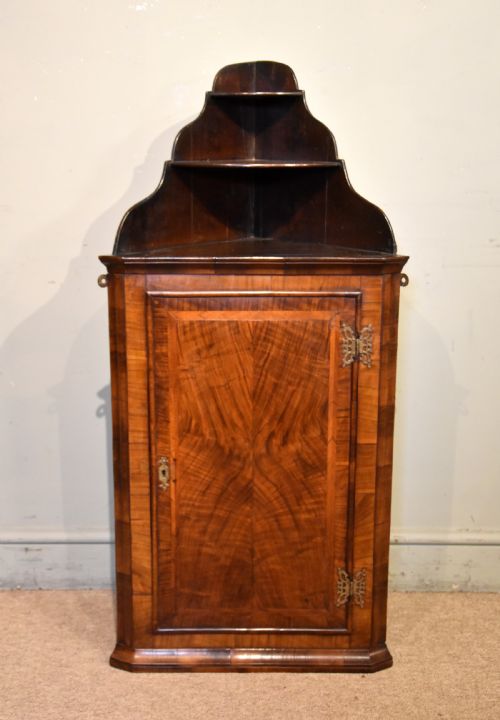
A wooden hanging corner cabinet turns unused room angles into storage, utilising wall space that standard furniture leaves empty. These pieces sit flush against two adjoining walls, projecting forward into the room with either a flat front or a curved bow front.
Most examples you meet on this page date from the Georgian period through to the nineteenth century, constructed primarily to hang securely from wall studs. They range from utilitarian pine and oak cupboards intended for modest rooms to finely figured mahogany and walnut versions made for formal reception spaces.
Materials and construction
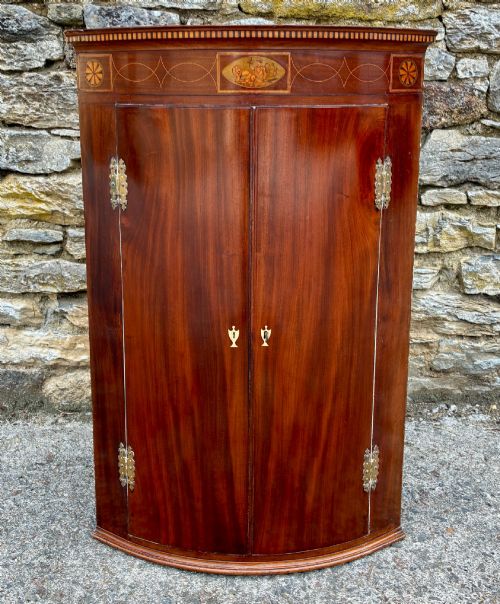
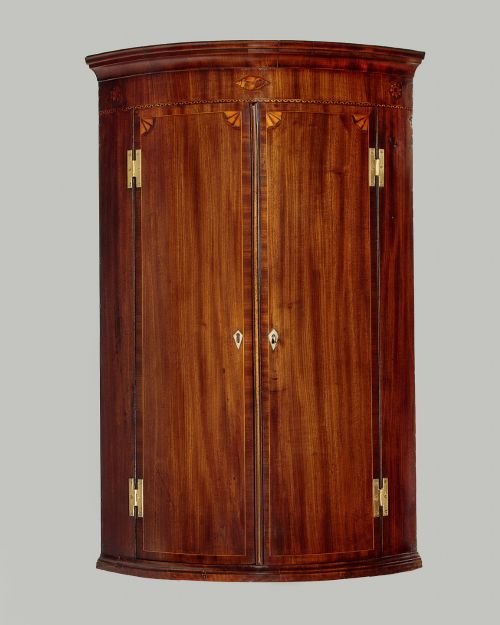
Cabinetmakers built these carcases using native timbers like oak, elm, and pine for structural integrity, often applying high-status face veneers of mahogany, walnut, or plum pudding mahogany. Boxwood stringing and contrasting inlay frequently accent the door panels and cornices on refined examples.
Doors swing on brass H-hinges or butt hinges, securing with working brass locks and escutcheons. Interior configurations typically feature shaped wooden shelves, sometimes accompanied by painted surfaces or small spice drawers.
The selection here spans from early eighteenth-century oak and walnut pieces through to nineteenth-century pine, mahogany, and arts and crafts wall cupboards.
Assessing quality and proportion
Quality rests heavily on the choice of timber figure and the crispness of architectural details such as broken arch pediments and dental cornices. Better examples display harmonious proportions where the curve of a bow front meets the wall uprights without awkward overhangs.
The integrity of the structural joints and the retention of original brass hardware and painted interiors elevate an ordinary utilitarian cupboard into a piece of distinct cabinet-making merit.
The Wooden Hanging Corner Cabinet Glossary
- Bow front
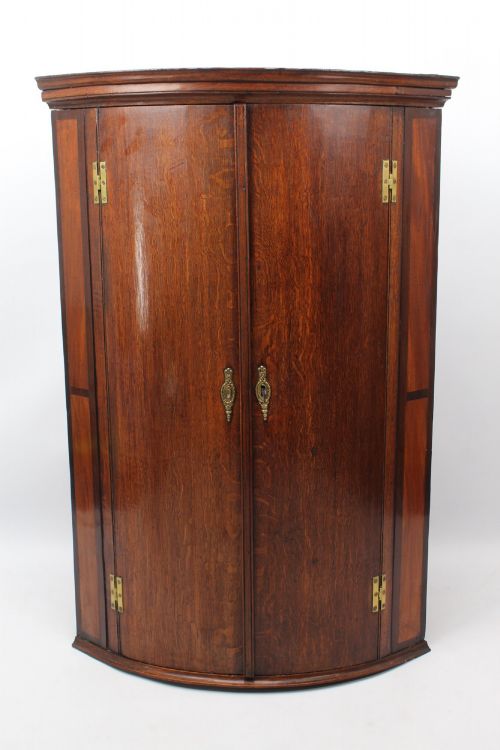
- A convex, outwardly curved front facade that softens the sharp angles of the corner. This curved profile requires skilled joinery to shape the rails and door frame.
- Pediment
- The decorative architectural crowning structure above the main cabinet body. Examples include broken arch designs that often centre on a carved urn or finial.
- Escutcheon
- A protective plate surrounding the keyhole, usually fashioned from brass. It prevents the wood around the lock from splintering during daily use.
- Stringing
- Thin inlaid lines of contrasting timber, such as boxwood, used to outline panels and borders. This linear detail defines the geometric ornamentation of Georgian and Regency pieces.
Wooden Hanging Corner Cabinet: Frequently Asked Questions
How do I hang a heavy wooden cabinet safely?
These cabinets rely on strong internal fixing blocks or pattresses attached securely to the back frame. You must screw directly into wall studs or use heavy-duty toggle anchors rated for the combined weight of the timber and its contents.
Because corner units project outward, the leverage places significant strain on the upper fixings. Distributing weight evenly across multiple anchor points ensures the piece hangs flush and secure.
What rooms suit a corner cupboard best?
Dining rooms and hallways offer the ideal environment for displaying ceramics or glassware behind wooden or glass doors. Their compact footprint leaves floor space open while utilising awkward intersections.
Kitchens and studies also benefit from the vertical storage they provide without crowding limited room layouts. Their historical role as practical receptacles makes them versatile for modern utility.
How do I tell oak from mahogany pieces?
Oak exhibits a coarse, visible grain with characteristic silver medullary rays flecked across the surface. It tends to carry a warm, golden-brown tone that deepens with age.
Mahogany presents a smoother, tighter grain pattern ranging from reddish-brown to dark chocolate. Premium cuts like plum pudding mahogany display dense, mottled figuring across the door panels.
Are painted interiors original on these antiques?
Many period cupboards feature old or original painted surfaces inside to brighten the display area behind the door. Colours often include soft greens, blues, or off-white washes applied to the backboards and shelves.
Original pigment shows appropriate craquelure and wear consistent with age. These painted treatments add considerable charm and provide a contrasting backdrop for displayed items.