


Wooden Hall Pew
A wooden hall pew grounds an entrance hall, offering sturdy seating built from oak, pine, or walnut across centuries of craftsmanship.
Wooden Hall Pew
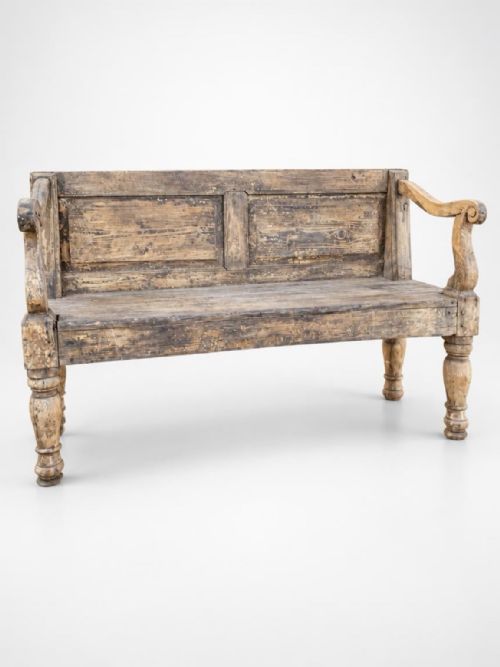
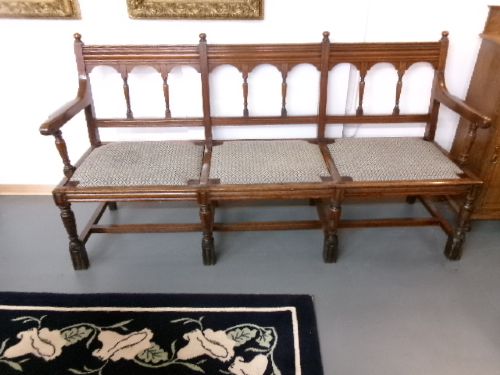
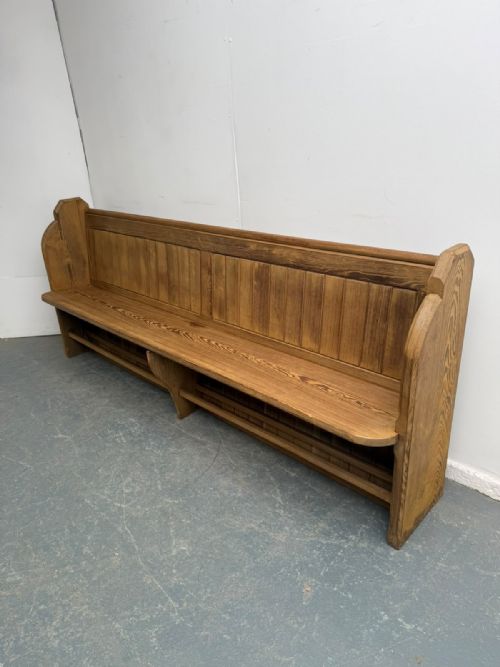
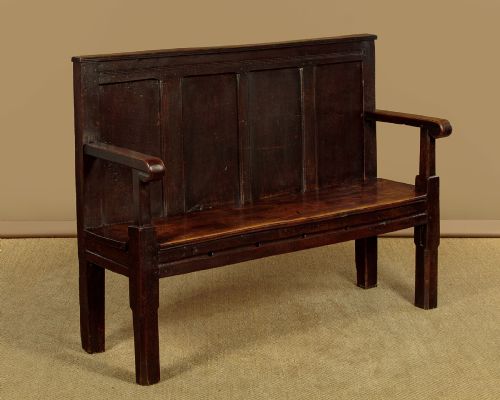
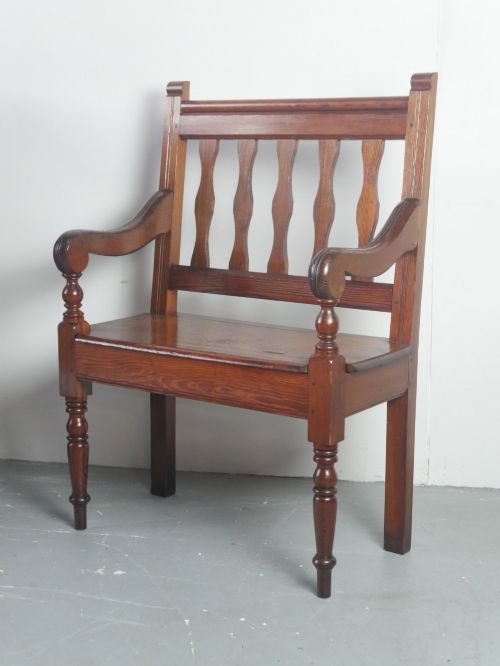
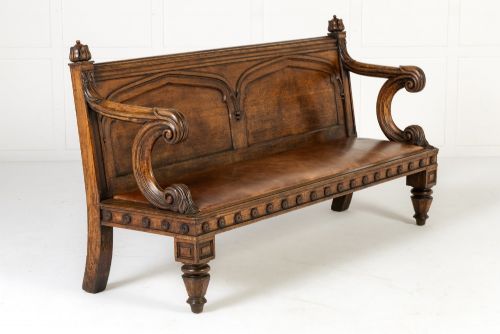
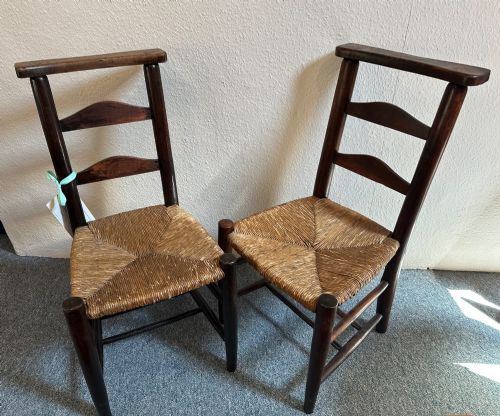
A wooden hall pew answers the need for practical corridor seating, appearing on this page as settles, church pews, tavern benches, and architectural hall seats. These pieces originate from English country houses, European farmhouses, and ecclesiastical settings, spanning the eighteenth, nineteenth, and early twentieth centuries.
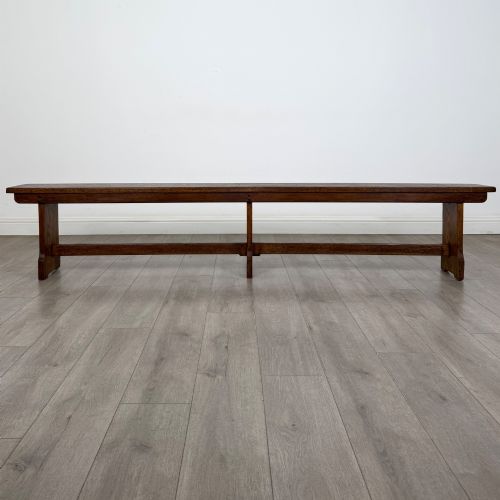
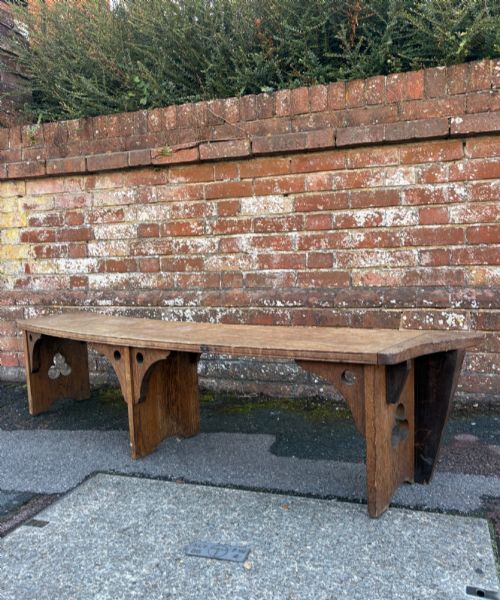
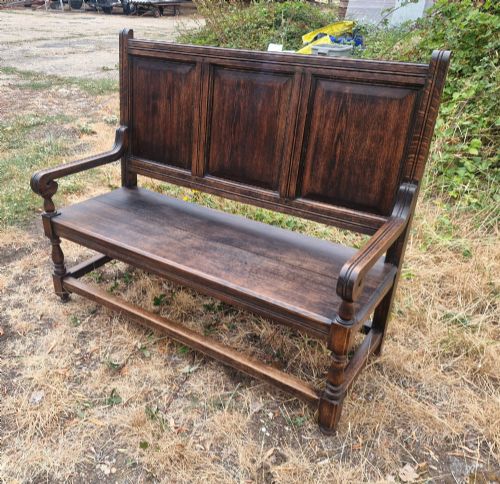
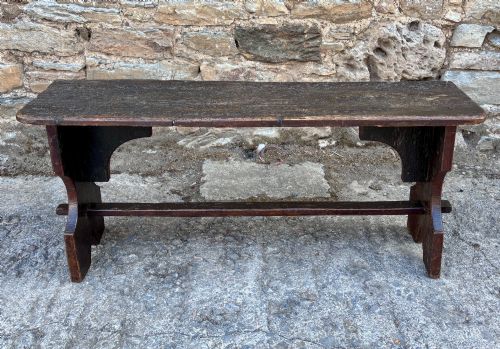
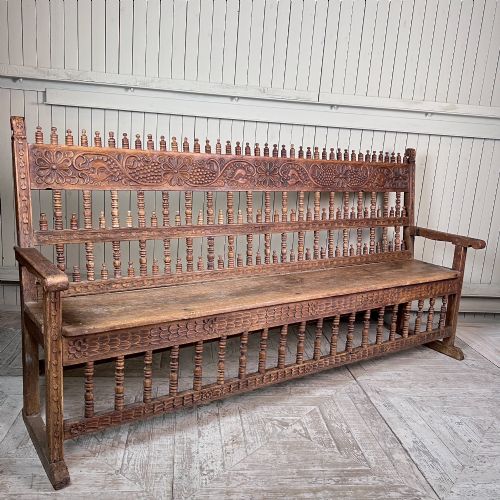
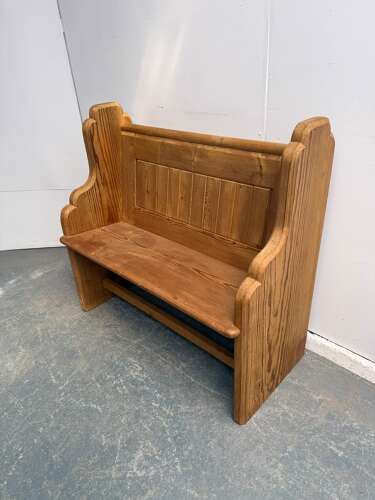
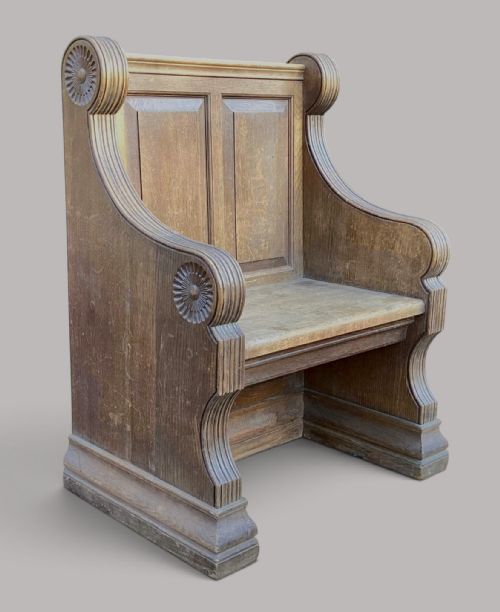
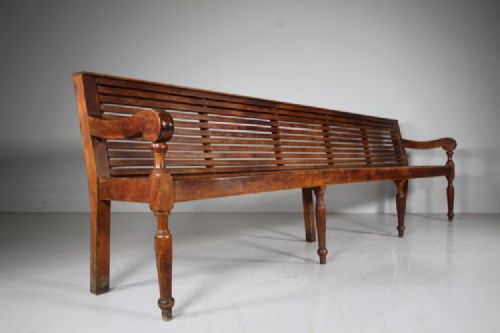
Oak and pine dominate the selection, shaped into long tavern benches, panelled seats, and high-backed settles. Buyers encounter both austere utilitarian forms and pieces bearing Gothic Revival tracery, trefoil carvings, or painted finishes.
Materials and Construction
Joiners built these benches using solid timber such as oak, pitch pine, walnut, and chestnut, often employing traditional panelled construction and pegged joints for stability. Surfaces received wax treatments, historical paint layers, or bleach to preserve the wood.
Details include architectural trefoil carvings, leather elements, and brass accents, alongside structural modifications like barrel backs designed to block cold draughts in large entryways.
Wooden Hall Pew Retail Price Guide 2026
Typical asking prices for wooden hall pew among the pieces listed under this phrase on Sellingantiques today, from the lower quarter to the upper quarter. They describe what is for sale here now, not the wider market.
Listings span the eighteenth, nineteenth, and early twentieth centuries, incorporating Victorian, Edwardian, and Georgian periods.
Standards of Make
Quality rests in the integrity of the timber and the honesty of the construction, distinguishing sturdy structural framing from lesser or overly restored examples. Heavier oak and chestnut builds from earlier periods command attention for their dense grain and substantial presence.
The sophistication of the joinery and carving - from simple country pine assemblies to deliberate Gothic Revival architectural forms - determines the character of each piece.
St Pauls Cathedral London
The Wooden Hall Pew Glossary
- Settle
- A wooden bench with a high back, solid arms, and often a storage box beneath the seat. This form protected sitters from cold draughts in historical hallways.
- Gothic Revival
- An architectural and decorative style popular in the nineteenth century, characterised by pointed arches, trefoil motifs, and heavy timber construction.
- Tavern Bench
- A long, narrow seating form designed for public houses or communal spaces, typically featuring straightforward wooden legs and sturdy plank tops.
- Ecclesiastical Furniture
- Pieces originally manufactured for churches, chapels, or organ lofts, often built from pine or oak with tall backs or specialised supports.
Wooden Hall Pew: Frequently Asked Questions
How do I choose the right size?
Measure your hallway length and clearance carefully, noting that these benches range from compact single-seater church pews to extensive multi-metre tavern seating.
Keep proportions in mind so the high back or solid arms of a settle do not overwhelm a narrow corridor.
Where should I place a wooden hall pew?
Position your bench against a main hallway wall to create an immediate focal point and a practical spot for putting on shoes.
Ensure there is enough walking space opposite the seat for doors to open and people to pass comfortably.
How do I care for antique pine and oak?
Dust the timber regularly with a dry cloth and apply a quality beeswax periodically to nourish waxed or unfinished surfaces.
Protect the wood from direct heat sources and strong sunlight to prevent the historic boards from drying out or splitting.