


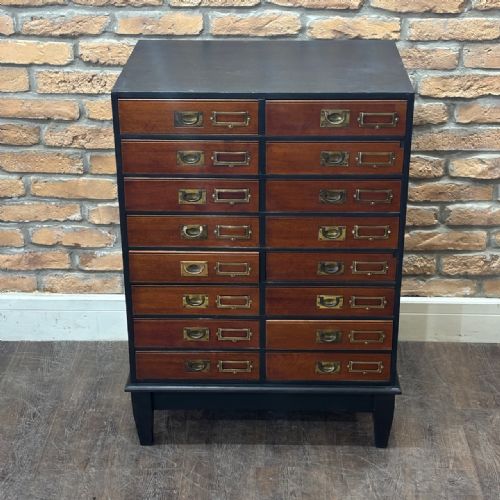
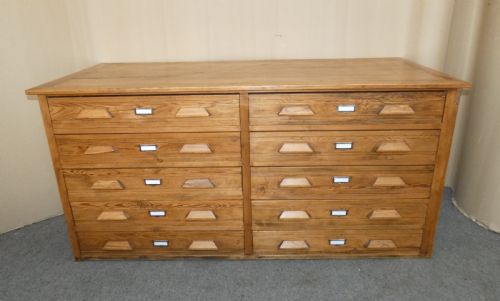
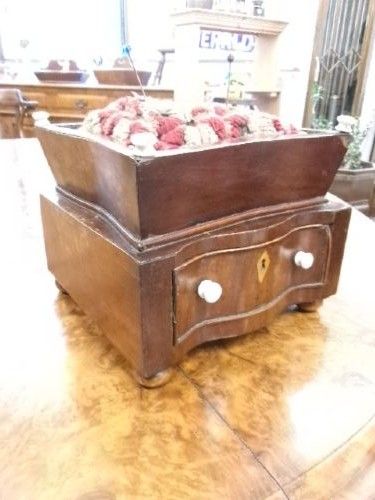
Wooden Haberdashery Drawers
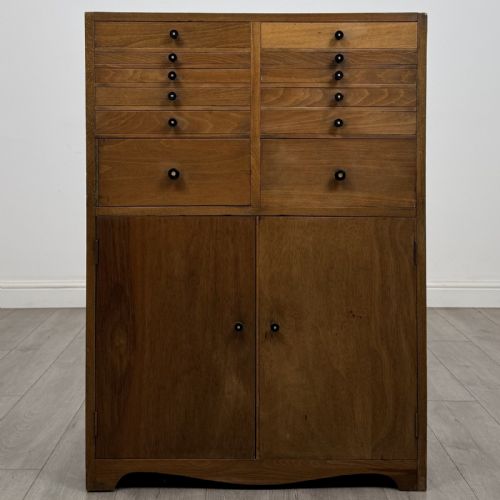
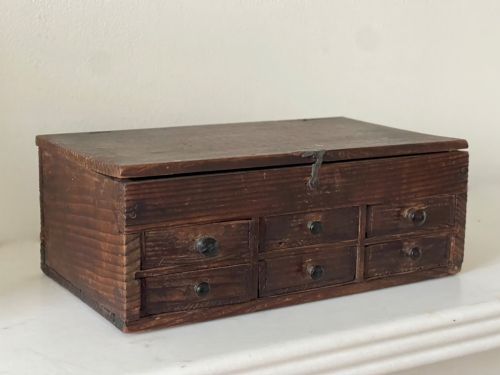
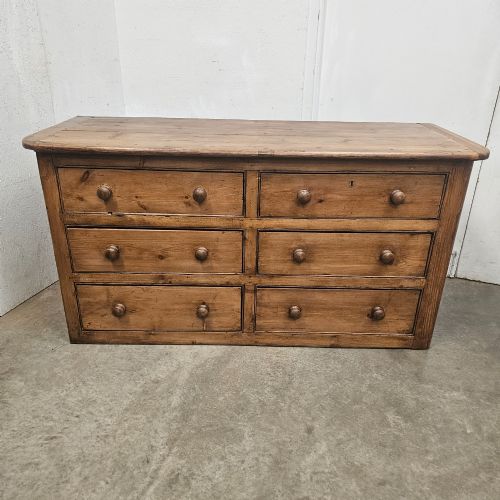
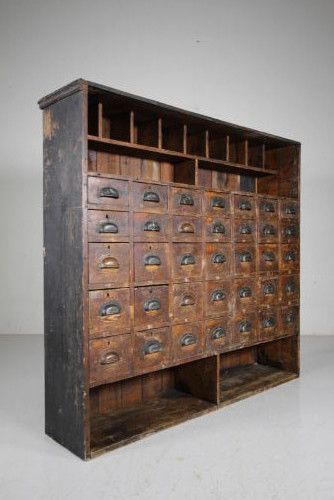
Wooden haberdashery drawers are multi-compartment storage units originating from shops and workshops, prized by collectors for heavy-duty utility and period character.
Wooden Haberdashery Drawers
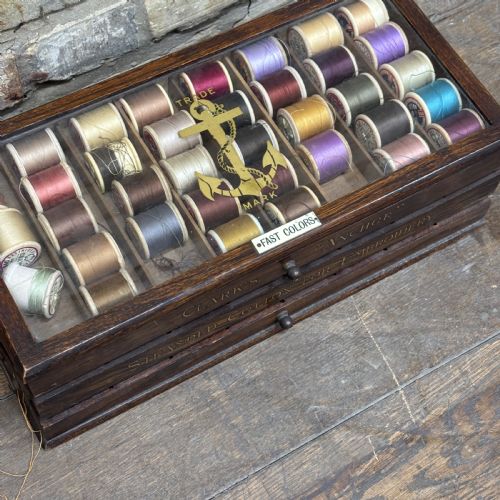
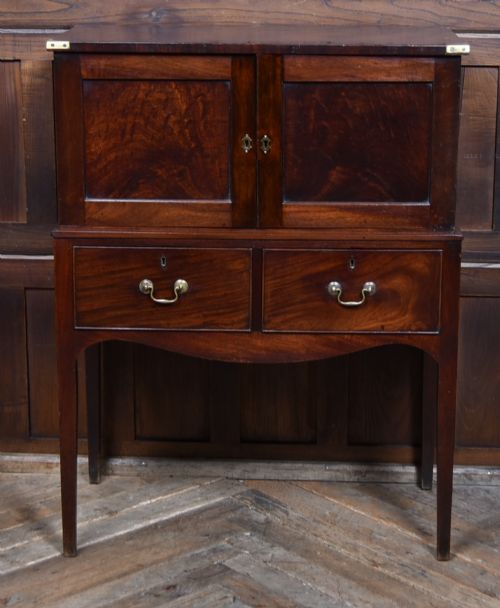
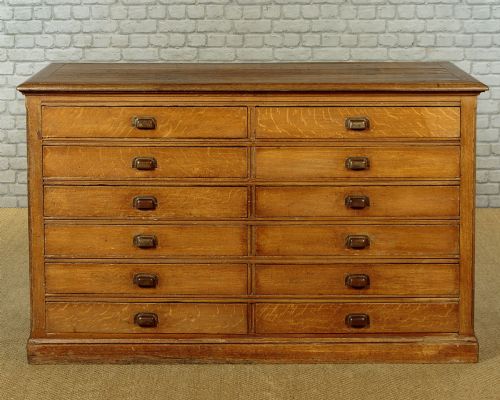
Wooden haberdashery drawers comprise multi-drawer banks, storage cabinets, and shop counters originating from commercial, retail, and industrial settings. You will encounter pieces spanning the nineteenth century through the 1930s, reflecting Victorian and Edwardian shopfitting traditions.
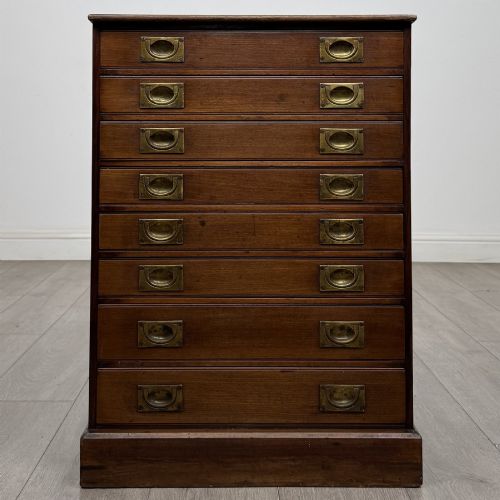
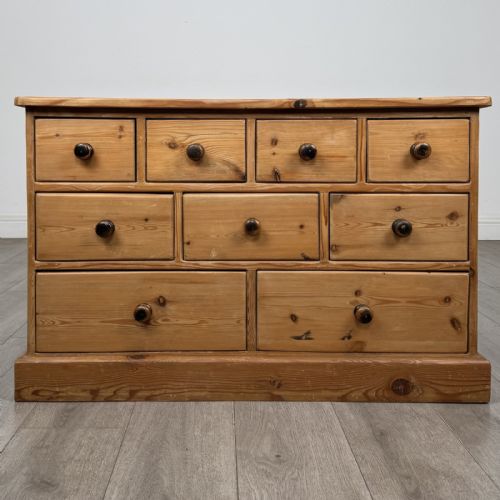
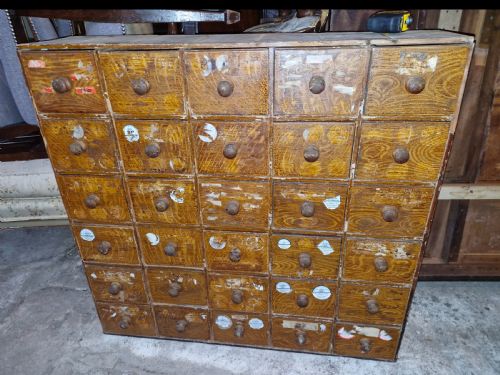
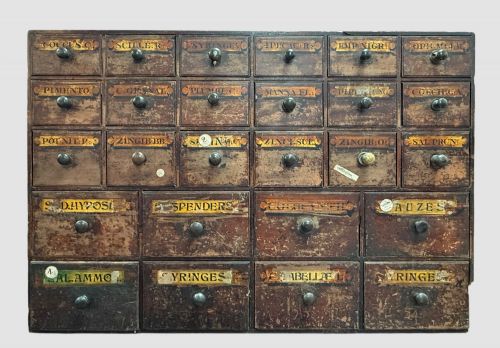
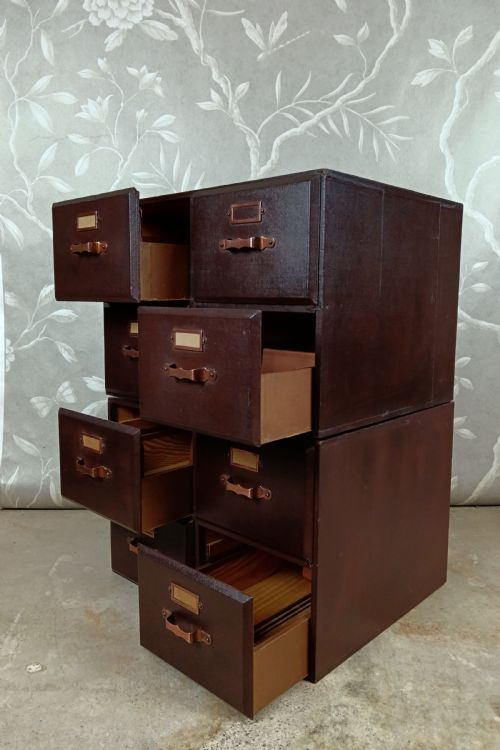
Banks of drawers and drapers chests serve as the primary forms available, alongside specialist pieces like apothecary chests and filing cabinets. These items provide numerous small compartments originally designed to organise ribbons, cottons, or hardware.
Originating from merchant shops, draperies, and workshops, these cabinets transfer practical commercial storage directly into domestic interiors. The surviving examples demonstrate heavy construction intended for daily retail use.
Materials and Construction
Carpenters utilised durable timbers such as pine, mahogany, oak, and walnut to build these functional storage banks. Solid wood construction ensures structural integrity across numerous narrow drawer frames.
Brass handles, label holders, and glass panels frequently complement the timber framework. Painted surfaces and stained deals also appear, recording the utilitarian finishes applied in period shops and offices.
Wooden Haberdashery Drawers Retail Price Guide 2026
Typical asking prices for wooden haberdashery drawers among the pieces listed under this phrase on Sellingantiques today, from the lower quarter to the upper quarter. They describe what is for sale here now, not the wider market.
Listings span the nineteenth century through the 1930s, incorporating Victorian, Edwardian, and industrial styles built from pine, mahogany, oak, and walnut.
Distinguishing Quality in Period Storage
The scale and drawer configuration dictate the utility and visual impact of a cabinet. Multi-drawer units with twenty or more matching compartments demonstrate substantial commercial ambition compared to smaller domestic variants.
Timber selection and hardware integrity reveal the original tier of manufacture. Fine mahogany or walnut framing combined with original brass pulls separates high-end retail shopfittings from standard workshop pine pieces.
Luxmore's of Ilfracombe
The Wooden Haberdashery Drawers Glossary
- Haberdashery cabinet
- A multi-drawer retail storage unit designed for displaying and sorting small sewing goods, ribbons, and fastenings. These cabinets typically feature banks of shallow drawers.
- Bank of drawers
- A large assembly of numerous small drawers housed within a single wooden carcass. Such units originate from commercial shops, offices, and apothecary stores.
- Deal
- A British term for softwood timber, specifically fir or pine. Stained deal appears frequently in nineteenth-century utilitarian furniture.
- Graduated drawers
- A series of drawers arranged vertically where the depth increases from top to bottom. This construction balances aesthetic proportion with storage capacity.
- Campaign chest
- A portable set of drawers built in sections with recessed brass handles for transport. These pieces derive from military usage but extend into nineteenth-century retail contexts.
Wooden Haberdashery Drawers: Frequently Asked Questions
What were wooden haberdashery drawers used for?
Merchants used these multi-drawer cabinets to sort and display small retail goods like cottons, buttons, and ribbons behind shop counters.
Today, owners utilise the numerous compartments to organise stationery, craft supplies, and small household collections.
How do I date a bank of drawers?
Examine the timber species, handle designs, and construction joints to determine the period of manufacture. Nineteenth-century pieces often employ hand-cut dovetails and heavy pine or mahogany carcases.
Twentieth-century examples frequently incorporate standardised hardware, plywood backs, or patent filing mechanisms characteristic of 1900s to 1930s offices.
Where do drapers chests originate?
Drapers chests originate from nineteenth and early twentieth-century textile shops and haberdashers. Shopkeepers relied on these banks of shallow drawers to keep merchandise ordered and accessible to customers.
Many surviving cabinets transition from commercial premises into domestic settings as freestanding storage units.
Can I use these cabinets in a modern kitchen?
These sturdy wooden cabinets integrate well into modern kitchens as islands, sideboards, or pantry storage. The shallow drawers suit cutlery, linens, and dry goods.
Ensure the timber surface receives appropriate sealing to withstand kitchen environments and moisture.