


Wooden Games Box Set
A wooden games box set brings together pastimes in fitted timber cases, offering lasting craftsmanship for collectors of parlour entertainments.
Wooden Games Box Set
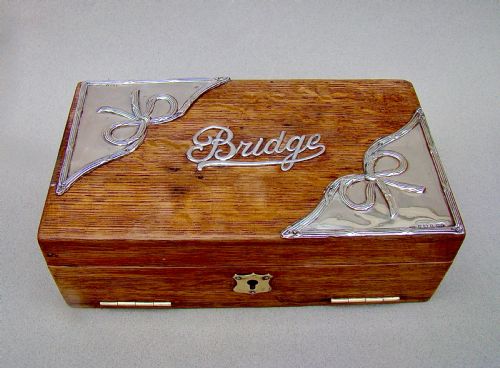
When searching for a wooden games box set, buyers encounter nineteenth and early twentieth century compendiums, fitted boxes, and individual pastime containers. These items span Victorian, Edwardian, and later periods, originating from English workshops, continental European carvers, and Chinese exporters.
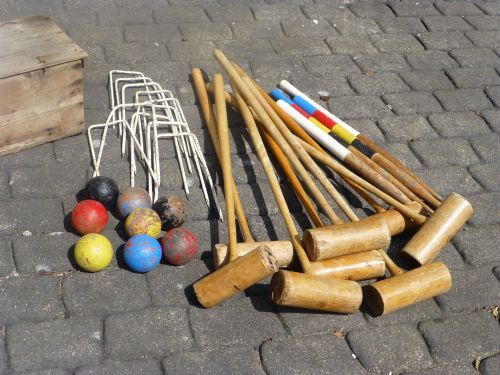
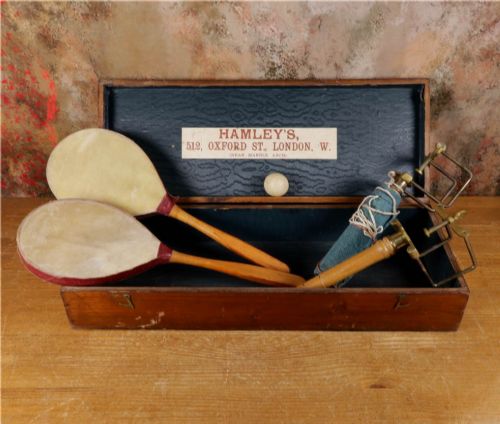
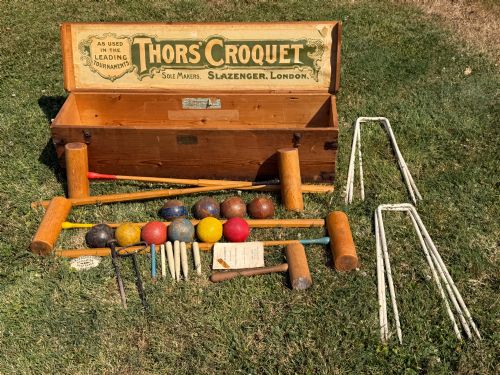
The selections on this page range from modest domino boxes and cribbage cribs to large burr walnut compendiums containing chess, backgammon, and cards. Outdoor pastimes like croquet and lawn tennis also appear housed in their original pine storage chests.
How they were made
Cabinet makers utilised dense timbers like mahogany, walnut, rosewood, and oak for the outer carcasses, often embellishing surfaces with satinwood inlay or intricate Tunbridge Ware mosaics. Interiors were partitioned using softer pine and lined with baize or velvet to secure playing pieces during travel.
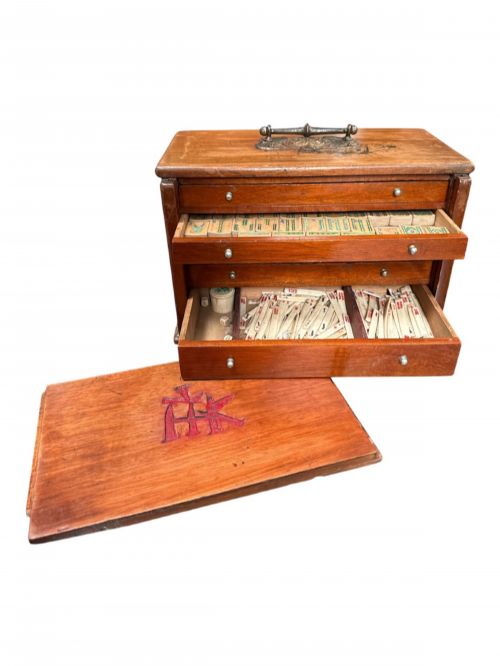
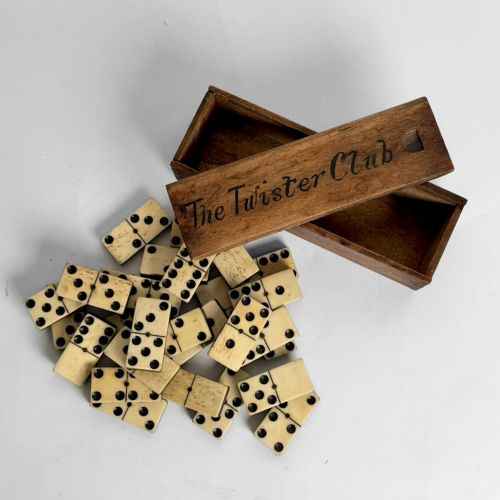
Internal components relied on traditional turning, carving, and moulding techniques. Boxwood and ebony yielded weighted Staunton chess pieces, draughtsmen, and teetotums, whilst bone and ivory served for dominoes, mahjong tiles, and miniature sets.
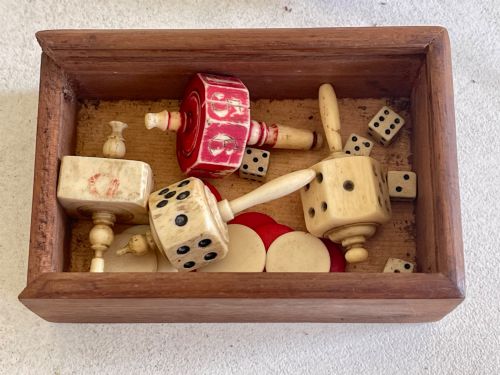
Bone prisoner of war teetotums offer a glimpse of pastimes whittled away in cramped quarters centuries ago.
What varies in quality
The standard of a compendium rests on the structural integrity of the timber carcass and the precision of its internal joinery. Finely fitted compartments designed to slide or lift smoothly indicate superior carpentry compared to basic nailed partitions.
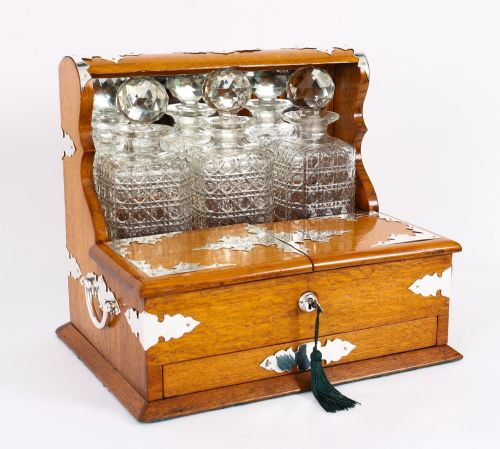
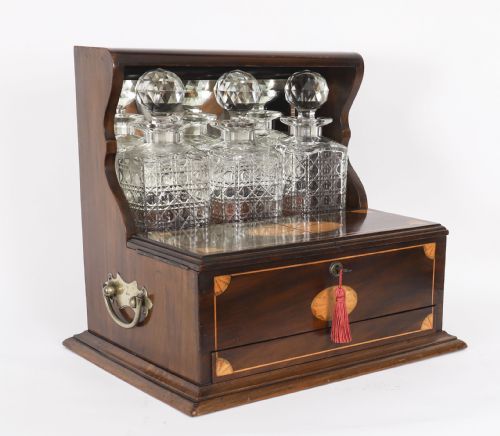
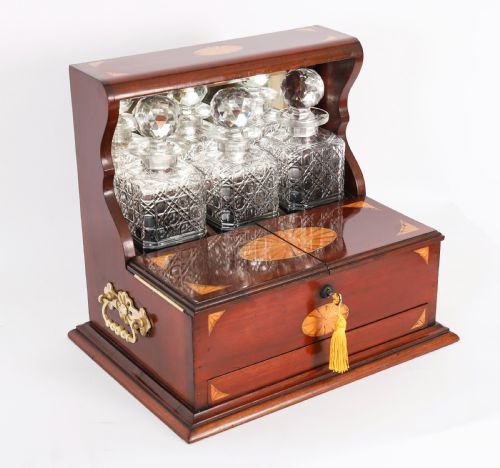
Detailing in the playing pieces themselves marks the boundary between everyday parlour sets and exhibition grade examples. Hand carved chessmen, substantial crystal decanters within a tantalus, and intact original boxes elevate the merit of a grouping.
Levi & Salaman·Slazenger·A.W.Gamage·F.H.Ayres Ltd·Jaques·British Chess Company
The Wooden Games Box Set Glossary
- Compendium
- A single fitted box containing multiple distinct parlour games, such as chess, backgammon, and cards. These multi tier receptacles represent the height of Victorian indoor entertainment.
- Tantalus
- A locking wooden frame holding decanters to prevent access without a key. In games compendiums, this mechanism is frequently incorporated into the main cabinet structure.
- Staunton
- The standard design for tournament chess pieces introduced in the mid nineteenth century. Characterised by heavily weighted bases and clear, recognisable forms for each piece.
- Tunbridge Ware
- Woodworking characterised by mosaic patterns formed from tiny geometrically arranged coloured wood blocks. This decorative technique adorned nineteenth century cribbage boxes and small containers.
- Teetotum
- A multi sided spinning top used for gambling or parlour pastimes. Early examples are often fashioned from carved bone.
Wooden Games Box Set: Frequently Asked Questions
What games are typically found inside?
These sets frequently house chess, backgammon, draughts, dominoes, and card games within partitioned wooden compartments. Larger compendiums add cribbage boards, dice, and occasionally roulette wheels.
Outdoor pursuits also appear in fitted timber containers, notably croquet sets with pine boxes and lawn tennis equipment from the early twentieth century.
How do I identify a Victorian compendium?
Victorian examples generally utilise timbers like walnut, rosewood, or mahogany, often featuring brass mounts and fitted interior trays lined with baize. Construction methods include dovetail joints and hand turned playing pieces.
Design motifs reflect nineteenth century tastes, ranging from plain golden oak tantalus cabinets to elaborate marquetry and Tunbridge Ware decoration.
Are the playing pieces original to the box?
Many sets retain their matching period pieces, particularly when housed in specialised fitted trays or custom compartments. Boxwood and ebony chessmen or bone dominoes often show wear consistent with the age of the exterior case.
Collectors look for matched sets where the wood patina and turning style align precisely with the era of the container.
How should I care for a wooden games box?
Keep these items away from direct sunlight and dramatic humidity changes to protect the timber and internal baize linings. Occasional treatment with suitable furniture wax maintains the finish of walnut, oak, and mahogany surfaces.
Store playing pieces carefully within their designated slots to prevent friction damage to both the contents and the internal partitions.