
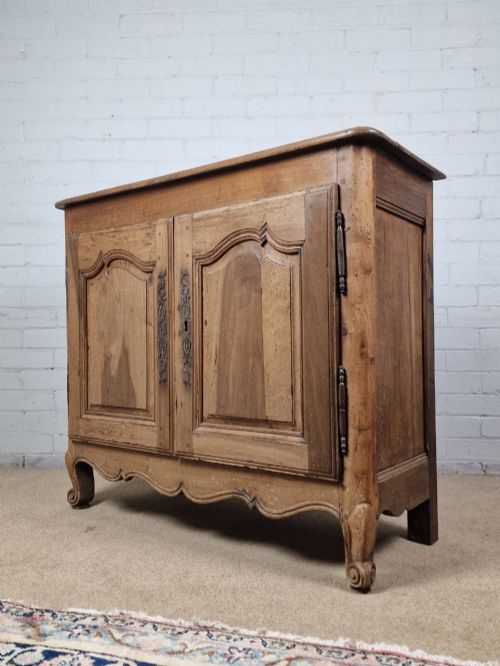
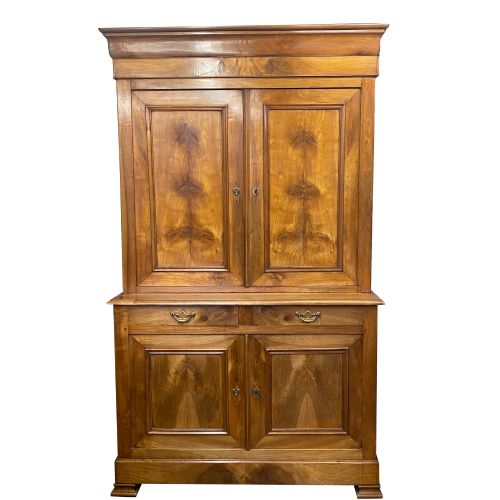
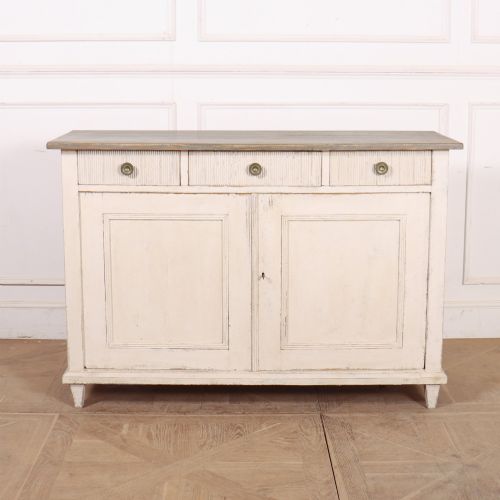
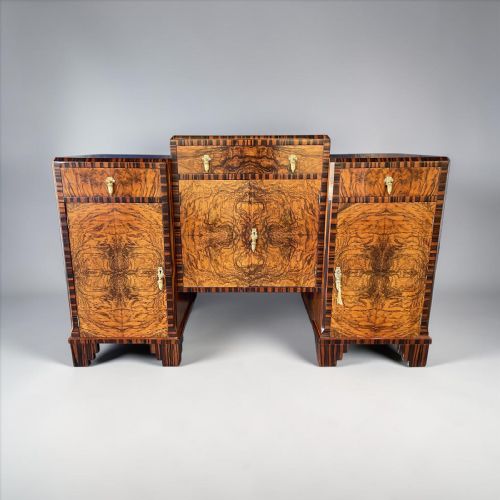
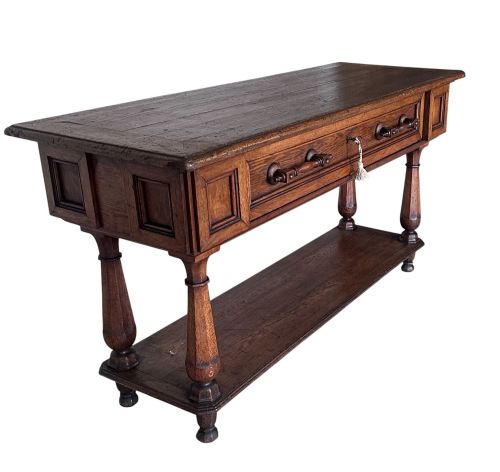
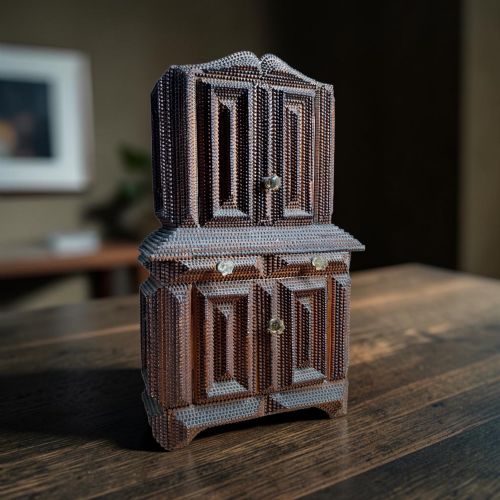
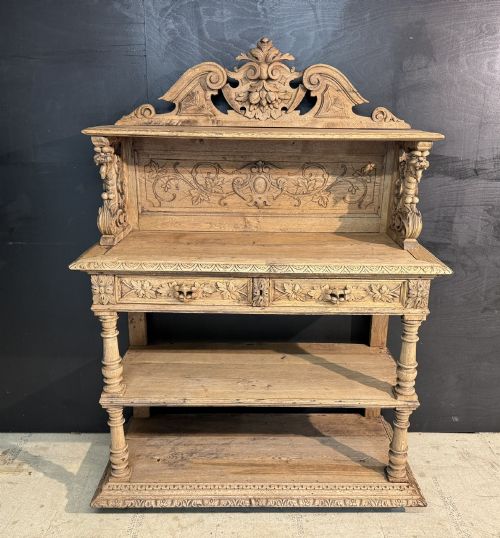
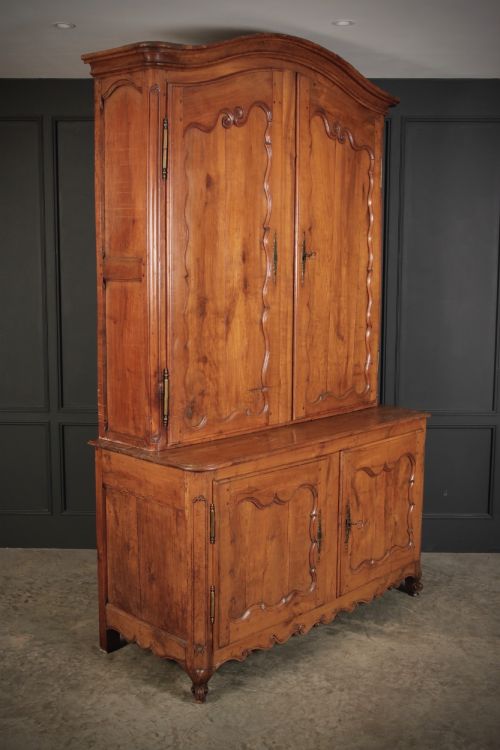
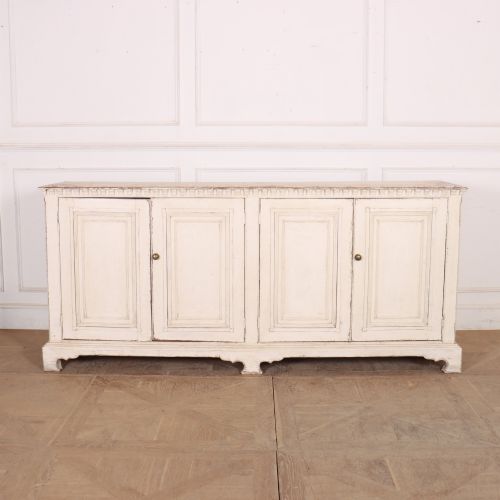
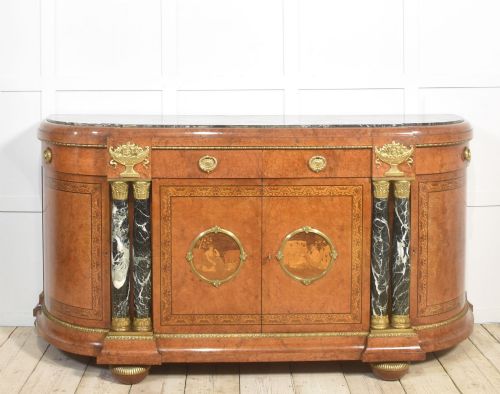
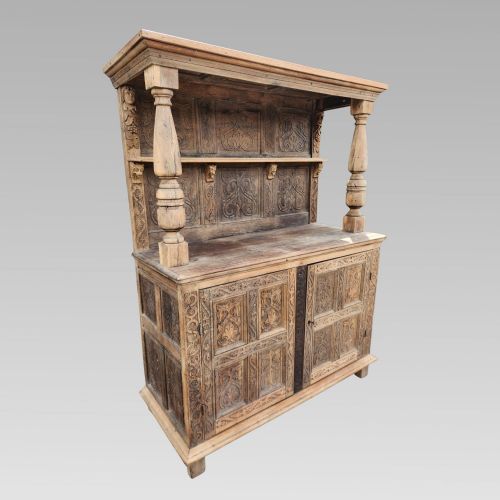
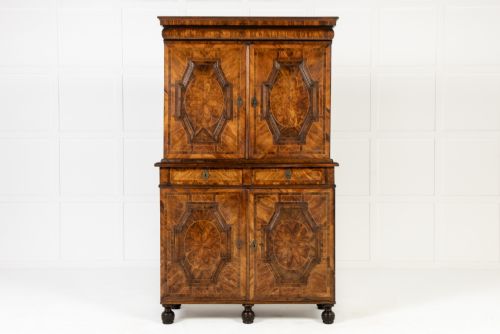


Wooden French Buffet
A wooden french buffet anchors a dining space with substantial storage and regional character.
Wooden French Buffet
A wooden french buffet provides sturdy storage for tableware and provisions in domestic spaces, ranging from low kitchen cupboards to tall dining room enfilades. When searching for a wooden french buffet, buyers encounter practical pieces designed for utility alongside more decorative serving tables.
The pieces listed here span several centuries, with examples originating from the seventeenth century through to the art deco period. Oak, walnut, and cherry wood dominate the selection, often taking the form of sideboards, cabinets, and housekeeper's cupboards.
Regional variations shape these forms, including rustic provincial pieces and elaborate revival designs. Buyers will find items featuring marble tops, brass hardware, and hand-carved details suited to various interior settings.
How they were made
Carpenters constructed these pieces using solid regional timbers such as oak, walnut, cherry wood, and fruitwood. Panels were frequently joined using traditional framing techniques to accommodate seasonal movement in the wood.
Surface finishing relied on natural waxes, oils, and hand-applied paints to protect the timber while developing a deep patina over decades of use. Hardware components in brass and iron were hand-forged or cast to secure doors and drawers.
Listings feature solid timber construction in oak, walnut, and cherry wood across the eighteenth and nineteenth centuries.
What varies in quality
The depth of carving and the crispness of moulded details distinguish standard utility storage from ambitious cabinet-making. Pieces featuring figural carvings or balanced proportions reflect a higher standard of workshop production.
The choice of primary timber impacts the overall character, with dense burr walnut and figured cherry wood denoting finer commissions. Original hardware and undisturbed surface patinas indicate careful preservation over time.
The Wooden French Buffet Glossary
- Enfilade
- A long sideboard or buffet featuring a series of doors along the front, typically designed for dining rooms. This form provides extensive surface and internal storage capacity.
- Housekeeper's cupboard
- A tall storage cabinet traditionally utilised for linen and dry goods. These pieces often feature a multi-part construction with upper shelving and lower drawers.
- Folk art
- Items produced outside formal guild traditions, often displaying idiosyncratic carved or painted decoration. These pieces rely on local materials and vernacular techniques.
- Directoire
- A transitional decorative style bridging Louis XVI and Empire periods, characterised by restrained classical geometry. Furniture from this era favours clean lines over heavy ornamentation.
- Patina
- The surface sheen and colour acquired by wood through age, handling, and light exposure. A desirable patina shows gradual wear without obscuring the grain.
Wooden French Buffet: Frequently Asked Questions
Where should I place a wooden french buffet?
These pieces function well in dining rooms, large hallways, and open-plan kitchens to provide both surface display and concealed storage.
Their substantial presence makes them suitable as focal points against a neutral wall, holding ceramics or lighting.
How do I clean a antique wooden buffet?
Dust the surfaces regularly with a soft, dry cloth to prevent dirt accumulation in carved recesses and mouldings.
Apply a quality beeswax periodically to nourish the timber and maintain the natural lustre without building up heavy residue.
Are these buffets suitable for modern kitchens?
Many examples provide generous internal capacity for dishware, glassware, and dry provisions used in contemporary daily life.
Low serving tables and marble-topped variants also offer practical counter space for food preparation and serving.
How do I identify an eighteenth-century piece?
Examine the construction methods, such as hand-cut joints and timber selection, which typically display regional French provincial characteristics.
Eighteenth-century examples often utilise solid cherry wood or oak with pegged tenons and traditional panel assembly.