




Wooden Framed Nautical Art
Wooden framed nautical art brings maritime history into rooms through framed paintings, dioramas and textiles made across the nineteenth and twentieth centuries.
Wooden Framed Nautical Art
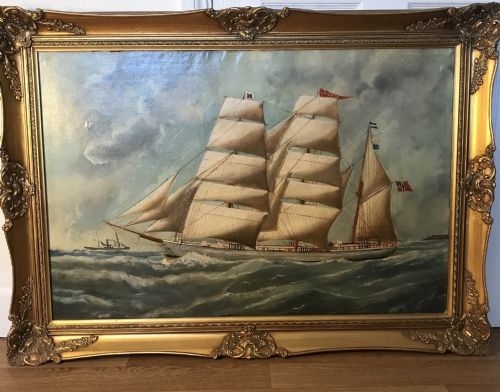
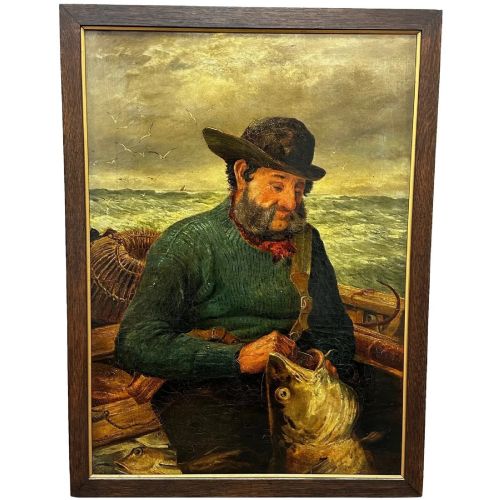
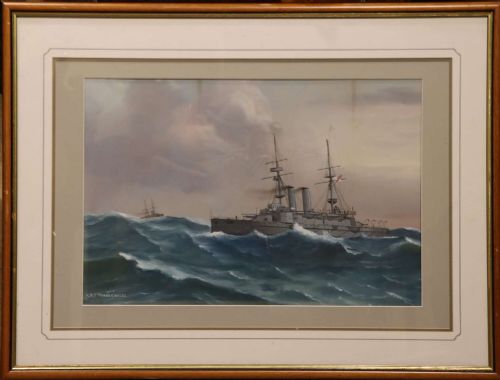
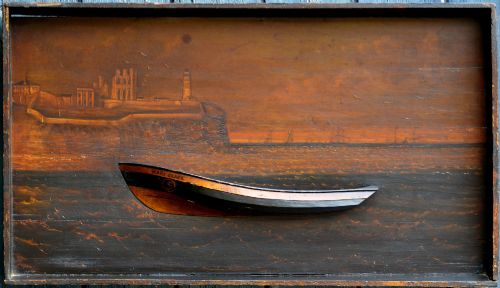
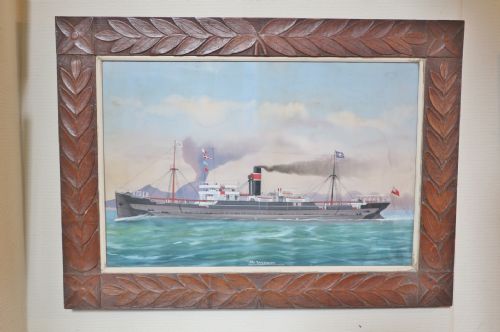
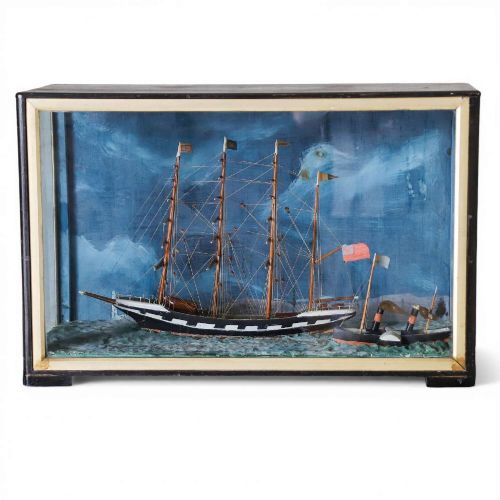
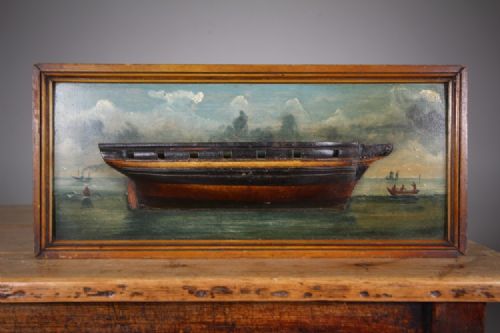
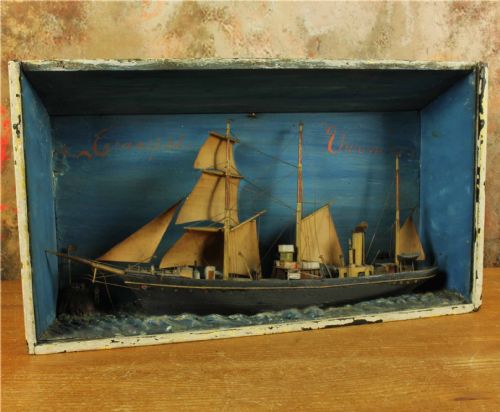
Wooden framed nautical art encompasses maritime paintings, shadow boxes and textile pieces that document shipping and coastal life. When searching this phrase, buyers encounter oil and watercolour paintings alongside detailed three-dimensional dioramas housed in wooden cases.
The pieces span the nineteenth century, the Victorian and Edwardian eras, and into the mid-twentieth century. Most examples on this page date from the nineteenth century or early twentieth century, reflecting naval vessels, steamships and clipper ships.
Forms range from flat framed canvas paintings to complex folk art dioramas incorporating handmade boat models and shell work. These works capture specific vessels like the Thermopylae and broader coastal scenes.
Judging quality and execution
Quality rests in the precision of the maritime rigging, the accuracy of the vessel architecture and the skill of the brushwork. Master painters and detailed model makers achieve a convincing sense of movement in rough waters or full sail.
The integrity of the wooden framing and the preservation of internal elements determine the condition of shadow boxes and dioramas. Pieces that retain their original glass and uncompromised painted backdrops hold greater visual coherence.
Folk art items demonstrate variation through the inventiveness of materials, such as straw work or shell application, where artisan interpretation shapes the character of the object.
Wooden Framed Nautical Art Retail Price Guide 2026
Typical asking prices for wooden framed nautical art among the pieces listed under this phrase on Sellingantiques today, from the lower quarter to the upper quarter. They describe what is for sale here now, not the wider market.
Sailors on long voyages utilised spare wool and embroidery needles to stitch detailed portraits of their sailing ships.
The Wooden Framed Nautical Art Glossary
- Diorama
- A three-dimensional scene enclosed in a box with a glass front, housing handmade boat models and painted backgrounds. These pieces present vessels in motion upon simulated seas.
- Woolie
- A sailors embroidery created using wool yarn on canvas to depict historic sailing ships. These textile works often feature textured stitching for the sails and water.
- Gouache
- An opaque water-based paint used on paper to render sharp maritime scenes and ship portraits. It provides solid colour blocks and fine detail for rigging.
- Folk art
- Objects created by self-taught makers or sailors outside academic traditions, including naive ship models and shell dioramas. These pieces rely on local materials and direct observation.
- Barque
- A sailing vessel with three or more masts having square sails on the fore and main masts and fore-and-aft sails on the mizzenmast. This rig frequently appears in nineteenth-century marine paintings.
Wooden Framed Nautical Art: Frequently Asked Questions
What is a ship diorama?
A ship diorama is a three-dimensional model of a vessel enclosed in a wooden box with a glass front. The interior typically combines a carved or constructed boat with a painted sea and sky background.
These pieces were often made by sailors or folk artisans to record specific ships or general maritime scenes. They protect delicate miniature rigging behind glass while creating realistic depth.
How do you date maritime paintings?
Dating relies on the vessel type depicted, the artist signature, and the framing materials used. Steamships indicate late nineteenth or early twentieth-century periods, while specific clipper designs point to the Victorian era.
Changes in painting styles, from nineteenth-century realism to later impressionist approaches, also help establish the decade of creation. Supporting inscriptions on the reverse or frame often provide specific ship names and dates.
What are sailors woolies?
Sailors woolies are embroidered pictures made by nineteenth-century seamen using coloured wool yarn on canvas. They depict sailing ships, often under full sail against stylised waves.
The varied stitch textures create a raised effect for the hulls, sails and flags. Makers utilised basic sewing skills to pass time on long voyages and record naval architecture.
How should I hang heavy ship dioramas?
Heavy wooden shadow boxes require secure wall fixings that distribute the weight evenly across the wall studs. Because these dioramas contain solid wood frames and glass, proper weight-bearing brackets are essential.
Keep them away from direct sunlight and fluctuating humidity to protect the internal paper backgrounds, paint and wooden models. Stable indoor conditions preserve the delicate components inside the sealed boxes.