


Wooden Four Poster Frame
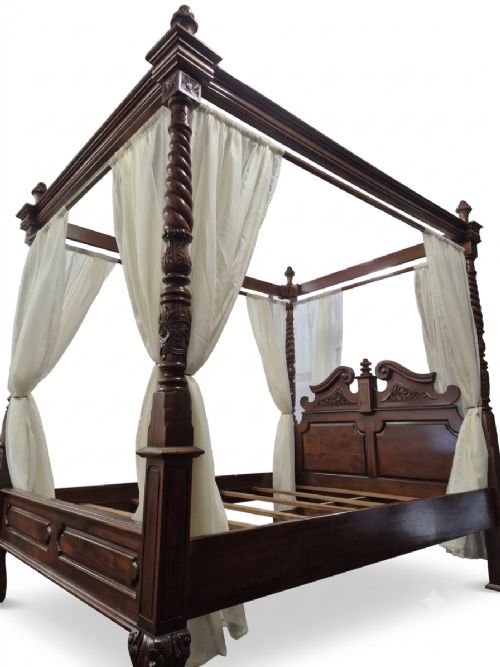
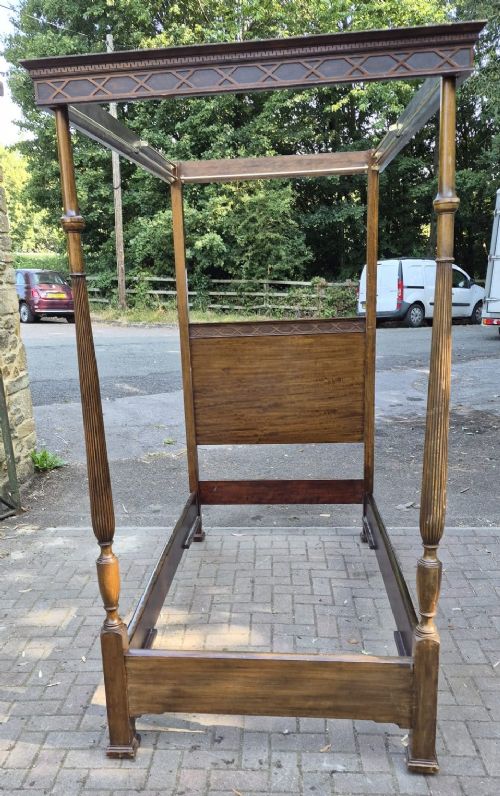
A wooden four poster frame grounds a room with architectural presence, offering traditional shelter and grandeur through its towering posts and overhead tester.
Wooden Four Poster Frame
When you search for a wooden four poster frame, you encounter a substantial range of bedframes, four poster beds, and tester beds spanning several centuries of cabinetmaking. The examples appearing here stretch from seventeenth-century oak through nineteenth-century mahogany and Victorian interpretations, alongside Edwardian creations and colonial variations.
Most pieces on this page take the form of full-sized double beds, king sizes, and single beds, occasionally accompanied by miniature furniture pieces like doll beds. Styles move from Elizabethan and Jacobean heavy oak framing to Regency mahogany, Georgian revival proportions, and Anglo-Indian colonial designs.
Origins vary widely across the selection, encompassing British vernacular pieces, American federal tiger maple, Chinese hardwood and lacquered marriage beds, and Portuguese constructions. Buyers select these frames to anchor a principal bedroom with historical scale and distinct regional joinery.
Materials and construction methods
Carpenters built these frames primarily using native and imported hardwoods, selecting oak for early seventeenth-century work and mahogany, flame mahogany veneer, and tiger maple for later periods. Pine frequently served as a secondary timber for internal rails and foundations, while brass hardware secured structural joints.
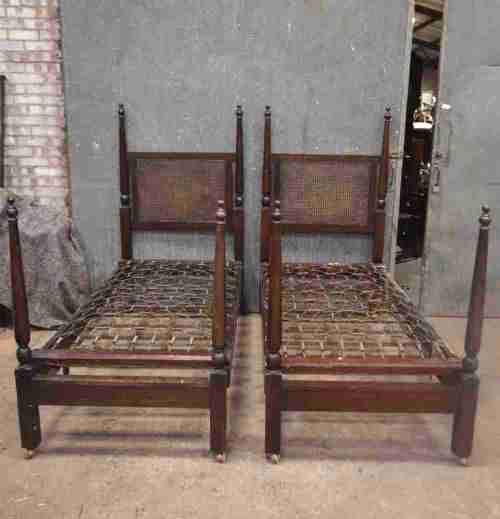
Joinery relied upon heavy framing, pegged mortise and tenon joints, and extensive hand carving on the headboards, cornices, and posts. Surface decoration incorporated painted elements, red lacquer finishes, and woven cane bergere panels alongside polished wood grains.
Listings feature oak, mahogany, pine, and painted surfaces across periods ranging from the seventeenth century through the Edwardian era.
Assessing quality in framing and carving
Quality reveals itself in the crispness of hand carving on the primary posts and the architectural proportion of the tester canopy. Superior examples display thoughtful timber selection, such as well-figured flame mahogany veneer or richly grained oak, matched symmetrically across the headboard and foot panels.
Structural integrity depends on the depth and tightness of the original joinery rather than later reinforcement. Pieces retain higher distinction when they preserve their authentic period tester cornices and uncompromised post heights without inappropriate alterations.
Howard and Sons
The Wooden Four Poster Frame Glossary
- Bergere
- An upholstered or cane-panelled wooden frame style. In these listings it appears on oak single beds.
- Half tester
- A canopy frame that extends only partway over the bed, supported by the headboard and two front posts rather than four full pillars.
- Marriage bed
- A traditional Chinese form often finished in red lacquer. These pieces serve as elaborate enclosed resting spaces with integrated woodwork.
Wooden Four Poster Frame: Frequently Asked Questions
Are these frames difficult to assemble?
Most antique wooden frames utilise traditional knock-down joinery such as bed bolts or heavy wooden pegs designed for dismantling. Patience and methodical handling are necessary during assembly.
Enlisting professional help ensures the heavy mahogany or oak posts and testers align securely without placing undue stress on historic joints.
How do I clean polished wood?
Dust the timber surfaces regularly with a soft, dry cloth to prevent particulate accumulation in hand-carved recesses. Avoid modern silicone sprays that can degrade historic polishes over time.
Apply a microcrystalline wax sparingly once or twice a year to nourish the grain of mahogany and oak, buffing gently to maintain a soft lustre.
Can I use standard mattresses?
Many historic frames require custom mattress sizing or supportive wooden base boards to bridge older rail configurations safely. Standard modern pocket-spring mattresses may require slight adjustments.
Consult the internal rail dimensions of the specific bedframe to determine whether a bespoke mattress base is necessary for proper support.