




Wooden Fire Screen
These wooden fire screen pieces are decorative hearth shields that block radiant heat and draft, offering period character to a room.
Wooden Fire Screen
A wooden fire screen takes various domestic forms across the Georgian, Victorian, and Edwardian periods, functioning primarily to shield inhabitants from excessive fireplace heat. Buyers frequently encounter standard standing frames alongside adjustable pole screens and metamorphic table combinations.
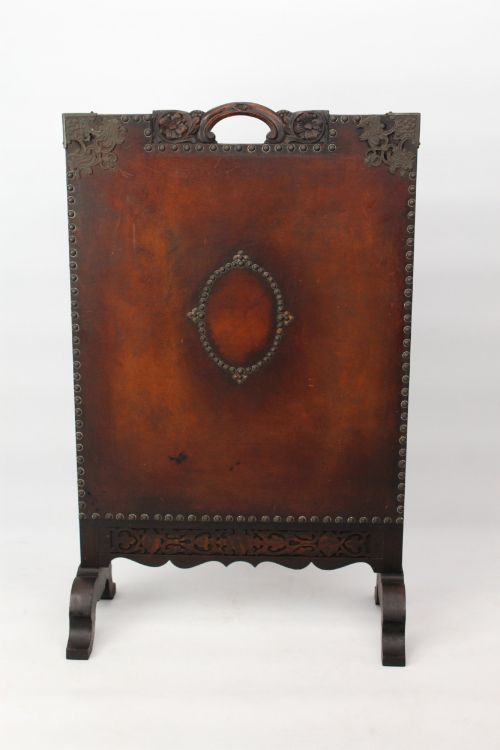
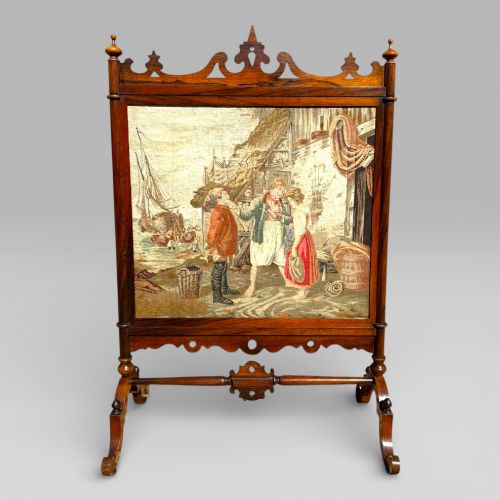
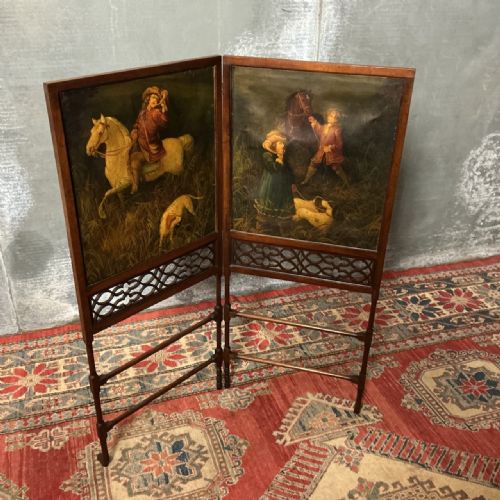
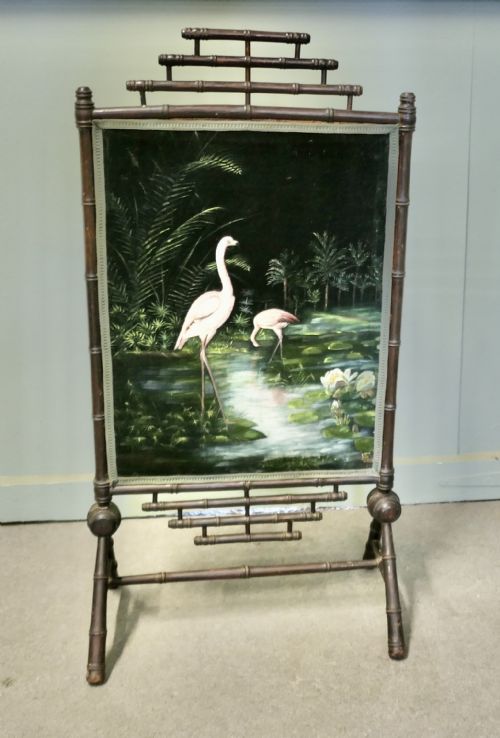
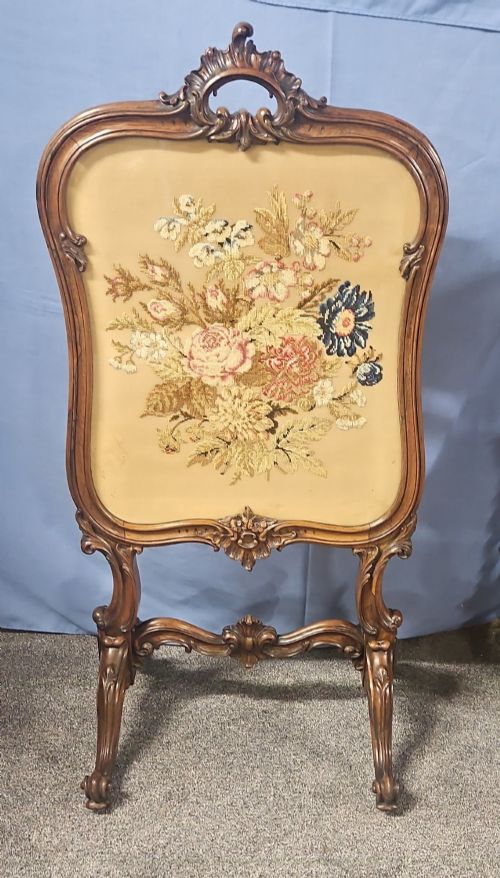
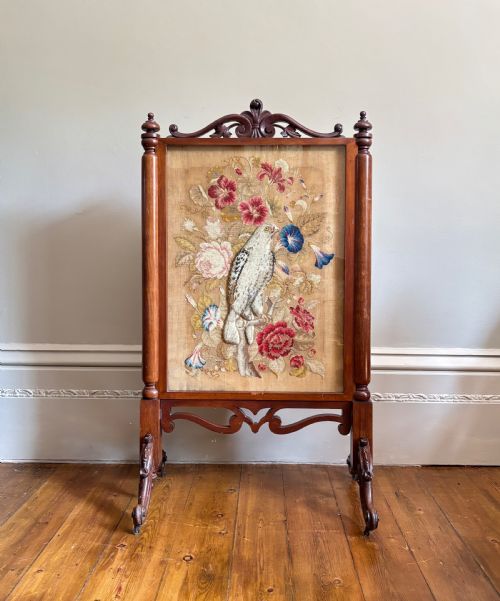
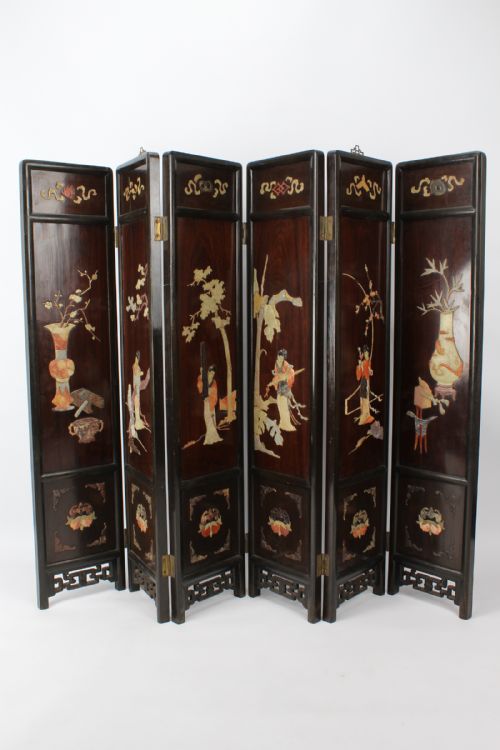
The materials span mahogany, walnut, rosewood, satinwood, and oak, often framing textile or painted inserts. Pieces range from carved Victorian frames to folding oriental designs and life-size dummy boards.
Origin and period styles dictate the aesthetic, covering Chinoiserie, Regency elegance, and ornate Victorian Rococo Revival. These domestic accessories survive from the eighteenth century through the early twentieth century in diverse configurations.
Materials and Construction
Carpenters utilised hardwoods such as mahogany, walnut, oak, and satinwood to construct stable support frames, occasionally incorporating brass and bronze hardware. Joinery methods varied from simple fixed joints to complex sliding mechanisms and adjustable poles.
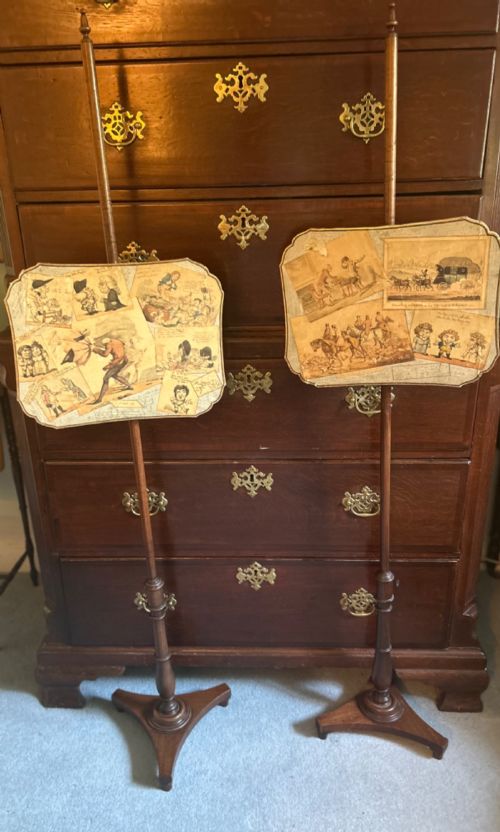
Panels often display intricate textile work, including woolwork, Berlin work, needlepoint, tapestry, and embroidery. Other examples incorporate oil paintings, satirical prints, painted hide, glass, and canvas inserts.
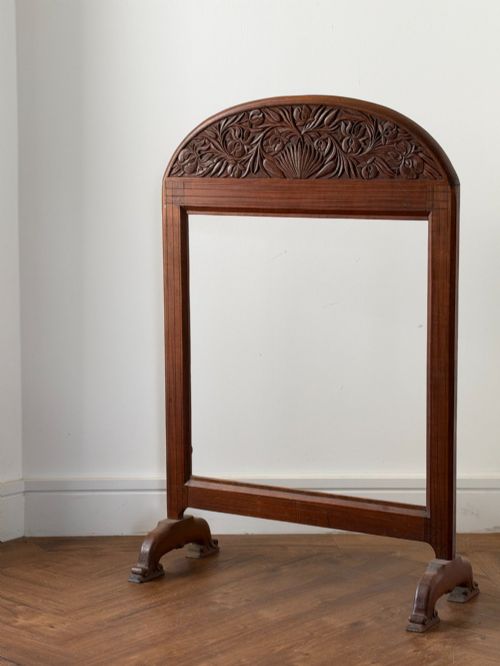
Carving technique defines the wooden surrounds, showing baronial motifs, floral elements, and classical detailing. Artisans combined woodworking with textile arts and painting to produce both functional and ornamental hearth furniture.
Wooden Fire Screen Retail Price Guide 2026
Typical asking prices for wooden fire screen among the pieces listed under this phrase on Sellingantiques today, from the lower quarter to the upper quarter. They describe what is for sale here now, not the wider market.
The listings span the eighteenth, nineteenth, and early twentieth centuries, featuring wood types such as mahogany, walnut, satinwood, and oak.
Evaluating Quality and Craftsmanship
Quality rests in the precision of the timber carving and the stability of the frame construction. Superior examples display crisp detail in the woodwork and robust joinery that withstands adjustment over time.
The artistic merit of the panel insert significantly influences the piece. Hand-woven tapestries, fine needlework samplers, and skilled oil paintings elevate the standard above simple printed or plain screens.
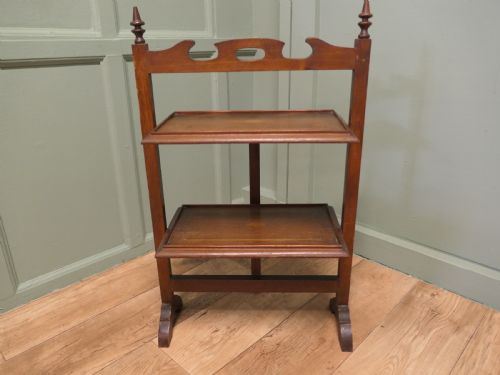
Ingenuity in design, such as metamorphic tables, dual-leaf pull-out mechanisms, or adjustable pole heights, separates standard screens from exceptional multifunctional examples.
The Wooden Fire Screen Glossary
- Pole screen
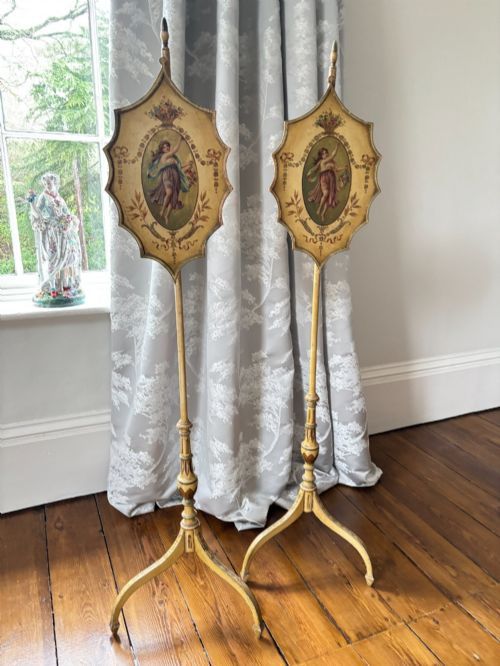
- A vertical wooden stand with an adjustable sliding panel designed to shield the face from hearth heat. The screen height adjusts along a turned pillar.
- Dummy board
- A painted wooden figure cut to life-size silhouette, popular in earlier periods to add decorative presence to an empty hearth. These pieces depict people, animals, or gentlemen with companions.
- Berlin work
- A type of nineteenth-century needlepoint worked in wool on canvas using patterned grid charts. This technique produced vivid floral and pastoral scenes commonly seen on fire screens.
- Metamorphic
- Furniture designed to transform into another functional form, such as a fire screen that converts into an occasional table. These dual-purpose items save space in period interiors.
- Poker work
- A pyrography technique using heated metal tools to burn designs into wood surfaces. This method creates detailed tonal imagery on wooden panels.
Wooden Fire Screen: Frequently Asked Questions
What is a wooden fire screen?
A wooden fire screen is a movable hearth accessory designed to block excessive heat from an open fire when the grate is not fully ablaze. They served a practical purpose in period homes before central heating regulated indoor temperatures.
Over time, these pieces evolved into decorative furnishings that showcased intricate needlework, paintings, and woodwork. They remain useful for hiding empty fireplaces during warmer months.
How do pole screens work?
Pole screens feature a vertical wooden shaft mounted on a stable base, holding a small panel that slides up and down. Users adjusted the height of the panel to block heat directly from the fire.
This mechanism allowed occupants to protect their faces from the intense glow of open coal or wood fires. The adjustable panels frequently display detailed embroidery or tapestry work.
How do I style a fire screen today?
A fire screen can be placed in front of an unlit fireplace to add texture, colour, and historical character to a room. They work effectively in both traditional and contemporary interiors as focal points.
Metamorphic versions can also function as occasional tables beside seating areas. Foldable and multi-leaf designs offer flexibility in positioning.
How can I tell the period of a screen?
Dating relies on timber choice, carving styles, and the medium of the central panel. Georgian and Regency pieces tend to show restrained classical proportions, while Victorian examples often feature heavier carving and dense tapestry.
Edwardian and later pieces introduce lighter woods and simpler geometric or oriental influences. Examining the construction methods and joinery helps confirm the era of manufacture.