

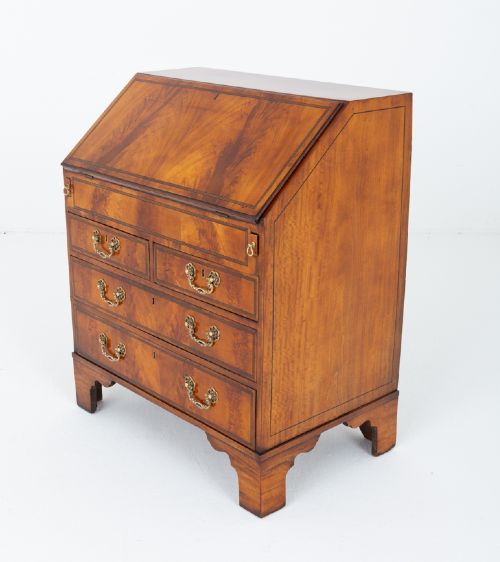
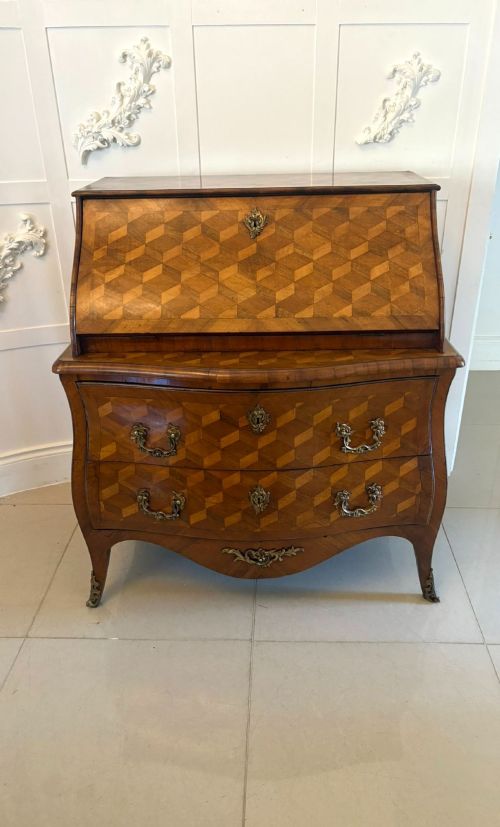
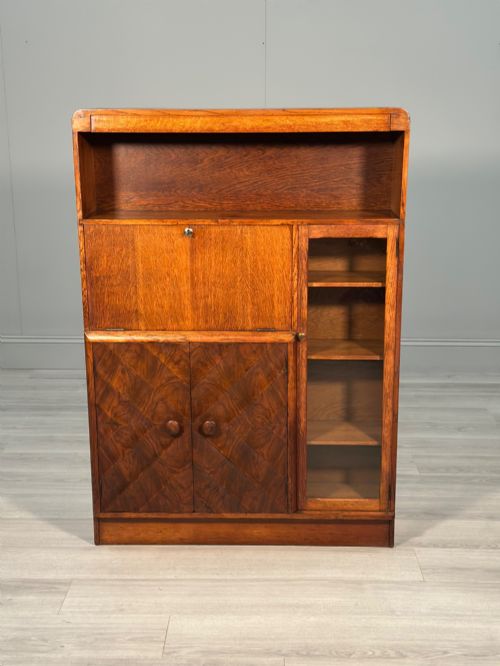
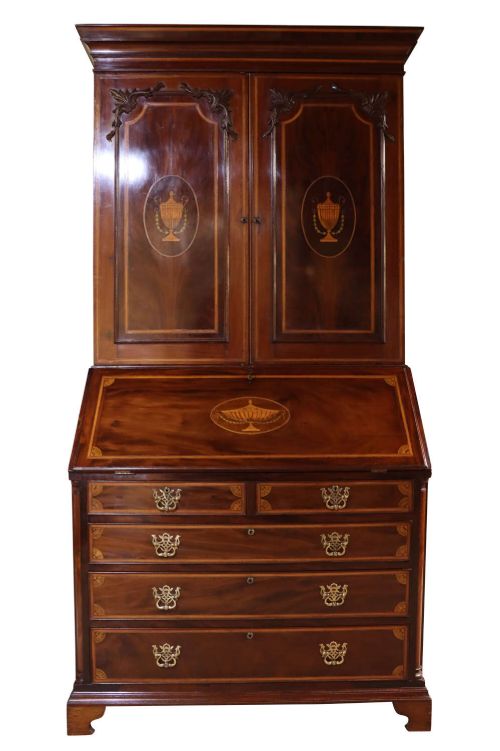
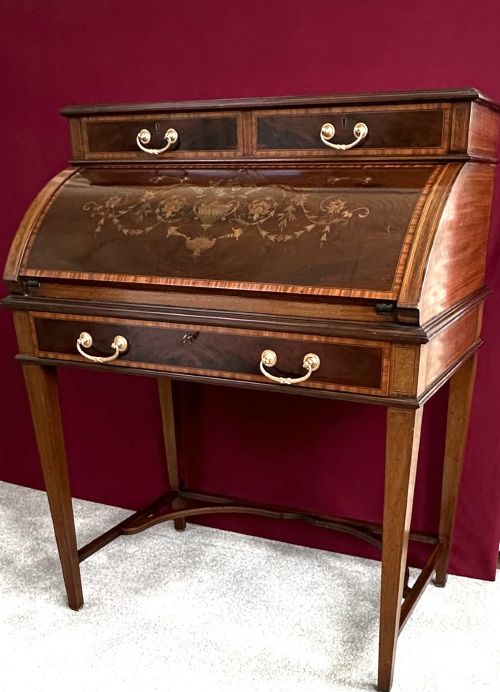
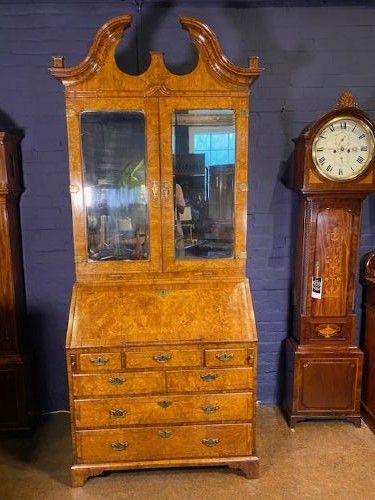
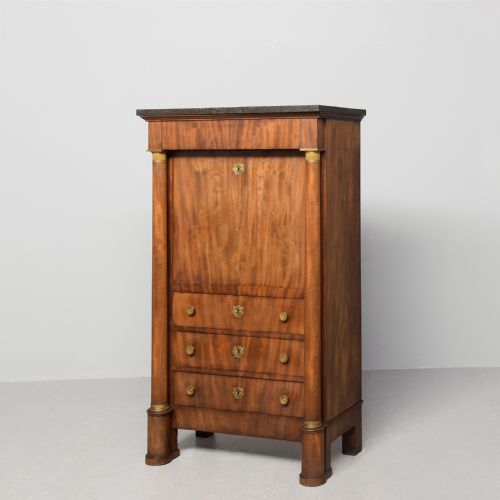
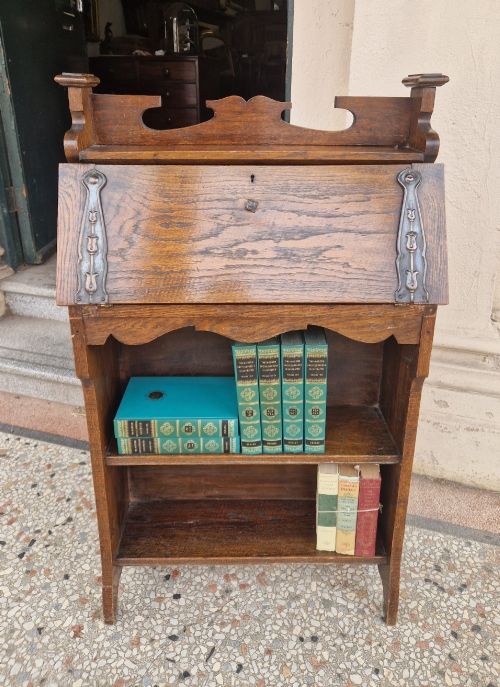
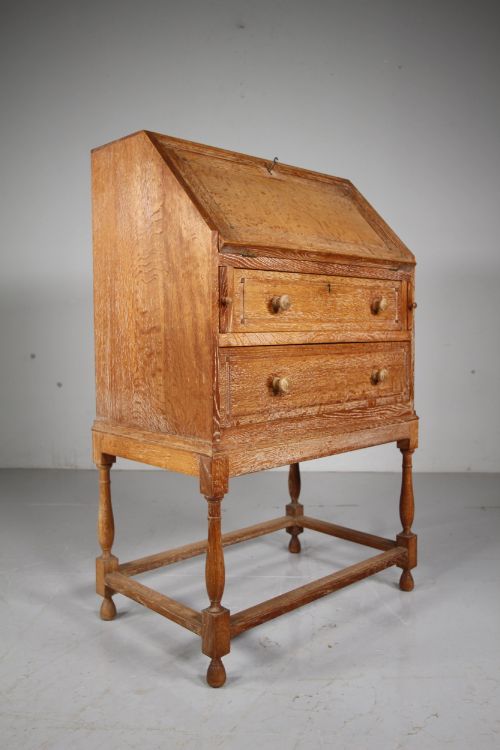
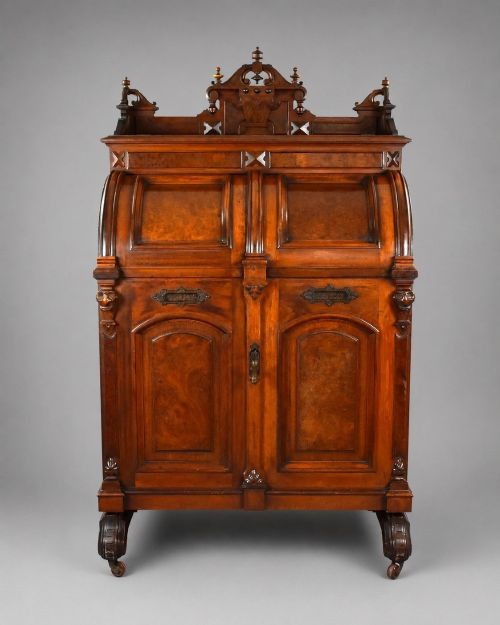
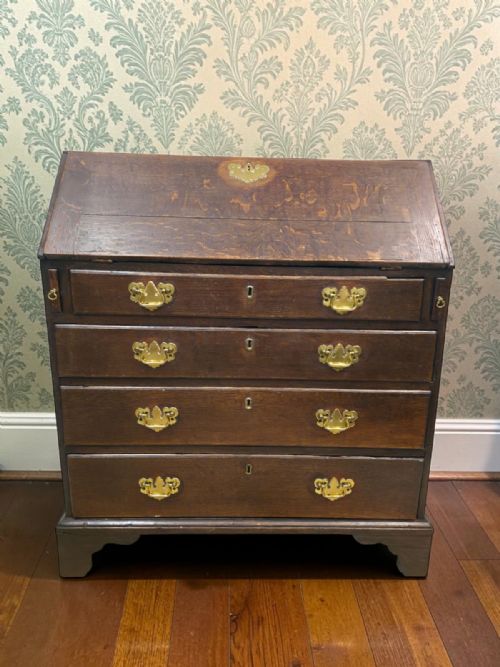
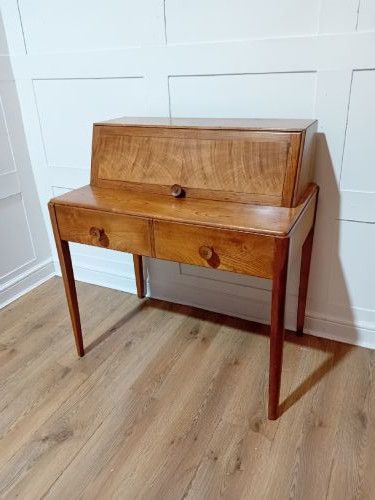
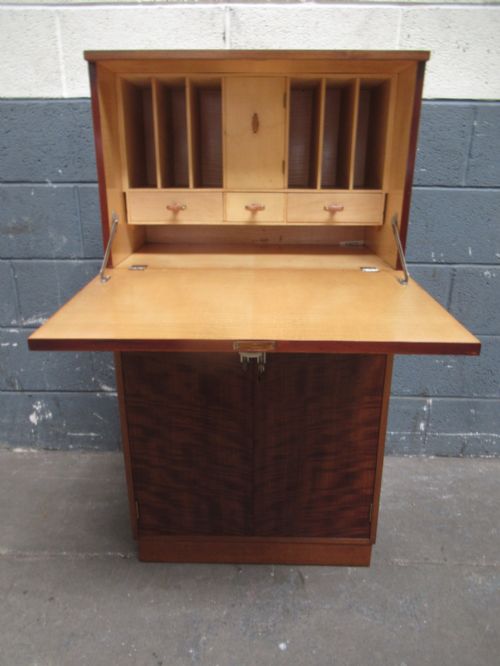


Wooden Fall Front Bureau
A wooden fall front bureau is a practical writing desk featuring a drop-down writing flap that conceals fitted interior compartments.
Wooden Fall Front Bureau
A wooden fall front bureau bridges the gap between secure storage and a functional writing surface, appearing in forms ranging from compact writing desks to towering bureau bookcases. When searching for a wooden fall front bureau, buyers encounter pieces spanning from the early 18th century through the Georgian and Victorian eras into the Edwardian period and Art Deco decades.
The domestic workspace evolved significantly across these eras, moving from sturdy oak and burr elm constructions of the early 1700s to refined mahogany and satinwood examples later in the century. By the Edwardian period and 1930s, makers such as E Gomme and Heals of London produced oak and walnut variants suited to smaller modern rooms.
The selection here encompasses bureau bookcases, secretaire abattants, and compact writing desks. Georgian mahogany and 18th-century walnut pieces represent the traditional core of these offerings, supplemented by Arts and Crafts and Art Deco interpretations.
Materials and construction
Cabinetmakers relied on dense timbers including mahogany, walnut, oak, elm, and satinwood, often accentuating surfaces with parquetry, marquetry, or intricate inlay. Burr veneers and figured grain patterns added visual depth to the fall front panels and writing slopes.
Interior compartments required precise joinery to create secret drawers, pigeonholes, and small cupboards hidden behind the main drop-front surface. Original brass handles, escutcheons, and ironwork hardware completed the structural assembly.
Wooden Fall Front Bureau Retail Price Guide 2026
Typical asking prices for wooden fall front bureau among the pieces listed under this phrase on Sellingantiques today, from the lower quarter to the upper quarter. They describe what is for sale here now, not the wider market.
Listings feature woods such as mahogany, oak, walnut, elm, satinwood, and ormolu across periods spanning from Queen Anne to Art Deco.
Distinctions in craftsmanship
The standard of execution depends heavily on the selection of timber veneers and the intricacy of the internal fittings. Superior examples utilise solid secondary timbers for drawer linings and exhibit precise dovetailing alongside finely turned pigeonholes.
Makers integrated structural enhancements such as supporting pigeonhole slides or pull-out lopers that engage automatically when the fall front lowers. Surviving original hardware and untouched surface patination distinguish higher tier pieces from later reproductions or heavily restored items.
E Gomme·Heals of London·Arthur Basil Reynolds
The Wooden Fall Front Bureau Glossary
- Fall front
- The hinged writing flap that drops down to form a horizontal desk surface. It conceals internal drawers and compartments when closed upright.
- Bureau bookcase
- A combination piece comprising a writing bureau on the lower section and enclosed shelving or cabinet doors above. These upper sections often feature glazed doors for display.
- Secretaire abattant
- A tall vertical cabinet with a drop-front writing surface, originating from French cabinetmaking traditions. It provides enclosed vertical storage above the writing flap.
- Parquetry
- Geometric wood inlay patterns assembled from small veneer pieces to form decorative mosaic designs on surfaces. It frequently appears on 18th-century and Continental pieces.
- Loper
- A wooden slide pulled out from the bureau frame to support the weight of the lowered fall front. Traditional mechanisms extend automatically as the flap opens.
Wooden Fall Front Bureau: Frequently Asked Questions
How do I identify an 18th century bureau?
Eighteenth century bureaux typically feature solid oak, elm, walnut, or mahogany construction with hand-cut dovetails on the drawer sides. The internal layouts often include stepped pigeonholes and central locking cupboards.
Early examples from this period rely on traditional ironwork or brass hardware and display natural timber patination developed over centuries of use.
Where were bureau bookcases used?
Bureau bookcases served primarily in private studies, libraries, and withdrawing rooms of large houses and urban residences. The upper bookcase section held reference volumes and bound manuscripts.
In later Edwardian homes and 1930s interiors, smaller oak and walnut variants suited tighter domestic spaces while retaining the dual function of storage and writing.
What are secret drawers in a bureau?
Secret drawers are hidden compartments built behind the stationary fittings or removable pigeonhole blocks inside the desk. They provided a secure space for currency and private documents.
Owners accessed these spaces by releasing spring-loaded catches, sliding false partitions, or lifting internal floor sections within the writing interior.