
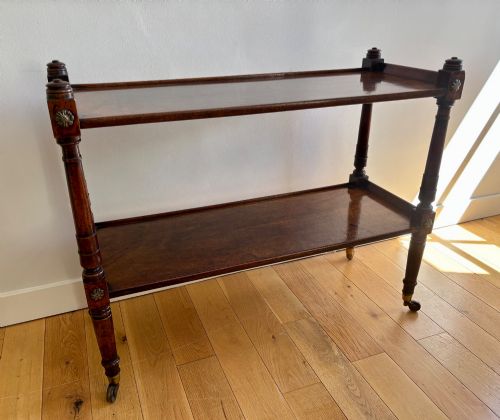
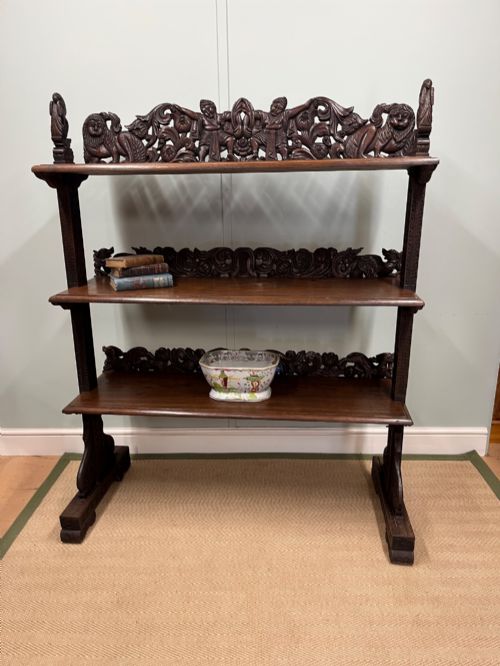


Wooden Etagere Stand
A wooden etagere stand brings tiered display space and architectural timber into a room, offering functional shelving that collectors prize for its versatile tiers.
Wooden Etagere Stand
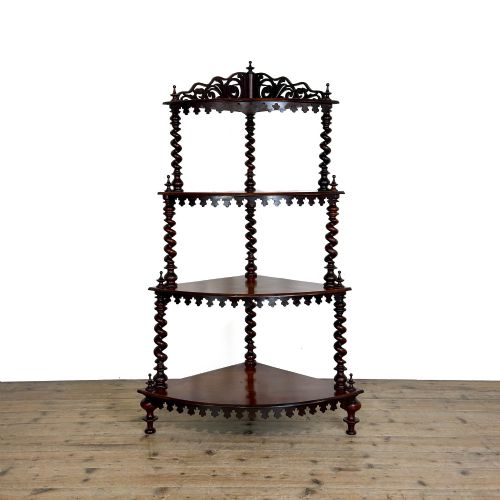
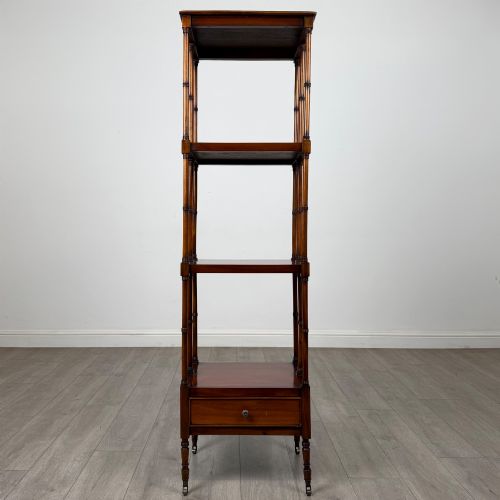
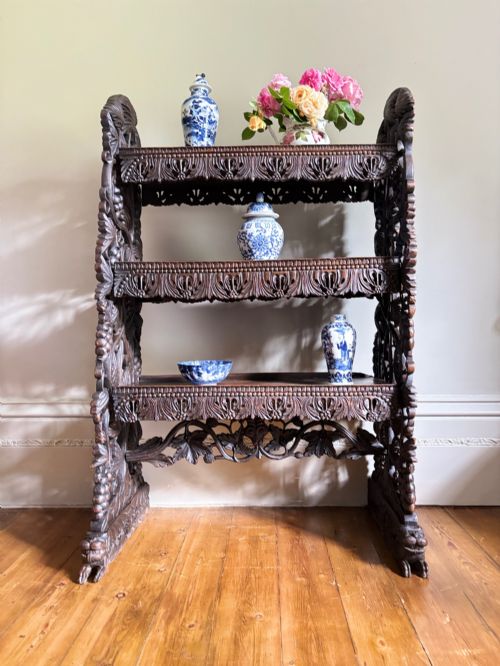
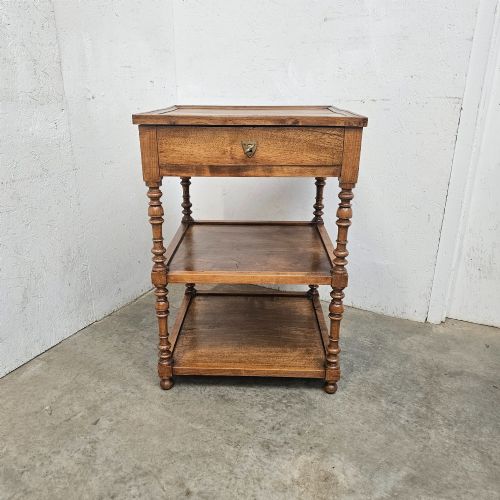
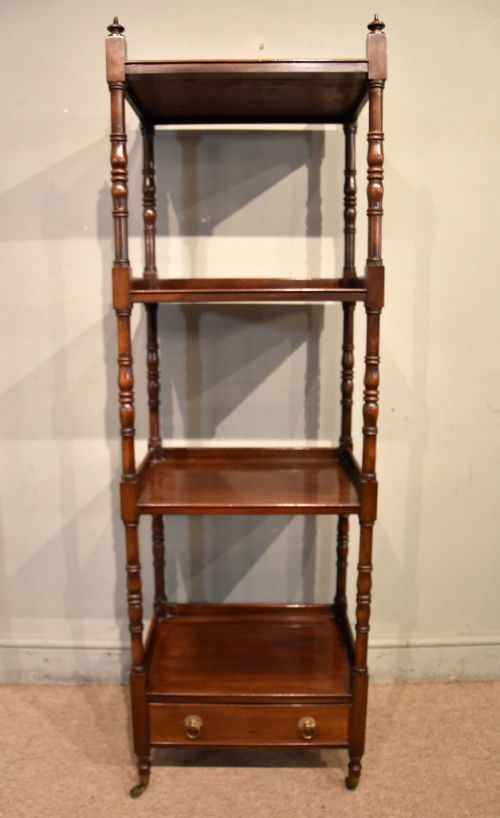
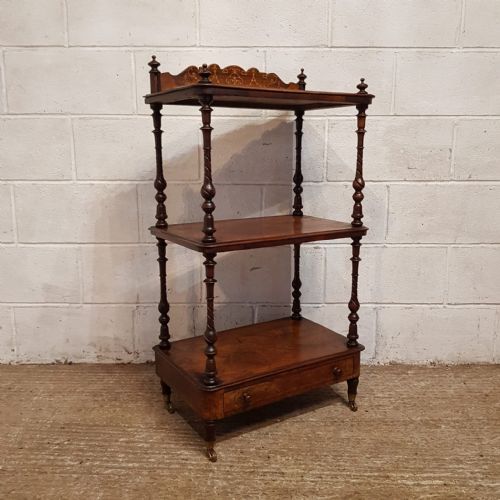
A wooden etagere stand functions primarily as an open multi-tiered shelving unit or whatnot designed for display and storage. Buyers seeking a wooden etagere stand encounter various forms, including corner units, freestanding multitier shelves, and pieces combined with cabinets or drawers.
The pieces span several key eras, appearing frequently in Victorian, Georgian, and Regency iterations alongside later Edwardian examples. These multi-tiered items serve to hold books, decorative objects, and small collections while adding vertical interest to domestic interiors.
Materials and construction
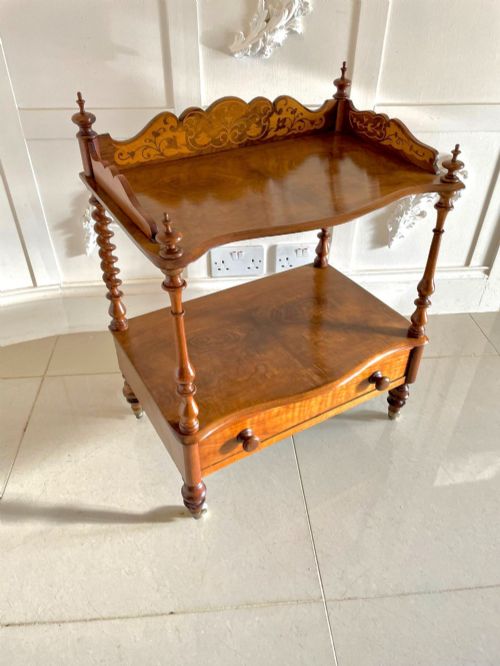
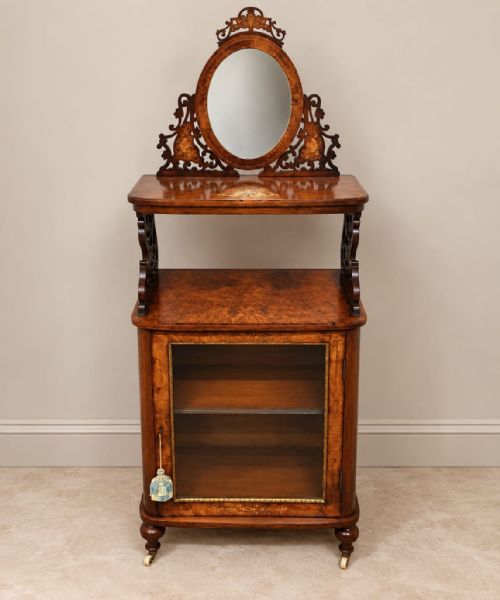
Cabinetmakers utilised dense hardwoods such as mahogany, walnut, burr walnut, rosewood, and teak to construct these tiered frames. Selected pieces incorporate decorative elements like ebonised wood, brass fittings, glass panels, and intricate marquetry inlay.
Structural methods involve tiered platforms supported by turned or carved uprights, occasionally incorporating single drawers, mirrors, or cupboard bases beneath the open shelves. Padauk and birdseye maple also appear, showing the diverse timber choices employed across different regional workshops.
Listings feature pieces spanning the Georgian, Regency, Victorian, and Edwardian periods, constructed in mahogany, walnut, padauk, and teak.
Assessing quality and craftsmanship
Superior examples distinguish themselves through the choice of timber figure, such as richly grained burr walnut or dense mahogany, paired with crisp carving and fine marquetry inlay. The integration of functional additions like dovetailed drawers, mirrors, or stable corner bracing elevates a piece above standard utility items.
Construction precision dictates the long-term stability of multi-tiered structures, where tight joints between shelves and uprights prevent wobble. Finer pieces demonstrate careful attention to proportion and decorative detailing that remains crisp across every tier.
W. Turner Lord & Co
The Wooden Etagere Stand Glossary
- Etagere
- A piece of furniture consisting of a set of open shelves for displaying small objects or ornaments. These tiers rise vertically to maximise display space.
- Marquetry
- Decorative woodwork in which delicate pieces of wood veneer are fitted into a design on a solid surface. This technique creates intricate pictorial or geometric patterns on tabletops and shelf surfaces.
- Padauk
- A heavy, durable tropical timber known for its deep reddish-brown colour. Makers utilised this dense wood for substantial carved shelving units and buffets.
- Burr walnut
- Timber taken from a walnut tree outgrowth, producing complex swirling grain patterns. Cabinetmakers prized this veneer for high-status Victorian display furniture.
Wooden Etagere Stand: Frequently Asked Questions
How were these stands used historically?
Historically, these tiered stands functioned as versatile display furniture in drawing rooms, parlours, and libraries. They held decorative ceramics, small timepieces, and bound volumes within easy reach.
Some iterations incorporated lower cupboards or music stands, adapting the basic shelving design for specific domestic storage needs.
How do I style a tiered stand?
Styling a tiered stand involves balancing items of varying heights and materials across the different levels. Placing heavier books on lower shelves and smaller decorative objects higher up creates visual stability.
Allowing some open space on the timber shelves ensures the display remains uncluttered and highlights the grain of the wood.
How do I identify Victorian and Georgian pieces?
Identifying the period relies on examining timber selection, construction methods, and decorative motifs. Georgian pieces often display restrained lines in solid mahogany, while Victorian examples frequently feature burr walnut veneers, turned uprights, and carved details.
Cabinetry details such as drawer construction and edge mouldings further clarify the manufacturing era.