







Wooden Drinks Chest
A wooden drinks chest keeps your bottles secure and ready, spanning George III wine coolers, Victorian tantalus boxes, and Edwardian cabinets.
Wooden Drinks Chest
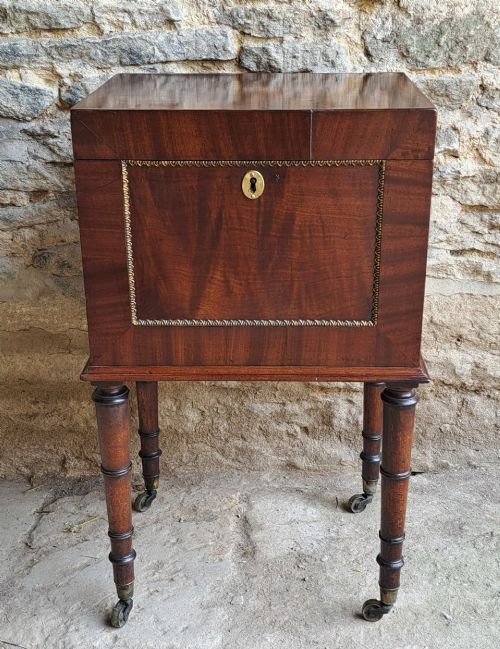
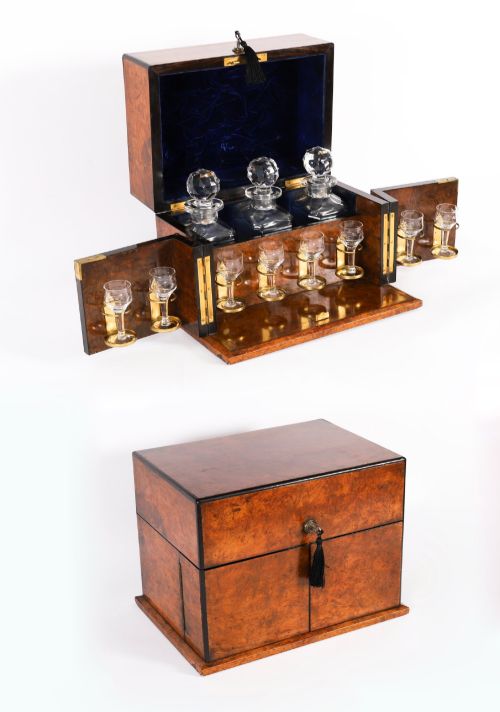
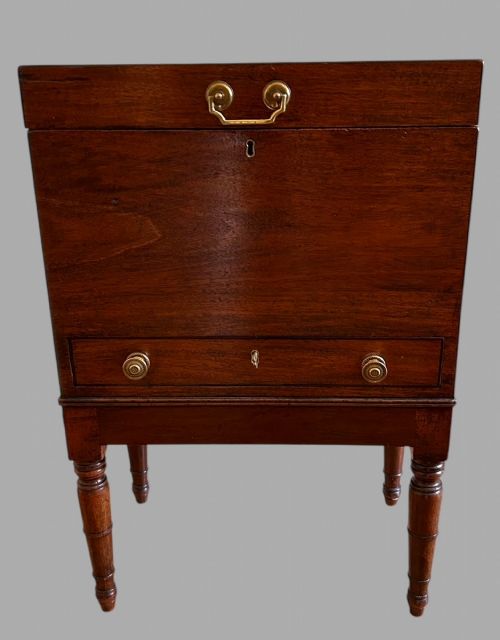
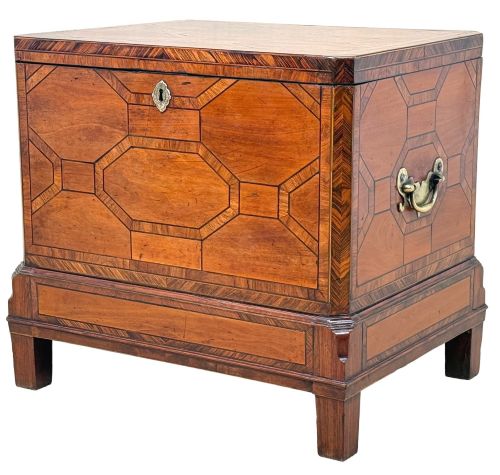
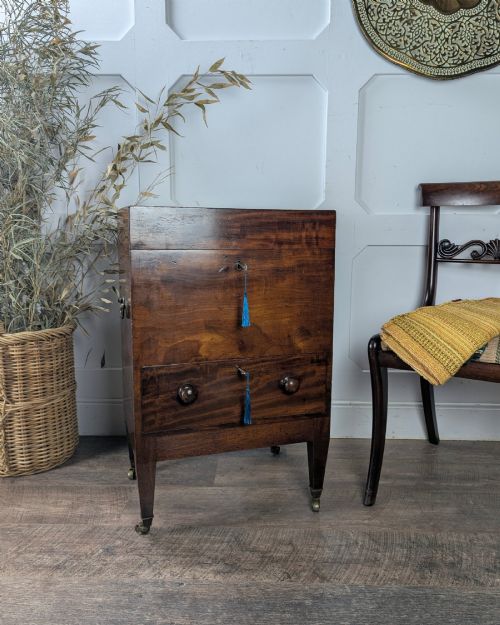
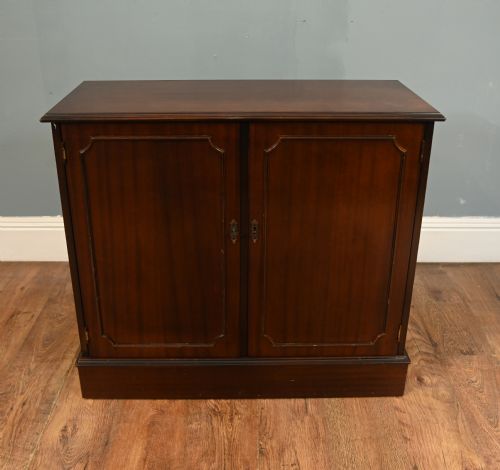
A wooden drinks chest encompasses cellarettes, wine coolers, tantalus boxes, and liquor cabinets designed to store bottles and decanters. When you search for a wooden drinks chest, you encounter forms ranging from George III and Regency cellarettes to Victorian oak tantalus sets and Edwardian cabinets.
The most frequent examples on this page are mahogany cellarettes and wine coolers from the Georgian, Regency, and Victorian eras. These pieces typically feature dedicated interior compartments designed to hold wine bottles or decanters securely.
Origins span British periods from the 18th century through the late Victorian and Edwardian decades, alongside occasional French and Art Deco examples. Makers and designers such as Gillows of Lancaster and London, Maples and Co, and Whytock and Reid appear across these styles.
Materials and construction
Makers built these pieces primarily in solid and veneered mahogany, oak, satinwood, and walnut, often accentuating the grain with stringing or crossbanding. Structural integrity relied on traditional cabinetry joinery, housing bottles within fitted wooden partitions or lead-lined interiors.
Hardware played a functional and decorative role, incorporating brass carrying handles, brass binding, hinges, and lock mechanisms. Cut glass decanters, glass mirrors, and ormolu mounts frequently complemented the polished timber exteriors.
Wooden Drinks Chest Retail Price Guide 2026
Typical asking prices for wooden drinks chest among the pieces listed under this phrase on Sellingantiques today, from the lower quarter to the upper quarter. They describe what is for sale here now, not the wider market.
Some Victorian tantalus boxes double as games compendiums, ensuring guests could lose their patience at cards as well as over locked whiskey.
Gradations of craftsmanship
Quality rests in the selection of timber figures, such as figured mahogany, satinwood, or kingwood, paired with precise cabinet joinery and marquetry inlay. Superior examples display sophisticated proportions, serpentine shaping, and well-executed internal fittings.
The sophistication of the hardware and locking mechanisms further separates standard items from exhibition pieces. Original brass fittings, intact glass decanters, and functional locking tantalus bars indicate higher levels of original manufacture.
Gillows of Lancaster and London·Maples and Co·Whytock and Reid·Incorporall
The Wooden Drinks Chest Glossary
- Cellarette
- A lockable container or cabinet used for storing wine and spirits near the dining table. They frequently feature lead-lined interiors or fitted wooden dividers.
- Tantalus
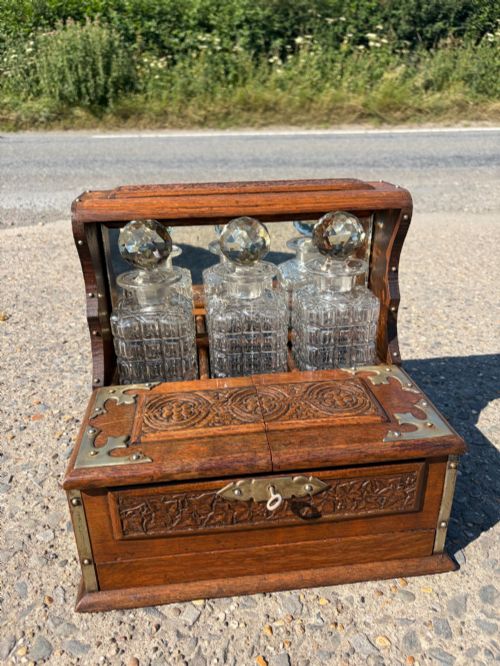
- A locking drink stand that holds decanters securely in a wooden frame so guests cannot pour a drink without a key. The mechanism engages a metal bar across the stoppers.
- Sarcophagus
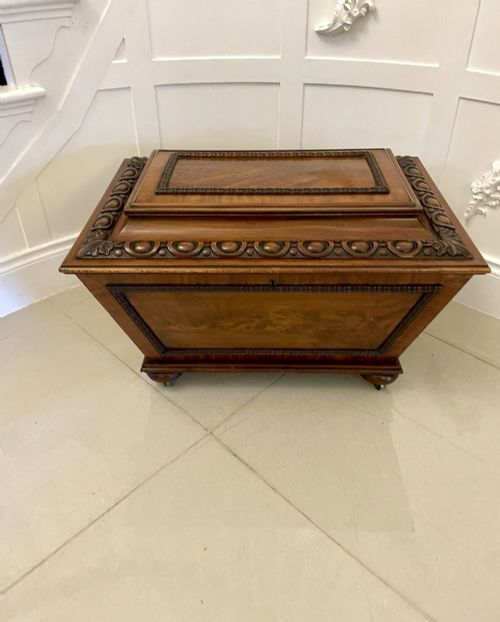
- A monumental cabinet shape with a domed lid and tapered sides, popular for Regency and Georgian wine coolers. This architectural form mimics ancient stone coffins.
- Ormolu
- Gilded bronze applied as decorative mounts on furniture during the 18th and 19th centuries. It adds metallic contrast to polished timber surfaces.
- Marquetry
- Decorative woodwork where pieces of veneer are fitted into a ground to form geometric or floral designs. Artisans utilise contrasting timbers to create these pictorial patterns.
Wooden Drinks Chest: Frequently Asked Questions
What is a tantalus?
A tantalus is a locking drink container that secures decanters within a wooden frame beneath a metal bar. This design prevents unauthorized access to the spirits inside while displaying the cut glass decanters.
Most examples date from the Victorian and Edwardian periods, often incorporating games compartments alongside the bottles.
How do cellarettes and wine coolers differ?
Cellarettes and wine coolers both store bottles, but wine coolers historically accommodated ice or water to chill the contents. Cellarettes served primarily as secure storage chests placed beneath sideboards or dining tables.
Both forms utilise fitted wooden interiors, and makers frequently used the terms interchangeably in nineteenth-century records.
How can I date a drinks chest?
Dating relies on architectural styles, timber selection, and hardware types. Georgian and Regency pieces show classical proportions and brass lion-paw feet or ring handles, while Victorian items often incorporate heavier oak frames or mechanical tantalus bars.
Maker signatures, stamps, and specific lock patents provide further chronological markers.