




Wooden Double Desk
A wooden double desk provides dual workspace in mahogany, oak or walnut, bringing practical surface area and period character to a room.
Wooden Double Desk
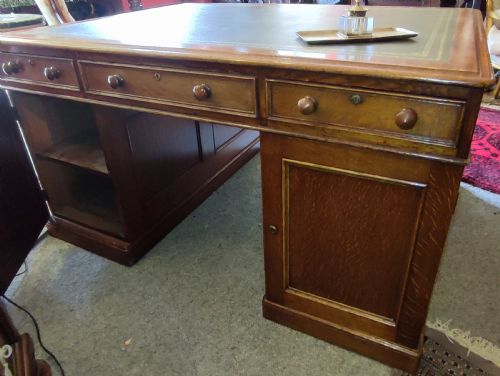
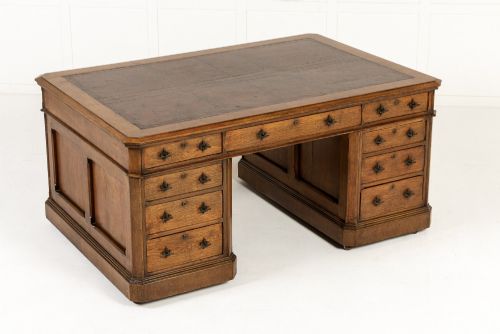
When searching for a wooden double desk, buyers encounter large freestanding library tables and partners desks designed for two people to work opposite one another. These pieces span the nineteenth century and the Edwardian period, constructed primarily in mahogany and oak.
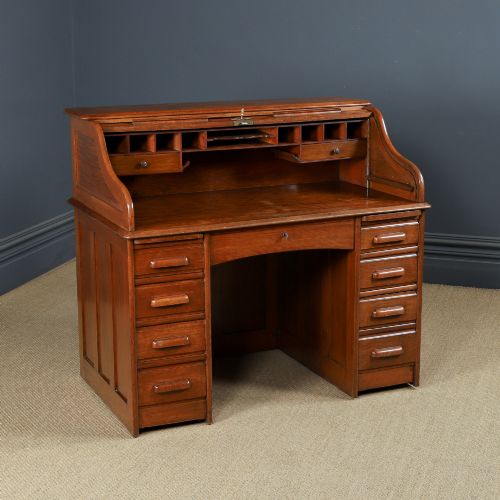
The inventory on this page shows heavy representation of Victorian pedestal desks alongside larger double-sided writing tables and country house examples fitted with numerous drawers. Double-sided sorting desks and partners formats dominate the form, offering simultaneous access from both sides.
Makers and workshops constructed these large writing surfaces using robust timbers such as figured mahogany, flame mahogany, burr walnut and solid oak. Many incorporate leather writing surfaces, brass pulls and panelled construction to suit domestic libraries and studies.
Quality and Craftsmanship
Quality rests in the selection of timbers, such as figured or flame mahogany veneers, and the depth of the cabinetmaking used to form the pedestal drawers. Secondary woods and internal drawer construction reveal the diligence of the original workshop.
The integrity of the double-sided arrangement, including matching drawer configurations on both flanks and original brass hardware, separates utilitarian office furniture from finer domestic library pieces.
Listings feature pieces spanning the eighteenth, nineteenth and early twentieth centuries, constructed in mahogany, oak, walnut and brass.
The Wooden Double Desk Glossary
- Partners Desk
- A large double-sided pedestal desk designed with drawers and cupboards on both faces so two people can work opposite each other. These pieces form the core of the double desk category.
- Pedestal Desk
- A form comprising two banks of drawers supporting a top surface with an opening for the knees in the centre. They are frequently built as double-sided items.
- Tambour Top
- A flexible sliding shutter made of narrow strips of wood glued to canvas, allowing roll top desks to enclose the writing surface. This mechanism appears on Edwardian and nineteenth-century examples.
- Sofa Table
- A freestanding table with drop leaves at either end, often utilised as a writing surface in period interiors.
Wooden Double Desk: Frequently Asked Questions
What is a partners desk?
A partners desk is a double-sided writing table designed with drawers and cupboards on opposing faces. This layout allows two individuals to sit opposite one another and utilise the surface simultaneously.
Such pieces typically feature large timber tops inset with leather and rest upon twin pedestals containing multiple drawers.
How do I date a wooden double desk?
Dating relies on identifying timber choices, construction methods, hardware styles and period characteristics. Pieces from the Georgian and Victorian eras exhibit distinct drawer linings, brass pull designs and cabinetmaking techniques.
Comparing the secondary woods and structural assembly helps place a desk within the nineteenth or early twentieth century.
Are these desks suitable for modern offices?
These double desks provide expansive surface area and substantial storage through their pedestal drawer configurations. Their freestanding nature allows them to sit centrally within a room rather than against a wall.
Working daily with these pieces involves accommodating their fixed historic dimensions and deep pedestal footprints within a contemporary room layout.
What woods were used for these desks?
Cabinetmakers primarily constructed these desks using mahogany, oak and walnut. Flame mahogany and burr walnut veneers were applied to primary surfaces for decorative visual effect.
Secondary timbers such as pine or oak appear internally within drawer construction and framing components.