


Wooden Country Rocking Chair
A wooden country rocking chair brings practical comfort and vernacular charm to a fireside, spanning simple spindle designs to robust Windsor forms.
Wooden Country Rocking Chair
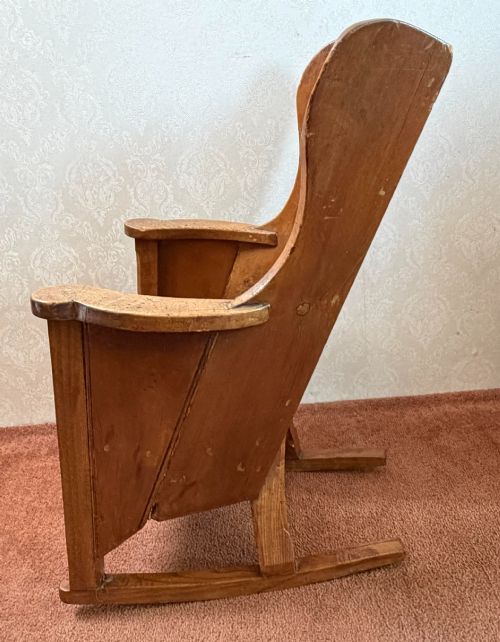
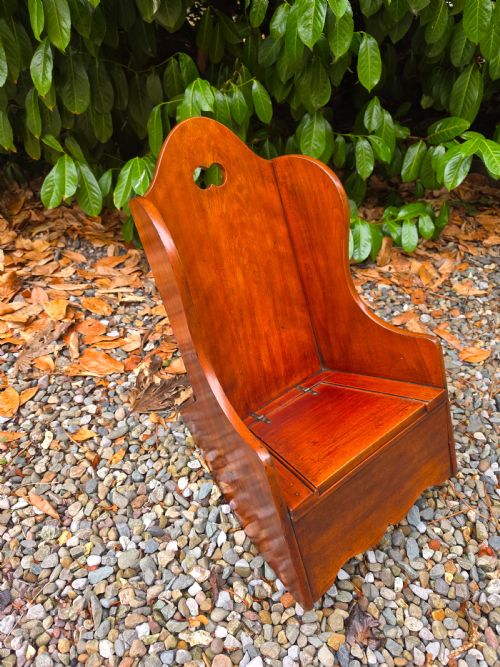
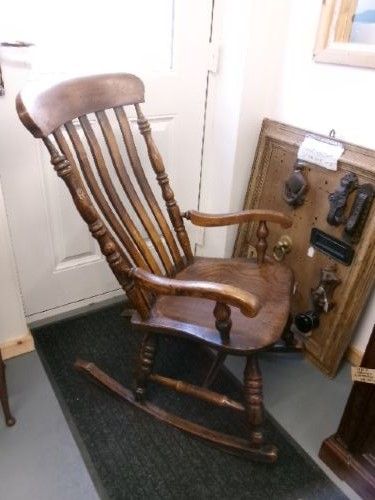
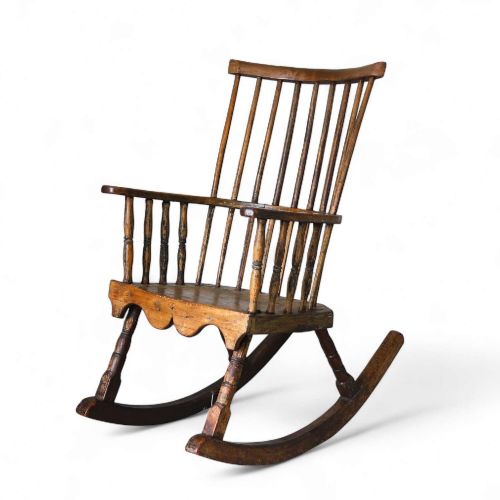
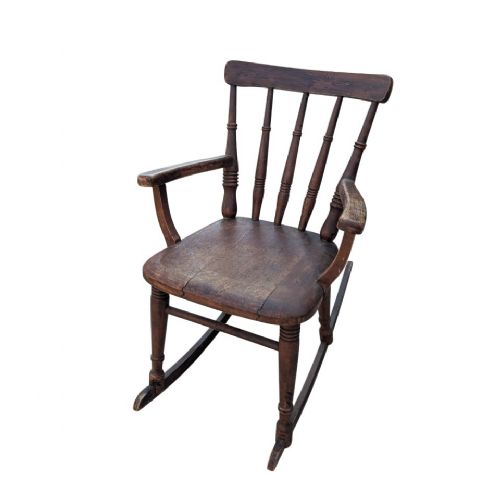
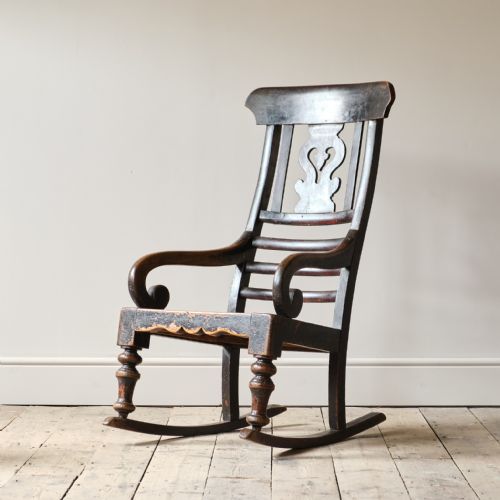
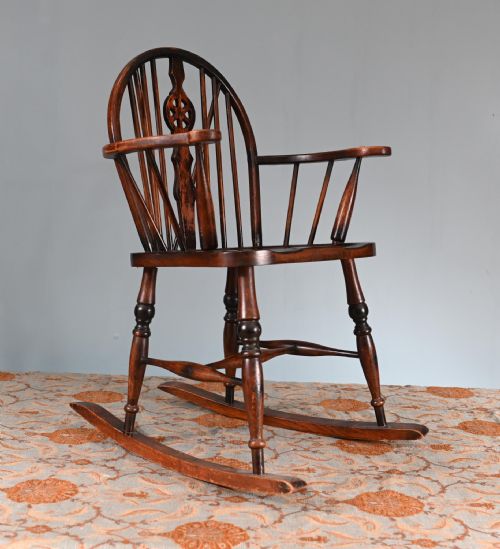
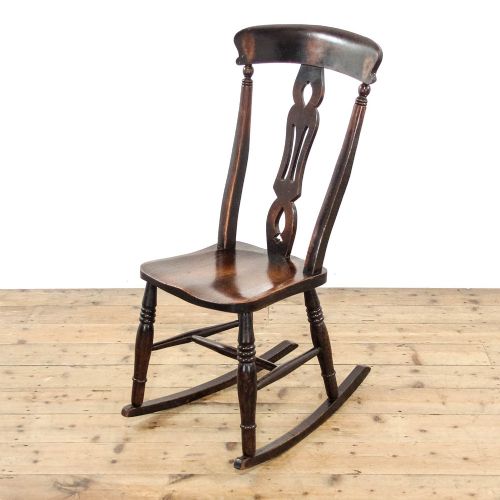
A wooden country rocking chair is a domestic seating form built for relaxation, appearing frequently in nineteenth-century and Victorian provincial settings. These seats range from full-size armchairs to smaller child versions, often following regional traditions such as the Windsor style or ladder back construction.
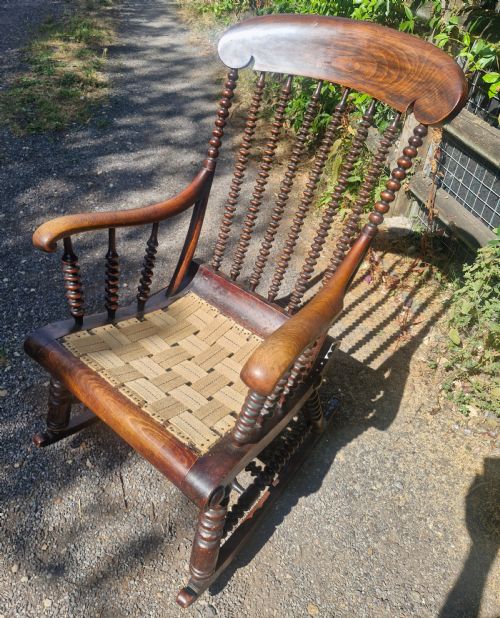
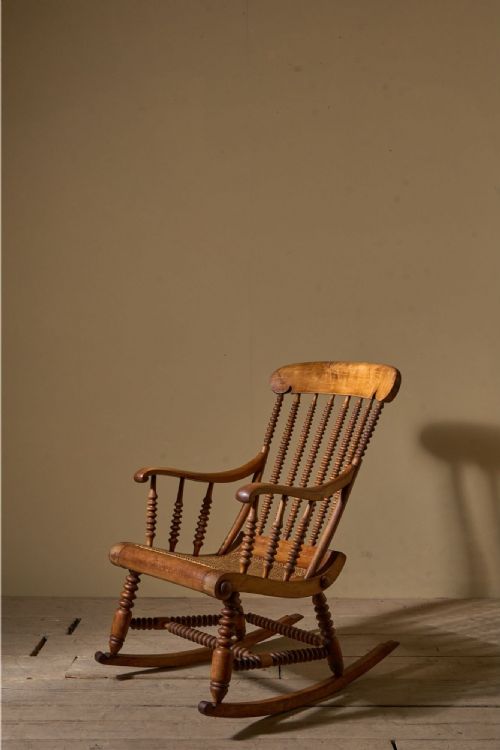
Most examples on this page belong to the nineteenth century, though earlier eighteenth-century pieces also surface. Forms vary from simple bobbin-turned frames to comb-back Windsor variants designed for daily household use.
Makers utilised local resources, meaning construction reflects the available timber of specific regions, from Thames Valley workshops to Scottish vernacular makers. Buyers encounter standard armchairs alongside specialised nursing chairs and potty rockers intended for nurseries and firesides.
Materials and Construction
Constructed primarily from native hardwoods, these chairs rely on combinations of elm, ash, beech, and oak for structural strength and flexibility. Turners shaped spindles and legs on lathes, while joiners formed seats from solid elm planks.
Seating areas often feature solid timber, rush, cane, leather, or sea grass inserts to support the user. Frames utilise traditional peg and dowel joinery, occasionally enhanced with painted surfaces or original finish patination.
Listings feature woods including elm, oak, beech, ash, pine, and fruitwood, paired with rush, cane, leather, and sea grass seats.
Assessing Quality
Quality rests upon the integrity of the timber selection and the retention of original components, particularly the curved rocking shoes at the base. Chairs retaining their original surface finish, whether bare elm or early paint, command greater interest than stripped or heavily restored examples.
Construction deftness defines the upper tier, seen in balanced spindle proportions, tight joints, and comfortable ergonomic rake in the backrest. Minor alterations to rockers or seating inserts shift a piece away from its original vernacular state.
The Wooden Country Rocking Chair Glossary
- Windsor
- A chair built with a solid wooden seat into which the legs and back spindles are direct-inserted. This construction method provides robust stability without a heavy interior frame.
- Bobbin turned
- A decorative turning style featuring series of rounded wooden spheres resembling spools of thread. It appears frequently on nineteenth-century vernacular chair legs and stretchers.
- Comb back
- A Windsor chair variation where the top rail resembles the spine of a comb, with vertical spindles rising through a low horizontal arm rail. It offers sturdy support for the shoulders.
- Ladder back
- A chair design utilising horizontal wooden slats between two vertical rear posts. This traditional form dates back centuries in country workshops.
- Vernacular
- Objects made by local craftsmen following regional traditions rather than strict academic pattern books. These pieces prioritize functional utility over high-style ornamentation.
Wooden Country Rocking Chair: Frequently Asked Questions
How do I date an old rocking chair?
Dating relies on examining tool marks, timber shrinkage, and structural construction methods. Eighteenth-century examples often display hand-carved elements and pegged joinery.
Later nineteenth-century pieces frequently incorporate machine turnings, standardised screws, or factory-bent components alongside traditional Windsor framing.
Are these chairs comfortable for daily use?
Most country rocking chairs offer surprisingly supportive seating due to sculpted wooden seats and angled backrests. However, seat heights tend to be lower than modern armchairs.
Adding a small cushion or sheepskin improves long-term comfort while preserving the historic timber surface beneath.
What is a Windsor rocking chair?
A Windsor rocking chair is built around a thick wooden seat plank that anchors both the undercarriage legs and the upper back spindles. Curved rockers are fitted beneath the legs.
This construction creates a resilient, flexible frame that absorbs movement effectively.
How should I care for antique wood?
Maintain antique wooden surfaces by keeping them away from direct heat sources and rapid humidity changes. This prevents the elm, ash, or oak from drying and splitting.
Apply a microcrystalline wax occasionally to nourish the grain and protect the original patina without building up heavy residues.