


Wooden Coffee Tray
A wooden coffee tray brings practical warmth to a room, offering a stable surface with the character of traditional timber and folding stands.
Wooden Coffee Tray
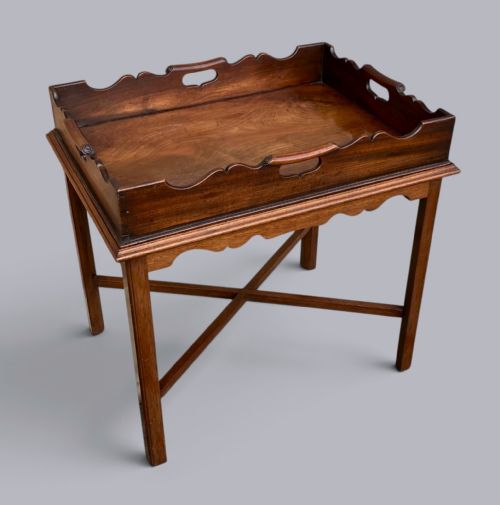
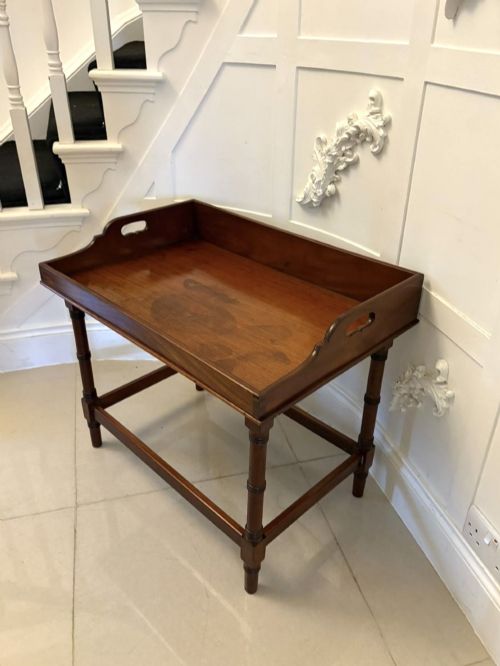
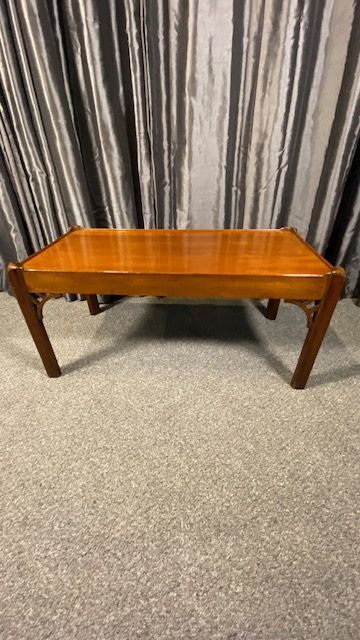
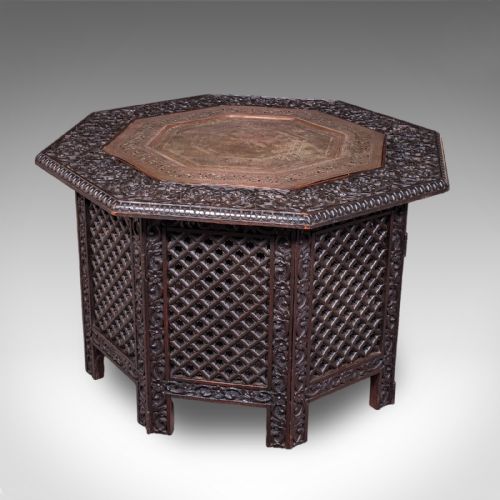
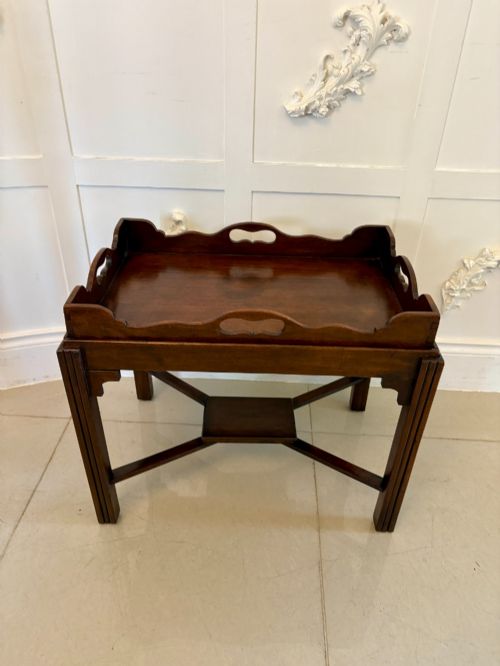
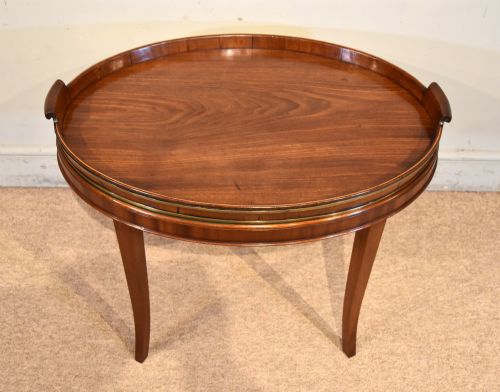
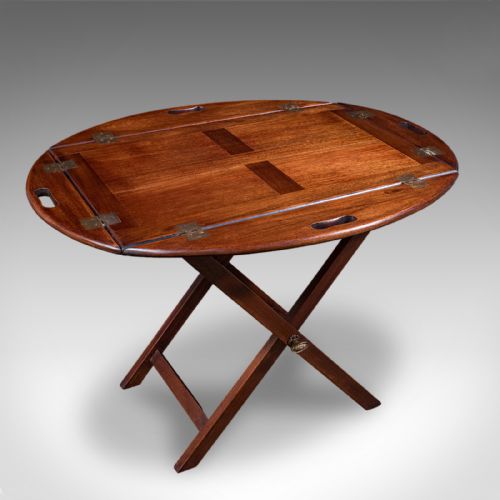
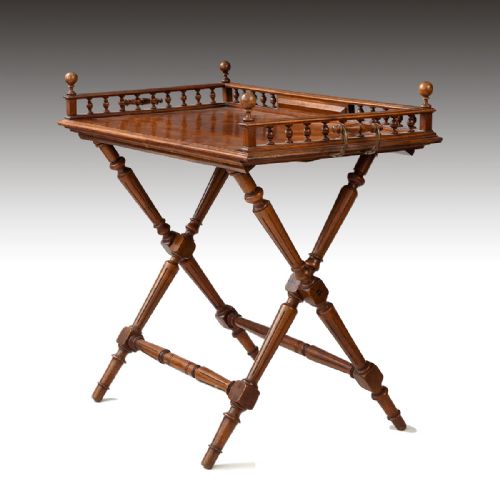
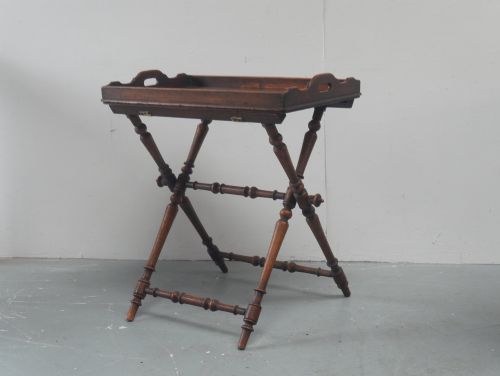
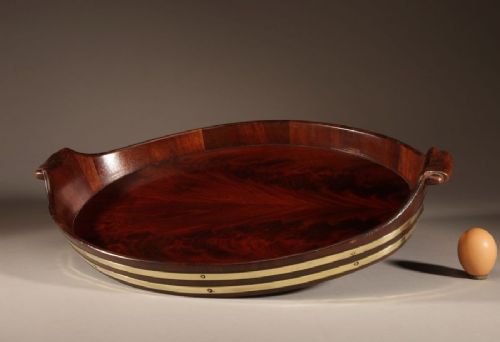
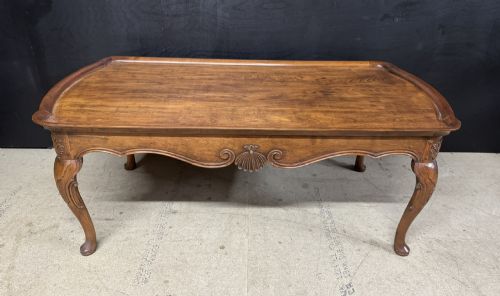
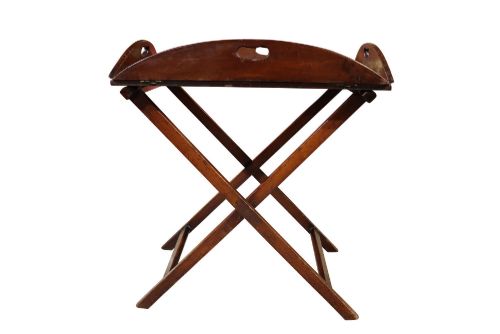
A wooden coffee tray often takes the form of a removable serving tray resting on a folding or fixed wooden stand, combining utility with portability. These pieces span centuries of domestic life, frequently appearing in forms like butler trays, oval galleried trays, and tray top tables.
The selections on this page draw from periods ranging from the eighteenth century through the Edwardian era and the nineteen-thirties, reflecting diverse craftsmanship. Many pieces incorporate stands, transforming portable trays into functional low tables suitable for daily use.
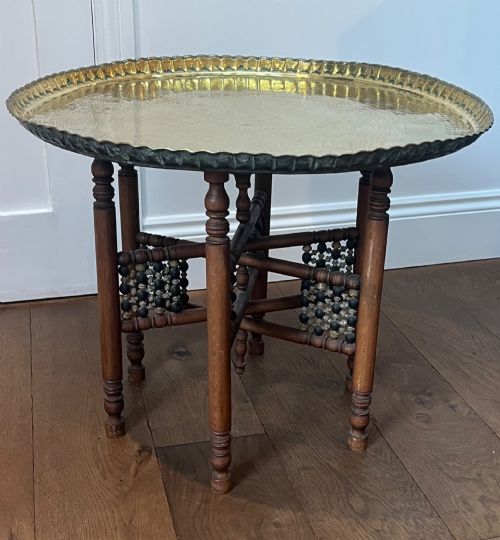
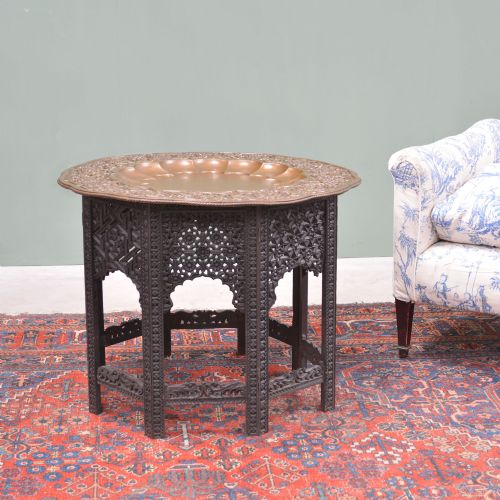
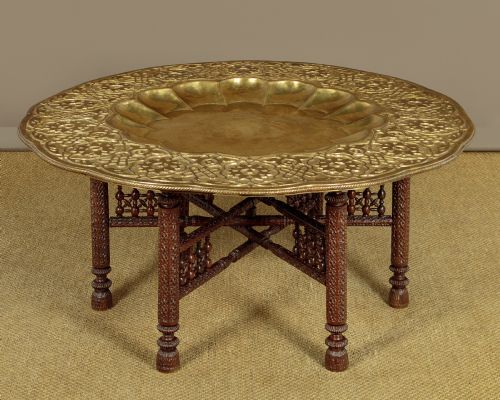
Origins vary widely across the inventory, including English cabinetmaking traditions alongside Anglo-Indian, Persian, and Chinese examples. Buyers encounter everything from solid oak and mahogany designs to walnut models featuring marquetry or brass insets.
Materials and construction
Cabinetmakers relied heavily on dense hardwoods such as mahogany, walnut, and oak to construct durable trays and folding stands. Timber selection dictated the weight and grain pattern, with burr walnut and figured mahogany prized for their rich visual depth.
Metal elements frequently complemented the woodwork, notably in brass and copper insets, coopered bands, and decorative hinges on folding frames. Some regional variations integrated elaborate surface carving or metal trays set into wooden frames.
Joinery methods ensured that folding stands remained stable while allowing the frame to collapse flat when necessary. Dovetail joints, galleried edges, and drop-flap mechanisms demonstrate the functional ingenuity applied to domestic service.
Wooden Coffee Tray Retail Price Guide 2026
Typical asking prices for wooden coffee tray among the pieces listed under this phrase on Sellingantiques today, from the lower quarter to the upper quarter. They describe what is for sale here now, not the wider market.
Listings feature numerous eighteenth and nineteenth-century forms alongside early twentieth-century interpretations in mahogany, walnut, and oak.
Distinctions in craftsmanship
The caliber of a wooden coffee tray rests on the selection of timber and the crispness of any carved or inlaid detail. Superior examples display carefully matched grain patterns across the tray surface and robust, well-fitted joinery on the supporting stand.
Originality of components marks a significant division between standard items and exceptional pieces. Surviving stands that genuinely match the period and manufacture of the tray hold greater integrity than later marriages of separate elements.
Refinement in secondary details, such as coopered edges, hand-cut dovetails, or integrated brass handles, separates mass-produced items from bespoke pieces. The weight of the timber and the subtlety of the polish reveal the maker's initial investment of time and skill.
The Wooden Coffee Tray Glossary
- Butlers tray
- A portable wooden tray with hinged or shaped sides, traditionally used for serving and designed to fit upon a folding X-frame stand.
- Galleried
- A tray featuring a raised wooden rim or border around its perimeter, designed to prevent items from sliding off during transport.
- Coopered
- Constructed from curved wooden staves joined tightly together side by side, much like a barrel, often seen in oval trays.
- Marquetry
- The art of applying thin veneers of different woods to a structure to form decorative patterns and pictorial designs.
- Drop-flap
- A hinged section of a tray or table top that can be lowered or raised to alter the surface area of the piece.
Wooden Coffee Tray: Frequently Asked Questions
How do I use a wooden tray table?
These tables serve well as movable coffee tables, cocktail surfaces, or display stands for books and decorative objects. The removable top allows for practical serving use when needed.
Folding stands also enable easy storage or repositioning within a room depending on daily spatial requirements.
Are the trays separate from the stands?
Many traditional designs feature a loose tray that lifts entirely off the supporting folding frame. Other variations integrate the tray top permanently into the table structure.
Checking the specific listing details clarifies whether a particular piece functions as a true removable serving tray or a fixed table top.
How do I date an antique wooden tray?
Dating relies on observing timber choices, construction techniques, and stylistic markers such as Georgian proportions or Edwardian inlay. Tool marks and the ageing of the wood provide further clues to the era of manufacture.
Comparing the hardware, hinges, and overall form against documented period examples helps confirm the age of both tray and stand.