




Wooden Carved Serving Tray
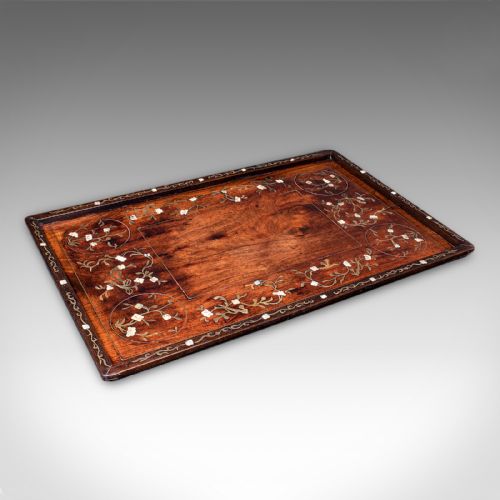
A wooden carved serving tray is a functional antique serving piece, and you will find examples here fashioned from oak, mahogany, teak, and walnut.
Wooden Carved Serving Tray
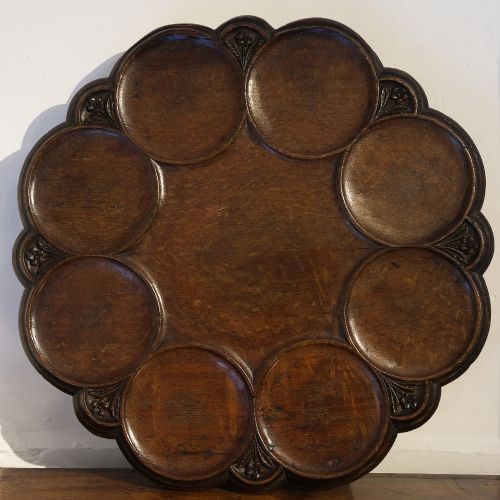
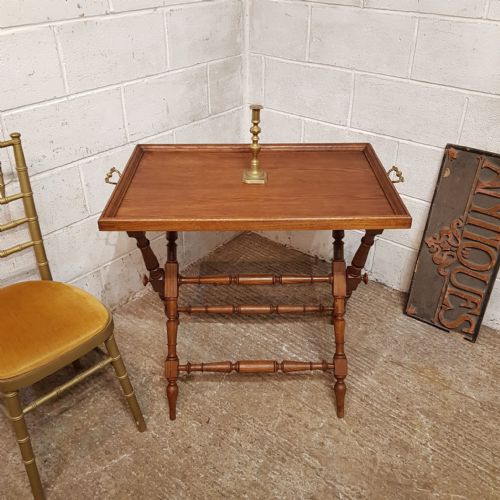
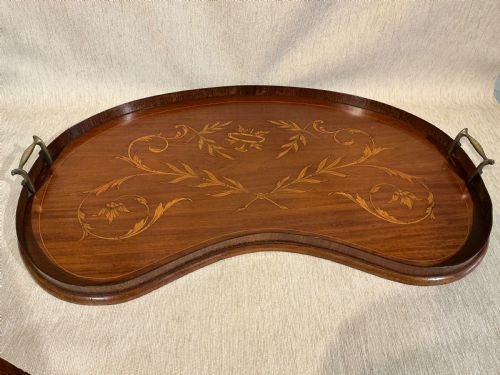
A wooden carved serving tray brings utility and hand-carved detail to the table, frequently appearing on this page as butler's trays, afternoon tea platters, and revolving lazy susans. These pieces emerge from the nineteenth century, the Victorian era, the Georgian period, and the early twentieth century.
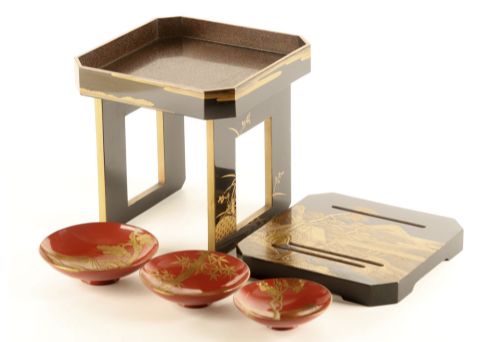
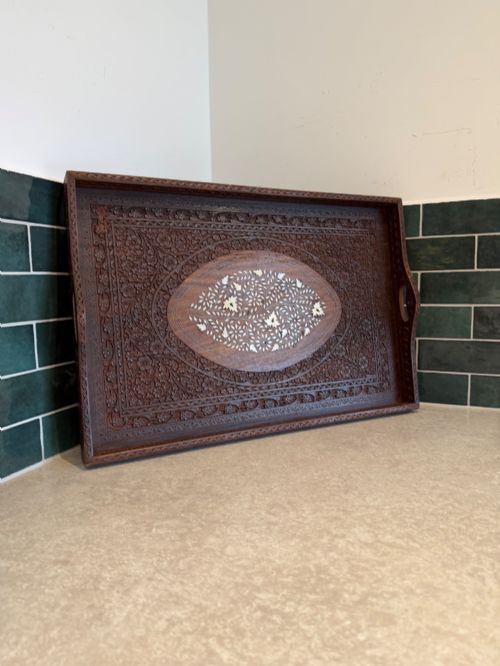
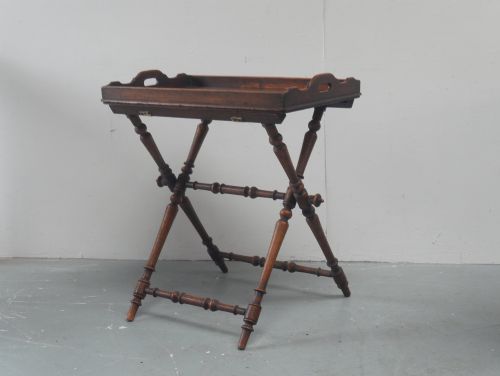
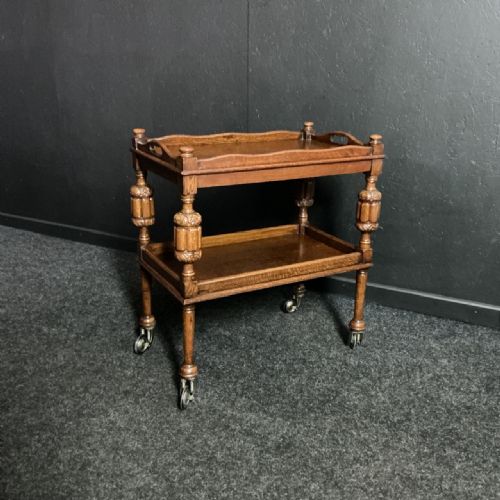
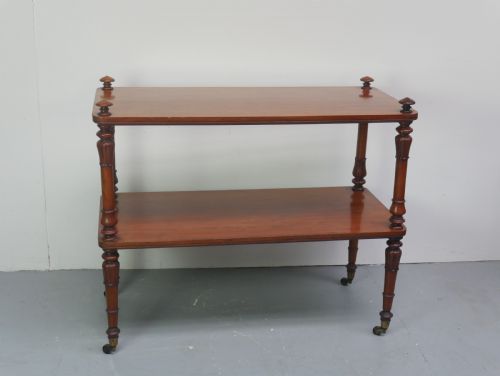
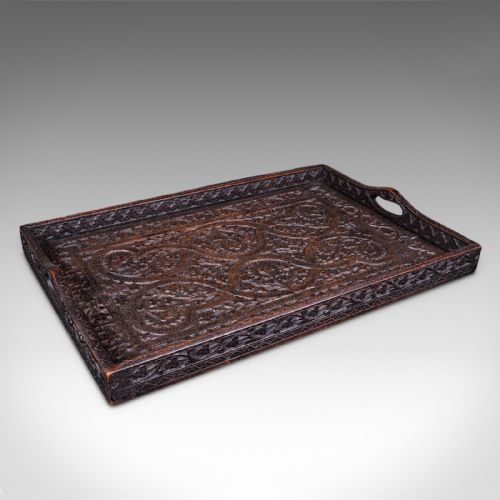
The most common versions you will meet span robust oak butler's trays on folding stands and intricately carved Anglo-Indian teak platters. Alongside these traditional serving trays, the selection includes tea trolleys, trays with scalloped edging, and Japanese ceremonial sets.
Makers and workshops from diverse regions contributed to this group, ranging from English cabinet makers working in mahogany to Kashmiri artisans carving walnut and Japanese craftsmen producing specialised sake sets. Each object reflects the domestic hospitality of its respective period.
What varies in quality
The depth and crispness of the carving distinguish finer examples from simpler utilitarian items, as does the selection of timber with rich natural grain patterns. Superior pieces display thoughtful integration of brass mounts, sturdy handles, and well-fitted folding stands that remain rigid when assembled.
Proportion and execution set individual items apart, particularly in the balance of galleried edges and the precision of scalloped borders. Condition and originality of the timber finish also influence the character of each piece, showing how well the wood has aged through decades of service.
Periods represented span the Georgian era, Victorian period, and early twentieth century, alongside regional styles such as Anglo-Indian and Kashmiri.
Maple & Co
The Wooden Carved Serving Tray Glossary
- Butler's tray
- A removable wooden tray with raised sides, designed to sit upon a folding X-frame stand for serving drinks or meals. This form became popular in British households during the nineteenth century.
- Lazy susan
- A revolving tray placed on a table or counter to assist in moving food easily among diners. These rotating wooden platforms often feature carved details along the upper surface.
- Galleried edge
- A raised border surrounding the perimeter of a tray to prevent items from sliding off during transit. In finer pieces, this gallery is pierced or shaped from the solid wood.
- Anglo-Indian
- A style describing items made in India during the British colonial period, typically utilising local teak or walnut with dense, intricate plant-based carving. These trays frequently served afternoon tea.
- Sencha
- A Japanese term for green tea ceremony trays, often carved in sets from wood during the nineteenth and early twentieth centuries. These delicate items reflect traditional East Asian craftsmanship.
Wooden Carved Serving Tray: Frequently Asked Questions
What is a butler's tray?
A butler's tray is a portable wooden serving tray featuring hinged or fixed raised sides, traditionally lifted off a matching folding stand.
These pieces allowed domestic staff to carry food and drink into a room before mounting the tray on its frame for service.
How do I use a lazy susan?
A lazy susan sits in the centre of a dining table or sideboard, rotating smoothly on a central pivot to share dishes among guests.
Carved wooden versions from the nineteenth and early twentieth centuries add a decorative element to table service while remaining fully operational.
How do I date a wooden tray?
Dating relies on observing the wood species, construction methods, hardware materials, and stylistic markers such as Victorian gallery edges or Georgian mahogany framing.
Comparing the turnover mechanism of a lazy susan or the joinery of a stand helps place the piece within its nineteenth or early twentieth-century context.