

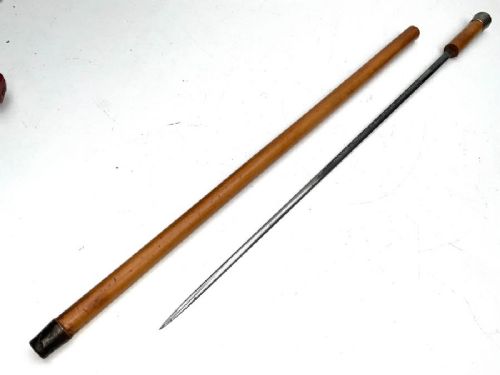


Wooden Cane Steel Blade
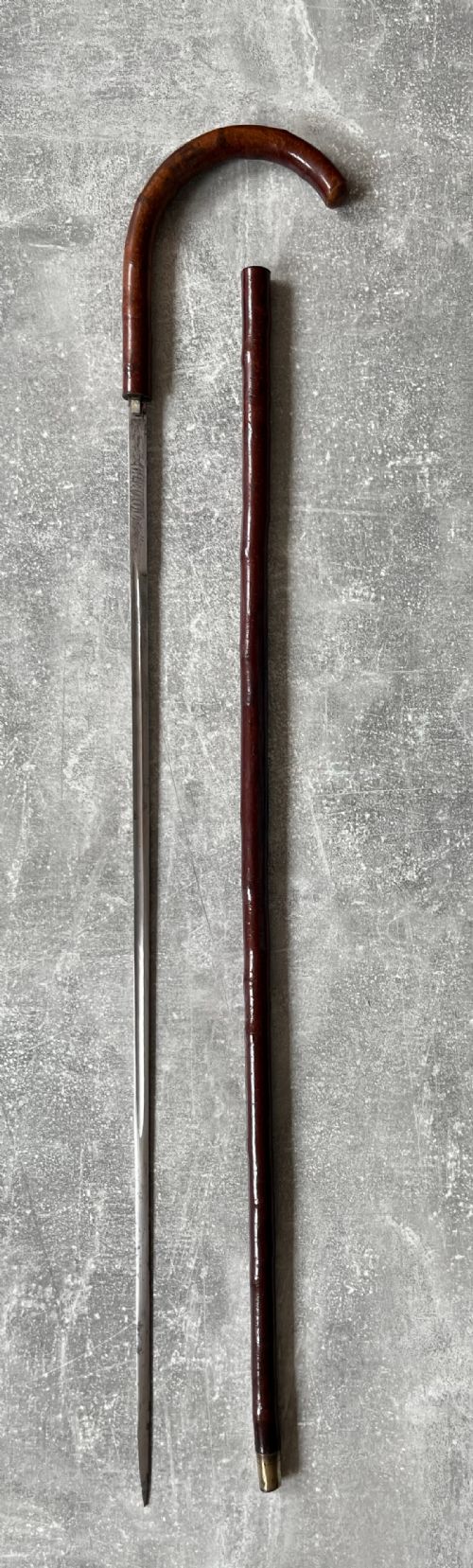
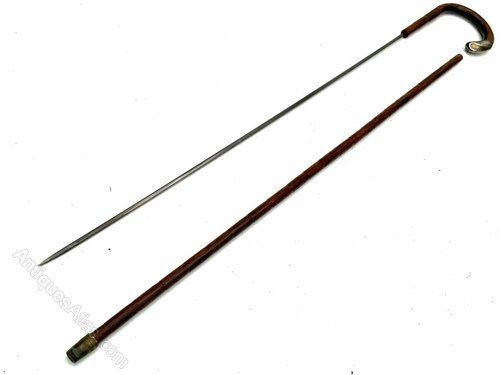
A wooden cane steel blade is a deceptively practical item, combining a gentleman's walking stick with a concealed weapon.
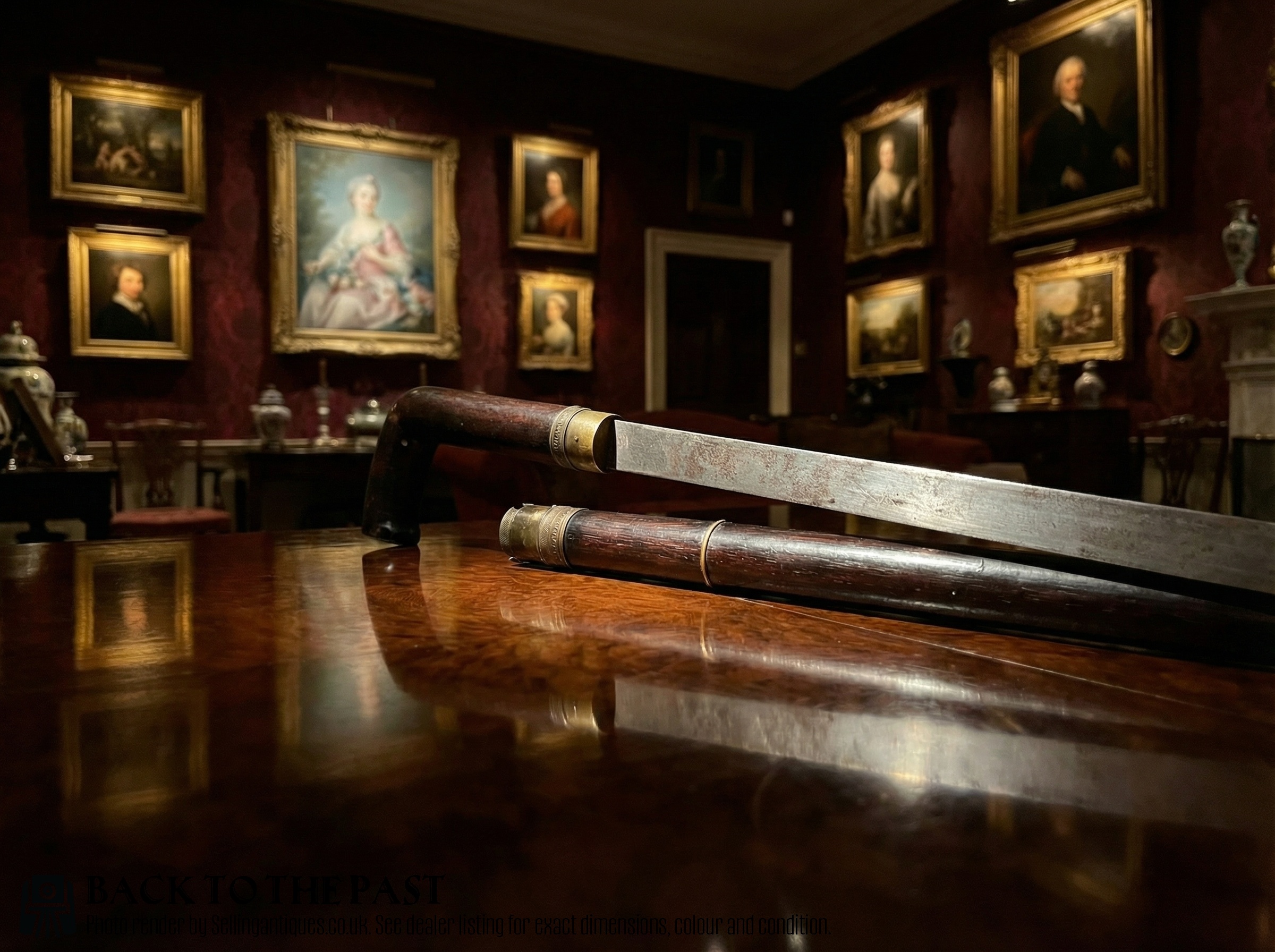
Wooden Cane Steel Blade
A wooden cane steel blade, often catalogued as a sword stick, serves as a dual-purpose accessory for personal defence and daily support. The pieces on this page span the late nineteenth century through to the Edwardian period and the nineteen-twenties.
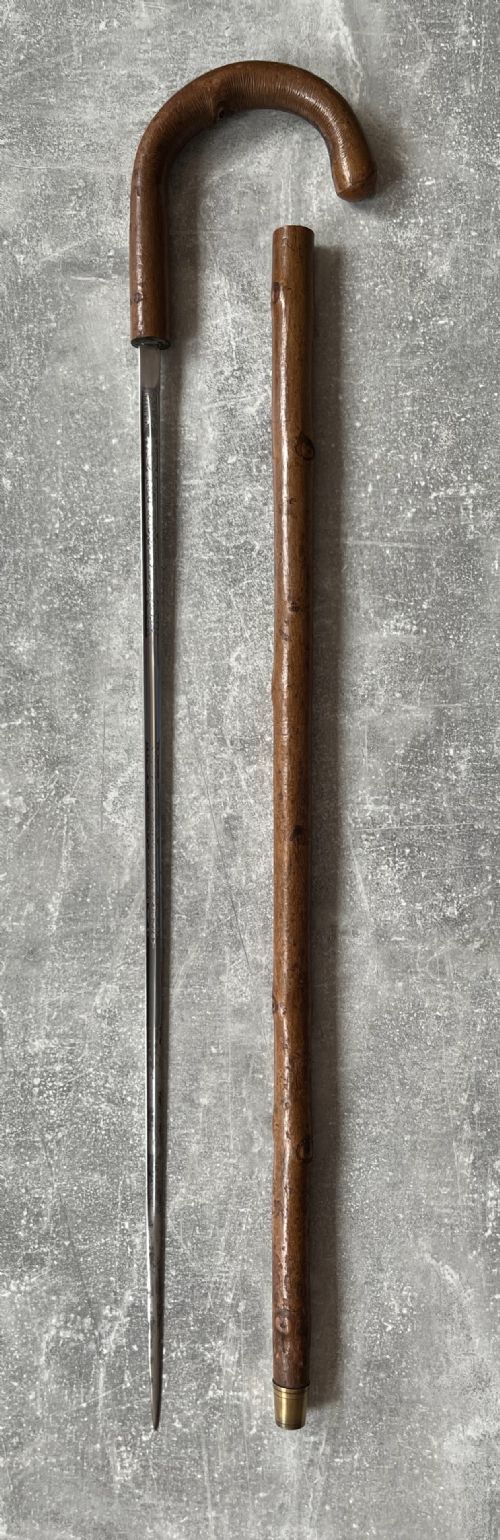
Most examples take the form of gentleman's walking sticks fitted with hidden blades, originating from British, French, and German makers. Common configurations include crook handles, root-ended grips, and horn or malacca shafts.
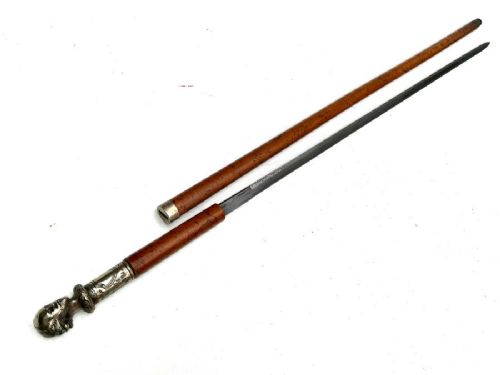
Military officers, Masonic members, and urban gentlemen favoured these items, reflecting the social requirements of the Victorian and Edwardian eras. Variations range from plain hazel wood shafts to decorated pieces with silver collars.
How they were made
Makers utilised dense natural timbers such as cherrywood, partridge wood, hazel, blackthorn, and malacca to construct durable outer shafts that concealed the metal interiors. Horn and brass frequently formed the handles and collars, providing secure grips and structural reinforcement.
The internal blades relied on quality steel, with notable examples bearing the marks of established blade-smiths from Toledo and Wilkinson. Precision fitting ensured the steel blade slid smoothly into the wooden scabbard without rattling or binding.
Wooden Cane Steel Blade Retail Price Guide 2026
Typical asking prices for wooden cane steel blade among the pieces listed under this phrase on Sellingantiques today, from the lower quarter to the upper quarter. They describe what is for sale here now, not the wider market.
Some nineteenth-century gentlemen concealed a lethal blade inside what appeared to be an innocent shepherd's crook.
What varies in quality
Quality depends heavily on the origin and reputation of the blade-smith, with branded steel from makers like Wilkinson or Toledo commanding greater regard than unmarked alternatives. The choice of timber also dictates standard, where exotic woods and seasoned partridge wood outlast softer common branches.
Engineering precision sets the finest specimens apart, specifically the seamless closure between the handle and the wooden shaft. Superior examples feature hallmarked silver collars, inscribed initials, or robust horn handles rather than basic metal fittings.
Wilkinson·Toledo
The Wooden Cane Steel Blade Glossary
- Collar
- A metal band encircling the top of the shaft just below the handle. It often bears silver hallmarks or owner initials.
- Partridge wood
- A dense, heavily mottled tropical timber utilised for its strength and distinctive feathered grain pattern. It provides a robust housing for a steel blade.
- Crook handle
- A curved grip shaped at the top of the stick for hooking over the arm. This traditional form appears frequently on Edwardian and Victorian walking canes.
- Malacca
- A type of rattan cane known for its smooth surface and rich brown mottled colouring. It serves as a light yet resilient material for gentleman's walking sticks.
Wooden Cane Steel Blade: Frequently Asked Questions
How are the blade and cane secured?
The steel blade slides directly into the hollowed wooden interior of the walking stick, acting as a scabbard. A friction fit, screw mechanism, or internal catch typically holds the handle securely to the shaft until drawn.
This tight tolerance prevents the blade from slipping out accidentally while walking.
Who carried these walking sticks?
Military officers, Masonic members, and urban gentlemen routinely carried sword sticks as part of standard daily attire. They provided both physical support and a means of personal protection in the nineteenth and early twentieth centuries.
Different social classes selected materials matching their status, ranging from simple hazel wood to silver-collared malacca.
How do I date a sword stick?
Dating relies on examining the material styles, hallmarks on any silver collars, and specific blade inscriptions. Victorian and Edwardian examples often display distinct handle shapes and timber preferences characteristic of their decade.
Makers' marks stamped onto the steel blade also provide precise manufacturing origins.