
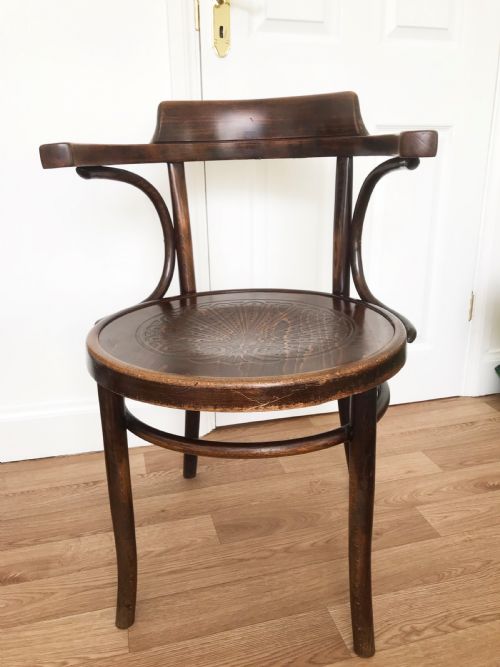

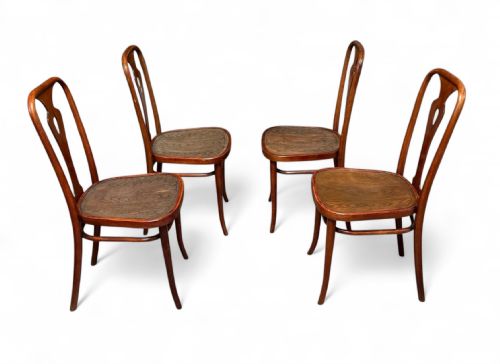


Wooden Cafe Dining Chair
These wooden cafe dining chair selections bring immediate bistro character to a room, offering practical daily seating rooted in bentwood and wood traditions.
Wooden Cafe Dining Chair
When you search for a wooden cafe dining chair, you find robust seating designed originally for hospitality spaces and public houses. The examples gathered here span periods from the nineteenth century through the Edwardian era into the mid twentieth century, featuring forms like bistro chairs, carvers, and garden dining sets.
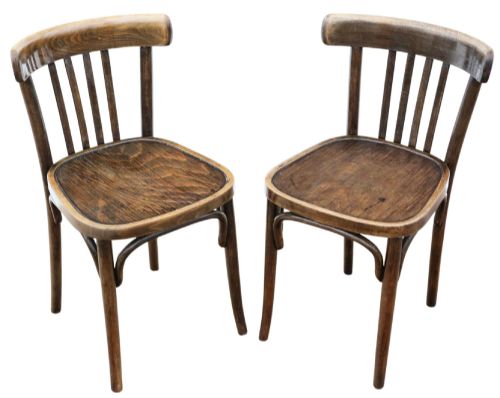
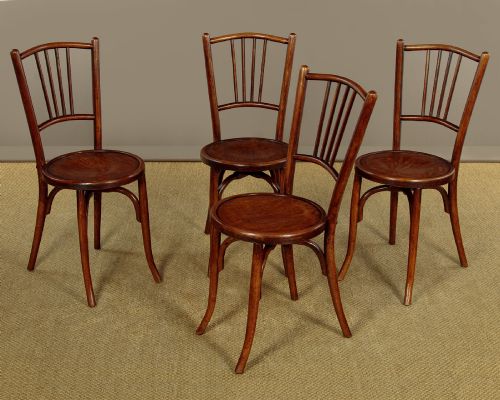
You are most likely to meet beech bentwood designs originating from makers who mastered steam bending during the late Victorian and early twentieth centuries. These pieces combine lightweight agility with sturdy frames suited for active dining spaces.
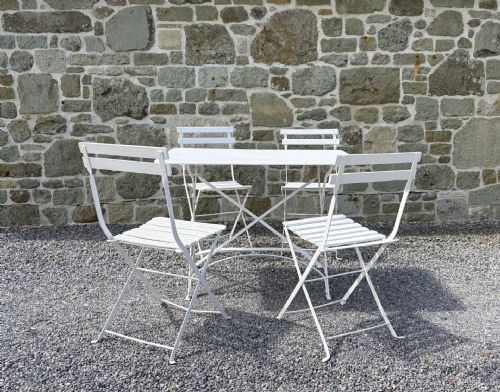
The inventory also includes French iron and wood garden furniture alongside matched sets originating from notable locations such as the Cafe Royal in London. Single chairs appear alongside sets ranging from pairs up to twelve pieces.
How they were made
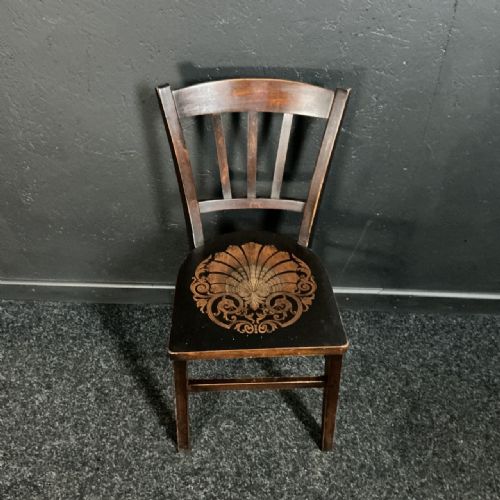
Makers utilised solid beech and beechwood, often steaming the timber to achieve the characteristic curved components integral to bentwood construction. Plywood also appears in seat panels, providing a smooth surface suited to commercial use.
Iron components integrate with wood in garden furniture variations, whilst staining finishes enhance the natural grain of the timber. Skilled joinery secures the curved frames together without adding excessive weight.
A sturdy set of beech bentwood chairs once seated patrons at the lively Cafe Royal in London.
What varies in quality
The distinction between standard commercial seating and finer examples lies in the precision of the steam bending and the integrity of the original joins. Superior specimens retain their structural rigidity and fluid lines after decades of commercial use.
Attribution to documented workshops elevates certain sets, particularly those bearing maker marks from established firms. The uniformity within larger sets also influences the overall cohesion of the group.
Thonet·Codina·J & J Kohn
The Wooden Cafe Dining Chair Glossary
- Bentwood
- Wood that has been shaped by heating it with steam until pliable and then bending it into curves. This technique defines the profile of traditional cafe seating.
- Beechwood
- A dense, pale timber commonly utilised for its strength and ability to hold steam bent shapes. It forms the primary structural material across most listed examples.
- Carver
- An armchair featuring integrated armrests, often positioned at the head of a dining table. These provide a wider seat than standard side chairs.
- Plywood
- Manufactured wood made from thin sheets of wood veneer glued together. This material frequently forms the flat or moulded seats of bistro chairs.
Wooden Cafe Dining Chair: Frequently Asked Questions
Are these chairs comfortable for daily dining?
The ergonomic curved backs and supportive wooden seats make them well suited for regular meals around a kitchen or dining table.
Many examples include upholstered cushions or caned panels that add an extra layer of comfort during extended sitting.
How do I care for vintage bentwood furniture?
Keep the wood nourished with appropriate waxes or mild polishes, and avoid placing the chairs in areas with extreme humidity or direct heat.
Regular gentle dusting helps preserve the stained wood finish and maintains the integrity of the glued and screwed joints.
Can I mix these chairs with modern tables?
The understated profiles and slender wooden frames allow these seats to complement contemporary dining tables without visual heaviness.
Their neutral beech and stained wood tones bridge the gap between traditional interior schemes and modern minimalist spaces.
How can I tell different production periods apart?
Earlier nineteenth century and turn of the century pieces typically exhibit tighter steam bends and specific maker stamps impressed into the underside of the seat.
Later twentieth century examples often show simplified construction methods and alternative plywood seat configurations.