




Wooden Bottle Box
A wooden bottle box secures fine spirits and travel provisions in timber, housing glass decanters or bottles within fitted compartments.
Wooden Bottle Box
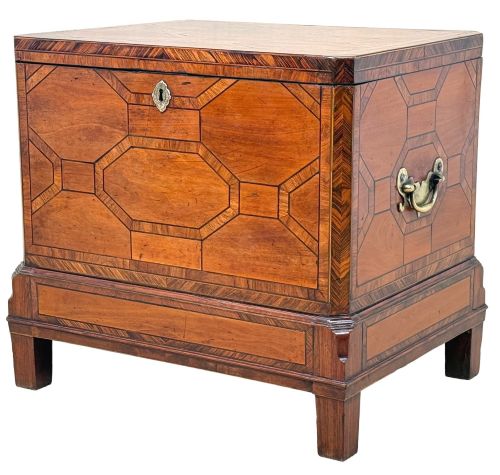
A wooden bottle box covers a variety of drinking vessels, cellarettes, and travelling cases designed to hold bottles securely during the Georgian, Regency, and Victorian periods.
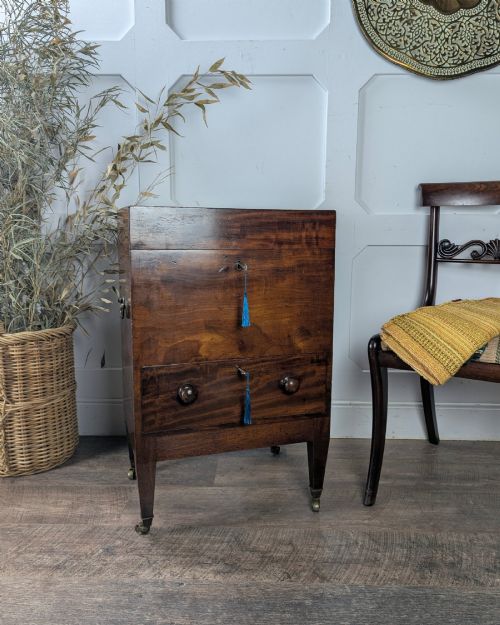
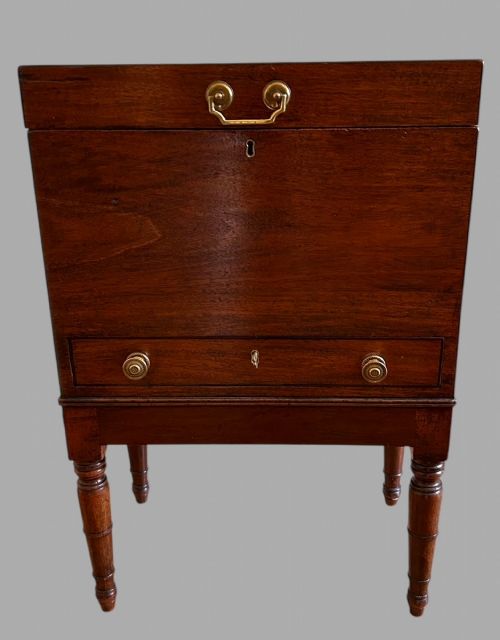
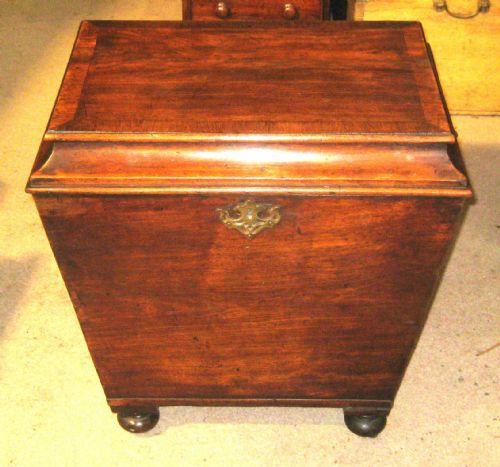
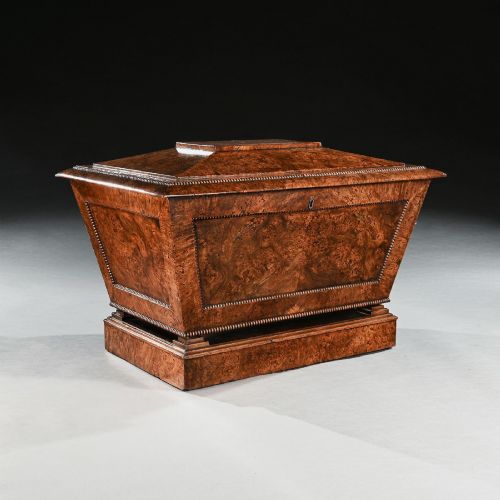
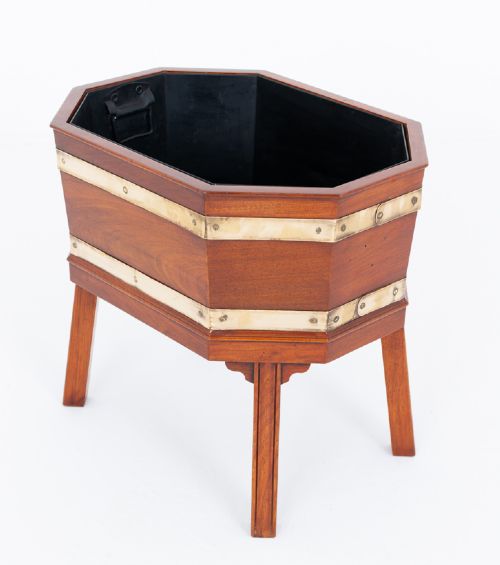
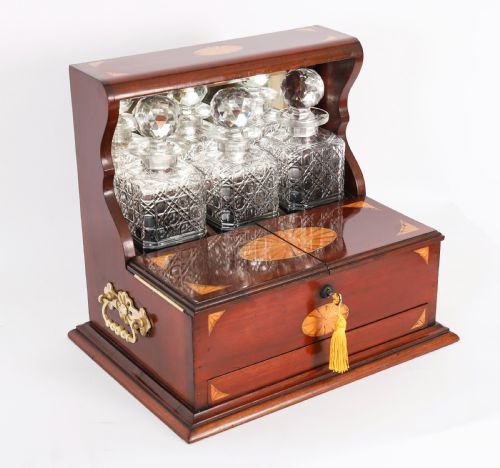
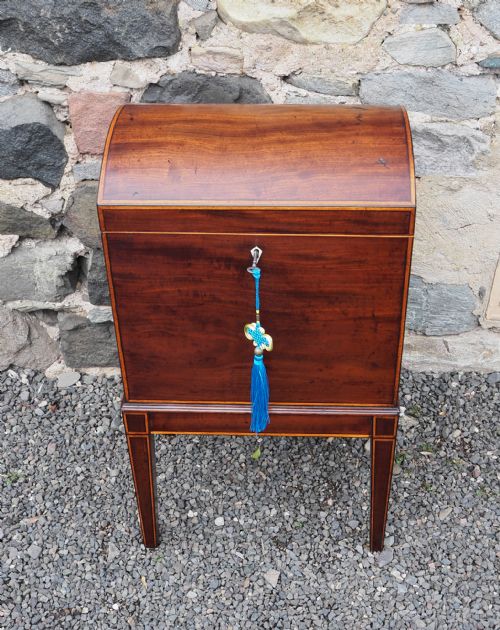
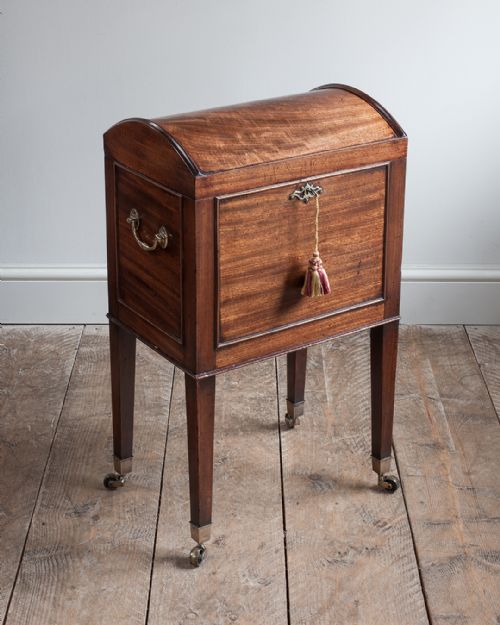
You will most frequently meet mahogany cellarettes and wine coolers shaped as sarcophagi or boxes, alongside oak or pollard oak tantalus sets housing cut glass decanters.
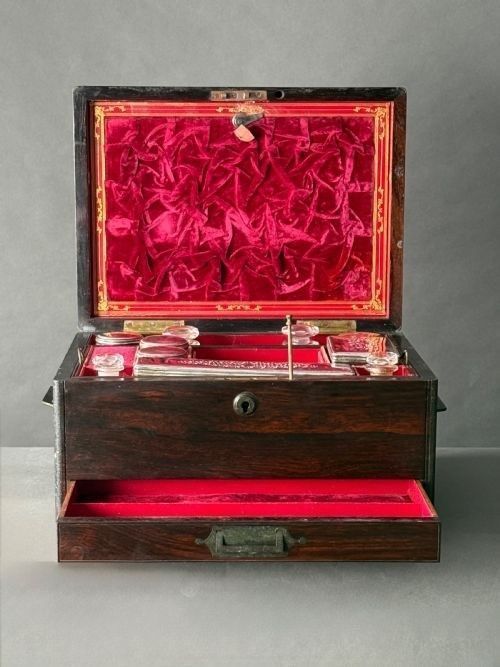
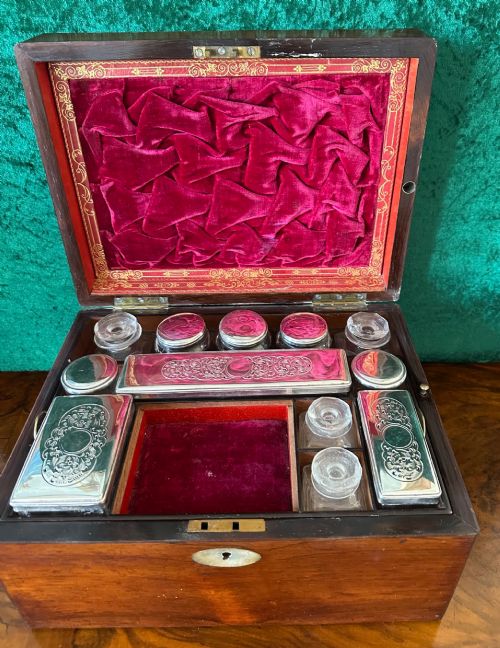
The selection also spans smaller apothecary boxes fitted with original glass bottles, as well as vanity cases and presentation cases constructed from satinwood, rosewood, and walnut.
How they were made
Cabinetmakers constructed these pieces primarily from solid mahogany, oak, and rosewood, often employing flame mahogany veneers and intricate marquetry or satinwood inlay.
Metal fittings played a crucial role in daily function, utilising brass handles, hinges, and bindings alongside silver-plated mounts on tantalus frames to reinforce the timber structures.
The listings span the 18th, 19th, and early 20th centuries, covering Georgian, Regency, Victorian, and Edwardian periods with materials including mahogany, oak, brass, and cut glass.
What varies in quality
The calibre of timber figure, such as highly figured pollard oak or flame mahogany, dictates the visual weight of the piece, alongside the crispness of brass mounts and inlay work.
Internal organisation sets finer examples apart, particularly complete sets of original cut glass decanters, intact velvet linings, and working locks with matching keys.
Gillows of Lancaster and London·Charles Heathcote Tatham
The Wooden Bottle Box Glossary
- Cellarette
- A lockable cabinet or box designed to hold wine bottles and spirits near the dining table. They frequently take sarcophagus or octagonal forms.
- Tantalus
- A locking beverage stand that secures decanters within a metal frame to prevent unauthorized access while displaying the contents. They typically house two or three bottles.
- Sarcophagus
- A monumental coffin-like shape with a domed lid and tapered base popular for Regency and Georgian wine coolers. This architectural form lent gravity to dining rooms.
- Apothecary box
- A small compartmentalised chest housing medical bottles, scales, and ingredients. These portable medicine chests date from the Georgian and Victorian eras.
- Treen
- Small handmade wooden utilitarian objects. In this context, items such as nutmeg graters were carved directly into the miniature shape of a wine bottle.
Wooden Bottle Box: Frequently Asked Questions
What is a wooden bottle box used for?
These boxes served to store, protect, and transport wine bottles, spirits, and medicinal liquids safely. They kept valuable drinks locked away in dining rooms or ready for travel.
Larger cellarettes sat beneath sideboards, while tantalus sets displayed decanters openly on tabletops with locking mechanisms to restrict access.
How do I date a wooden bottle box?
Dating relies on timber selection, hardware styles, and overall architectural form. Georgian and Regency pieces favour mahogany and sarcophagus silhouettes, while later Victorian examples often introduce oak marquetry and silver-plated tantalus frames.
Internal fittings like cut glass decanters and the nature of the brass locks provide further clues to the exact period of manufacture.
Are the glass bottles original to the box?
Many boxes retain their fitted glass decanters or apothecary bottles, though replacements occurred over centuries of use. Examining the fit within the velvet or wooden dividers helps determine originality.
Matching cut glass patterns and proportional wear to the bases indicate that the bottles have belonged to the case for a very long time.
How should I care for antique mahogany and oak?
Maintain timber surfaces by keeping them away from direct sunlight and rapid temperature changes that cause wood to split. Regular dusting with a dry cloth preserves the patina.
Apply a microcrystalline wax sparingly when the wood appears dry, avoiding modern silicon-based polishes that degrade historic finishes.