



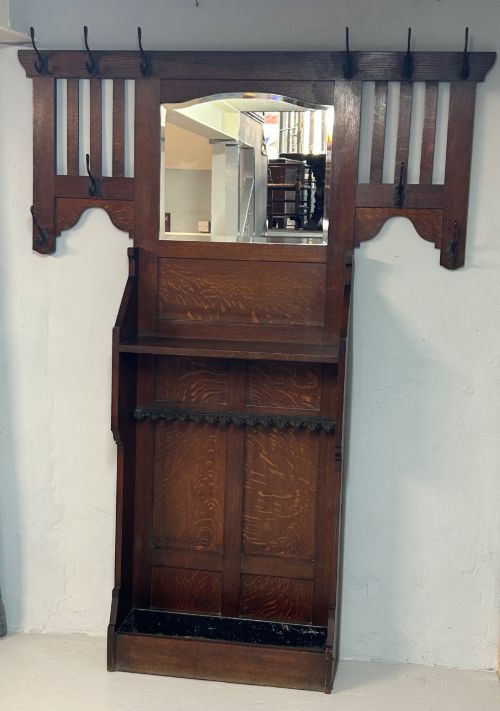
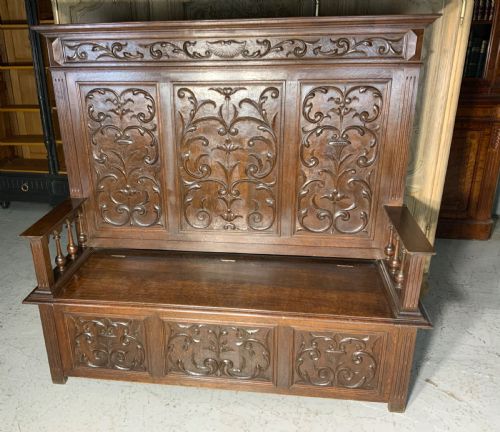
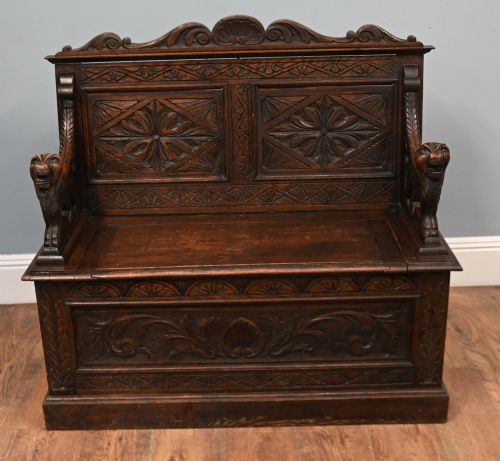

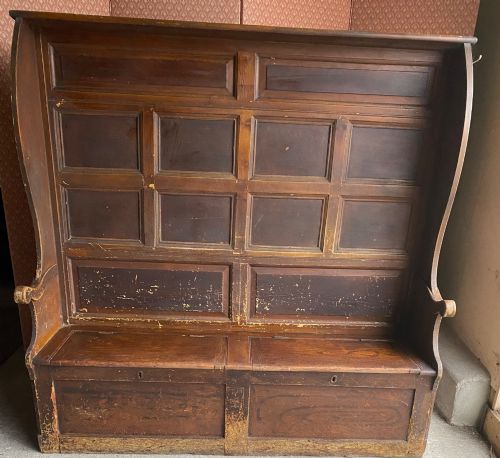
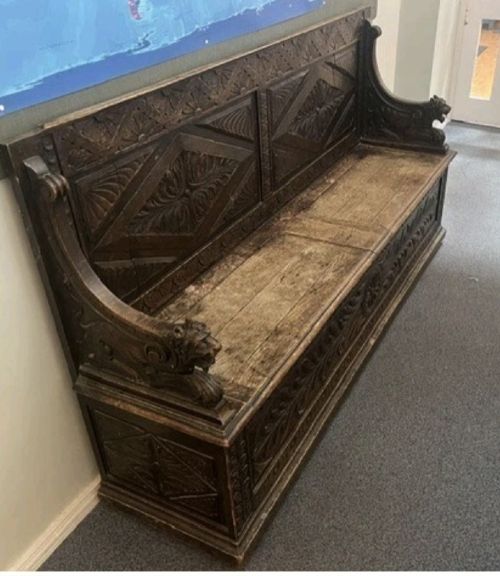



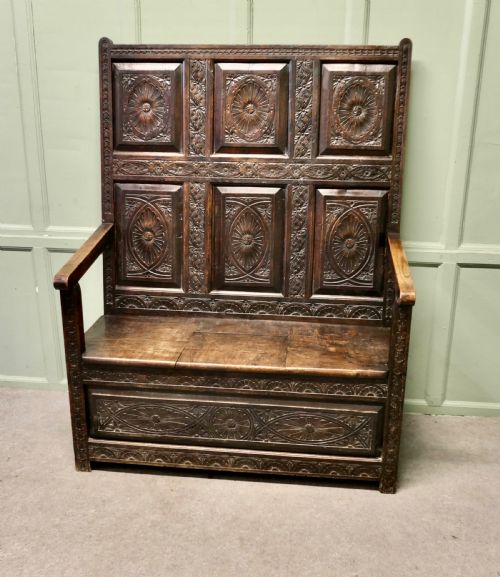
Wooden Bench with Storage
A wooden bench with storage provides practical seating combined with a concealed compartment for household items.
Wooden Bench with Storage
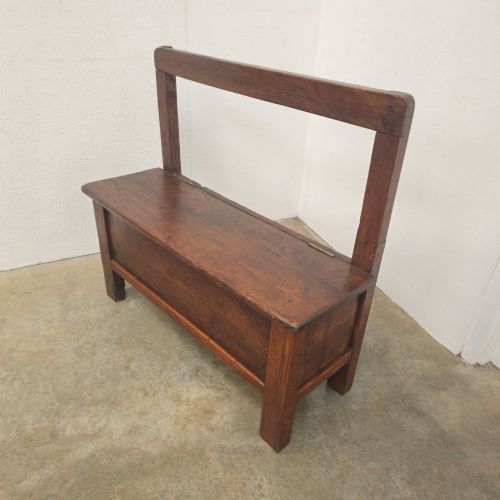
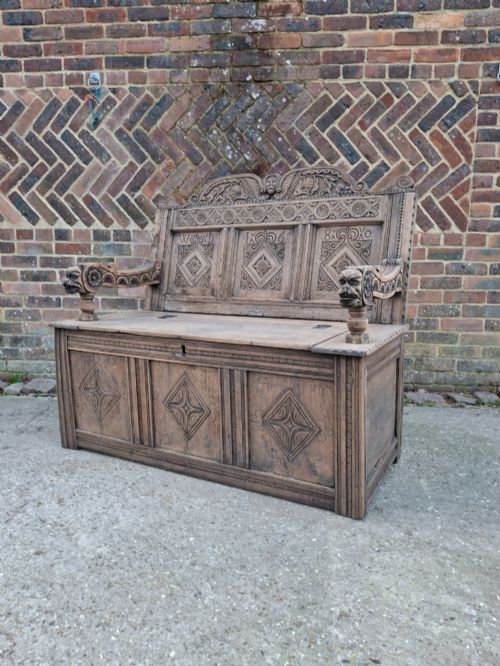
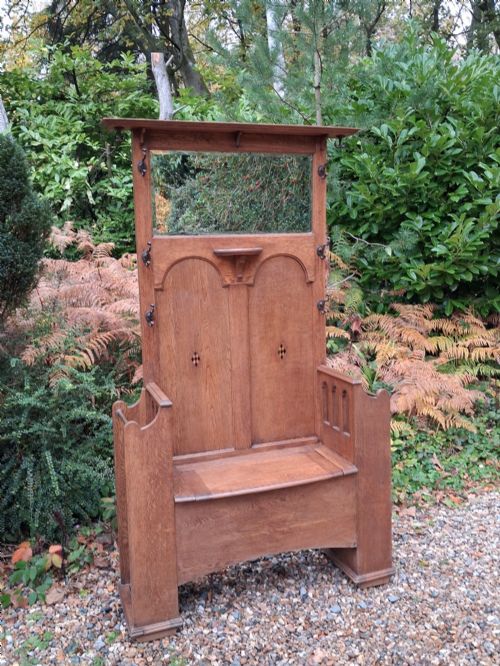
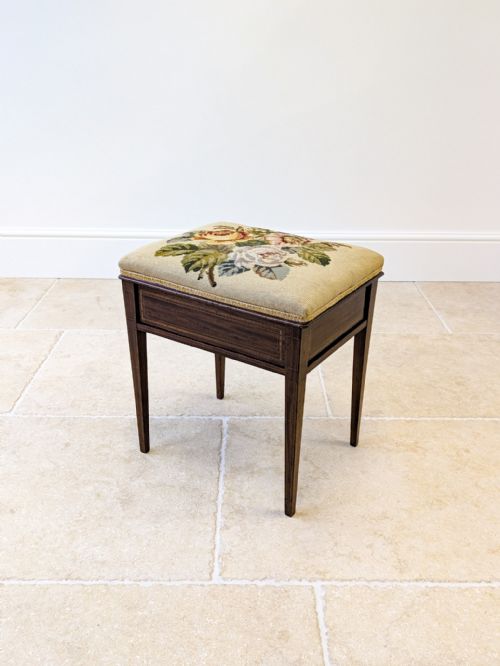
A wooden bench with storage serves as a dual-purpose item found in hallways and living spaces across various historical periods. These pieces combine a place to sit with a hidden compartment beneath the seat, functioning as a box settle, hall bench, or mule chest.
The selection ranges from country pine examples to substantial oak pieces spanning the seventeenth through to the early twentieth century. Common regional variations include Welsh, Hungarian, and English designs displaying styles such as Arts and Crafts, Gothic Revival, and rustic farmhouse.
Buyers frequently encounter nineteenth-century pine and oak variations fitted with lift-up lids, hinged box seats, or integrated shoe storage. These domestic furnishings reflect the practical storage needs of traditional homes.
Materials and construction
Carpenters constructed these benches primarily using domestic timbers such as solid oak, pine, elm, and fruitwood, occasionally incorporating iron and brass hardware. Hardwoods like mahogany and walnut appear in later or more formal pieces.
Joinery methods rely on traditional framing techniques, including pegged mortise and tenon joints for structural stability in high-use seating. Surfaces display waxed finishes, original paint layers, or carved ornamentation characteristic of periods like the Jacobean Revival.
Wooden Bench with Storage Retail Price Guide 2026
Typical asking prices for wooden bench with storage among the pieces listed under this phrase on Sellingantiques today, from the lower quarter to the upper quarter. They describe what is for sale here now, not the wider market.
Listings feature items spanning the seventeenth century through to the 1930s, constructed from oak, pine, elm, and fruitwood.
Variations in quality
Quality rests in the integrity of the timber selection and the retention of original surfaces, such as early paint or patinated wax. Dense, well-figured oak and substantial elm demonstrate superior material grade compared to utilitarian pine.
Construction details distinguish workshop standards, seen in the hand-cut joinery, the execution of carved panels, and the survival of original iron or brass hinges and fittings on the storage compartments.
James Shoolbred and Co·Shapland and Petter·Liberty
The Wooden Bench with Storage Glossary
- Box settle
- A wooden bench featuring a high back and a concealed storage compartment accessed by lifting the hinged seat. This form protected sitters from draughts in older interiors.
- Hall bench
- A narrow seat designed for an entrance passage, frequently incorporating storage for boots, shoes, or outerwear beneath the lid.
- Mule chest
- A storage chest fitted with one or more drawers beneath the main compartment, bridging the transition between a simple coffer and a modern drawer unit.
- Settle
- An early wooden bench with solid arms, a high panelled back, and enclosed sides intended to retain heat from a hearth.
Wooden Bench with Storage: Frequently Asked Questions
What is a wooden bench with storage?
A wooden bench with storage is a dual-purpose item of furniture that combines a seat with a concealed compartment beneath it.
These pieces range from traditional oak box settles to pine hall benches designed for practical household use.
Where were these benches placed?
These benches traditionally stood in hallways, entrance passages, and principal living rooms of historical homes.
In these locations, they provided a convenient place to sit while removing footwear and a discreet space to store blankets, shoes, or garments.
How do I identify the period?
Dating relies on observing the timber species, construction methods, and stylistic details such as carved panels or turned spindles.
Earlier examples from the seventeenth and eighteenth centuries typically feature heavy oak framing and hand-cut joinery, whereas nineteenth-century pieces often utilise pine or softer hardwoods.
How do I maintain the wood?
Maintenance involves applying appropriate natural waxes to nourish unpainted timber surfaces and preserve the finish.
Keeping the furniture away from direct heat sources prevents the wood from drying out and reduces the risk of splitting.