




Wooden Bear Statues
Wooden bear statues bring character into a room, spanning European forest carvings and Japanese folk traditions.
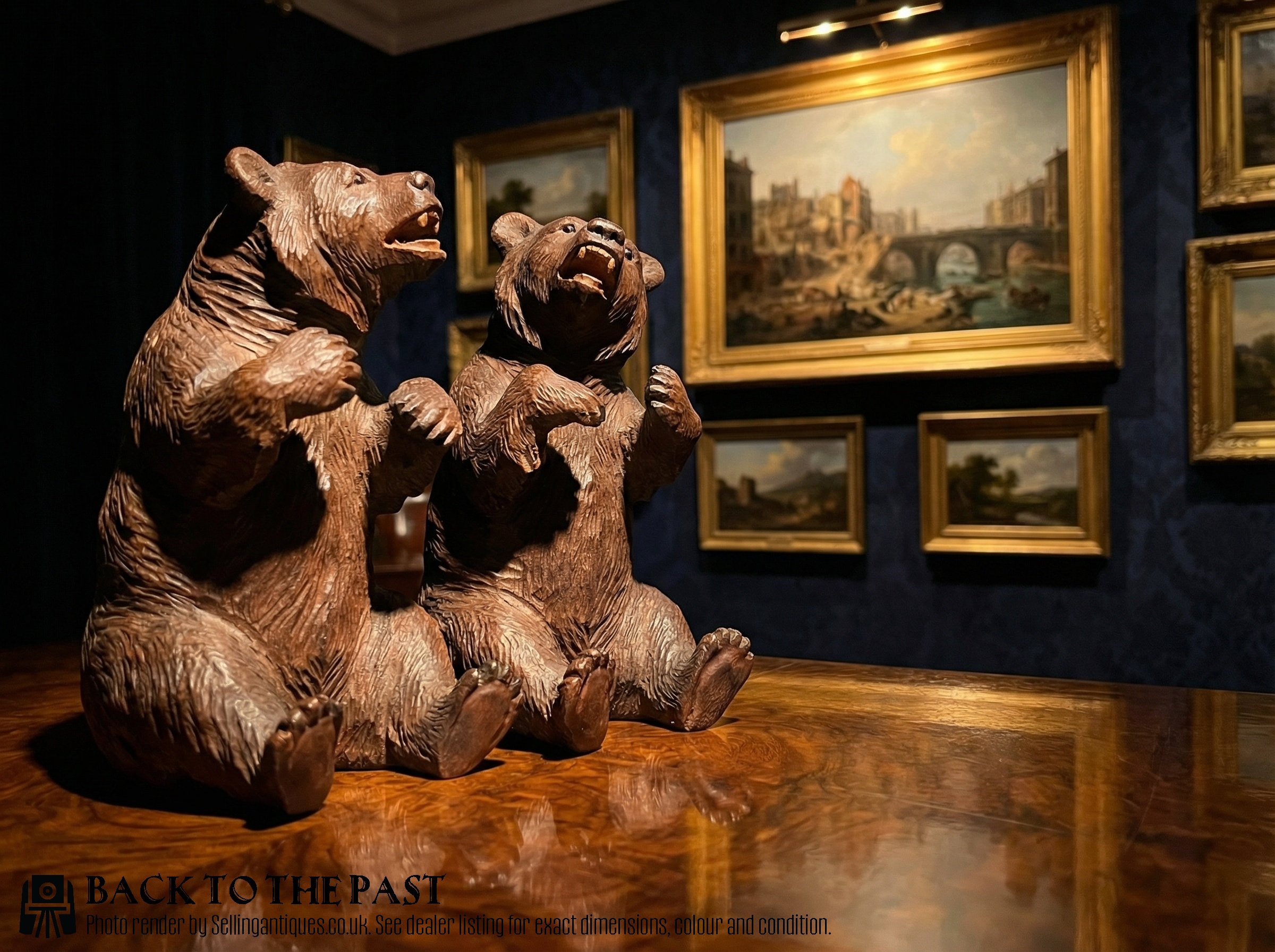
Wooden Bear Statues
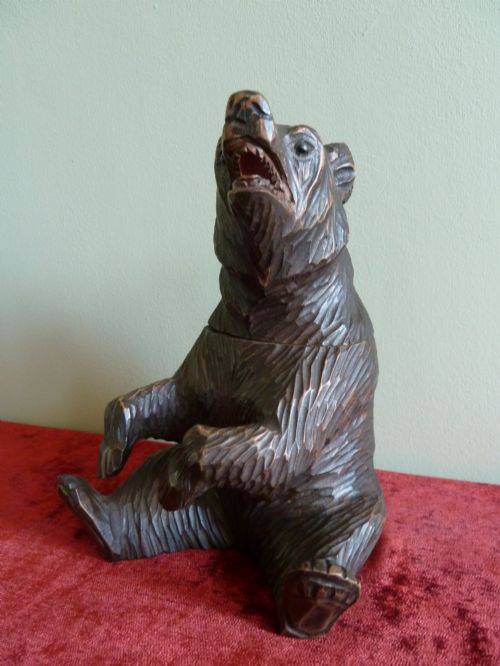
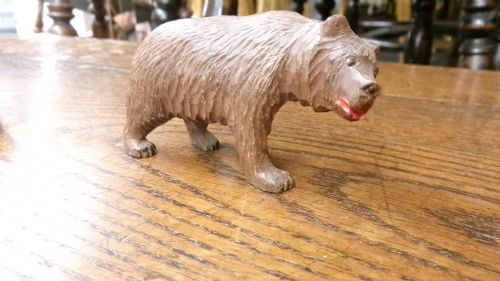
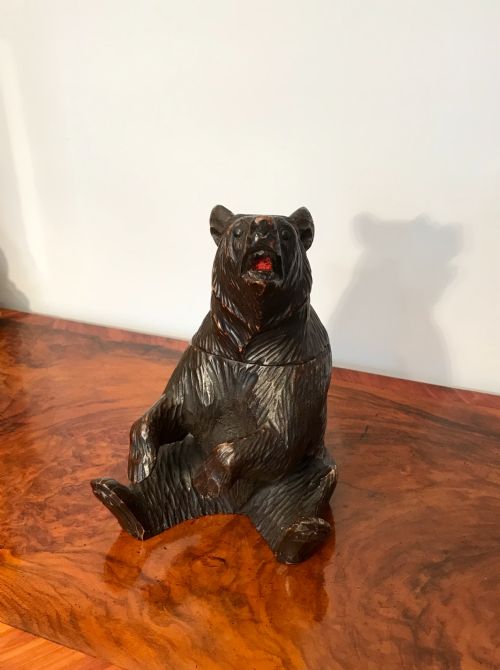
Wooden bear statues encompass a range of carved figures created across the nineteenth and early twentieth centuries. When searching for wooden bear statues, buyers encounter European woodland works alongside Japanese folk art pieces. These items serve as sculptures, tobacco jars, lamps, and decorative objects for the home.
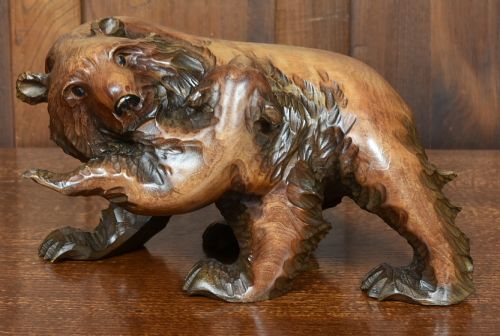
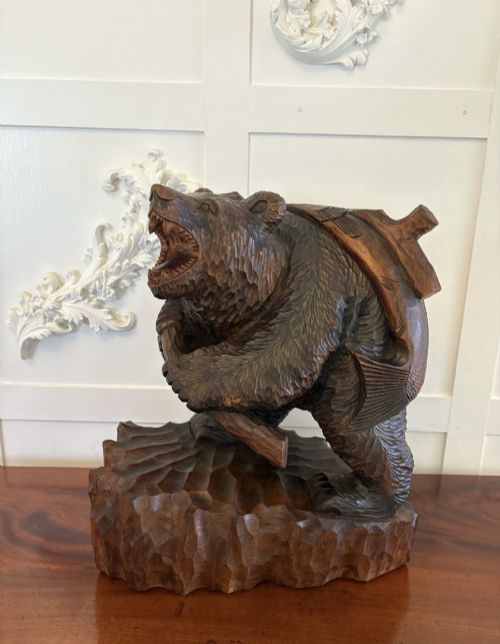
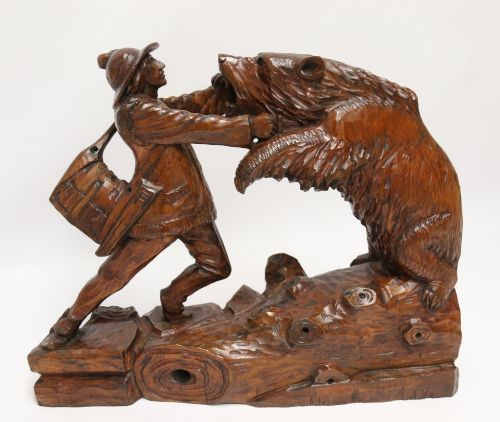
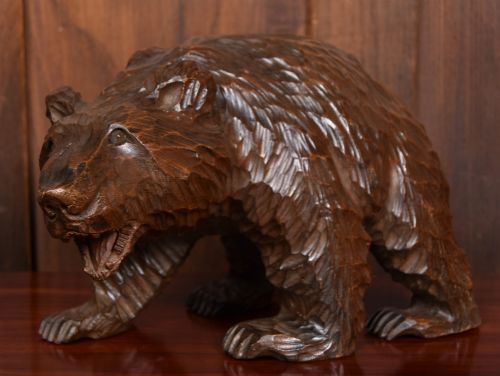
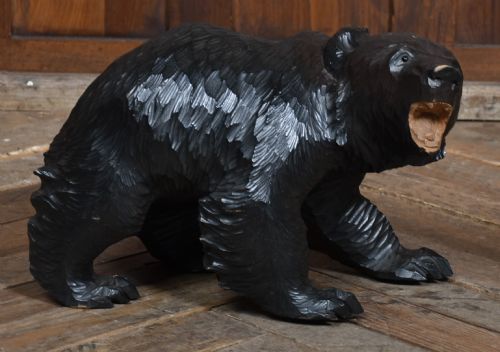
The regional traditions vary distinctly in form and expression. European pieces often emerge from the Black Forest or Swiss vernacular, depicting naturalistic animals engaged in human activities. Japanese carvings, known as Kibori Kuma, present bold, hand-carved representations often associated with Hokkaido folk craft.
Examples on this page span several decades, including Victorian, Edwardian, and Georgian eras. Materials range from linden wood and walnut to general hardwood and wax. Buyers find both single sculptures and pairs, alongside unusual functional objects like tobacco holders.
How they were made
Makers added small details to heighten realism or expression. Stud eyes appear on certain smaller figures, while glass elements sometimes form the eyes of larger specimens. Surface finishes rely on wax applications to protect the wood and deepen its tone over time.
Wooden Bear Statues Retail Price Guide 2026
Typical asking prices for wooden bear statues among the pieces listed under this phrase on Sellingantiques today, from the lower quarter to the upper quarter. They describe what is for sale here now, not the wider market.
Materials in these listings include linden wood, walnut, general hardwood, glass, and wax.
What varies in quality
The execution of the carving defines the primary distinction between pieces. Superior examples display careful anatomical proportion and natural movement in the limbs and expression. Lesser pieces rely on blocky forms with minimal attention to muscular or facial detail.
The choice of material and condition of the timber further separates the range. Fine-grained woods like walnut and linden allow for sharper definition that survives intact. Intact original surfaces and undamaged glass or stud eyes contribute to a more complete piece.
The Wooden Bear Statues Glossary
- Black Forest
- A style of wood carving originating from the central European mountain region. It typically depicts bears and other wildlife in naturalistic or whimsical poses.
- Kibori Kuma
- Japanese wood-carved bears originating from Hokkaido. These figures display distinct regional folk art techniques and bold chisel marks.
- Linden wood
- A pale, fine-grained timber favoured by carvers for its even texture. It permits intricate detail without splitting.
- Tobacco jar
- A lidded vessel designed to hold pipe tobacco. Many carved bear figures incorporate this lidded compartment into their bodies.
- Stud eyes
- Small metal or glass pins inserted to represent the eyes of the animal. They provide a glint of realism in simpler carvings.
Wooden Bear Statues: Frequently Asked Questions
What are Black Forest bears?
Black Forest bears are carved wooden sculptures made in Switzerland and Germany during the nineteenth and early twentieth centuries. They often depict bears holding trays, standing as umbrella stands, or performing human tasks.
These pieces reflect a distinct regional style that gained popularity among Victorian tourists. Today they remain collected for their charm and craftsmanship.
How old are these wooden bears?
The pieces span the nineteenth and early twentieth centuries, with examples from the Georgian, Victorian, and Edwardian periods. Dates range from the 1800s up to the 1920s.
Exact dating relies on style, wood type, and construction methods. Makers used traditional hand tools throughout this timeframe.
How do Japanese and European bears differ?
European Black Forest bears typically show detailed fur texture and complex poses, often incorporating functional elements like lamps or tobacco jars. Japanese Kibori Kuma figures focus on bold, direct chisel work that highlights the grain of the wood.
Both traditions capture the animal's form but through distinct regional carving techniques. This contrast defines much of the variety in the category.
Where were these figures displayed?
Owners placed these carvings throughout nineteenth-century homes as decorative objects, desk accessories, or smoking room furnishings. Functional items like tobacco holders sat on tables or sideboards.
Larger pieces served as floor lamps or hall stands. Smaller figures occupied cabinets alongside other curiosities.