




Wooden Base Mirror
A wooden base mirror anchors silvered glass to a solid timber foot, uniting practical dressing with architectural presence across Georgian, Victorian, and Edwardian rooms.
Wooden Base Mirror
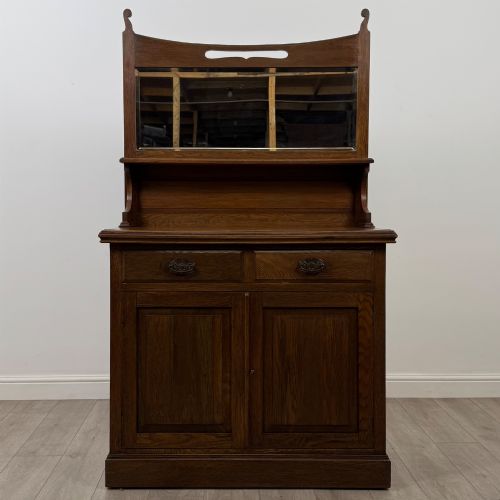
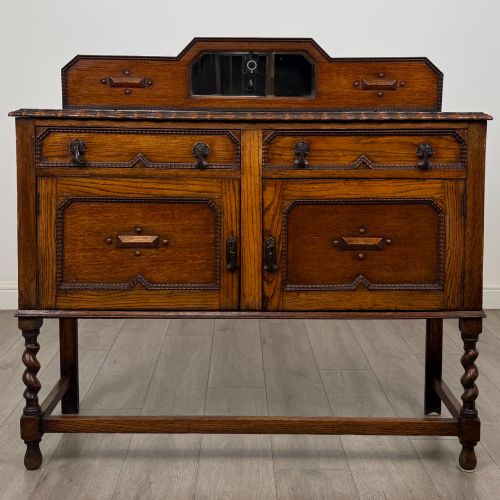
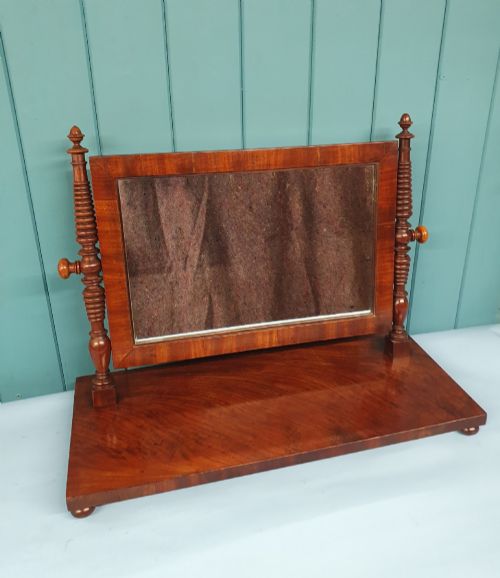
A wooden base mirror encompasses portable toilet mirrors, swing glasses, and substantial sideboard backs seen across Georgian, Victorian, and Edwardian periods. These domestic objects anchor a pivoting glass frame to timber supports, ranging from compact mahogany box mirrors to large oval swing glasses on shaped plinths.
Materials and construction
Makers utilised dense timbers such as mahogany and oak to construct the supportive frames and plinths, often selecting figured veneers for visual depth. Brass fittings frequently secure the pivoting arms, allowing the glass plate to tilt.
Glass plates are bedded into rebated wooden frames, sometimes accompanied by secondary pine linings in the box bases or drawers. Turned supports and barley twist legs appear on larger sideboard backs and dressing tables.
Wooden Base Mirror Retail Price Guide 2026
Typical asking prices for wooden base mirror among the pieces listed under this phrase on Sellingantiques today, from the lower quarter to the upper quarter. They describe what is for sale here now, not the wider market.
Some dancing ladies in spelter keep surprisingly steady company beside seventeenth-century oak.
Judging quality and execution
Quality rests upon the selection of timber and the precision of joinery within the drawer linings and frame corners. Superior examples display thoughtful grain matching across the mahogany or oak surfaces rather than plain utility cuts.
The weight and clarity of the mirror glass alongside the robustness of the brass pivot hardware separate fine pieces from standard workshop output. Original box bases retain well-fitted interior compartments and tight dovetail joints.
The Wooden Base Mirror Glossary
- Box mirror
- A small dressing mirror mounted upon a shallow wooden box base containing one or more small drawers.
- Swing mirror
- A glass plate hung between two upright posts on pivots, allowing the angle of reflection to adjust freely.
- Mirror back
- An architectural mirror plate integrated into the upper superstructure of a sideboard or buffet.
- Barley twist
- A spiral turning carved into wooden uprights or table legs, common in Edwardian furniture.
- Dovetail
- An interlocking joint used in drawer construction that demonstrates traditional cabinet-making skill.
Wooden Base Mirror: Frequently Asked Questions
How do I clean an antique mirror glass?
Use a soft, dry microfibre cloth to remove dust from the glass surface without disturbing the surrounding timber frame.
Avoid spraying liquids directly onto the glass, as moisture can seep behind the plate and damage the silvering over time.
Can I adjust a loose swing mirror?
Most pivoting mirrors rely on brass screw caps or tension nuts set into the upright posts. Tightening these fittings gently restores resistance to the frame.
Take care not to force the mechanism if the timber around the screw housing shows signs of wear.
Where should I place a dressing mirror?
Position the piece on a stable chest of drawers, dressing table, or directly on the floor for larger cheval formats. Ensure the supporting surface is level to prevent strain on the frame.
Keep the wood away from direct heat sources to protect the polished finish and prevent timber shrinkage.
How do I date a mahogany mirror?
Examine the construction methods visible in the drawer joints and the thickness of the timber framing. Georgian and early Victorian pieces often feature hand-cut dovetails and heavier primary woods.
Later Edwardian examples tend to show machine milling and lighter oak or golden oak tones.