
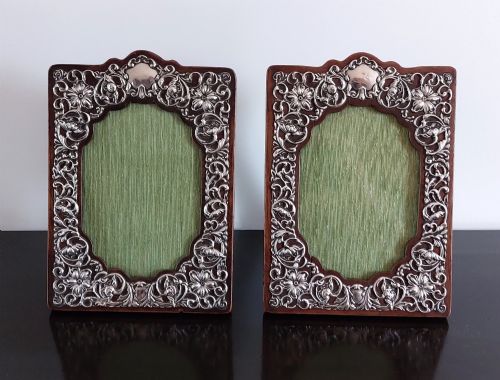
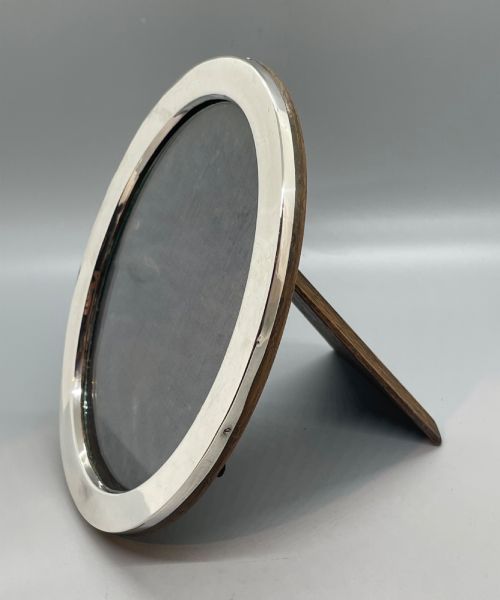
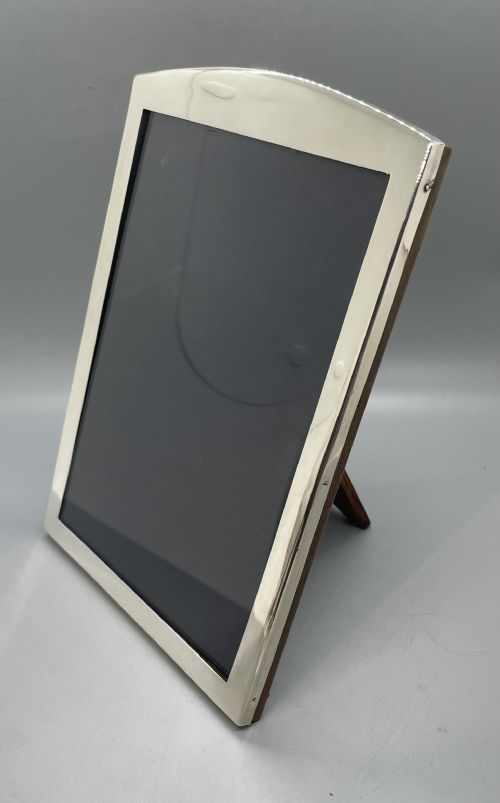
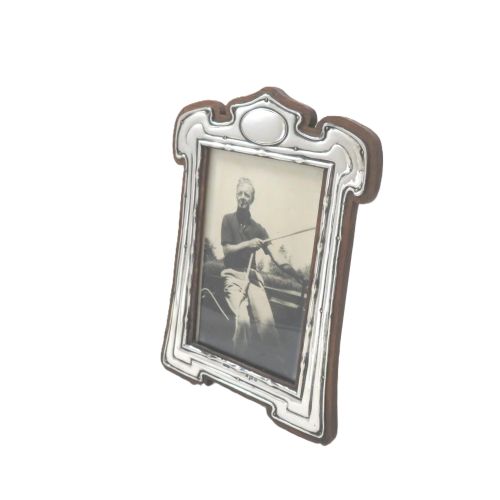
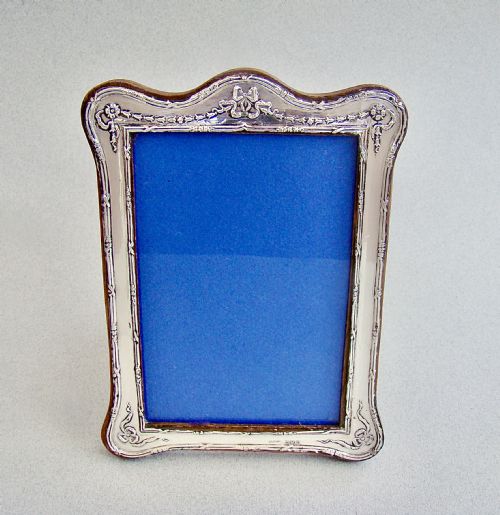


Wooden Back Silver Frame
A wooden back silver frame holds a photograph securely while adding gleaming metal and warm timber to any desk or mantelpiece.
Wooden Back Silver Frame
When you search for a wooden back silver frame, you are looking at photograph and picture frames that combine precious metal fronts with sturdy timber supports. These pieces range from Edwardian and George V examples to later mid-century British items.
The versions you are most likely to meet on this page feature sterling silver fronts mounted onto wooden backs complete with integrated stands. These items span periods from the early twentieth century up to the nineteen-forties.
How they were made
Maker's workshops constructed these frames by shaping sheet sterling silver over wooden cores or attaching silver fronts to wooden backs. Many examples incorporate glass to protect the photograph alongside silk linings within the internal structure.
Craftsmen applied decorative techniques such as embossed floral borders and Neoclassical Revival motifs directly onto the silver. Oak and other woods provided the necessary rigidity for the stands and rear panels.
Listings feature sterling silver combined with wood, glass, and silk across Edwardian, George V, and George VI periods.
What varies in quality
The distinction between ordinary and superior examples lies in the crispness of the embossed decoration upon the silver front. Finer pieces display sharply defined floral borders and clear hallmarks from assay offices like Birmingham.
Quality also rests in the construction of the wooden back and stand, where sturdier timber framing and intact original hinges separate better survivals from lesser ones.
The Wooden Back Silver Frame Glossary
- Sterling Silver
- A silver alloy containing 925 parts of pure silver per thousand, standard for quality British photo frames. This material provides the bright metallic sheen characteristic of the period.
- Hallmark
- A series of official marks stamped on precious metals indicating the maker, assay office, and year of testing. Birmingham assays are common among these frames.
- Embossed
- Raised ornamentation hammered or pressed into the surface of the silver sheet. Floral borders are a frequent application of this technique.
- Neoclassical Revival
- A decorative style drawing inspiration from classical antiquity, often seen in the borders of early twentieth-century frames. It utilises symmetry and restrained motifs.
Wooden Back Silver Frame: Frequently Asked Questions
What periods do these frames date from?
The pieces shown here span several decades of the twentieth century, with a strong representation of Edwardian and George V items. You will also encounter examples from the nineteen-forties.
Assay dates stamped into the silver help pinpoint the exact year of manufacture, ranging from the early nineteen-hundreds onward.
How were these frames used?
These items served to display portrait photographs of family members and loved ones on desks, dressing tables, and mantelpieces. The integrated wooden stand allowed each frame to rest securely on flat surfaces.
The glass front protected the paper photograph beneath from dust and handling while the silver provided a decorative border.
How do I care for the silver?
Cleaning requires a soft cloth and a gentle silver polish formulated to remove tarnish without harming the underlying metal. Care must be taken around embossed areas to avoid flattening the raised details.
Keep the wooden back dry and avoid excessive moisture when cleaning the silver front to preserve the timber and any internal silk components.
Are all the backs made of wood?
The frames in this selection rely on wooden backs and stands to support the heavier silver fronts. Oak is among the timbers utilised for these structural elements.
These wooden components often house the mechanism that holds the photograph and glass securely in place.