





Wooden Altar Sticks
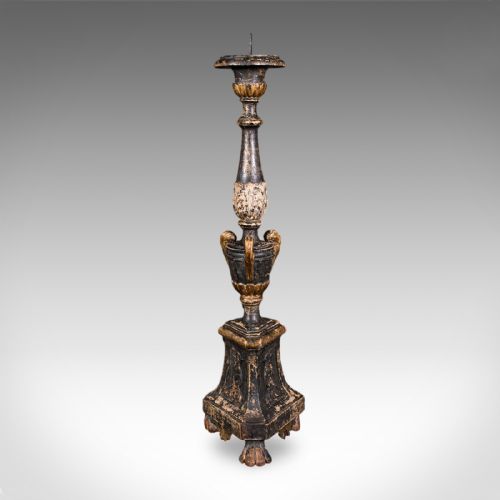
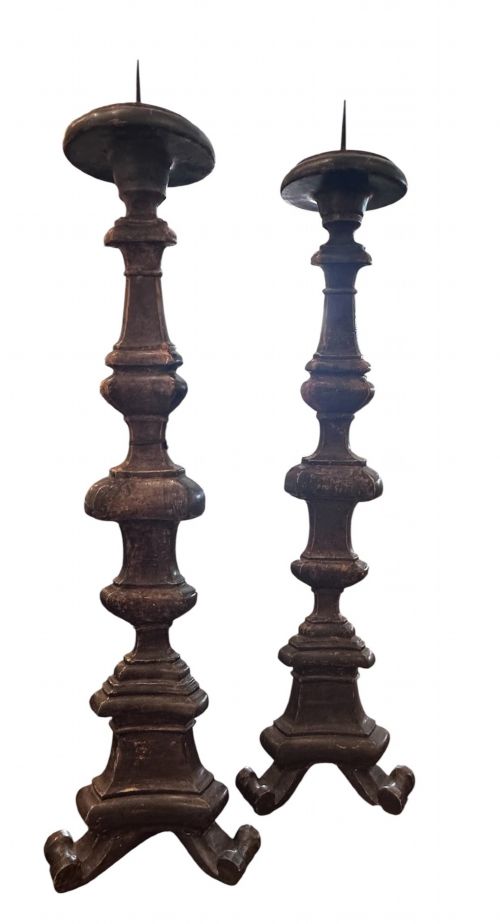
Wooden altar sticks bring centuries of ecclesiastical presence into domestic rooms, offering the sculptural weight of turned wood and historic gilding.
Wooden Altar Sticks
When you search for wooden altar sticks, you encounter ecclesiastical candle holders and prickets originating from Italian, French, and English workshops spanning the eighteenth and nineteenth centuries. These pieces carry the solemnity of church interiors into domestic settings, taking the form of tall candlesticks, prickets, and converted lamp bases.
The versions most commonly met on this page include pairs of carved wooden shafts finished with silver leaf, gold leaf, or gesso, alongside simpler turned wooden examples from the early twentieth century. Their silhouettes range from the exuberant flourishes of Italian Baroque and French Chateau styles to the restrained geometry of Georgian and English vernacular design.
How they were made
Makers shaped these solid timber foundations on lathes or carved them by hand from indigenous and imported woods before applying preparatory layers of gesso to smooth the grain. This meticulous ground provided a receptive surface for delicate applications of metallic leaf.
Craftsmen then gilded or silvered the wooden cores using thin sheets of gold or silver leaf, occasionally highlighting details with paint or ebonising the bare timber for contrast. The resulting surfaces acquired a distinct patina as the underlying gesso and wood began to show through decades of handling.
Wooden Altar Sticks Retail Price Guide 2026
Typical asking prices for wooden altar sticks among the pieces listed under this phrase on Sellingantiques today, from the lower quarter to the upper quarter. They describe what is for sale here now, not the wider market.
Several examples have crossed the boundary from holy to domestic by quietly trading their prickets for modern lamp fixtures.
What varies in quality
The quality of wooden altar sticks rests upon the crispness of the original hand-carving and the depth of the preparatory gesso work beneath the metallic leaf. Finer examples retain sculptural definition in their acanthus leaves and turned nodes, whereas lesser pieces display softened contours from hurried production or heavy over-painting.
The integrity of the underlying timber and the character of the aged surface also distinguish superior specimens. Pieces that have aged naturally without excessive modern intervention show a harmonious integration between the exposed wood, the metallic leaf, and the accumulated wear of use.
The Wooden Altar Sticks Glossary
- Pricket
- A candlestick featuring a sharp metal spike at the top designed to secure the base of a large candle. This traditional form predates socket candlesticks and remains common on ecclesiastical altar pieces.
- Gesso
- A plaster-like mixture applied to wooden objects to create a smooth, absorbent surface for gilding or painting. It allows intricate carved details to hold sharp definition under layers of metal leaf.
- Giltwood
- Timber that has been decorated with gold leaf applied over a prepared gesso ground. It provides a luminous surface that reflects candlelight in ecclesiastical settings.
- Ebonised
- Wood treated with chemical stains or dark finishes to imitate the deep, black appearance of ebony. This technique gained favour in English and continental furniture during the nineteenth century.
- Silver Leaf
- Extremely thin sheets of beaten silver applied to wood surfaces to simulate solid silver metalwork. Over time, exposed silver leaf develops a characteristic dark oxidation.
Wooden Altar Sticks: Frequently Asked Questions
How were they used historically?
In ecclesiastical settings, these sticks supported large candles used during religious services and ceremonies. Their elevated height ensured that light reached across the altar space.
As domestic decorative objects, they later served to anchor mantelpieces or large tabletops, often receiving conversions into lamp bases during the twentieth century.
How do I live with them?
Living with wooden altar sticks involves placing them where their height and historic surfaces can be appreciated without risk of physical damage. They suit mantlepieces, sideboards, and architectural ledges where their vertical proportions balance the room.
Keep them away from direct heat sources and moisture to protect the historic gesso and delicate metallic leaf finishes from flaking.
How can I tell periods apart?
Differentiating periods relies on observing stylistic markers and construction methods inherent to each era. Eighteenth-century examples often exhibit heavier hand-carved ornamentation and thicker gesso layers, while nineteenth-century pieces may show more standardised turning.
Twentieth-century interpretations frequently adopt earlier Italian or English aesthetic conventions while utilising cleaner, less oxidized materials.