
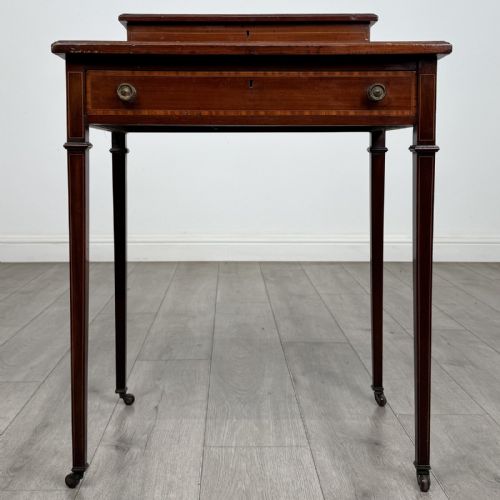
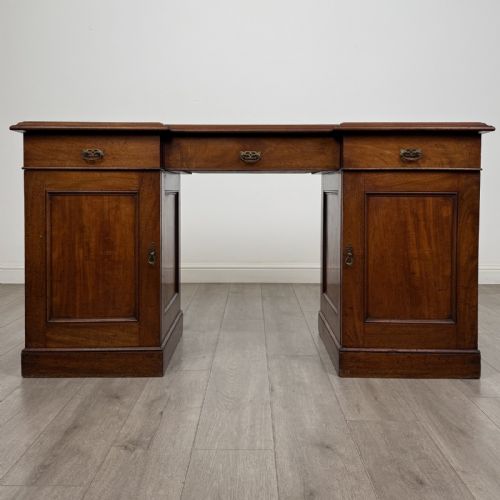
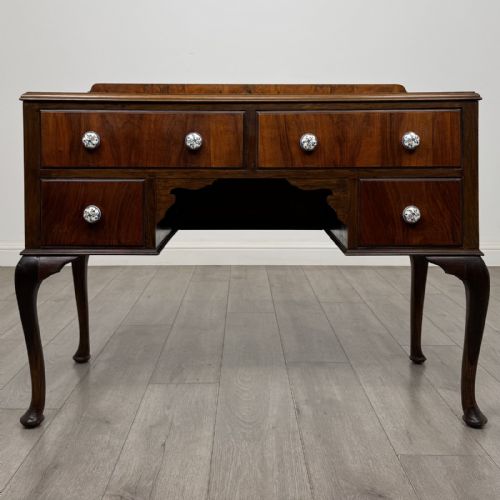
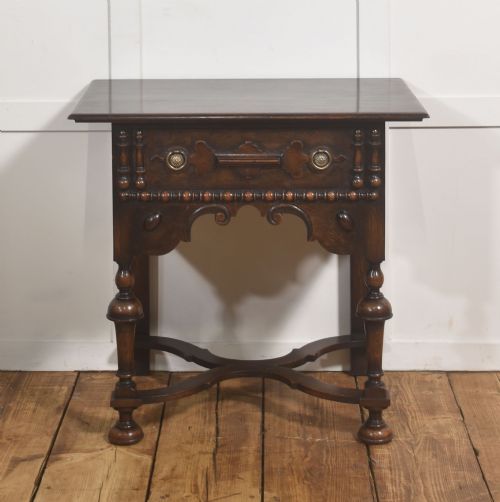
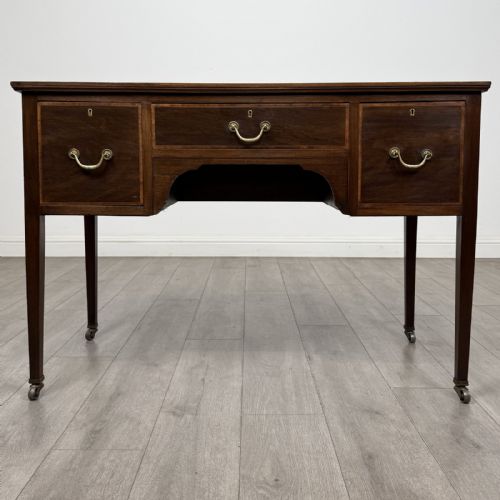
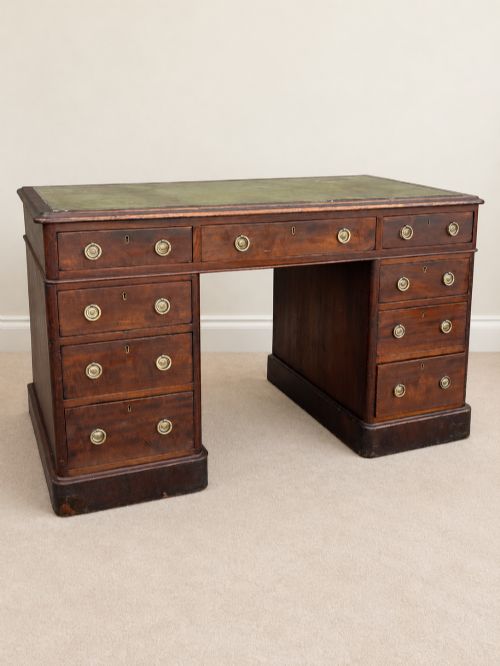
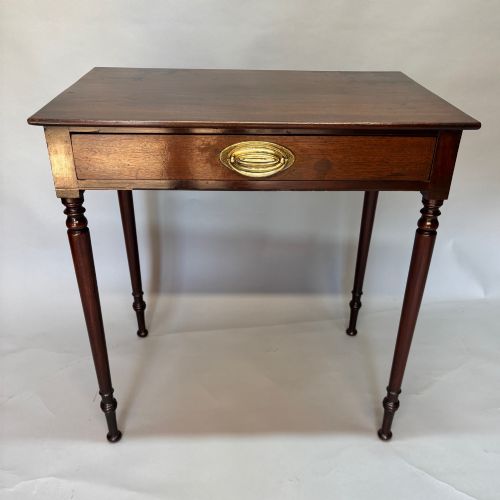
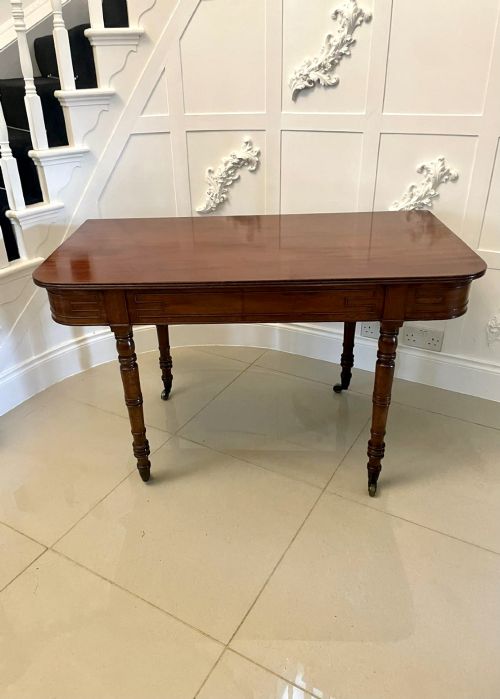
Wood Writing Desk
A wood writing desk provides a dedicated surface for correspondence and study, uniting functional utility with rich cabinet timber.
Wood Writing Desk
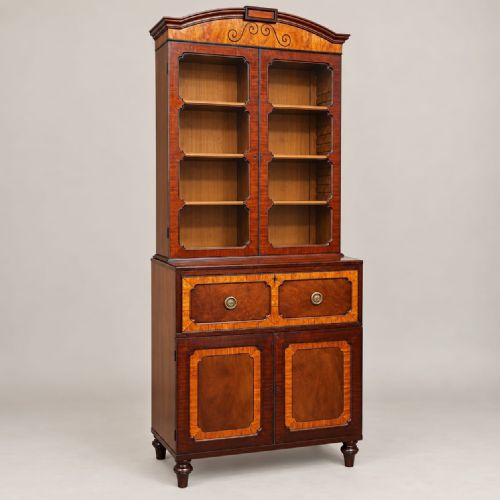
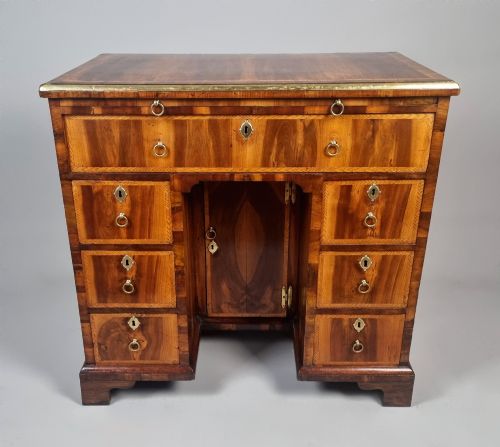
A wood writing desk encompasses everything from compact Davenport desks to grand Victorian twin pedestal tables and Georgian secretaire bookcases.
The pieces appearing most frequently across these centuries span Victorian and Edwardian iterations alongside earlier Georgian and 18th century examples.
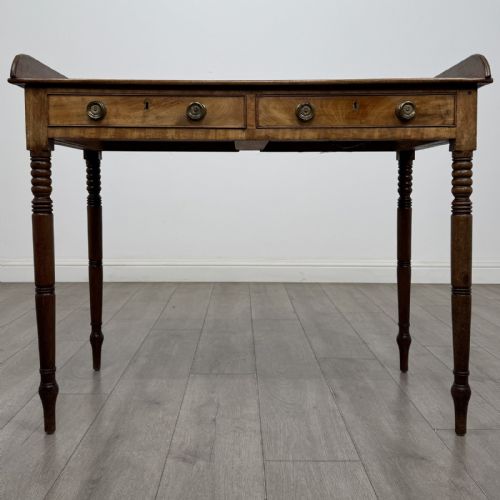
Makers utilised various secondary forms such as side tables, bureaux and console tables to provide surface workspace and integrated storage.
Dating ranges from the 18th century through the 19th century and into early 20th century revivals, offering diverse proportions for domestic interiors.
Materials and Construction
Cabinet makers built these desks primarily using solid and veneered hardwoods like mahogany, oak, walnut, rosewood and burr walnut.
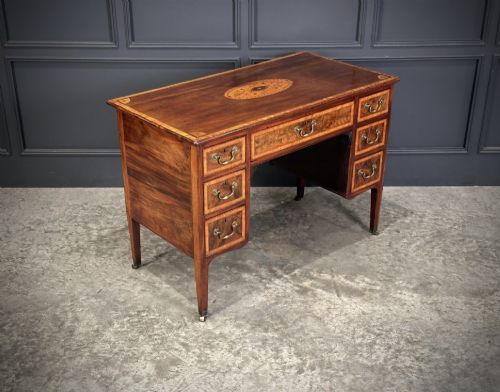
Secondary decorative treatments incorporate satinwood inlay, floral marquetry, brass mounts or handles and inset leather writing surfaces.
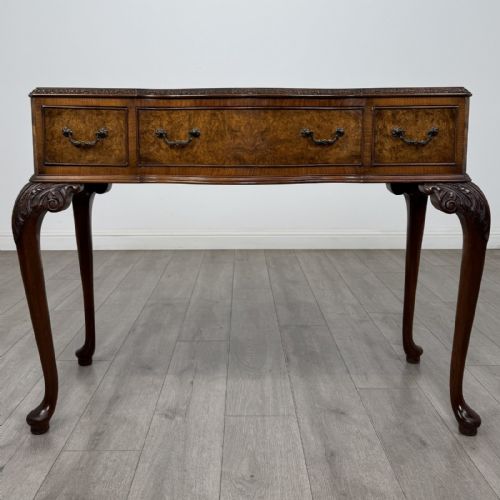
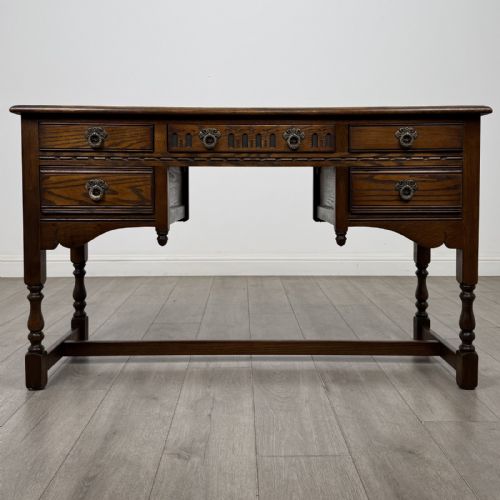
Structural support relies on turned legs, stretchers, cabriole legs with carved knees, or twin pedestals featuring integrated side cupboards and drawers.
Listings feature woods including mahogany, oak, walnut, rosewood, burr walnut, yew wood, satinwood, maple and kingwood across multiple centuries.
Standards of Craftsmanship
Quality depends upon the selection of timber figures, such as figured mahogany or burr walnut, and the precision of inlaid detailing or marquetry.
Construction integrity distinguishes finer pieces, evident in drawer dovetailing, the smoothness of mechanical actions in secretaire drawers, and stable framing.
Refined proportions and original hardware, including brass castors and handles, elevate the distinction of a desk.
The Wood Writing Desk Glossary
- Bureau
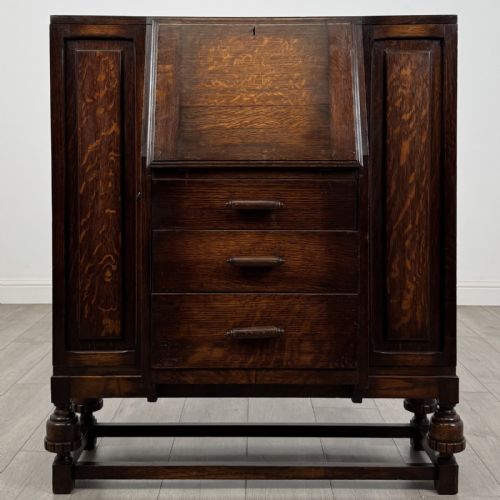
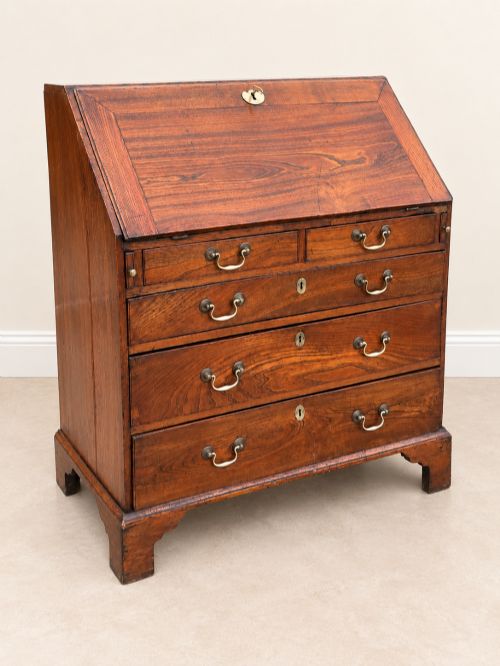
- A sloping writing flap opening to reveal fitted interior pigeonholes and small drawers. This form often sits above graduated drawers or stands on legs.
- Secretaire
- A cabinet or bookcase incorporating a pull-down writing drawer or fall-front panel. It conceals a fitted desk interior behind formal exterior doors.
- Davenport
- A compact desk featuring a sloping writing surface over a pedestal of side drawers. The top often includes a stationary compartment.
- Marquetry
- Decorative veneer work forming pictorial or geometric patterns using various coloured woods. Craftsmen assemble these thin veneers onto the primary carcase.
- Partners Desk
- A large freestanding pedestal desk designed with drawers and cupboards on both opposing sides. Two people may sit and work at it simultaneously.
- Pedestal Desk
- A flat-topped writing table supported by two vertical banks of drawers. These units rest directly on the floor to carry the weight of the top.
Wood Writing Desk: Frequently Asked Questions
How do I identify a Victorian desk?
Victorian desks frequently utilise solid mahogany or burr walnut, often featuring turned legs fitted with castors or substantial twin pedestal bases. These pieces typically display heavier proportions and darker timber finishes compared to earlier Georgian examples.
Interior construction often employs secondary timbers like pine for drawer linings, alongside machine-cut dovetails on later 19th-century specimens. Look for inset tooled leather writing surfaces and ceramic castors which became common during this period.
What is a Davenport desk?
A Davenport is a compact writing desk featuring a sloped, leather-inset top that lifts to reveal a small storage well. A bank of drawers opens to one side while the opposite side shows dummy drawer fronts for symmetry.
Originally designed for domestic drawing rooms or shipboard cabins where space was limited, these pieces often incorporate burr walnut veneers and hidden stationery compartments. Their small footprint makes them suitable for modern corners.
Where should I place a partners desk?
A partners desk requires a central room placement rather than sitting against a wall, because drawers and cupboards are accessible from both sides. This arrangement showcases the finished timber panels all around the piece.
Ensure adequate clearance around the desk for chairs to pull out comfortably in both directions. The substantial scale of these desks makes them practical centrepieces for home studies.
How do I care for antique wood surfaces?
Maintain antique wood surfaces by dusting regularly with a soft, dry cloth and avoiding silicone-based polishes that build up over time. Natural beeswax applied sparingly helps nourish aged timbers like mahogany and walnut.
Keep desks away from direct heat sources and strong sunlight to prevent the timber and leather writing inserts from drying out and cracking. Use coasters and blotters to protect polished tops from moisture and ink stains.