

Wood Writing Box
A wood writing box provides a portable desk fitted for ink, paper and letters, shaped by nineteenth-century craftsmanship for correspondence on the move.
Wood Writing Box
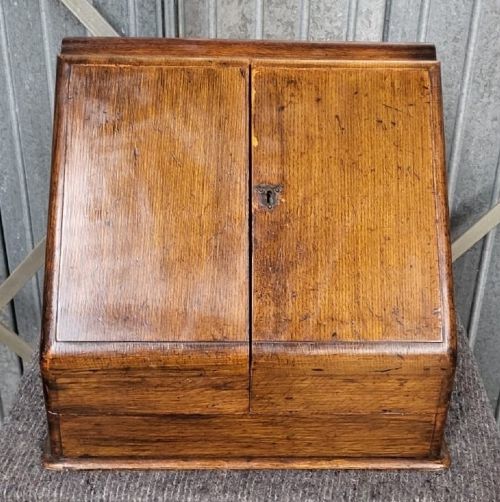
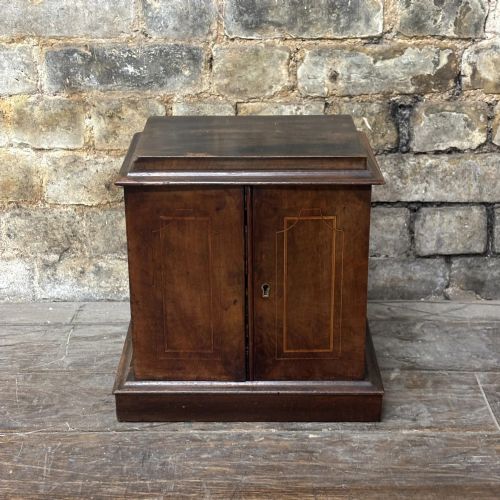
A wood writing box encompasses slope desks, stationery cabinets and campaign boxes designed for correspondence and document storage. These pieces emerge chiefly from Georgian, Regency and Victorian periods, reflecting an era when personal and official business required portable writing equipment.
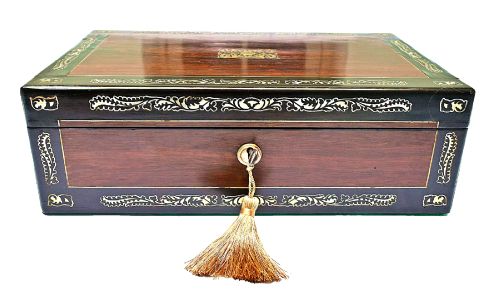
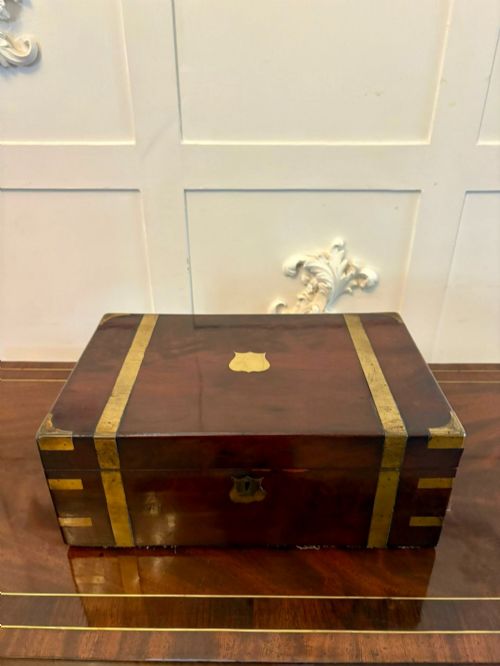
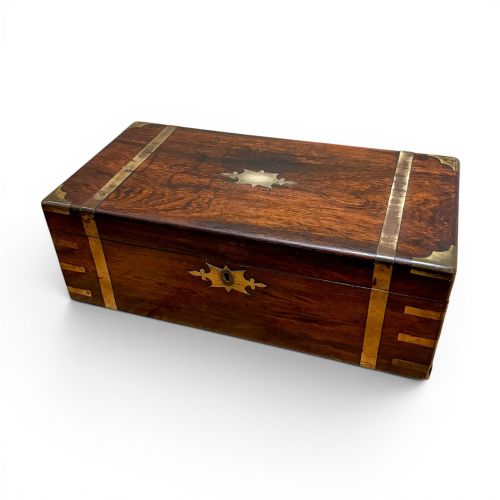
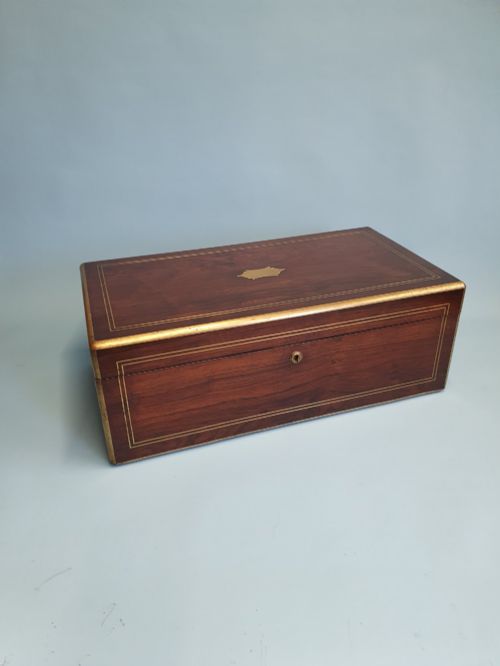
The most frequent version met on this page is the Victorian rosewood or mahogany writing slope, often reinforced with brass banding and fitted with a sloping leather writing surface. Interior compartments house inkwells, pen trays and secret drawers concealed beneath removable panels.
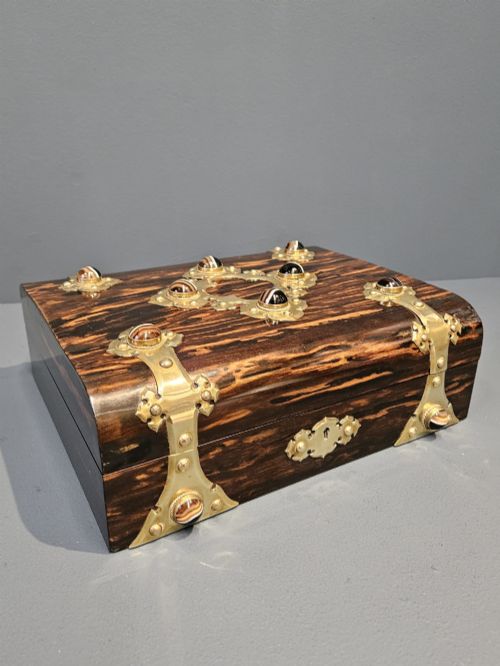
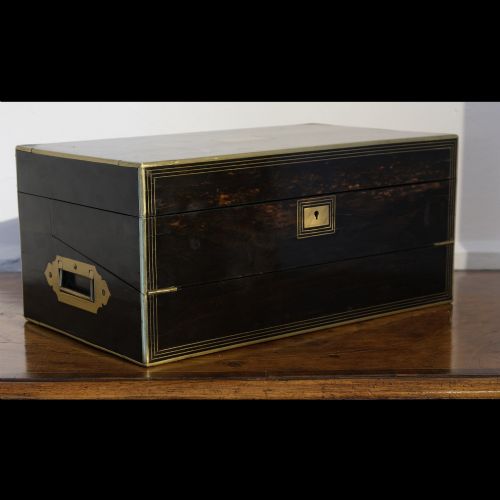
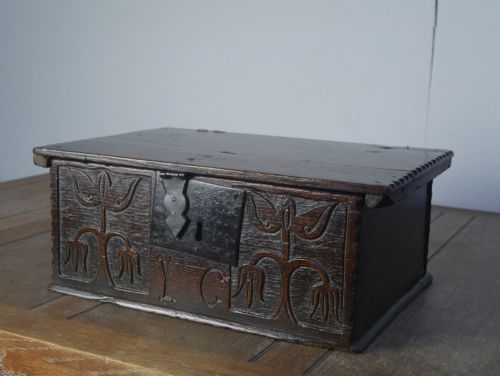
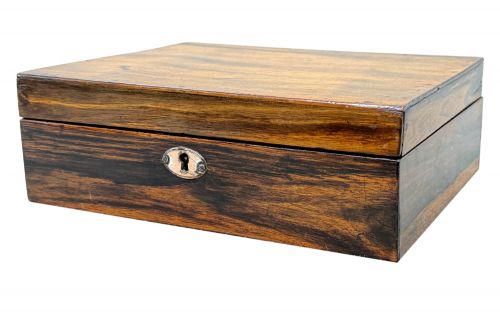
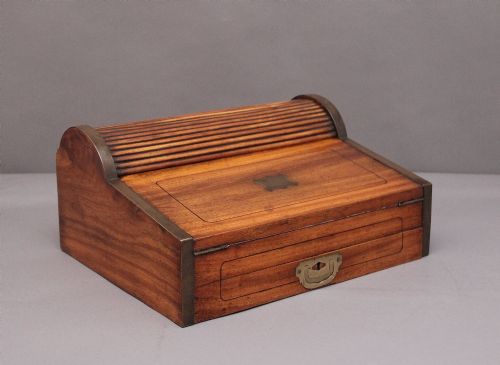
Alternative forms include coromandel stationery boxes, Anglo-Indian carved wood boxes, and camphor wood campaign slopes. Each variation adapts the fundamental hinged box design to specific domestic or travel requirements.
Materials and construction
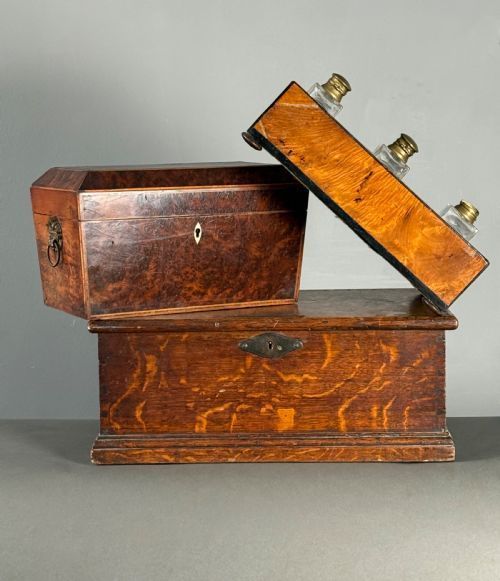
Cabinetmakers utilised dense timbers such as mahogany, rosewood, coromandel and walnut, often applying flame veneer or intricate parquetry and marquetry patterns. Heavier structural carcasses relied on oak or camphor wood.
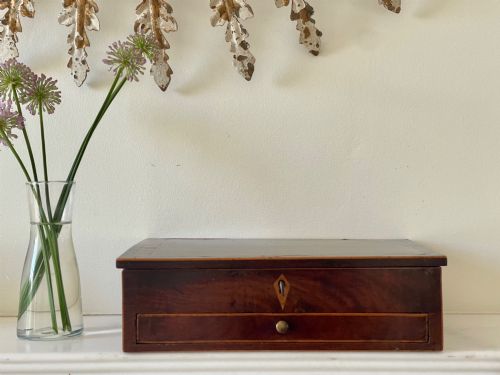
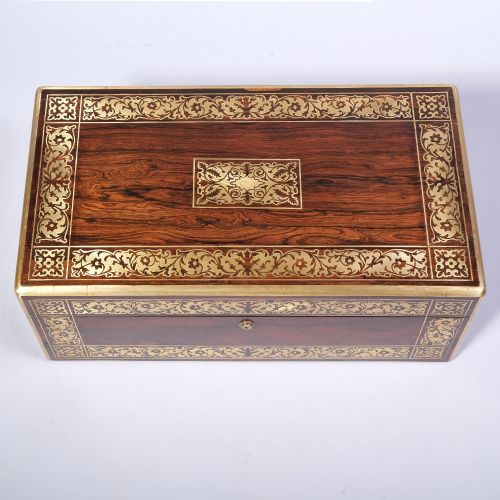
Surface enrichment involved brass inlays, brass corner bindings, mother-of-pearl escutcheons and delicate boxwood stringing. Specialised regional techniques included Tunbridge ware mosaic tiling and carved bone detailing found on Anglo-Indian pieces.
Interior architecture required precise carpentry to house folding slope surfaces, secret compartments, ink bottles with brass screw lids, and pen recesses that secured tightly during transport.
Wood Writing Box Retail Price Guide 2026
Typical asking prices for wood writing box among the pieces listed under this phrase on Sellingantiques today, from the lower quarter to the upper quarter. They describe what is for sale here now, not the wider market.
Secret drawers required pressing hidden internal catches disguised as pen dividers.
Judging quality
Quality rests on the selection of timber veneers, the precision of the brass or mother-of-pearl inlay, and the structural integrity of the carcase joints. Superior examples display continuous grain matching across the lid and sides.
Internal execution distinguishes finer boxes from utilitarian versions, particularly the complexity of secret drawer mechanisms, the presence of matching original glass inkwells, and the finish applied to concealed secondary woods.
Edmund Nye·Briggs
The Wood Writing Box Glossary
- Writing slope
- A box with a hinged lid that opens to form an inclined writing surface lined with leather or velvet. Inside compartments hold stationery and writing implements.
- Campaign box
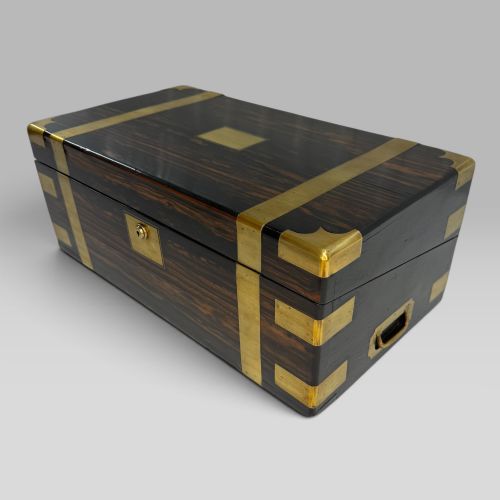
- Portable furniture reinforced with brass corners and flush carrying handles designed for military use during travel. These items dismantle or include secure locking mechanisms.
- Secret drawers
- Hidden compartments accessed by removing false bottoms or operating secret spring-loaded catches within the stationery well. They safeguard valuables and private correspondence.
- Tunbridge ware
- Small wooden objects decorated with mosaic patterns created from thousands of tiny coloured wood blocks assembled to form pictorial or geometric designs.
- Escutcheon
- A decorative brass plate surrounding a keyhole that protects the surrounding wood from wear and reinforces the lock mechanism.
Wood Writing Box: Frequently Asked Questions
What is a wood writing box?
A wood writing box is a portable desk featuring a hinged, sloping lid that opens to reveal compartments for paper, pens and ink. These boxes served as personal writing desks in homes and during travel.
Cabinetmakers constructed them from hardwoods like mahogany, rosewood and coromandel, often decorating the exteriors with brass banding and mother-of-pearl inlay.
How do I use a writing slope?
Opening the hinged lid reveals a divided interior with spaces for inkwells, stamps and pens, while the folded lid panel lowers to create a slanted writing surface. Many slopes include a leather-lined writing pad insert.
Secret compartments are typically accessed by lifting out the pen tray or sliding internal dividers to release hidden spring catches.
How do I identify a Victorian box?
Victorian writing boxes frequently utilise rosewood, walnut or coromandel, often featuring heavy brass corner mounts, edge banding and shield-shaped key escutcheons. The interiors generally contain cut-glass inkwells with brass screw tops.
Later Victorian examples may incorporate stationery racks, perpetual calendars or Gothic Revival design motifs.
What is a campaign writing slope?
A campaign writing slope is built for durability during travel, featuring reinforced brass corners, flush recessed carrying handles, and robust locking mechanisms. These boxes were used by officers and officials on military campaigns.
They are commonly constructed from durable timbers such as camphor wood, mahogany or teak to withstand changing climates.