


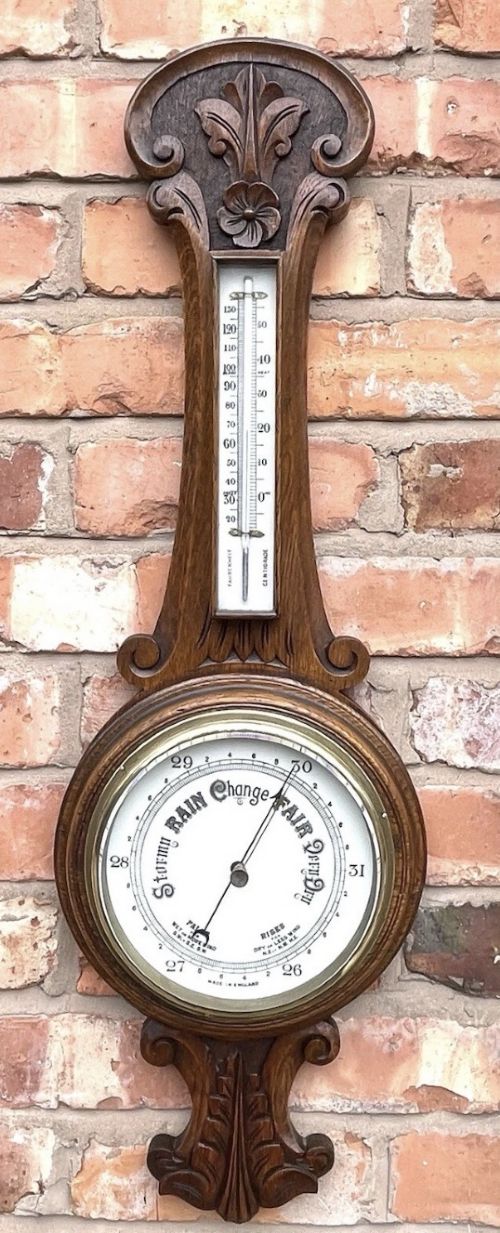

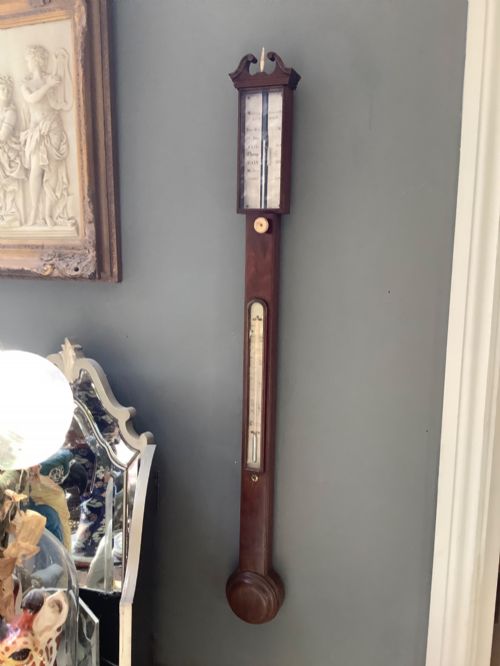
Wood Wall Barometer
A wood wall barometer measures atmospheric pressure while bringing rich timber grain and period craftsmanship directly into a room.
Wood Wall Barometer
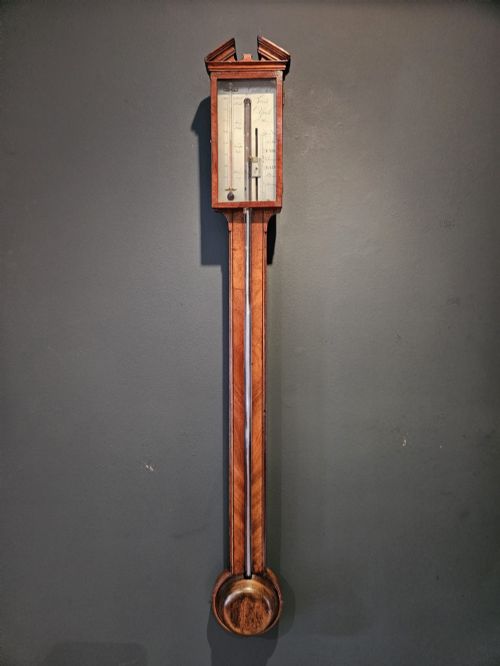
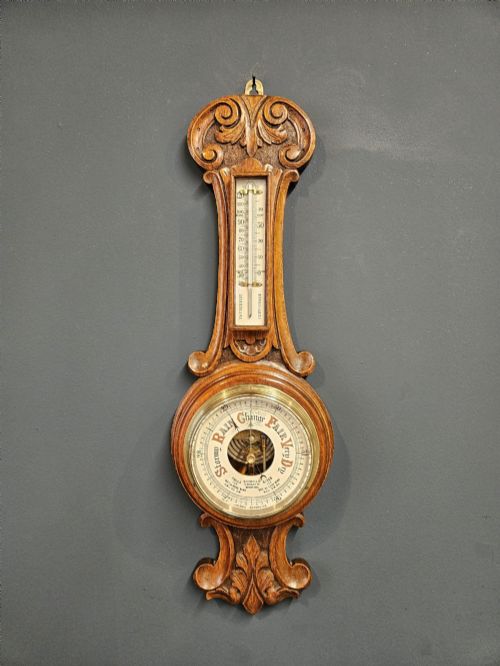
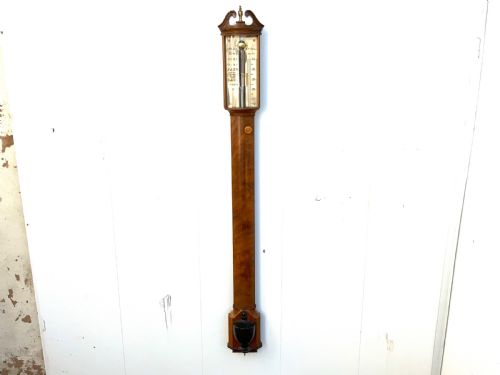
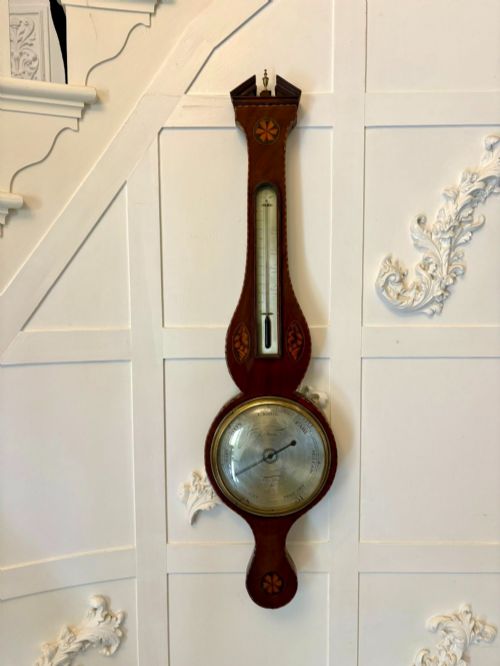
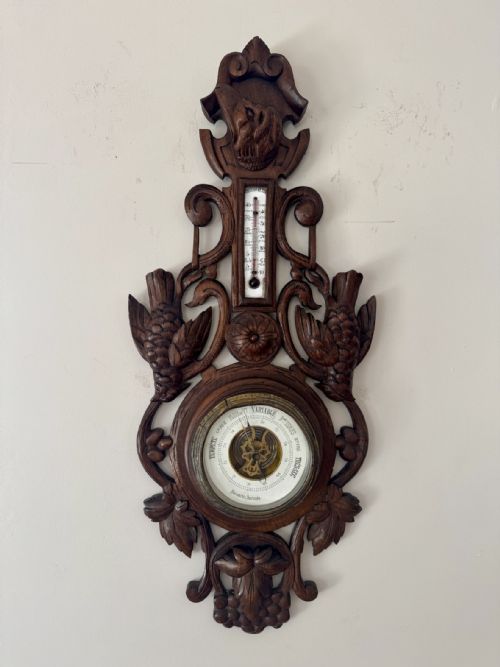
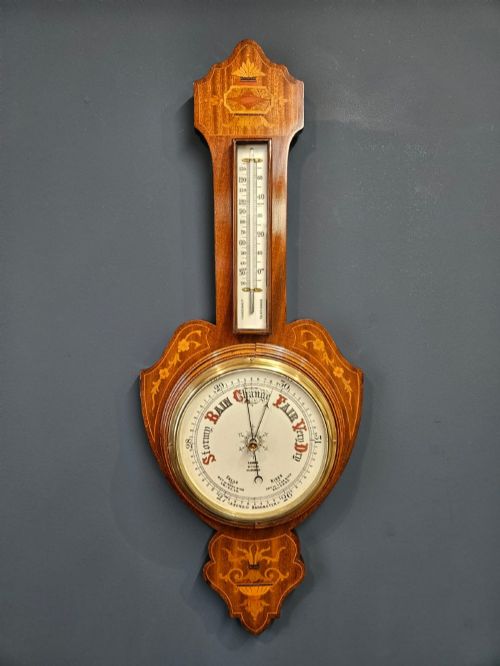
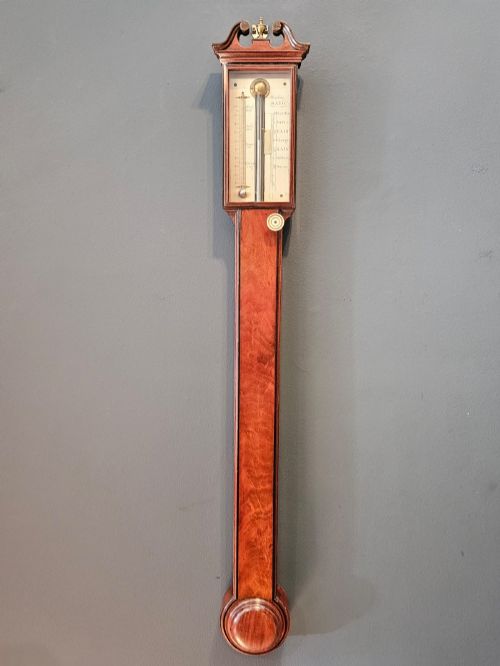
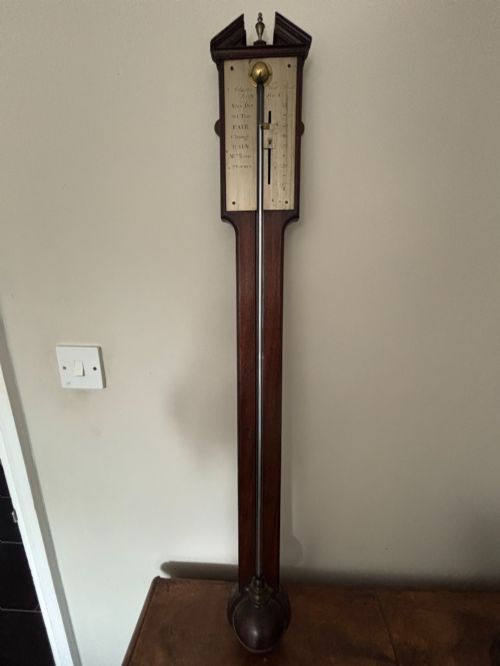
A wood wall barometer is an instrument designed to measure atmospheric pressure, housed within a timber enclosure meant for suspension on a vertical surface. When searching for a wood wall barometer, buyers encounter diverse forms ranging from traditional stick barometers to domestic banjo and wheel designs.
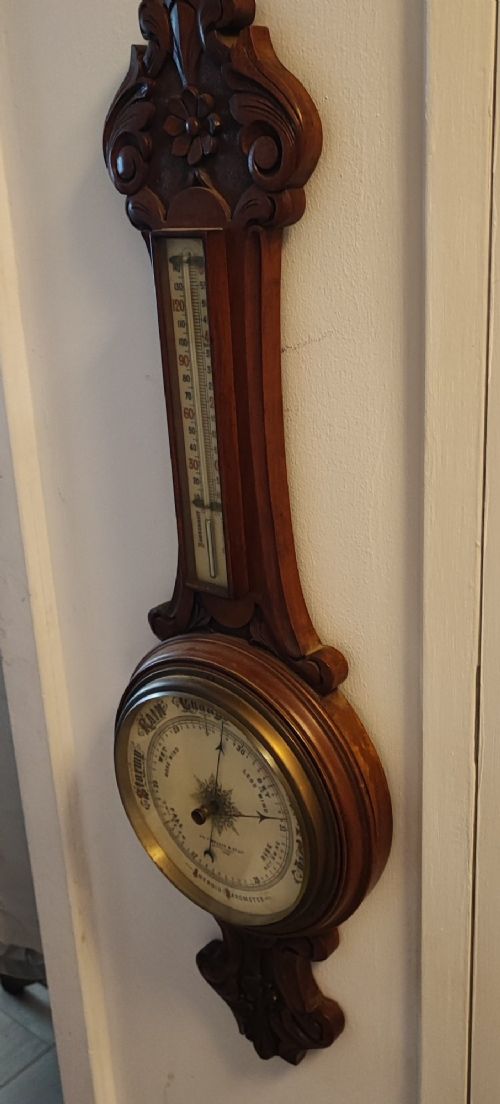
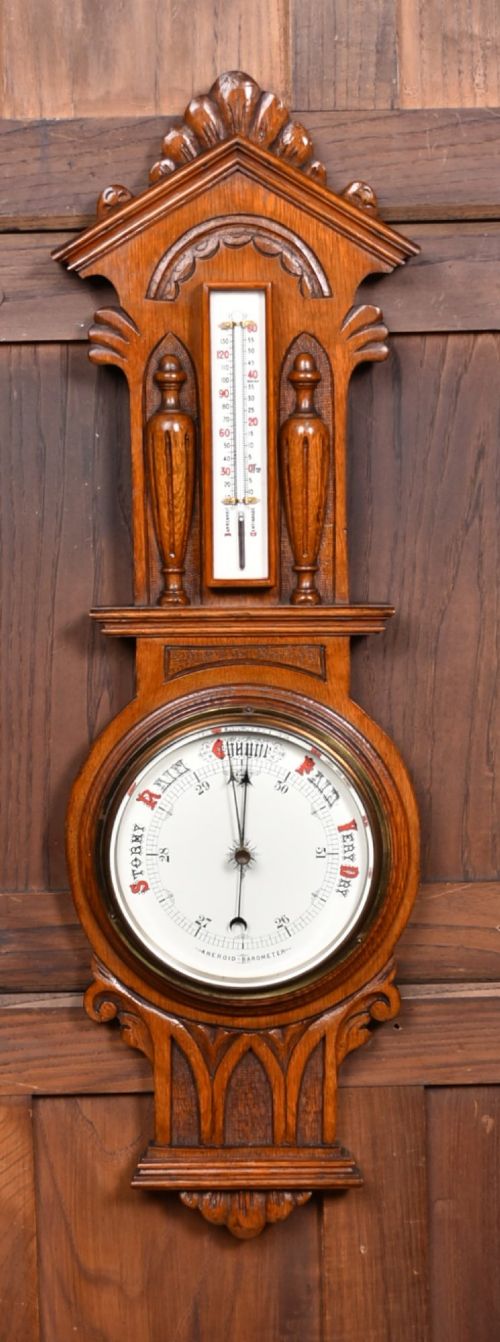
The most common examples on this page span the Georgian, Victorian, and Edwardian eras. These pieces typically manifest as tall, narrow stick barometers or wider banjo shapes that often incorporate thermometers alongside the primary dial.
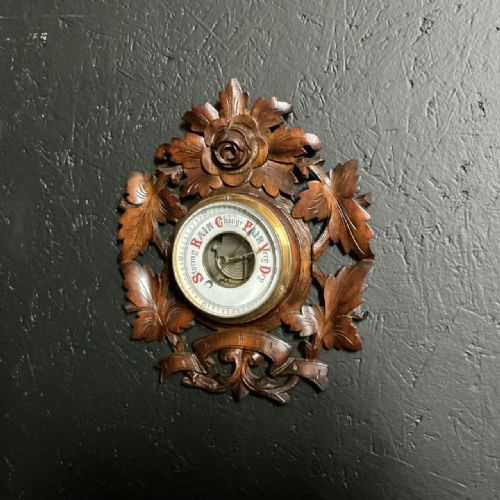
Timbers such as mahogany, oak, walnut, and rosewood dominate the selection, frequently enhanced with inlay, carved details, or brass fittings. Their origins trace across British workshops as well as Continental centres like the Black Forest region.
Materials and Construction
Cabinet makers utilised dense hardwoods including mahogany, walnut, oak, and rosewood to construct sturdy housing frames that protected the delicate internal mechanisms. These timbers were often selected for rich grain patterns, then shaped through curving, shell inlay, or detailed hand-carving.
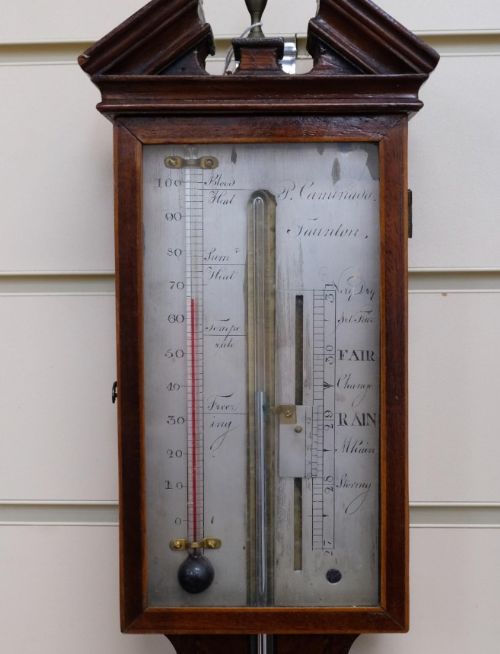
Glass protected the dials, scales, and mercury columns, while brass formed bezels, pointers, and cistern covers. Silvered brass scales provided clear, engraved graduations for reading atmospheric changes with precision.
Wood Wall Barometer Retail Price Guide 2026
Typical asking prices for wood wall barometer among the pieces listed under this phrase on Sellingantiques today, from the lower quarter to the upper quarter. They describe what is for sale here now, not the wider market.
Listings feature woods such as mahogany, oak, walnut, and rosewood, spanning periods from the 18th century through the Georgian, Victorian, and Edwardian eras.
Evaluating Craftsmanship
The sophistication of the internal movement further distinguishes the pieces. Skeletonised movements that expose the brass gears sit alongside reliable aneroid systems and traditional mercury-filled tubes signed by established makers.
P. Caminada·George Adams·Negretti & Zambra·Dollond of London·JB Bergna·Alexander Wright
The Wood Wall Barometer Glossary
- Banjo barometer
- A domestic wall barometer shaped broadly like a banjo, featuring a circular dial at the top and a longer trunk below that frequently houses a thermometer.
- Stick barometer
- A tall, narrow wall barometer containing a vertical glass tube filled with mercury, mounted against a wooden backboard with a silvered scale.
- Aneroid barometer
- A barometer that measures pressure using a flexible metal box called an aneroid capsule, avoiding the use of liquid mercury.
- Skeletonised movement
- A clock or barometer mechanism designed with open framework plates that reveal the internal gears and working parts.
- Silvered scale
- A brass dial plate treated to achieve a bright, matte silver finish upon which the measurement graduations and numbers are engraved.
Wood Wall Barometer: Frequently Asked Questions
How do I hang a heavy wood wall barometer?
Secure a sturdy screw directly into a wall stud or utilise an appropriate heavy-duty wall anchor rated for the weight of the timber frame. Hang the instrument firmly from its mounting bracket to ensure it remains vertical.
A vertical orientation is essential for the proper function of internal mechanisms, particularly mercury-filled tubes. Check the placement with a spirit level before leaving the barometer to settle against the wall.
Do these barometers still show the weather accurately?
Many historical barometers retain functional movements and continue to respond accurately to shifts in atmospheric pressure. Calibrating the instrument against a known local reading helps align the needle correctly.
Changes in weather appear on the dial as the metal capsule expands and contracts or as mercury moves within the glass tube. Regular monitoring allows users to track approaching high or low pressure systems.
How should I clean the wooden frame?
Dust the timber gently with a soft, dry cloth to remove surface particles without disturbing the finish. Avoid using liquid polishes, silicone sprays, or abrasive cleaners that can damage historic polish.
Preserving the natural patina requires minimal intervention and stable indoor humidity away from direct heat sources. Conditioning oils should only be applied sparingly if the timber appears excessively dry.
What is the difference between an aneroid and a stick barometer?
A stick barometer relies on an exposed or partially visible vertical column of liquid mercury balanced against atmospheric pressure. These tall instruments often feature architectural wooden hoods and detailed scale plates.
An aneroid barometer operates entirely without liquid, using an internal metal vacuum capsule connected to a mechanical linkage that moves a dial pointer. This design permits more compact shapes like the domestic banjo configuration.