




Wood Umbrella Holder
A wood umbrella holder keeps hallway floors dry while anchoring the entryway with period character.
Wood Umbrella Holder
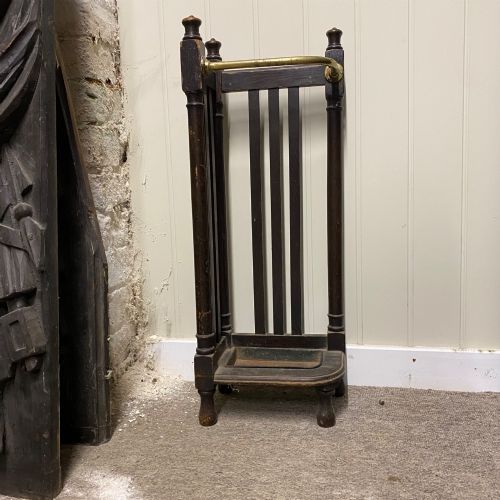
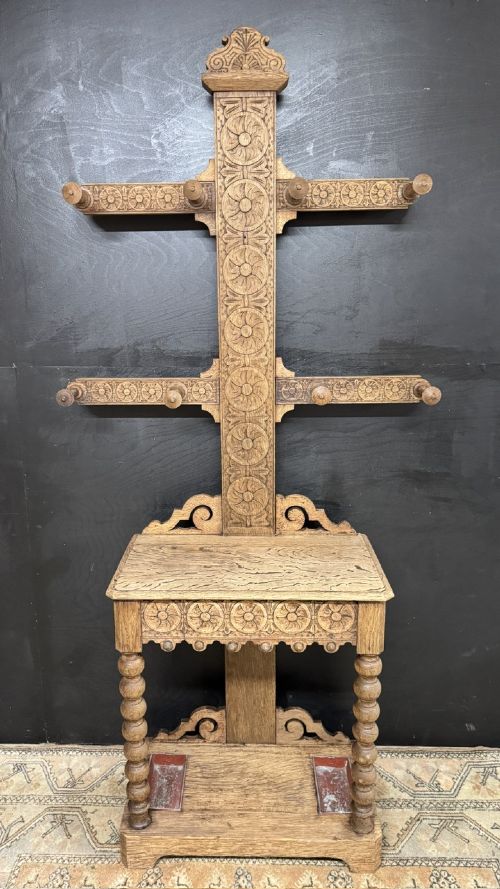
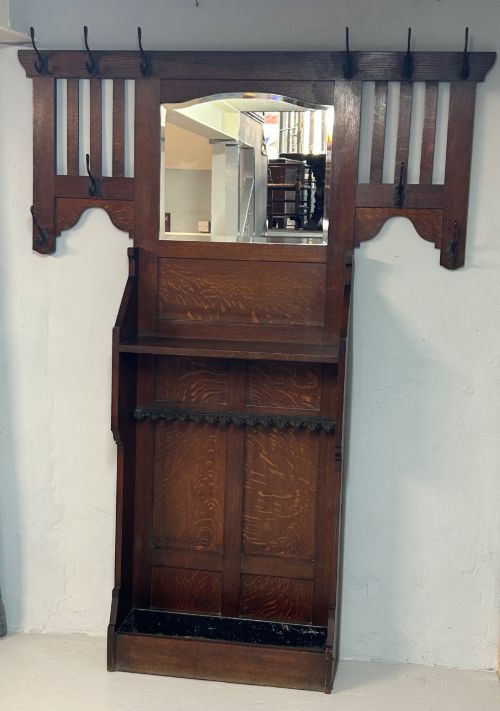
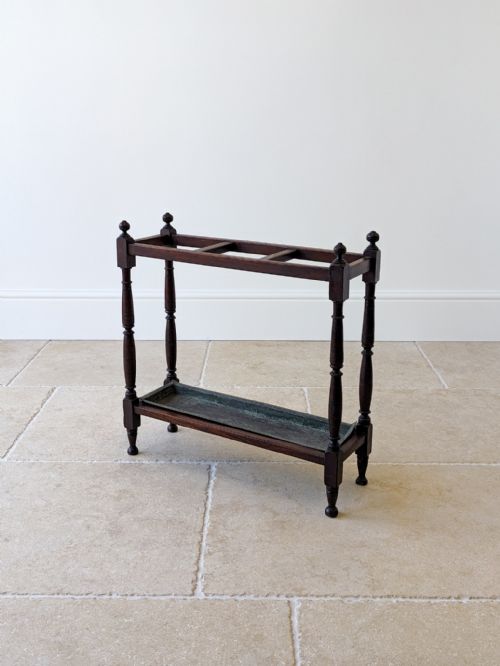
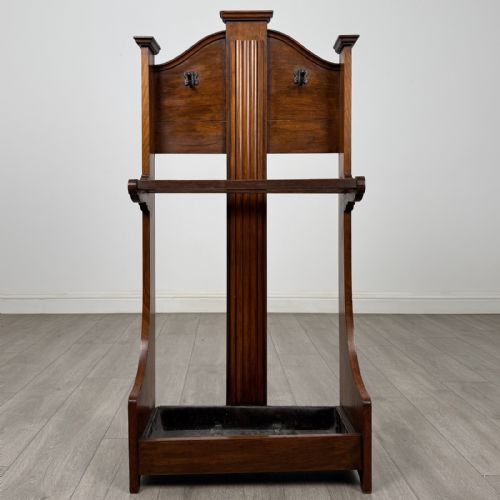
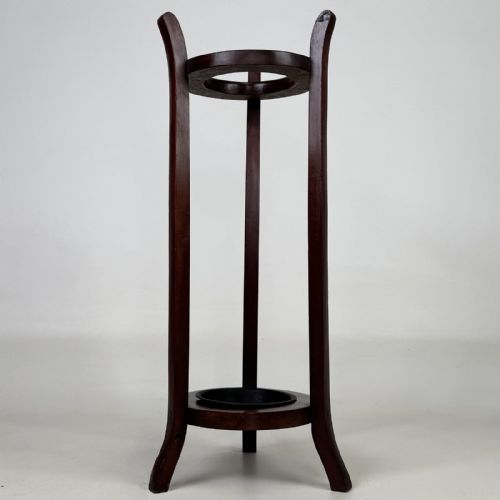
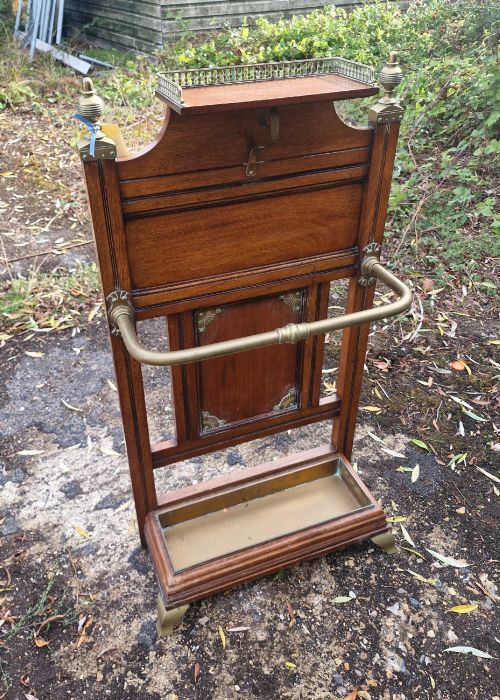
A wood umbrella holder is primarily found in forms such as umbrella stands, stick stands, and larger hall stands that combine coat hooks and mirror panels. These pieces date across the nineteenth and early twentieth centuries, spanning the Victorian and Edwardian eras.
The most common versions on this page are mahogany, oak, and walnut stick stands alongside heavily carved Black Forest examples. Buyers encounter everything from simple coopered barrels to combined coat and hat stands.
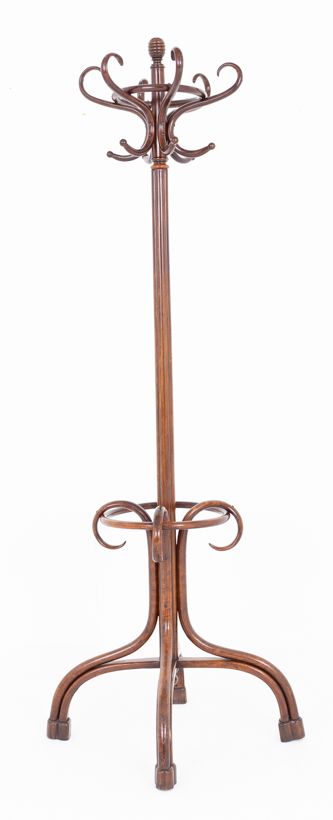
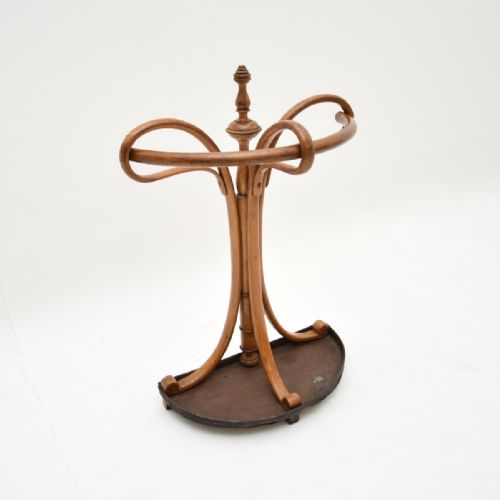
Makers and regional styles range from English country house mahogany items to Austrian bentwood pieces. Some incorporate brass mounts, metal drip trays, or inlaid maple details to catch water from wet walking sticks.
How they were made
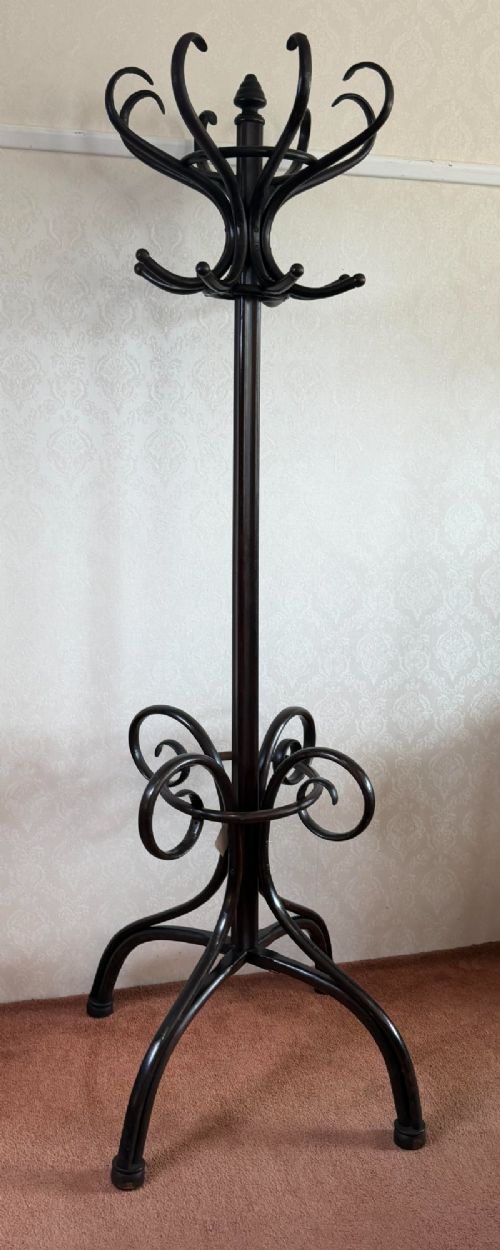
Construction relies heavily on traditional cabinet timbers like mahogany, oak, and walnut, shaped through turning, coopered stave construction, or steam bending. Bentwood pieces utilise heated timber forced into curved silhouettes.
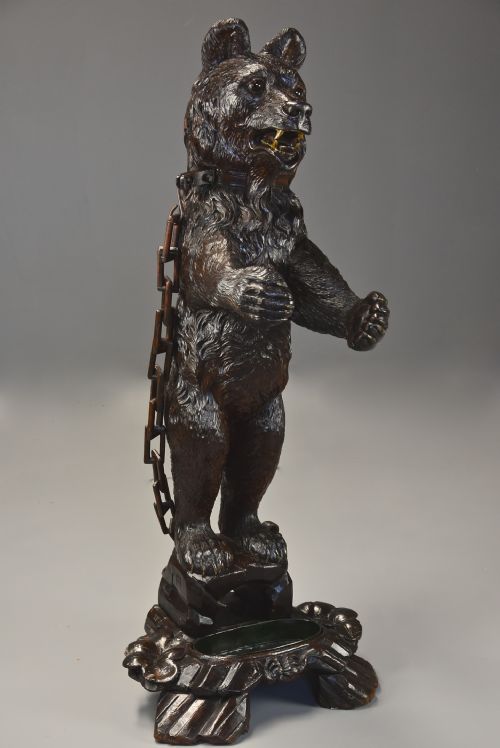
Carved items, particularly Black Forest pieces depicting bears and naturalistic oak trees, demonstrate detailed hand chiselling. Joinery is paired with functional elements such as fitted metal liners, cast iron supports, and brass rings.
Surface finishes include ebonising, polish, and natural wax to protect the dense hardwoods from daily moisture exposure.
Wood Umbrella Holder Retail Price Guide 2026
Typical asking prices for wood umbrella holder among the pieces listed under this phrase on Sellingantiques today, from the lower quarter to the upper quarter. They describe what is for sale here now, not the wider market.
Several carved wooden bears stand ready in the hallway to hold your walking sticks.
What varies in quality
Quality rests in the crispness of carved detailing, especially on figurative Black Forest bears and floral motifs, where deep, expressive chisel work separates standard items from finer examples. Timber selection also dictates grade, with figured mahogany and exhibition-quality oak standing apart from plain utility pine or basic woods.
Construction integrity defines the upper tier, seen in tight coopered barrel joints, robust barley twist turnings, and well-integrated brass mounts. Pieces retaining their original cast iron or metal drip pans demonstrate superior original state compared to those with replaced internal fittings.
Thonet·Shoolbred
The Wood Umbrella Holder Glossary
- Hall stand
- A multi-functional piece combining an umbrella holder with coat hooks, a mirror, and often a glove drawer. These items formed the central storage hub in Victorian and Edwardian entrance halls.
- Bentwood
- A technique of steaming wood until pliable and bending it into curved structural frames. Austrian workshops popularised this lightweight method for stands and coat racks.
- Black Forest
- A nineteenth-century carving style originating in Switzerland and Germany known for realistic animal figures. Bears holding umbrella loops are typical of this tradition.
- Coopered
- A method of construction using vertical wooden staves bound by hoops, similar to barrel making. This technique creates round wooden umbrella cylinders.
- Barley twist
- A type of turned wooden column resembling a spiral rope. It appears frequently on the upright supports of early twentieth-century oak stands.
Wood Umbrella Holder: Frequently Asked Questions
Where should I put a wood umbrella holder?
These pieces suit entrance halls, porches, and boot rooms where wet umbrellas and walking sticks require a designated drop zone.
Ensure the floor surface tolerates moisture, as older stands often feature open bases or internal metal trays designed to catch dripping water.
How do I protect the wood from damp umbrellas?
Most antique stands include original metal, brass, or cast iron drip pans at the base to catch moisture. Using a modern plastic liner inside the metal tray prevents standing water from rotting the wooden baseboards over time.
How do I tell Victorian stands from Edwardian ones?
Victorian stands tend to use heavier, dark mahogany or ebonised timber with deep mouldings, marble shelves, or elaborate carvings. Edwardian examples often feature lighter oak or walnut frames with simpler, more restrained lines.
What is a Black Forest umbrella stand?
These are nineteenth-century carved wooden pieces, typically featuring life-like bears holding branches or loops for walking sticks. They originated in the mountainous regions of central Europe and showcase exceptional hand-carved detail.