

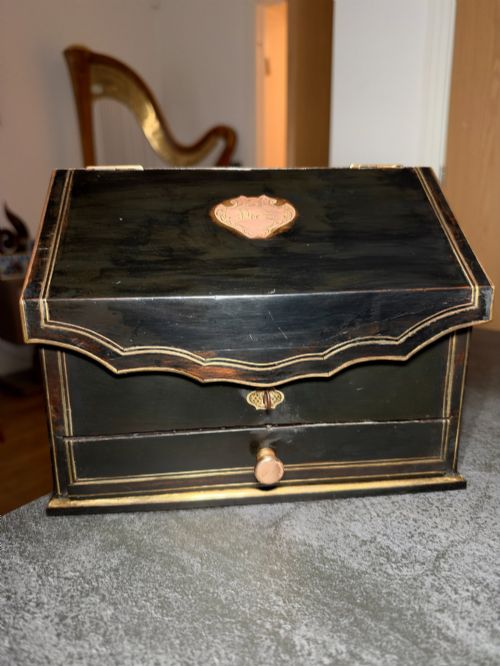
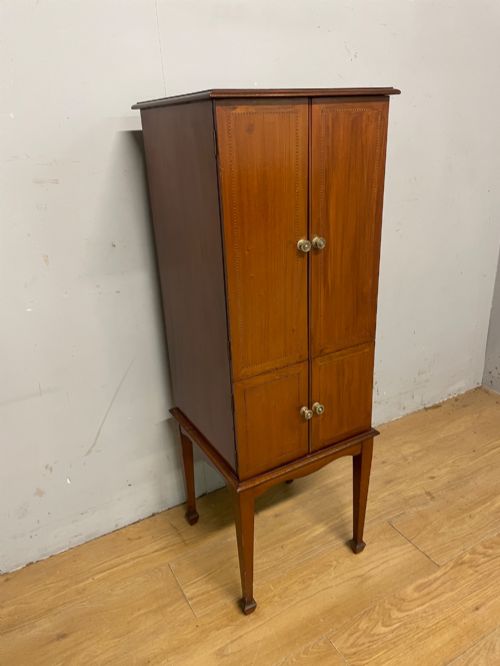
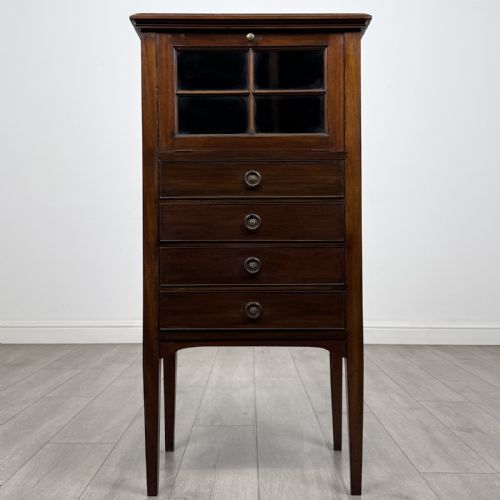
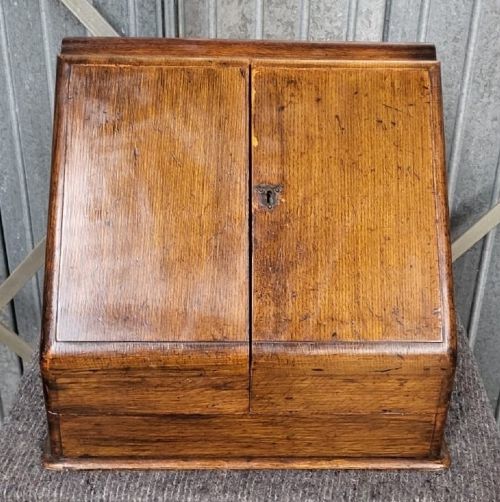




Wood Stationery Cabinet
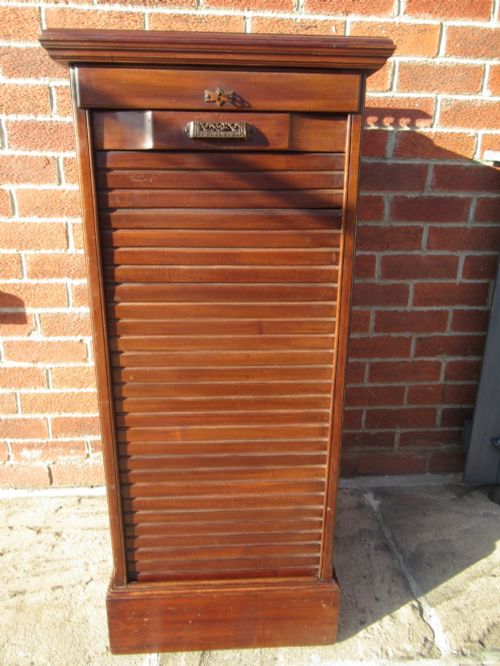
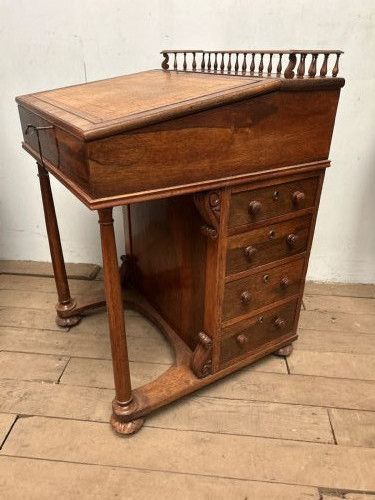
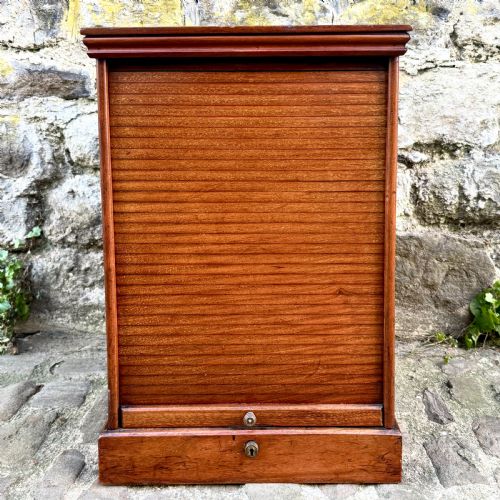
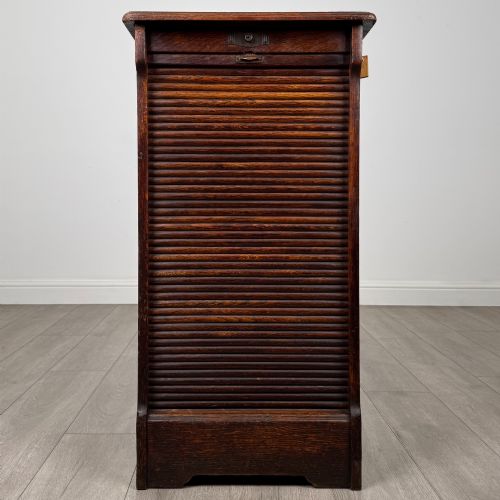
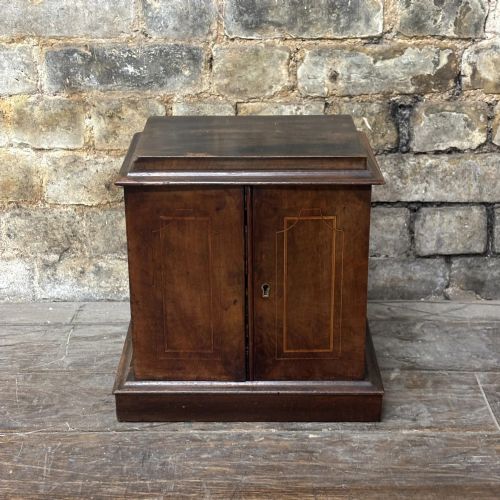
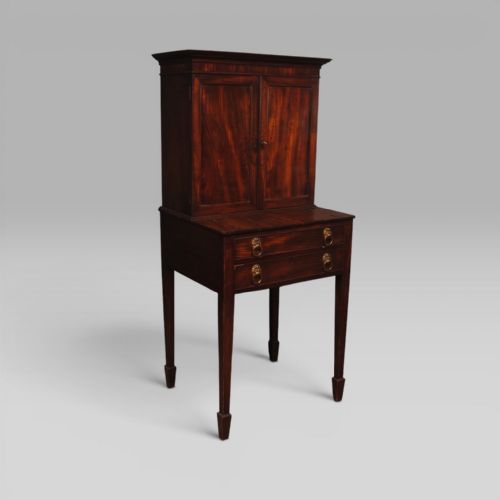
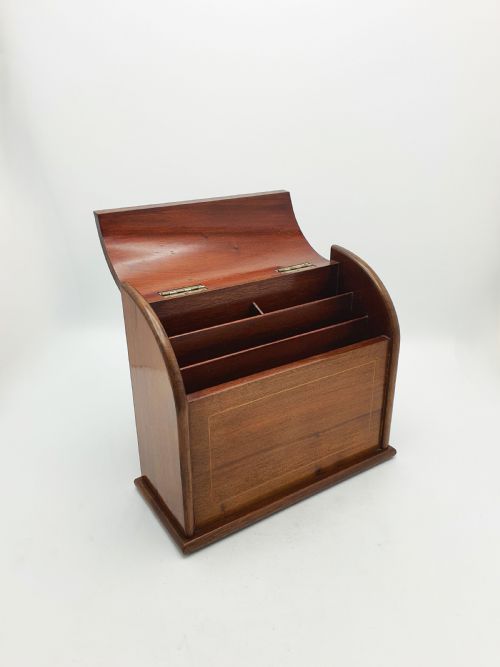
A wood stationery cabinet organises correspondence with fitted compartments, sloping lids or tambour doors fashioned in mahogany, oak and rosewood.
Wood Stationery Cabinet
A wood stationery cabinet provides a dedicated vessel for paper, envelopes and writing implements, appearing across periods from the Georgian era through to the early twentieth century. These pieces range from compact desk boxes and hinged-lid tidies to larger tambour-front file cabinets and correspondence chests.
The versions most commonly met on this page date from the Victorian and Edwardian periods, constructed in mahogany, oak and rosewood. Formats vary from tabletop stationery boxes to larger writing cabinets, davenports and office filing units equipped with adjustable shelves.
Examples often incorporate decorative elements such as inlaid boxwood, raised galleries or carved details, reflecting the stylistic shifts from Regency elegance to Edwardian practicality.
Materials and construction
Cabinet makers utilised dense hardwoods including mahogany, oak, rosewood and burr walnut, often selecting figured veneers for exterior surfaces. These timbers provided the structural stability required for intricate internal letter dividers and sloping desk lids.
Hardware played an essential functional role, with brass hinges, locks, handles and galleries incorporated into the design. Tambour fronts relied on closely fitted wooden laths running in recessed grooves to slide smoothly around curves.
Wood Stationery Cabinet Retail Price Guide 2026
Typical asking prices for wood stationery cabinet among the pieces listed under this phrase on Sellingantiques today, from the lower quarter to the upper quarter. They describe what is for sale here now, not the wider market.
Some Edwardian stationery boxes included compartments specifically sized for calling cards and fountain pens.
Assessing quality and execution
Quality rests upon the selection of timber and the precision of the joinery, particularly in the construction of internal letter compartments and sliding mechanisms. Superior pieces display thoughtful grain matching across the exterior and robust internal framing that withstands daily handling.
The refinement of secondary details distinguishes finer examples, such as finely cut brass hardware, crisp inlaid boxwood stringing and well-executed carved galleries or panel work. The integration of mechanical actions, including pop-up stationery sections or smooth tambour doors, reveals the maker's technical capability.
The Wood Stationery Cabinet Glossary
- Tambour
- A flexible sliding door formed from narrow strips of wood glued to a canvas backing. This mechanism allows the door to curve around the corners of a cabinet without protruding into the workspace.
- Davenport
- A compact form of writing desk featuring a sloping, hinged desktop above a pedestal of drawers. It typically incorporates a stationery compartment on the upper rear surface.
- Gallery
- A low ornamental railing or pierced border surrounding the top surface of a cabinet or desk. It prevents items placed on top from sliding off.
- Inlay
- A decorative technique where contrasting materials such as boxwood are embedded into the wood surface to create patterns. This method adds visual depth to the casework.
- Correspondence chest
- A box or small cabinet designed specifically to hold writing paper, envelopes and sealing wax. These pieces often feature drop fronts or fitted internal tiers.
Wood Stationery Cabinet: Frequently Asked Questions
What is a wood stationery cabinet used for?
These cabinets were designed to organise letters, writing paper, envelopes and stamps on a desk or bureau. Their internal compartments kept correspondence sorted and protected from dust.
Today they function effectively for storing modern stationery, cards or small personal items while maintaining period character in a room.
How do I identify an Edwardian stationery cabinet?
Edwardian examples, usually dating from around 1900 to 1910, often feature lighter mahogany timbers with subtle inlaid boxwood stringing or Sheraton Revival motifs. They frequently utilise practical mechanisms like tambour fronts or sloping hinged lids.
Earlier Victorian versions tend to employ heavier timbers such as walnut, rosewood or oak, sometimes displaying more robust carving or Gothic Revival influences.
What is a tambour front cabinet?
A tambour front consists of narrow vertical strips of wood attached to a flexible fabric backing, allowing the door to slide smoothly along a track around a curved corner. This design concealed the interior letter slots without requiring clearance for swinging doors.
Cabinet makers used this technique extensively in office furniture and stationery boxes from the late nineteenth century onwards.
How do I care for a antique wood cabinet?
Keep the wood away from direct sunlight and strong heat sources to prevent the timber and veneers from drying out or splitting. Occasional application of a suitable wax polish maintains the lustre of the finish.
Avoid excessive moisture on the surface and protect brass hardware from harsh cleaning agents.