


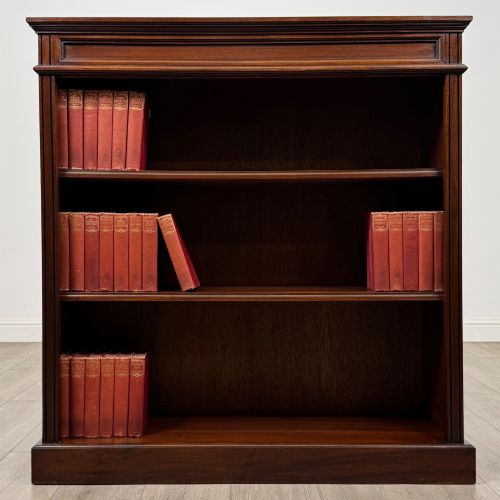
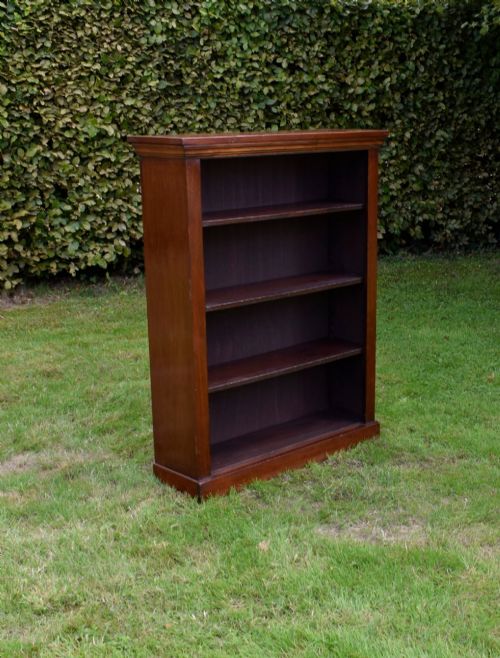
Wood Open Display Shelves
Wood open display shelves bring warmth and accessible storage to a room, presenting books and objects with straightforward utility.
Wood Open Display Shelves
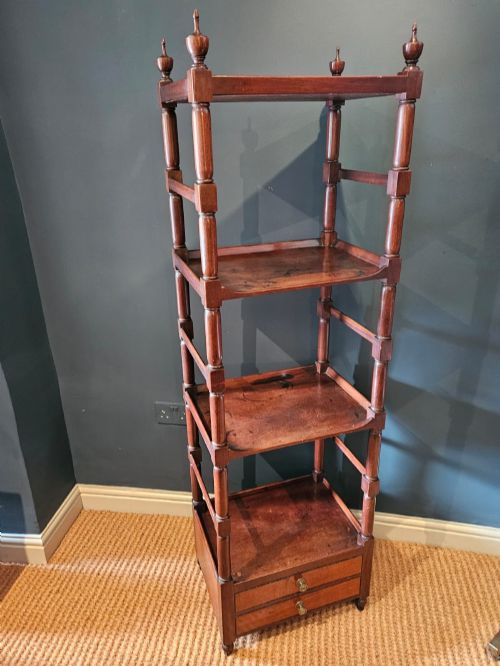
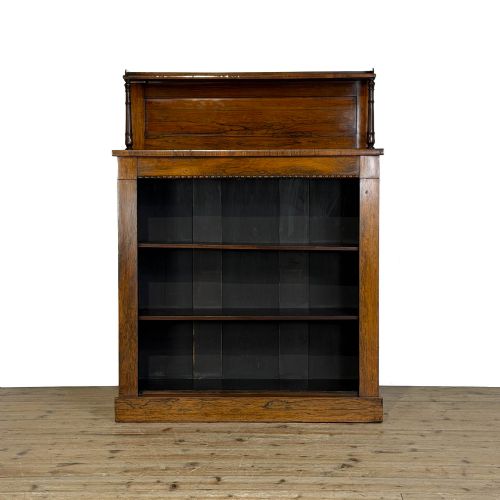
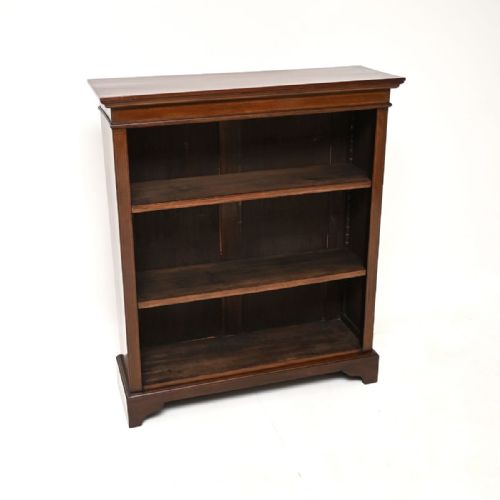
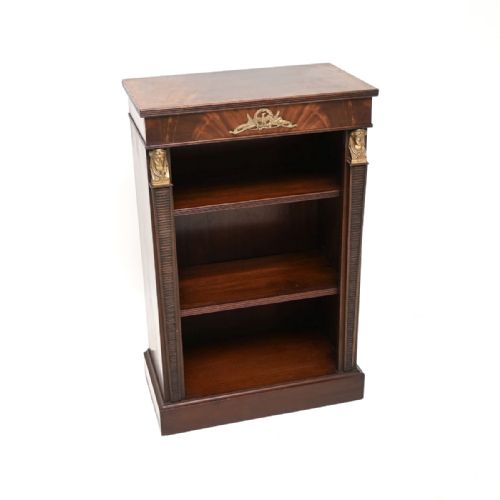
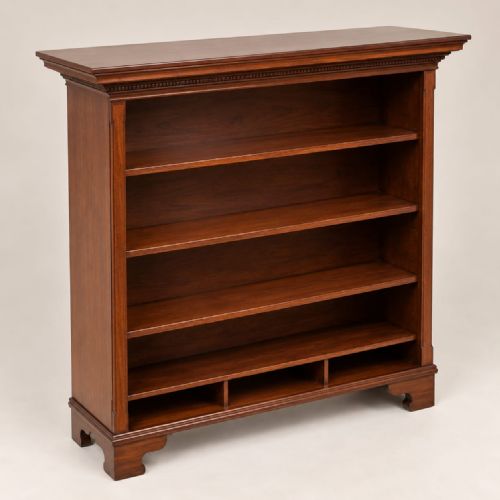
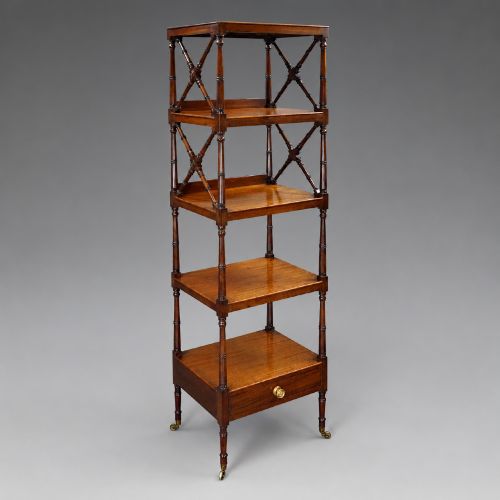
When you search for wood open display shelves, you encounter various forms designed for storage and exhibition, including bookcases, whatnots, etageres, and wall-hanging shelves. These pieces date across the nineteenth and twentieth centuries, spanning Victorian, Edwardian, George III, and Art Deco styles.
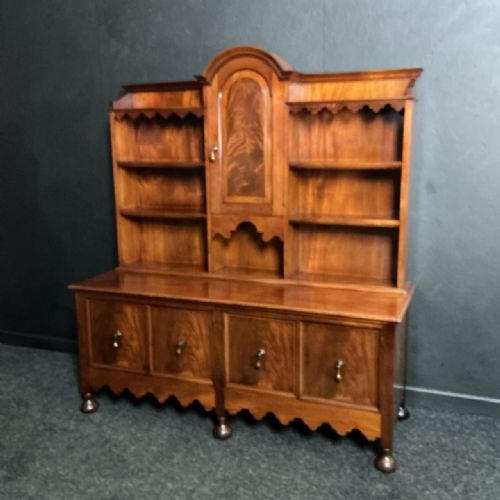
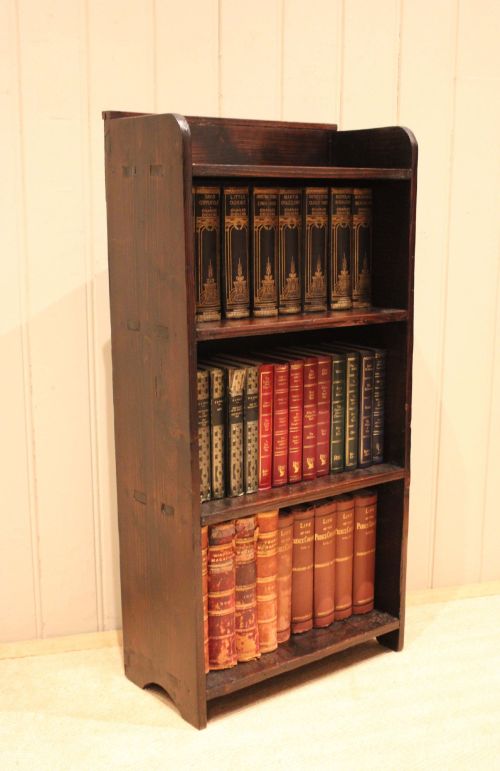
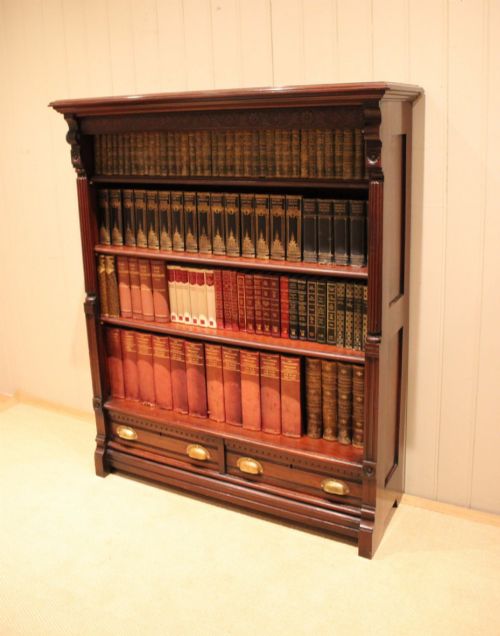
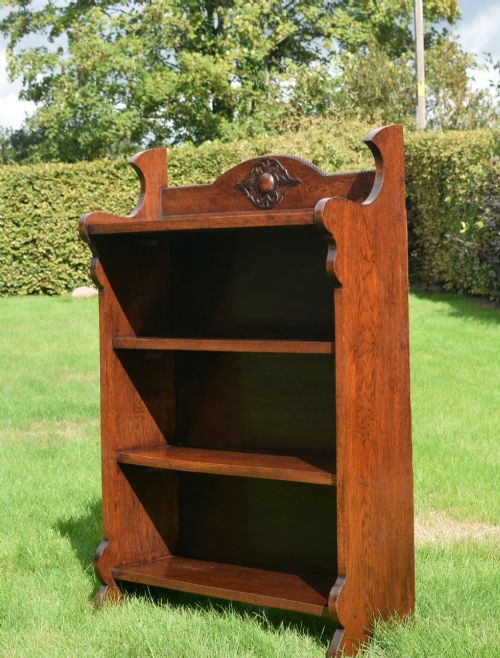
The most common examples on this page are mahogany and oak bookcases from the Victorian and Edwardian periods, frequently featuring adjustable tiers. You also find corner shelves, dressers, and specialised pieces like music cabinets and etageres.
Origins vary from British workshops to continental European makers and Anglo-Indian production. The primary function remains the exhibition of books and decorative items without doors to obstruct the view.
Materials and construction methods
Cabinet makers utilised dense hardwoods such as mahogany, walnut, oak, and rosewood, often selecting timber for prominent grain patterns. Secondary woods appear in backing boards and internal framing, constructed with traditional joinery.
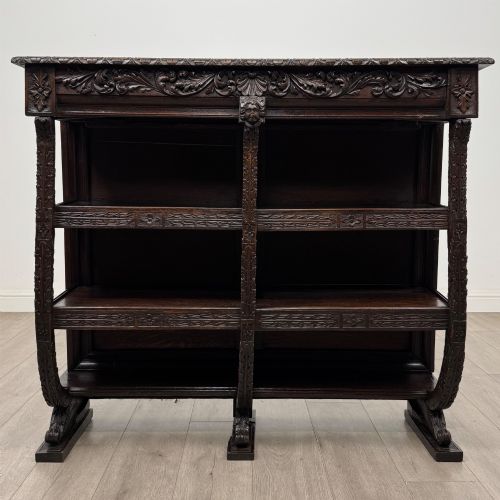
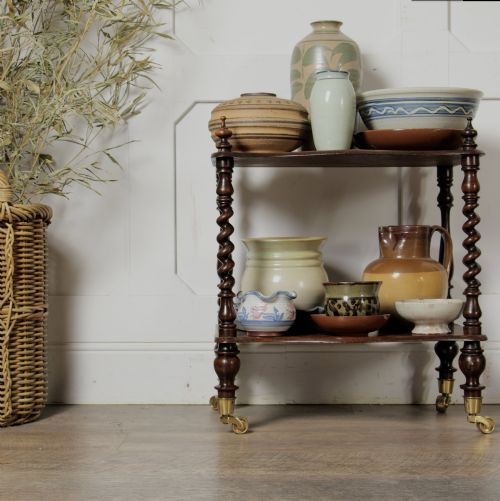
Decoration relies on carved elements, barley twist supports, brass fittings, and occasional inlay work. Surfaces are finished to highlight the natural tone of the wood rather than concealing the material beneath heavy pigments.
Assessing quality in open shelving
Quality rests upon the selection of timber and the precision of the joinery rather than ornate decoration alone. Finer pieces demonstrate careful attention to grain matching across shelves and uprights, alongside robust structural integrity.
The presence of adjustable shelving systems operated by brass pins or rackwork indicates superior utility in bookcases. Proportion, balance, and the crispness of any hand-carved mouldings separate standard utilitarian furniture from exceptional cabinet work.
Gabriel Viardot
The Wood Open Display Shelves Glossary
- Whatnot
- A piece of furniture consisting of several open shelves for displaying small objects or books. It typically stands on legs and dates from the eighteenth century onwards.
- Etagere
- A piece of furniture with a set of open shelves for displaying ornaments. The term often describes French or continental pieces with lighter decorative framing.
- Barley twist
- A type of turning shaped like a helix resembling a twisted rope. This decorative feature appears frequently on supports and legs of Victorian furniture.
- Adjustable shelves
- Shelves that can be moved to different heights using internal vertical slots, pegs, or rackwork strips. This mechanism allows the interior space to accommodate volumes of various sizes.
- Padauk
- A heavy, durable tropical hardwood with a reddish hue used in cabinet making. It appears in imported furniture such as Anglo-Indian pieces.
Wood Open Display Shelves: Frequently Asked Questions
How do I date a wooden open bookcase?
Dating relies on timber choice, construction methods, and stylistic cues present in the piece. Victorian and Edwardian examples often display distinct mouldings and hardware appropriate to their era.
Examination of the backboards and shelf support systems provides further clues regarding the manufacturing period.
Are these shelves suitable for heavy books?
Many period bookcases feature sturdy hardwood construction and adjustable timber shelves designed to hold substantial weight. Solid mahogany, oak, and walnut variants offer reliable strength for everyday use.
Checking the thickness of the shelves and the condition of the supports ensures safe loading.
What is the difference between a whatnot and an etagere?
While both serve as open tier shelving units, a whatnot is traditionally of British origin with functional partitioned tiers, whereas an etagere often implies a lighter, more decorative French form.
Both styles prioritize the display of ornaments over heavy book storage.
How do I clean and maintain antique wood shelves?
Maintenance involves dusting with a dry, soft cloth and occasionally applying appropriate beeswax to nourish the timber. Avoid placing wooden furniture in direct sunlight or near heat sources to prevent warping.
Proper care preserves the original finish and patina developed over decades.